


Assange and Ecuador: no monopoly on hypocrisy
Julian Assange’s supporters accuse the media of hypocrisy in pointing to Ecuador’s sketchy record on press freedom—but come dangerously close to apologizing for repression.
In the wave of protest over a provocateur-produced "film" dissing the Prophet Mohammed, jihadists could be seizing back the initiative from secular revolutionaries in the Arab world.
A months-long civil disobedience campaign against the Koodankulam nuclear plant in southern India’s Tamil Nadu state turned violent as police opened fire on protesters.
Insurgents attacked Bagram Air Base outside Kabul—and a skateboarding program run by a nonprofit for Kabul youth, killing four kids.
The eleventh 9-11 anniversary saw riots in Libya and Egypt over an Islamophobic film produced by an Israeli-American real-estate developer.
The 9-11 commemoration was subdued, with no speechifying by politicians, a good sign that the US is finally moving on. Except, of course, that we remain at war in Afghanistan…
Human rights groups fear Iraq’s government may be using state-sanctioned executions to eliminate opponents held in prison following spate of over 20 executions last month.
A 13-year-old cyclist is in critical condition after being struck by a van in Brooklyn’s Borough Park. Police say “no criminality is suspected,” apparently without irony.
Both parties represent global empire and corporate rule. But it is also clear that this election is turning into a referendum on whether the USA should be a white republic.
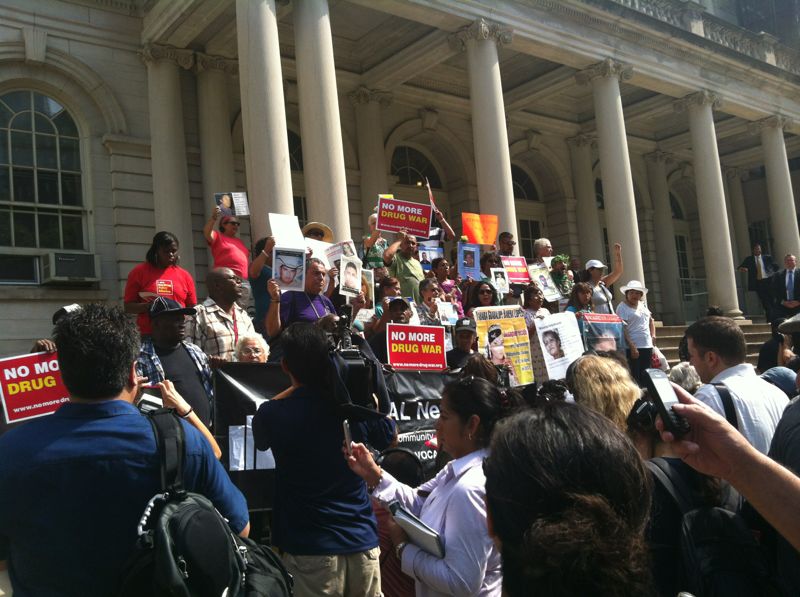
Mexican poet and author Javier Sicilia stands on the steps of New York’s Federal Hall, across Wall Street from the Stock Exchange, in a Sept. 7 rally by the Caravan for Peace With Justice and Dignity that culminated a tour… Read moreMexican Peace Caravan Occupies Wall Street
An employee of the controversial Yanacocha gold mine in Peru’s Cajamarca region was arrested for the slaying of a local campesino leader who opposed the mine’s expansion.
A proposed law in Peru would impose a prison term for “denial” of Sendero Luminoso’s terrorism, but critics insist that if the law is instated it should also include “state terrorism.”