


Burma: pipeline plans behind Rohingya cleansing?
The Burmese port of Sittwe, epicenter of violence against the Muslim Rohingya people, is to be the starting point for the new Shwe pipeline linking Burma’s west coast with China.
Authorities in Mexico's coal-producing northern state of Coahuila say that the notorios Zetas, bloodiest of the country's warring cartels, have taken over much of the mining industry.
Gangland street shoot-outs in Tamaulipas left scores dead this past week just south of the Texas border—without a word of coverage in Mexico’s media, due to cartel threats.
As the Pentagon adds 14 interceptors to its anti-missile system in Alaska, some observers see a design on Arctic resources also sought by competitors Russia and China.
The National Indigenous Organization of Colombia warned the Inter-American Human Rights Commission that 65 the country's indigenous groups risk cultural or physical "extinction."
A clash broke out as riot troops from Peru's National Police force evicted a group of informal miners from their encampment in northern La Libertad region, leaving two miners dead.
Dissident Cuban blogger Yoani Sánchez spoke to a packed auditorium at New York University, challenged by audience members from both the left and the right.
A court in Argentina sentenced the country’s last military dictator Reynaldo Bignone to life in prison for crimes against humanity committed during his rule in 1982 and ’83.
The election of Buenos Aires’ Cardinal Bergoglio as Pope Francis deepens growing concerns about the complicity of the Catholic Church in Argentina’s “Dirty War” of the 1970s.
In a new massacre near Homs—one of several in Syria over the past weeks—the regime blames the Nusra Front rebels, while the opposition blames the pro-regime Shabiha militia.
Ten years after the US invasion, Iraq is enmeshed in a cycle of human rights abuses, including attacks on civilians, torture and unfair trials, Amnesty International charges.
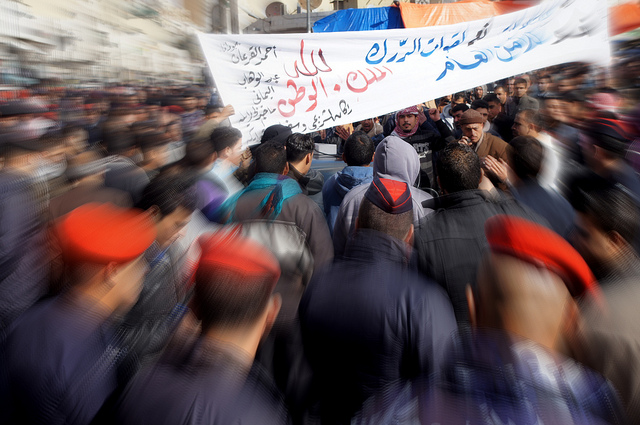
One of the ongoing Friday protests in Amman, Jordan, last year. Spontaneity, largely horizontal organization, and a suspicion toward explicit political leadership have all been signature components of the Arab revolutions. Joshua Stephens of Toward Freedom interviews Mohammed Bamyeh, who writes on… Read moreAnarchism and the Arab uprisings