Africa
jihadis

Is Ukraine backing Mali insurgents?

Mali announced that it has cut diplomatic relations with Ukraine, after a Kyiv military official boasted of having aided an insurgent attack in the country’s north that left scores of government troops and Russian mercenaries dead. Andrii Yusov, spokesman for Ukraine’s GUR military intelligence agency, said on social media that “the rebels received necessary information, and not just information, which enabled a successful military operation against Russian war criminals.” While not saying whether Ukrainian military personnel were involved in the fighting or were present in the country, Yusov cryptically added that the GUR “won’t discuss the details at the moment, but there will be more to come.” Malian official Col. Abdoulaye Maiga said Yusov’s comments “admitted Ukraine’s involvement in a cowardly, treacherous and barbaric attack by armed terrorist groups.” (Photo: FIDES)

Planet Watch
Oppie

Podcast: Oppenheimer and techno-hubris

In Episode 185 of the CounterVortex podcast, Bill Weinberg reviews the Oppenheimer movie, and discusses the legacy of J. Robert Oppenheimer 78 years after Hiroshima. Manhattan Project dissidents like Leo Szilard petitioned to stop the dropping of the atomic bomb on Japan. But such sentiment was overruled by Harry Truman’s geopolitical imperatives—and what Freeman Dyson called the “technical arrogance” of Oppenheimer and his circle. Now, as open Russian nuclear threats continue to mount in Europe, we are poised at the brink of unparalleled catastrophe. Listen on SoundCloud or via Patreon. (Image via The Day After Trinity)

Iran
ivel

Iran demolishes houses, farms of Baha’i community

Security forces laid siege to a village in northern Iran, demolishing houses and farms belonging to members of the persecuted Baha’i faith. Over 200 troops were deployed to Roshankouh, in Mazandaran province, blocking the road into the village and confiscating residents’ cell phones before commencing demolition of several properties. However, video footage of heavy machinery demolishing buildings was posted to social media by the Baha’i International Community. The organization reports that six homes were destroyed and over 20 hectares of land were confiscated. Troops used tear-gas and fired shots in the air to disperse residents who gathered to protest the demolitions. (Photo of Baha’i village in Mazandaran: Baha’i Communiyu of Canada)

Planet Watch
PLARF

China: rapid expansion of nuclear missile silo fields

Satellite images reveal that China is building two new nuclear missile silo fields. The Federation of American Scientists reports that the People’s Liberation Army Rocket Force (PLARF) appears to be constructing new missile silos near Yumen, Gansu province, and at another site some 380 kilometers to the northwest, near Hami in Xinjiang. The construction at Yumen and Hami constitutes the most significant expansion ever of China’s inter-continental ballistic missile silos. China has for decades operated about 20 silos for its DF-5 ICBMs. With 120 silos under construction at Yumen, another 110 silos at Hami, a dozen silos at Jilantai, Inner Mongolia, and possibly more silos being added in existing DF-5 deployment areas, the PLARF appears to have approximately 250 silos under construction—more than ten times the number of ICBM silos currently in operation in China. (Photo: Federation of American Scientists)

Greater Middle East
al-bokari

Saudi Arabia imprisons Yemeni dissident blogger

A court in Saudi Arabia sentenced a Yemeni blogger to 10 months in prison, a fine of 10,000 riyals ($2,600) and deportation for a social media post supporting equal rights for people in same-sex relationships. Mohamad al-Bokari was arrested in Riyadh in April, after posting a video on social media, which authorities said contained “sexual references” and “violated public order and morals.” This was apparently a reference to the line: “Everyone has rights and should be able to practice them freely, including gay people.” Sources told Human Rights Watch that al-Bokari was subjected to a forced anal exam, an internationally discreditedpractice used to seek “proof” of homosexual conduct. HRW says the practice has no scientific basis, violates medical ethics, and constitutes cruel, degrading, and inhuman treatment that may rise to the level of torture. Al-Bokari was charged with “violating public morality” and “imitating women.” (Image: Amnesty International)

Inner Asia

2008 Tibetan uprising remembered in Queens

Students for a Free Tibet held a 10-year commemoration of the 2008 Tibetan uprising at a hall n the Queens neighborhood of Astoria, New York City. The 2008 uprising, which began in Lhasa in March, continued for weeks and spread across the Tibetan plateau. It was put down at a cost of some 20 lives, by official Chinese figures. But Tibetan rights groups and the government-in-exile in Dharamshala, India, claim that hundreds were "disappeared" in a subsequent wave of repression, with some 200 presumed killed. Guest of honor at the commemoration was Dhondup Wangchen, producer of the 2008 documentary film Leaving Fear Behind, made in the prelude to the uprising, in which ordinary Tibetans spoke of their feelings about China hosting the Summer Olympics. Wangchen was subsequently arrested, convicted of "subversion," and served six years in prison. Upon his release, he fled Tibet and was granted asylum in the United States. He is shown here with his wife, Lhamo Tso, who waged a campaign for his release. (Photo: Rose Tang)

North Africa

Libya: Haftar vows to attack Italian warships

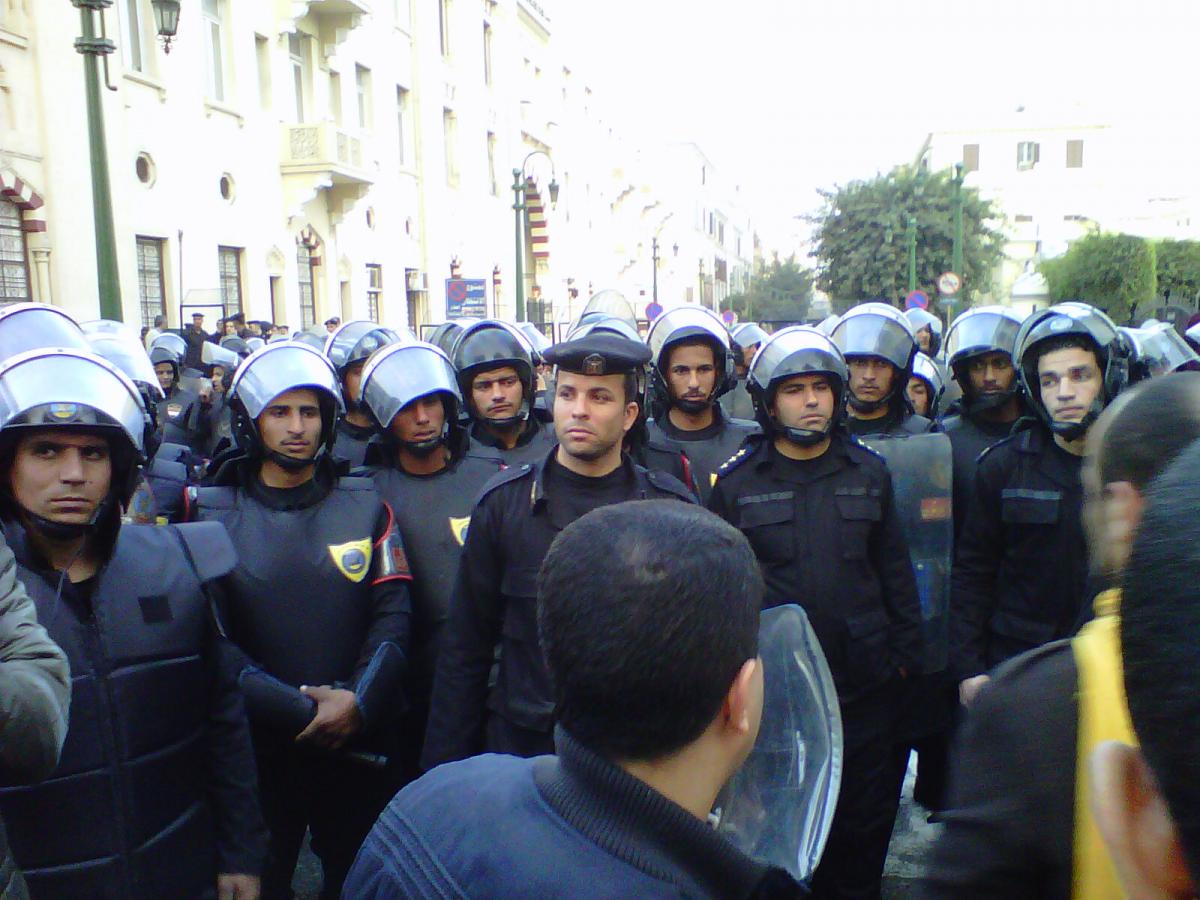
The military commander of Libya's unrecognized eastern government, Khalifa Haftar, threatened to bombard any warships entering the country's national waters—an explicit challenge to Italy, which is dispatching vessels to the Libyan coast as part of its effort to intercept migrants seeking to cross the Mediterranean from North Africa.  The statement took aim at the Tripoli government, which Haftar accused of entering into agreements with foreign powers that "violate the sovereignty of Libya under the pretext of fighting illegal immigration."

PERU’S NEW GOVERNMENT WANTS MORE CHINA


by Nelly Luna Amancio, Diálogo Chino

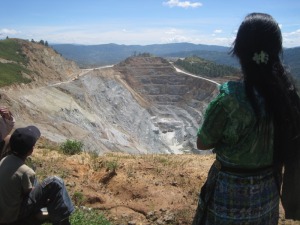
Peru’s new president, Pedro Pablo Kuczynski (known as PPK), intends to stimulate the country’s economy by processing and refining minerals, in addition to simply exporting them. Since his victory in the runoff election on June 5, Kuczynski has declared the need for Peru to prioritize both mineral extraction and trade relations with China.

China is Peru’s biggest investor. With this in mind, Kuczynski—who will replace the outgoing President, Ollanta Humala, at the end of July—described as “necessary” a trip to China ahead of the Asia-Pacific Economic Cooperation (APEC) forum in Lima in November, his first official visit overseas. “China is our number one trading partner and they are the ones who purchase our minerals,” he said.

“We are an economy with enormous natural resources, but we have to industrialize and that is no easy task. So, we will have to work with those who buy significant amounts of our exports, which means, to a large extent, China,” Kuczynski insisted during the Eleventh Business Summit of the Pacific Alliance in Lima in June.


Continue ReadingPERU’S NEW GOVERNMENT WANTS MORE CHINA