North America
CounterVortex

Podcast: Politics of the Second Amendment

In Episode Four of the CounterVortex podcast, Bill Weinberg makes the case that the Second Amendment is a non-grammatical muddle of obfuscation—because the issue was just as contentious in 1789 as it is today, and the Framers fudged it. That’s why both the “gun control” and “gun rights” advocates can claim they have the correct interpretation—as they each advocate solutions that, in their own way, escalate the police state. In the wake of the latest school massacre, youth activists are pressing the issue, and this is long overdue. But the discussion that needs to be had would explore the social and cultural roots of this peculiarly American pathology. Listen on SoundCloud, and support us via Patreon.

East Asia

Xi censors Orwell: too obvious. But the letter N?

Following the announcement that China’s Communist Party has proposed scrapping term limits for the presidency, effectively setting Xi Jinping up as president for life, the online reaction within the People’s Republic was initially voluble and irreverent. But authorities quickly cracked down, barring certain words and phrases from Sina Weibo search results. The absurd overkill in what what was blocked betrays an obvious fear of the masses on the part of China’s ruling elite. The very titles of George Orwell’s novels 1984 and Animal Farm have of course been suppressed. This is hardly surprising. It’s almost heartening that despots around the world still find Orwell so dangerous that they have to ban him. But some other samples of the verboten verbiage are more revealing—and enigmatic. (Photo: chinaworker.info)

The Caucasus

Chechen police state turns ire on druggies

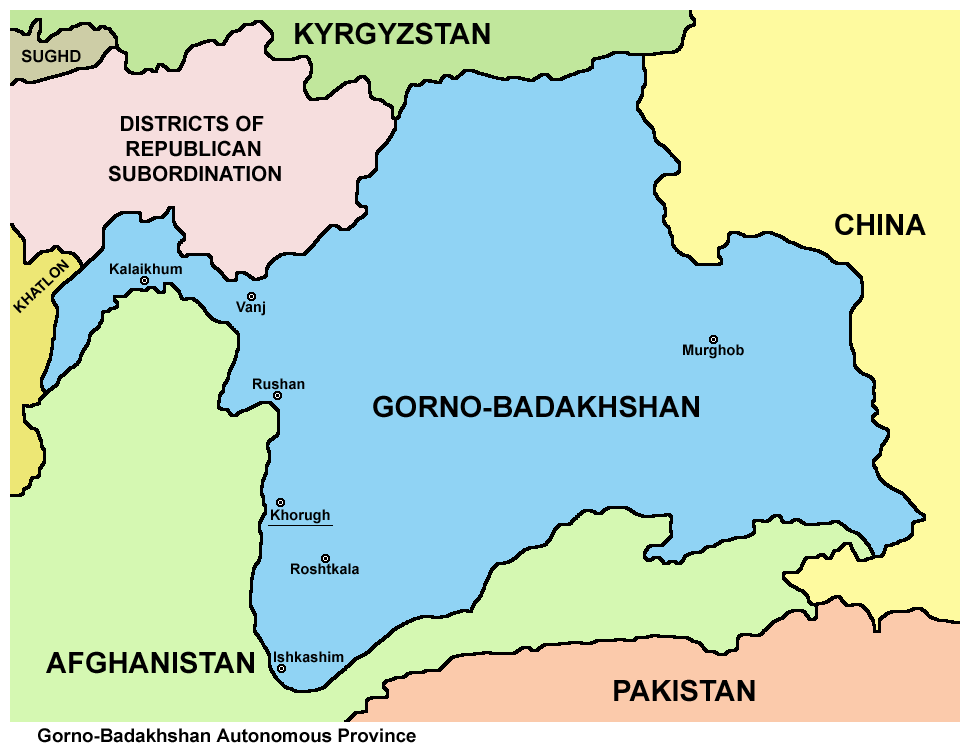
Last year, horrific reports emerged from the southern Russian republic of Chechnya that authorities were rounding up gays in detainment camps and subjecting them to torture —the first time this kind of thing has happened in Europe since Nazi Germany. Now the reign of terror is being extended to drug users and small-time dealers, who are facing torture at the hands of Chechen security forces as part of the same ultra-puritanical campaign. Reports describe electric current being applied to suspects to induce them to “confess.” No one has survived without confessing, victims are told. (Map: Perry-Castañeda Library Map Collection)

Inner Asia
Uighurs

China: sweeps, surveillance in police-state Xinjiang

Thousands of Uighurs, members of the indigenous Muslim and Turkic people of China's far-western Xinjiang region, have been detained in "political education camps," while authorities are placing sophisticated facial-recognition technology even in remote villages to enforce restrictions on residents' movements. DNA samples, fingerprints, iris scans, and blood types are being collected from all residents as a part of the surveillance program. The measures come amid a wave of arrests of Uighur community leaders on charges of "religious extremism." (Photo: Mvslim.com)

Southeast Asia

Philippine paradox: martial law, medical marijuana

In flagrant violation of the Philippine constitution, President Rodrigo Duterte extended martial law in Mindanao for another year. Simultaneously, he announced a return of the National Police to drug enforcement after they were removed due to outrageous human rights abuses. But opposition lawmakers are trying to put the breaks on the militarization, and have even introduced a bill to legalize medical marijuana. (Photo: Anakpawis)

Iran

Iran relents in draconian drug war —after protest

Some rare good news is reported from Iran, where a reform of the country's drug laws may save the lives of thousands now on death row. Some 5,000 people are currently awaiting execution for drug offenses in the Islamic Republic, and all of them could now have their sentences reviewed. News accounts of the reform did not note that it is the fruit of protests within Iran, as well as pressure from international human rights groups. It won little coverage in the West, but following a wave of executions, some 1,800 prisoners at Qezel Hessar Prison outside Tehran went on hunger strike. Some courageous prisoners' families organized to support them, calling for reduced sentences for drug crimes—even holding vigils outside the Parliament building. (Image: Middle East Eye)

North America
Otay Mesa

Trump’s vision for USA: shithole of racism

With his "shithole" comment, Trump makes clear he would bring the United States back nearly a century to the 1920s, when immigration "quotas" were imposed for countries whose inhabitants were deemed undersirable, essentially cutting off immigration of Jews, Italians and Slavs. But deepening the insult, today Haitians and Salvadorans are being driven from their homelands by poverty and instability which is itself the bitter fruit of "free trade" policies foisted upon their governments by pressure from Washington. (Photo: Homeland Security's Otay Mesa Detention Center, BBC World Service via Flickr)

Africa

Harsh repression as bread riots rock Sudan

Sudanese authorities carried out mass arrests and confiscated newspapers as protests exploded over rising bread prices and severe economic austerity. One student was killed amid demonstrations in Geneina, capital of West Darfur state. Protests were also reported from the cities of Nyala, al-Damazin and the capital Khartoum. The unrest broke out as bakeries doubled the price of bread following a government decision to increase the price of flour nearly fourfold. The decision was part of a package of austerity measures issued under the country's 2018 budget, seeking to address the spiralling inflation rate.

Southeast Asia

Duterte fudges police death toll to justify drug war

The Philippines' President Rodrigo Duterte—trying to justify sending the National Police back into drug enforcement after he was pressured to withdraw them by a public outcry over their slaying of innocent civilians—has been caught in a lie. He stated that 300 police officers have been killed in anti-drug operations since he took office in June 2016—this by way of providing a rationale for the police killing thousands of Filipinos in this same period. But official figures from the Philippine National Police put the number at 86. Even if one adds army troops killed batting Islamist militants in Mindanao, the number is only 250. (Photo: Anakpawis)

East Asia

China: dissident blogger gets eight years in prison

A court in China convicted a prominent cyber-activist on subversion charges, after holding him for two years. Wu Gan, AKA "Super Vulgar Butcher," was arrested during the "709 Crackdown" on rights campaigners in 2015. Following the verdict, Wu was sentenced to eight years—the harshest term yet for anyone targeted in the crackdown. There's a particular irony to Wu's draconian sentence, as he made protesting transgressions of justice in China's court system his special cause. For instance, he took up the case of a rape victim who had killed her assailant, a Communist Party official. He also followed the example of online activists in the West by posting videos of police abuses. Photo: YouTube

East Asia
China

Beijing squatter protest —and human rights dilemma

A rare protest is reported from Beijing following the mass eviction of a squatter camp for migrant workers. The protest comes just as the US and EU condemned China on the occasion of International Human Rights Day—and China held its own "South-South Human Rights Forum" in Beijing, in a bid to deflect Western criticism and redefine human rights as a "right to development."

Southeast Asia

Duterte backtracks on drug war de-escalation —surprise!

Just weeks after the Philippines' Rodrigo Duterte won rare favorable headlines by pledging to pull the National Police out of his ultra-deadly "drug war," he's already threatening to send them back if the "drug problem becomes worse again." Not coincidentally, the threat comes just as Trump green-lighted Duterte's campaign of mass murder, meeting with him at the Manila ASEAN summit and issuing only praise—with not a peep about human rights.