East Asia
Nagasaki

Gaza at issue in Nagasaki commemoration

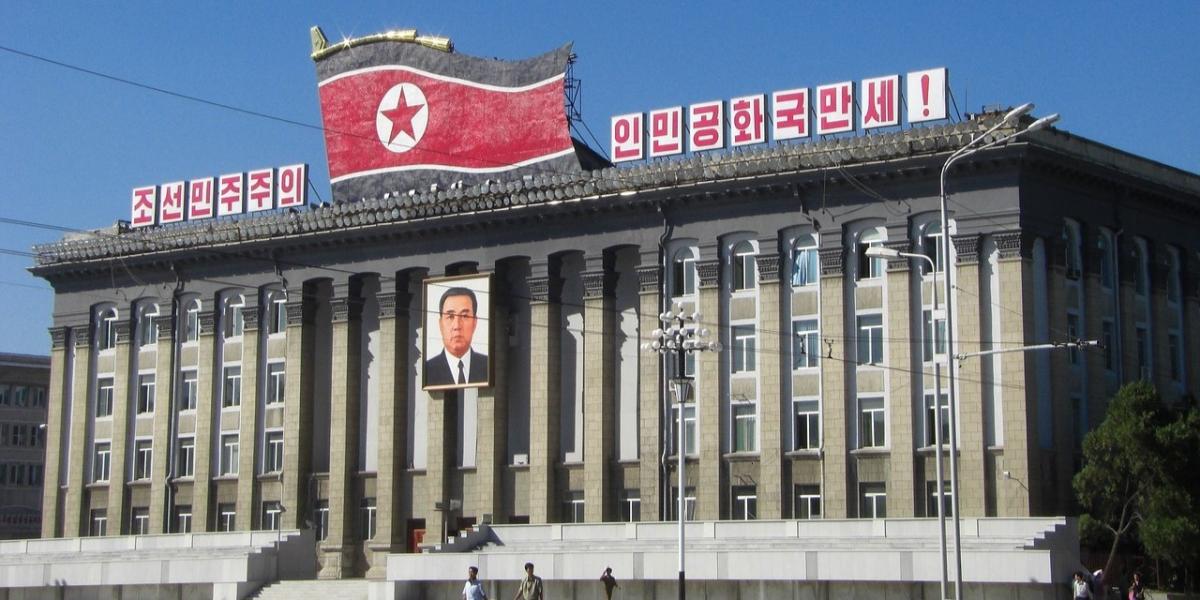
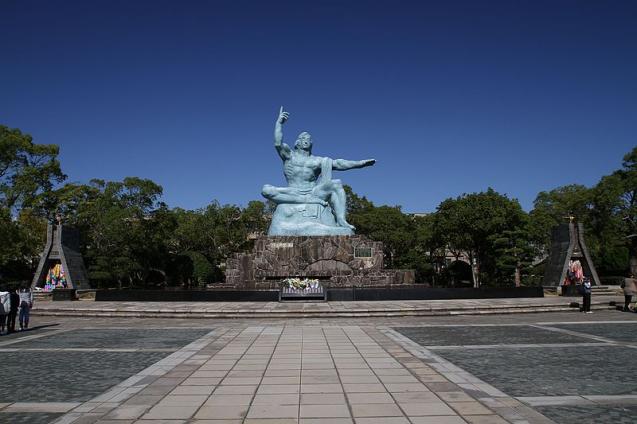
The US ambassador to Japan did not attend this year’s official commemoration of the atomic bombing of Nagasaki in protest of the city’s failure to invite Israel. Ambassador Rahm Emanuel said the event had been “politicized” by Nagasaki’s decision to exclude the Jewish state. Five other G7 countries and the EU likewise boycotted the ceremony. The municipal government in Hiroshima refused to pay heed to public calls to exclude Israel over the Gaza bombardment, and invited Israeli officials to its event as usual. Russia and Belarus were exuded from both commemorations for a third consecutive year. (Photo: Pop Japan)

Greater Middle East
Golan Heights

Podcast: flashpoint Golan Heights

In Episode 237 of the CounterVortex podcast, Bill Weinberg provides some under-reported context for the international crisis that has quickly spiraled since last week’s deadly rocket strike on a Golan Heights village, and now threatens to escalate to the unthinkable. Under international law, the Golan is Syrian territory not Israeli. And the kids who were killed in the rocket strike were Druze not Jews. Most of the Druze residents of the Golan have refused Israeli citizenship and remain loyal to Syria. Only one country on Earth recognizes Israeli sovereignty over the Golan—the USA, thanks to Donald Trump. Israel has a complicated history with the Druze, going back well before the occupation of the Golan in 1967. But the origins of the current trajectory toward regional war in a massacre of Druze youth points again to how peoples on the ground are exploited as pawns and propaganda in the cynical Great Power game. Listen on SoundCloud or via Patreon. (Photo: Freedom’s Falcon via Wikimedia Commons)

Watching the Shadows
computer smash

AI, nuclear power and the end of the Earth

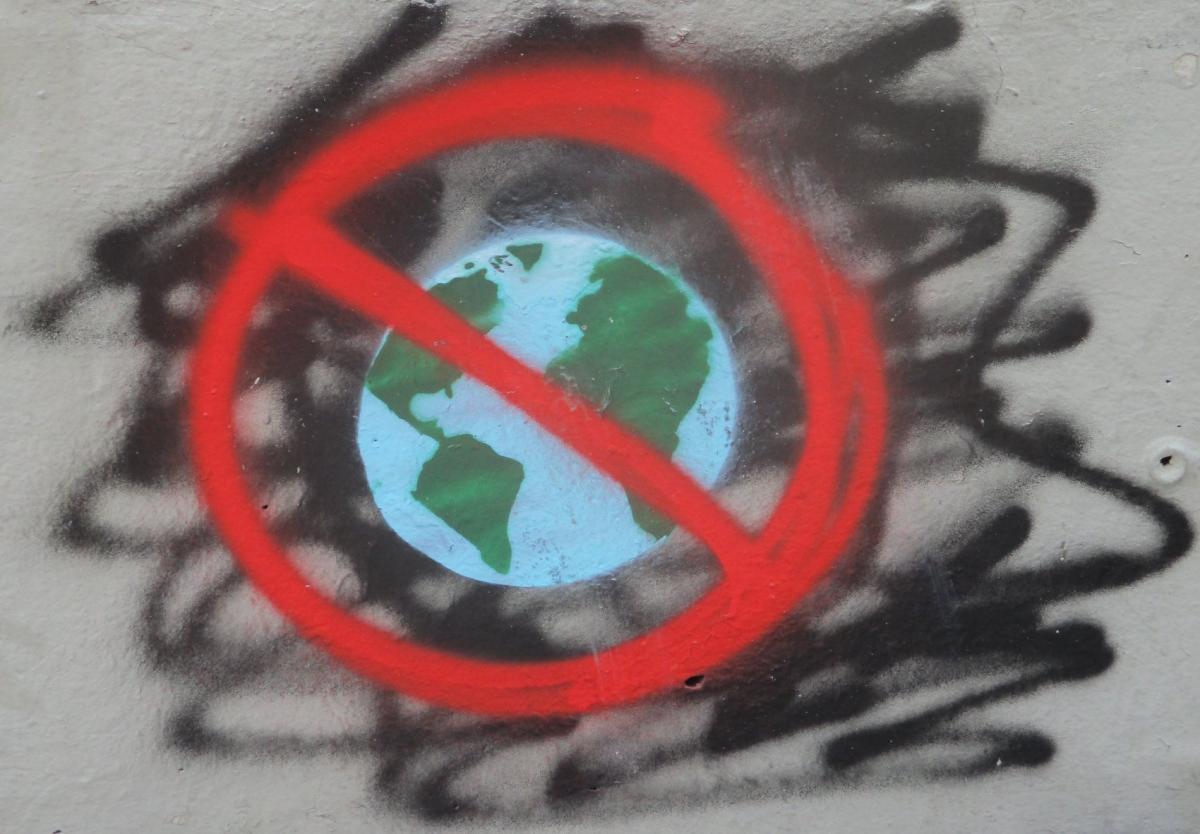
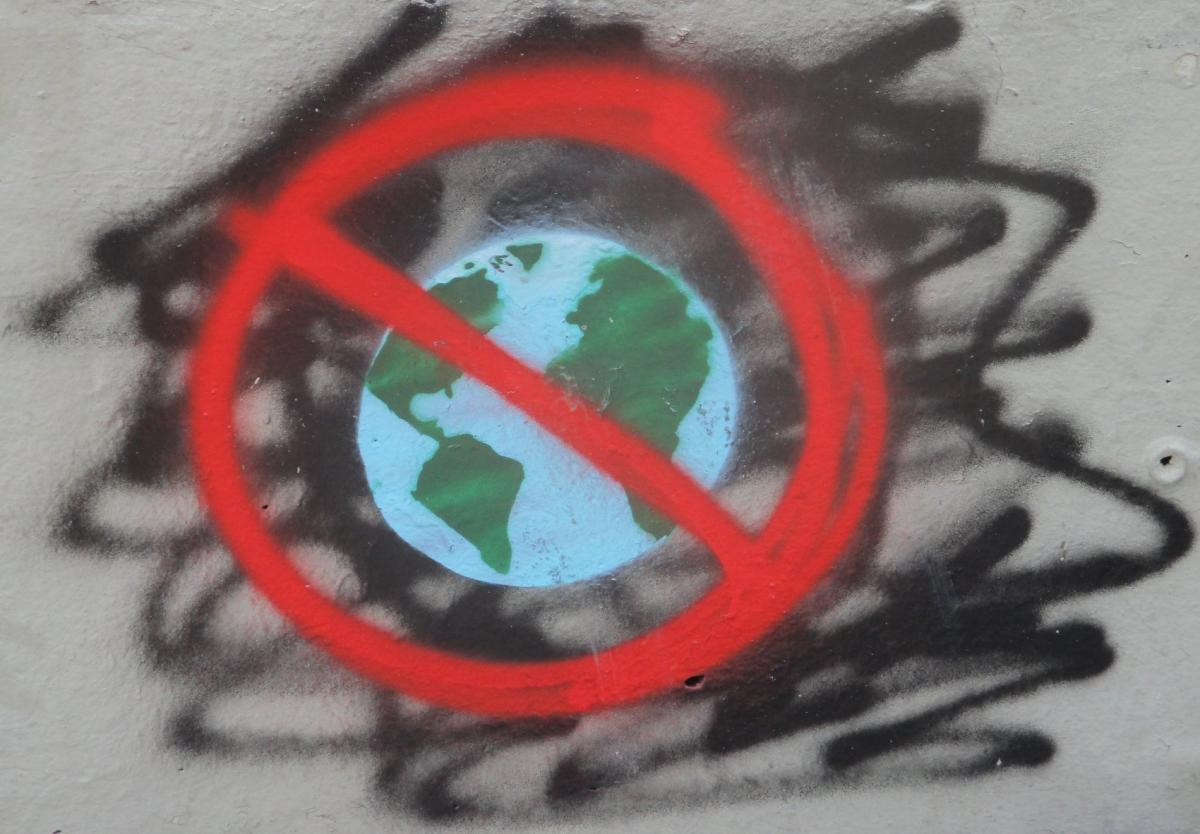
Tech companies now acknowledge that they are failing to meet their carbon emission reduction goals because of the mega-computing necessary for artificial intelligence—as if AI were something good and inevitable rather than ultra-dystopian. Meanwhile, the nuclear industry exploits carbon concerns to lubricate its comeback—with even countries like Kenya now planning reactors, amid oppressive and iniquitous social conditions. Even apart from the risk of devastating accidents, the normal functioning of nuclear power constitutes an ongoing disaster due to the dilemmas of waste disposal and the despoliation of indigenous lands by uranium mining. Climate disaster versus nuclear disaster is a false choice posed by omnicidal techno-capitalism. The only way to salvage a dignified human future lies in the abolition of fossil fuels, nuclear power and artificial intelligence alike. So argues Bill Weinberg in Episode 234 of the CounterVortex podcast. (Image: Earth First! Newswire)

Africa
west africa

Uranium at issue in Great Game for West Africa

The ruling junta in Niger revoked the operating license of French nuclear fuel producer Orano at one of the world’s largest uranium mines. Russian companies have meanwhile indicated interest in picking up the lease for the giant Imouraren mine. However, exports are stalled by closure of the border with Benin, the vital sea corridor for landlocked Niger, as tensions mount between the two countries. The uranium dispute comes as French and US troops have been forced to withdraw from Niger, and Russian forces have moved in. The Pentagon’s AFRICOM commander Gen. Michael Langley has acknowledged that the US is seeking to establish new bases in neighboring West African countries, including Benin. (Map: World Sites Atlas)

East Asia
Legislative Yuan

Protesters surround Taiwan parliament

Some 30,000 Taiwanese demonstrators surrounded the Legislative Yuan, the island’s parliament, one day after Lai Ching-te of the Democratic Progressive Party (DPP) was sworn in as president. They were protesting against the legislative majority’s attempts to enact new laws they say would unconstitutionally limit the power of the executive. Three days before the inauguration, physical conflict broke out among lawmakers on floor of the Legislative Yuan, with five briefly hospitalized. The DPP, while winning the presidency, failed to maintain a legislative majority in the January election, leaving the opposition Kuomintang to form a majority coalition. The Kuomintang favors closer ties with China, while the DPP upholds Taiwan’s de facto independence. Beijing responded to Lai’s inauguration with menacing naval maneuvers, completely surrounding Taiwan with warships. The protest at the Legislative Yuan evokes memories of the 2014 Sunflower Movement, when activists occupied the parliament chamber for 24 days to oppose a free trade agreement with China being pushed by the then-Kuomintang government. (Photo: Kanshui0943 via WikimediaCommons)

Watching the Shadows
Krasnogorsk

Podcast: conspiracy theory and the Moscow terror

The deadly terror attack in a concert hall outside Moscow was immediately claimed by ISIS-K, the Islamic State network’s Afghanistan franchise. But just as quickly, the Russian and Ukrainian intelligence services accused each other of being behind it—the latter saying it was organized as a “provocation” to expand Moscow’s war in Ukraine. Putin’s rise to power, including his recent rise to outright autocratic power, as well as his various military adventures, have indeed been lubricated every step of the way by terror attacks. But who was actually behind the Crocus City Center attack may not really matter overmuch. If 9-11 was a “Reichstag Fire” for the hyper-interventionist aims of Dubya Bush, that analogy may prove to apply even more closely to the concert hall carnage serving the war aims and totalitarian domestic agenda of Vladimir Putin. Bill Weinberg discusses in Episode 219 of the CounterVortex podcast. Listen on SoundCloud or via Patreon. (Photo: governor of Moscow Oblast via Wikimedia Commons)

Watching the Shadows
Crocus

Moscow terror: ISIS, Ukraine or ‘false flag’?

A group of armed men opened fire at a concert hall in a Moscow suburb, killing at least 133 people and injuring scores more. ISIS-K, the Islamic State network’s Afghanistan franchise, quickly took credit for the attack. But just as quickly, the Russian and Ukrainian intelligence services accused each other of being behind it—the latter saying it was organized as a “provocation” to expand Moscow’s war in Ukraine. Putin’s rise to power, including his recent rise to outright autocratic power, as well as his various military adventures, have indeed been lubricated every step of the way by terror attacks. But who was actually behind the Crocus City Center attack does not really matter overmuch. Just as 9-11—whoever was behind it—served the hyper-interventionist aims of Dubya Bush and his administration, we may be reasonably certain that the concert hall carnage will serve the war aims and totalitarian domestic agenda of Vladimir Putin. (Image: Wikipedia)

Palestine
Gaza

Israeli official broaches nuclear strike on Gaza

A member of the Israeli cabinet broached a nuclear strike on the Gaza Strip, making outraged headlines in the Arab world. Jerusalem Affairs & Heritage Minister Amichai Eliyahu of the ultra-nationalist Otzma Yehudit (Jewish Power) party said in a radio interview that there are “no non-combatants in Gaza,” and using a nuclear weapon on the Palestinian enclave is “one of the possibilities.” The comment was immediately repudiated by Prime Minister Benjamin Netanyahu, who issued a statement saying that Eliyahu has been suspended from cabinet meetings “until further notice.” Nonetheless, this comes as the death toll in nearly a month of Gaza bombardment approaches 10,000, with increasingly genocidal rhetoric voiced by Israeli officials up to and including Netanyahu. And despite a supposed relaxation of international tensions after Hezbollah leader Hassan Nasrallah’s highly anticipated speech was less bellicose than expected, the nuclear-powered (and presumably nuclear-armed) submarine USS Florida has arrived in the Middle East. The Ohio-class submarine is now operating under the command of the US Navy’s Fifth Fleet, which polices the Persian Gulf, Red Sea and Arabian Sea—a clear signal to Iran and its regional allies. (Photo: Maan News Agency)

Europe
Putin

Russia conducts simulated nuclear strike

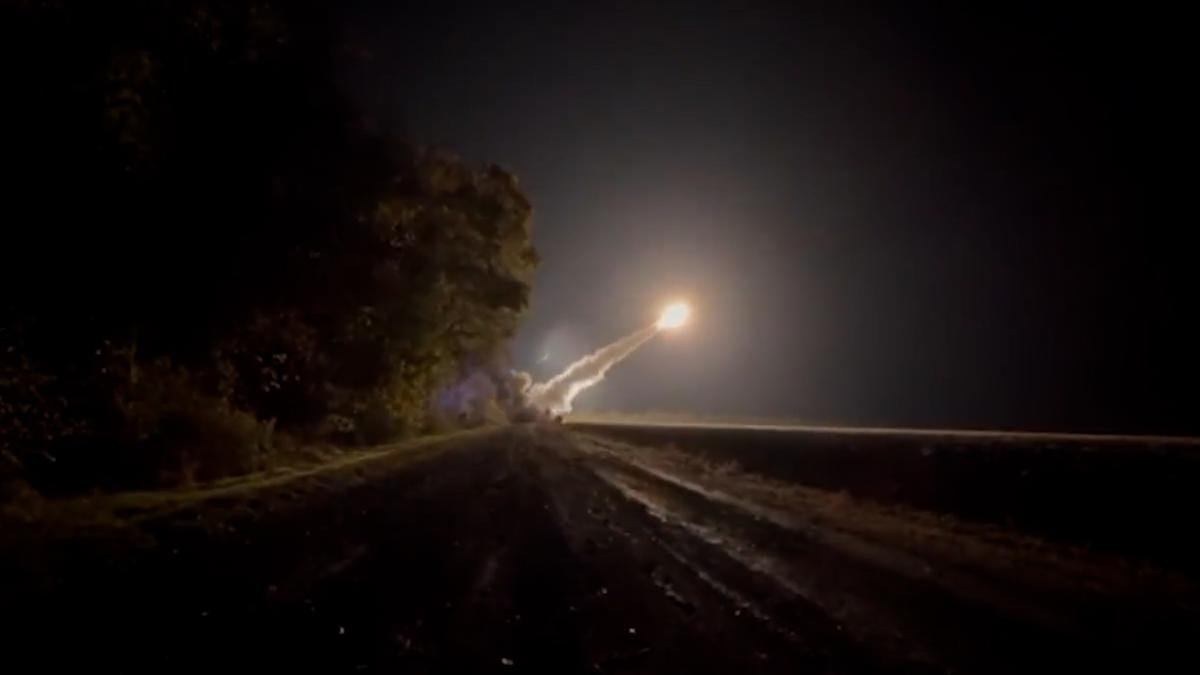
Russia’s military conducted exercises with nuclear-capable missiles, shortly after the State Duma unanimously voted to revoke ratification of the Nuclear Test Ban Treaty. The Russian Strategic Missile Forces command claimed the exercises were part of a regularly scheduled annual training drill held every October. But Defense Minister Sergei Shoigu said the exercises were to simulate a retaliatory nuclear strike to be carried out if Russia were attacked with nuclear firepower first. The Russian military widely publicized videos of the exercises across state media. According to the Kremlin, the exercises were overseen by President Vladimir Putin from a Moscow command center. (Photo: Kremlin)

Planet Watch
uranium

Podcast: Niger, Siberia and the global uranium wars

The Tuaregs of Niger and Buryat of Siberia, like the Navajo of the US Southwest, have had their territories usurped and destroyed by uranium mining for the nuclear-industrial complex, and it makes little difference from their perspective whether the extractivist bosses were French, Russian or American. While the Great Powers wage a neo-colonial game for control of this strategic resource, the indigenous peoples on the ground pay with their lands and lives—and are fighting back for autonomy or outright independence, and ecological and cultural survival. Bill Weinberg breaks it down in Episode 192 of the CounterVortex podcast. (Photo: Russian uranium mine in Buryatia, via Moscow Times)

Africa
Gabon

Gabon coup: another blow to Françafrique

A group of soldiers in Gabon seized control of the country and canceled the results of its presidential election—just after incumbent President Ali Bongo, heir to a corrupt dynasty closely aligned with France, was declared the winner amid claims of electoral fraud. In scenes reminiscent of those in Niger after the recent coup there, crowds have poured into the streets of Gabon’s capital Libreville, expressing their support for the new junta—and animosity for both the ousted Bongo dynasty and France. The coup appears to mean a further reduction for the French influence sphere in Africa, known as Françafrique. Over the past three years, coups have ousted French-aligned regimes in Mali, Burkina Faso and Guinea as well as Niger. Russia appears eager to step into the erstwhile role of France in providing military assistance to these countries. The day after the Gabon putsch, a Russian delegation met with Burkina Faso’s interim regime to discuss stepped-up security cooperation. (Map: PCL)

South Asia
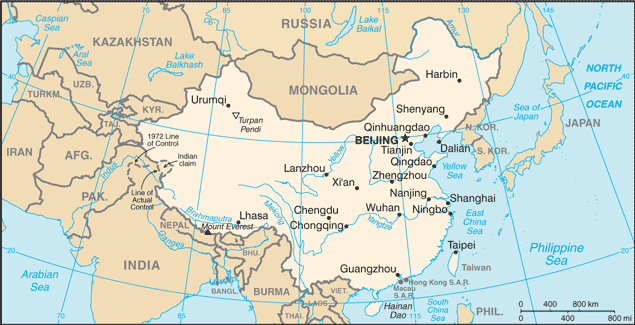
Aksai Chin

Podcast: Himalayan fault lines in BRICS

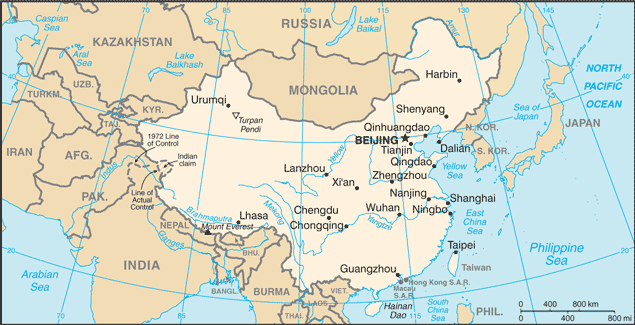
In Episode 189 of the CounterVortex podcast, Bill Weinberg notes that despite all the tankie pseudo-left enthusiasm for the BRICS summit in South Africa, the notion of a unified bloc against Western hegemony is illusory. The Johannesburg confab was immediately followed by a diplomatic spat between China and India, sparked by Beijing’s release of an official map of the territory of the People’s Republic—showing two Himalayan enclaves claimed by India as Chinese territory: Aksai Chin and Arunachal Pradesh, which have both been the scene of border skirmishes in recent years. The map also shows an island in the Amur River, by mutual agreement half controlled by Russia, as entirely Chinese. Moscow, depending on China’s acquiescence in the Ukraine war, has lodged no protest over this. But the border disputes between nuclear-armed India and China have the potential to escalate to the unthinkable. Listen on SoundCloud or via Patreon. (Map: CIA via Wikipedia)