
Syria

Kurdish forces turn Manbij over to Assad: report

Following the announcement of a US withdrawal of its troops embedded with Kurdish forces in Syria, the Kurds are again making overtures for a separate peace with the Assad regime. Kurdish fighters of the People’s Protection Units (YPG) are reported to have turned over the flashpoint town of Manbij to regime forces—marking the first time that the Assad regime’s flag has flown over the northern town for more than six years. “The aim is to ward off a Turkish offensive,” said Ilham Ahmed, an official of the Kurdish autonomous administration. “If the Turks’ excuse is the [YPG], they will leave their posts to the government.” However, a Kurdish deal with Assad could cement the split between the Syrian rebels and the YPG, and holds risk of opening an Arab-Kurdish ethnic war in northern Syria. (Photo via Kurdistan24)

Syria

Podcast: Solidarity with Idlib and Rojava

In Episode 23 of the CounterVortex podcast, Bill Weinberg notes the assassination of Raed Fares, a courageous voice of the civil resistance in besieged Idlib province, last remaining stronghold of the Syrian Revolution. The resistance in Idlib, which liberated the territory from the Bashar Assad regime in popular uprisings seven years ago, is now also resisting the jihadist forces in the province, expelling them from their self-governing towns and villages. Their hard-won zones of popular democracy face extermination if this last stronghold is invaded by Assad and his Russian backers. As Assad and Putin threaten Idlib, Trump’s announced withdrawal of the 2,000 US troops embedded with Kurdish forces in Syria’s northeast is a “green light” to Turkey to attack Rojava, the anarchist-inspired Kurdish autonomous zone. The two last zones of democratic self-rule in Syria are each now gravely threatened. Yet with Turkey posing as protector of Idlib, the Arab revolutionary forces there have been pitted against the Kurds. The Free Syrian Army and Rojava Kurds were briefly allied against ISIS and Assad alike four years ago, before they were played against each other by imperial intrigues. Can this alliance be rebuilt, in repudiation of the foreign powers now seeking to carve up Syria? Or will the US withdrawal merely spark an Arab-Kurdish ethnic war in northern Syria? Weinberg calls for activists in the West to repudiate the imperial divide-and-rule stratagems, and demand survival of liberated Idlib and Rojava alike. Listen on SoundCloud, and support our podcast via Patreon. (Photo: NYC Syria Peace Vigil Group)

Greater Middle East

Saudi authorities admit: Khashoggi was killed

Saudi Arabia's attorney general confirmed that prominent journalist and Washington Post columnist Jamal Khashoggi died in the country's Istanbul consulate. A statement said that Khashoggi was killed after a fight inside the consulate, and that 18 Saudis are detained pending an investigation. Turkish officials believe Saudi agents killed and dismembered Khashoggi. His body has not been found. "Now the same government that lied to the world, claiming for weeks that it had no knowledge of Khashoggi's fate, expects us to believe he died in a fight," said the Committee to Protect Journalists. "This ridiculous assertion is further evidence of a cover-up. We need an international investigation and relentless pressure on Saudi Arabia from the Trump administration, if we ever hope to get to the truth." (Photo: CPJ)

Iraq

Wave of femicide in Iraq, vocal women targeted

Four prominent Iraqi women had been assassinated over the past weeks, including Tara Fares, a model and social media star, and Souad al-Ali, a feminist and leader of the recent popular protests in Basra. Other outspoken women are receiving threats and have been forced to flee the country—including Yanar Mohammed, leader of the Organization of Women's Freedom in Iraq. Prime Minister Haider al-Abadi has ordered an investigation into the killings, but Mohammed is skeptical, saying, "The police are collaborating with the murderers and covering up. for them. We never get the exact story." (Image via Gulf News)

Greater Middle East

Saudi regime pressured over missing journalist

The Committee to Protect Journalists has called on Saudi Arabia to immediately account for the whereabouts of prominent Saudi journalist Jamal Khashoggi, who has not been seen since entering the Saudi consulate in Istanbul earlier this week. Multiple news outlets report that Turkish authorities, who have been investigating his disappearance, believe that Khashoggi is dead and was killed inside the consulate. "CPJ is alarmed by media reports that Jamal Khashoggi may have been killed inside the Saudi Arabian consulate in Istanbul," said CPJ Deputy executive director Robert Mahoney. "The Saudi authorities must immediately give a full and credible accounting of what happened to Khashoggi inside its diplomatic mission. The country has stepped up its repression of critical journalists in the past year at home. We hope this has not now spread abroad." (Photo via CPJ)

Syria

Podcast: Standing for Idlib

In Episode 19 of the CounterVortex podcast, Bill Weinberg discusses the urgent need for solidarity with Idlib, the last remaining stronghold of the Syrian Revolution, and looks at heroic examples of the civil resistance there, which is standing up to the Assad regime and jihadists alike—such as Rania Kisar, who has been running schools and other civil institutions; and Radio Fresh, which is continuing to broadcast in defiance of threats and censorship from the jihadists. The weekly Friday demonstrations in Idlib continue to keep alive the spirit of the 2011 Arab Revolution, demanding a democratic future for Syria. In a victory for the forces organizing in solidarity with Idlib around the world, the long-planned Assad regime invasion of the opposition-held province has been postponed (at least) in a deal negotiated by Russia and Turkey, buying time for the survival of the revolution. But those who stand in solidarity with Idlib in New York City have themselves been threatened and physically attacked by followers of sectarian pseudo-left factions that support the genocidal Assad regime. Listen on SoundCloud, and support our podcast via Patreon. (Photo: Syria Solidarity NYC via Facebook)

Greater Middle East

Woman activist faces execution in Saudi Arabia

Saudi rights advocates are warning of the possible imminent beheading of detained activist Israa al-Ghomgham, who has been provisionally sentenced to death by a Riyadh court. At a hearing before the Specialized Criminal Court in the capital, the Public Prosecutor recommended the death penalty for six defendants, including Ghomgham and her husband, Moussa al-Hashem, who have been held for nearly three years on charges related to anti-government protests in the Shi'ite-majority eastern region of Qatif. The charges include "participating in protests," "incitement to protest," "chanting slogans hostile to the regime," "attempting to inflame public opinion," "filming protests and publishing on social media," and "providing moral support to rioters." The prosecutor called for their execution based on the Islamic law principle of ta'zir, in which the judge has discretion over the definition of what constitutes a crime. A judge is expected to either confirm or reverse the death penalty recommendation at Ghomgham's next hearing in October. (Photo of Israa al-Ghomgham as a child, with her co-defendants, via Middle East Eye)

North Africa

Berber language rights at issue in Libya, Morocco

The Libyan Amazigh Supreme Council, representing the country's Berber ethnic minority, has decided to boycott the referendum on the country's newly released draft constitution, in protest of the lack of provisions for their language and cultural rights. Berbers want their language to be official in the Libyan constitution, given equal status with Arabic in administration and education. Meanwhile in Morocco, Berber leaders are protesting a move by the city of Agadir to remove street names in the Berber language, Tamazight. The Agadir city council voted to change Tamazight street names to the names of Palestinian cities, ostensibly as a show of support for Palestinians. Abdullah Badou, head of Morocco's Amazigh Network, said: "We do not have a problem with Palestine. Certainly, we support the Palestinians, but we do not agree with those who ignore the nature of the area and the history of Morocco." (Photo of Agadir port via Morocco World News)

Syria

Book review: Impossible Revolution

This book is a necessary corrective to the dominant perception—left, right and center—that the opposition in Syria are all jihadists and dictator Bashar Assad the best bet for “stability.” Long a left-wing dissident in Assad’s Syria, Saleh is a veteran of the dictator’s prisons. Here, he traces the origins of the Syrian revolution to agony caused by the regime’s “economic liberalization” (socialist phrases aside), describes the initially unarmed opposition’s popular-democratic nature, and discusses the struggle to keep the Free Syrian Army accountable to this grassroots base after it became clear a military dimension to the revolution was necessary. He makes the case that the Assad regime can be termed “fascist” even by the most rigorous definition, and has been making good on its pledge to “burn the country” before ceding power. (Image: Haymarket Books)

Iraq

Econo-protests rock Iraq’s oil-rich south

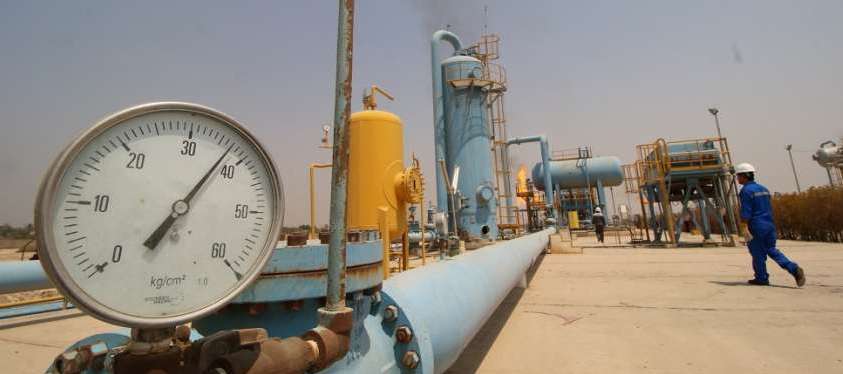
Protests against unemployment, poor government services and corruption that began in Iraq's southern oil hub of Basra have spread to several other cities, including Najaf, Amara, Nasiriya and even Baghdad. At least three have been killed since the protests erupted a week ago. Prime Minister Haidar al-Abadi arrived in Barsa to try to calm the situation July 13, flying straight into the city from the NATO summit in Brussels. But the next day he convened a meeting of Iraq's National Security Council, where the decision was taken to cut Internet access in Basra and mobilize army troops to the city. Units from the elite Counter-Terrorism Service and the Army’s Ninth Division have now arrived in Basra. (Photo: Kurdistan24)

North Africa

Morocco: harsh prison terms for protest leaders

Angry protesters massed in front of the Moroccan parliament building in Rabat after the sentencing of several leaders of the 2016 uprising in the country's marginalized Rif Mountains. Demonstrators chanted "We are all Zefzafi," "Freedom, dignity, justice," and "Long live the Rif." Among 53 sentenced was Nasser Zefzafi, who became the symbol of the al-Hirak al-Shaabi, or "Popular Movement,"which demanded jobs, regional development and a crackdown on corruption. Zefzafi was among four activists who were sentenced to 20 years in prison for "plotting to undermine the security of the state." A march against the sentences was also held in the capital of the Rif region, Nador. Some protesters carried Amazigh (Berber) flags in the demonstrations. (Photo: Arab Reform Initiative)

North Africa

Podcast: Homage to Lounes Matoub

In Episode 12 of the CounterVortex podcast, Bill Weinberg pays homage to the martyred Berber singer and songrwiter Lounes Matoub on the 20th anniversary of his assassination. It remains unclear to this day if Matoub was killed by agents of the Algerian state or militants of the Islamist opposition—as both were equally opposed to the Berber cultural renaissance that he represented. The Berbers, or Imazighen (singular: Amazigh), are the indigenous people of North Africa, whose language and culture have been suppressed to varying degrees by Arab-dominated regimes from Morocco to Libya. The 1980 "Berber Spring" in the Kabylia region of Algeria was key to Matoub's politicization, and his assassination was followed by a second round of "Berber Spring" protests in 2001. This presaged the international Arab Revolution that broke out a decade later—which in North Africa was really also a Berber Revolution. The 2011 ptotests and uprisings resulted in advances for Berber cultural rights and autonomy in Algeria, Morcco and Libya alike—a sign of hope amid the current atmosphere of counter-revolution and reaction throughout the Middle East and North Africa. Listen on SoundCloud, and support our podcast via Patreon. (Image via Le Matin d'Algéria. Lounes Matoub shown accosted by Algeria's ruling generals on one side and the Islamist opposition on the other.)