

Africa
Djibouti

Djibouti: Horn of Africa’s next domino?

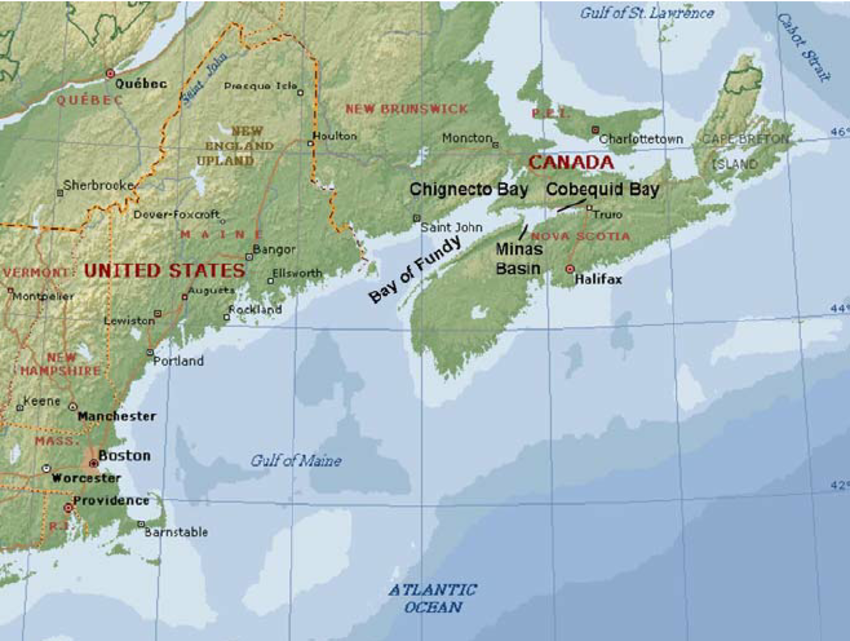
At least three people are dead following an outbreak of inter-communal violence in Djibouti. Fighting erupted in several areas between members of the Afar ethnic group, which straddles Djibouti’s borders with Ethiopia and Eritrea, and the Issa, the country’s other main ethnicity, which is a sub-group of the Somali people and straddles the borders with Ethiopia and Somalia. Issa protesters blocked the rail line and road connecting Djibouti’s port to Ethiopia, a key artery for the landlocked Horn of Africa giant. The violence came in response to a deadly attack on Somali Issa civilians four days earlier within Ethiopia. Fighters from Ethiopia’s Afar region raided the town of Gedamaytu (also known as Gabraiisa) in neighboring Somali region, reportedly killing hundreds of residents. The two regions have long been at odds over three contested kebeles (districts) on their shared border, which are predominately inhabited by Issa but located within the regional boundaries of Afar. (Map: ISS Africa)

Syria
Daraa

Syria: starvation threat seen in Daraa siege

The siege imposed by Syrian government forces on Daraa al-Balad enclave since June could lead to serious humanitarian repercussions if it continues, Euro-Mediterranean Human Rights Monitor said in a statement. Russian-backed regime forces are trying to get remnant rebel fighters in the district of Daraa city to surrender their light weapons, and accede to installation of military checkpoints—demands that violate terms of the 2018 ceasefire in Daraa. The statement urgently called for lifting the siege and allowing entry of humanitarian aid, noting that shipments from the World Food Program have been barred entry. It also stressed that all roads to hospitals in government-controlled Daraa are cut off by regime troops, leaving district residents without access to medical facilities, except for a single insufficient clinic within the encircled area. Food, medicines and other basic materials are running low, threatening 40,000 residents with starvation. (Map: Wikimedia Commons)

Syria
Saydnaya

US imposes sanctions on Syria prisons, rebels

The Office of Foreign Assets Control (OFAC) of the US Treasury Department imposed sanctions on eight prisons run by Syrian President Bashar Assad’s intelligence unit, for human rights abuses against political prisoners and other detainees. Additionally, OFAC added five senior security officials of Assad’s regime who control the detention facilities to the Treasury’s Specially Designated Nationals & Blocked Persons List. According to OFAC, the regime has imprisoned hundreds of thousands of Syrians during the war, of whom at least 14,000 have been tortured to death, with a further 130,000 missing and believed to be under arbitrary detention. OFAC also placed sanctions on Syrian armed rebel group Ahrar al-Sharqiya and two of its leaders for abuses against civilians. (Image: Syria Untold)

Africa
iswap

ISIS franchise takes insurgency to Cameroon

The under-reported conflict in Cameroon’s Far North Region is heating up, as an ISIS franchise has usurped leadership of the local Boko Haram insurgency. Five soldiers and a civilian were killed this week in a raid on an army post near the Nigerian border. The heavily-armed insurgents are believed to be from the Islamic State of West Africa Province (ISWAP). The group has “regained strength following internal restructuring,” according to the Cameroonian defense ministry—a reference to the death in May of Boko Haram leader Abubakar Shekau, and the absorption of his forces by ISWAP. (Photo: ISS Africa)

The Andes
castillo

Peru: populist president prevails amid polarization

Proclaiming that “change is coming,” Pedro Castillo, a left-populist former school teacher, was sworn in as Peru’s new president on the bicentennial of the country’s independence. He pledged to redraft the constitution, raise taxes on mines, and form a “Binational Cabinet” with neighboring left-led Bolivia. But Castillo assumes office amid a profound political crisis and growing polarization—as well as the highest COVID-19 death rate in the world. His far-right opponent Keiko Fujimori, who challenged his victory with baseless claims of voter-fraud, has a formidable bloc in Congress and promises to obstruct his agenda. (Photo: Diario Uno)

Afghanistan
afghanistan

Podcast: Afghanistan and the politics of withdrawal

In Episode 82 of the CounterVortex podcast, Bill Weinberg calls out the Orwellian pronouncements from media and politicians that Biden is “ending the war” in Afghanistan—as the war is actually escalating. This is the same imperial narcissism we heard with the much-hyped US “withdrawal” from Afghanistan in 2014, and the US “withdrawal” from Iraq in 2011. In both cases, the war went on—and actually got worse, with the emergence of ISIS and the genocide of the Yazidis. Weinberg recalls with grim vindication that he similarly called out the glib optimism about a  withdrawal from Iraq in CounterVortex commentaries during the occupation. Meanwhile, Hazara women—who face the threat of genocide if the Taliban re-take power—are arming to resist the Taliban advance. The critical task now is to loan what solidarity and visibility we can to such efforts—not to engage in hubristic crowing about the “end of the war.” Listen on SoundCloud or via Patreon. (Map: Perry-Castañeda Library)

North Africa
Tunisia

Tunisia: president accused of ‘coup’

Tunisian President Kais Saied was accused by opposition parties of launching a “coup” with the help of the country’s military after firing the prime minister and freezing parliament. The move comes after anti-government protesters took over the streets of the capital Tunis, expressing dismay over ongoing economic turmoil and a demonstrably poor response to the COVID-19 pandemic. Recent loan negotiations with the International Monetary Fund aimed at controlling mass inflation further raised the ire of Tunisians; terms require Tunisia to raise taxes, set higher prices on goods, and implement austerity policies reducing public-sector employment and programs. (Image: Pixabay)

Syria
Raqqa

Survivors struggle four years after battle of Raqqa

Children in Raqqa, northeast Syria, are still living among ruins, with limited water, electricity, and access to education, four years after the city was taken from ISIS, according to a new report by Save the Children. Thousands of people have returned to Raqqa since the battle for the city ended in 2017. But levels of rebuilding and rehabilitation of housing remain low, with children living in constant fear of their homes collapsing on top of them. Research estimates that 36% of the city’s buildings remain entirely destroyed. At the peak of the bombing campaign, Raqqa faced 150 air-strikes a day. (Photo: Mahmoud Bali/VOA via Wikimedia)

Iraq
mosul

ISIS regroups amid slow rebuilding in Iraq

A suicide bomb killed at least 30 in Baghdad, exploding in a busy market as people prepared for the Eid al-Adha holiday. The so-called Islamic State claimed responsibility for the blast. Nearly four years after the liberation of Mosul, remnants of the militant organization are regrouping to stage scattered attacks across the country. And Iraq has yet to recover from the fight against ISIS. In a new report from the Norwegian Refugee Council, Mosul residents offer sobering testimony on the challenge of trying to restart their lives despite a failure to rebuild much of the city’s devastated homes, infrastructure, and economy. There are still around 1.2 million Iraqis displaced across the country, including 257,000 in Nineveh province, where Mosul sits. Aid groups warn that these people are being exposed to new risks as camps close, leaving some with nowhere to go. (Photo: Tom Peyre-Costa/NRC via ReliefWeb)

Planet Watch
Greenland

Greenland suspends oil exploration, citing climate crisis

The government of Greenland announced that it will suspend all oil exploration, saying the territory “wants to take co-responsibility for combating the global climate crisis… The future does not lie in oil. The future belongs to renewable energy, and in that respect we have much more to gain.” The US Geological Survey estimates there could be 17.5 billion undiscovered barrels below the territory’s lands and waters. Many had hoped potential reserves could allow Greenland to acheive independence, compensating for the annual subsidy of 3.4 billion kroner ($540 million) the territory receives from Denmark. (Photo: Pixabay)

The Amazon
Amazon Fires

Brazil’s Amazon is now a net carbon source: study

The Amazon has long played a vital role in balancing the global carbon budget, but new evidence suggests the climate scales are tipping in the world’s largest rainforest. Now, according to a study published in Nature, the Brazilian Amazon is emitting more carbon than it captures. Southeastern Amazonia, in particular, switched from being a carbon sink to a carbon source during the study period. Emissions were high in 2010, when the study began, because of a dry El Niño year, and researchers expected to see emissions return to normal afterward. But this never happened. The reason: emissions from forest fires—which have accelerated dramatically under President Jair Bolsonaro. (Photo via Mongabay)

Planet Watch

Podcast: climate change and the global struggle

In Episode 81 of the CounterVortex podcast, Bill Weinberg takes stock of the fast-mounting manifestations of devastating climate destabilization—from Oregon to Siberia, from Germany to Henan. In Angola, traditional pastoralists are joining the ranks of “climate refugees” as their communal lands are stricken by drought. In Iran’s restive and rapidly aridifying Ahwazi region, protests over access to water have turned deadly. These grim developments offer a foreboding of North America’s imminent future. Yet media commentators continue to equivocate, asking whether these events are “linked to” or “caused by” climate change—rather than recognizing that they are climate change. And the opportunity for a crash conversion from fossil fuels that was posed by last year’s pandemic-induced economic paralysis, when already depressed oil prices actually went negative, is now being squandered. Oil prices are again rising, with the return to pre-pandemic dystopian “normality.” Listen on SoundCloud or via Patreon. (Photo of Ahwazi protesters in Iran: Ahwazna)