Syria
Idlib

Syria: regime bombs first responder headquarters

Assad regime forces shelled a White Helmets civil defense center in northwest Syria, killing a rescuer and wounding three others. The destroyed center was in the town of Qastoun in the al-Ghab Plain of western Hama province. Local sources said that Russian-made Krasnopol guided missiles were used, indicating the deliberate targeting of the rescuers. Regime forces have escalated shelling of southern Idlib and western Hama provinces this month, as civilians return to their homes from displaced persons camps near the Turkish border. At least nine people have been killed, a school destroyed, and crops burned. (Photo via EA Worldview)

Iran
Iran

Iran: ‘Death Committee’ veteran becomes president

Iranians voted in a controlled election, virtually guaranteed to deliver an ultra-conservative president after all other serious contenders were barred from the race. The pre-ordained winner is Ebrahim Raisi, the chief justice, who has been under US sanctions since he oversaw repression in putting down the 2019 protest wave. Amnesty International reacted to Raisi’s election by calling for him to be investigated for “the crimes against humanity of murder, enforced disappearance and torture.” Especially at issue is Raisi’s role as a member of the “Death Committee,” a panel of four special jurists that that oversaw the secretive execution of some 3,000 political prisoners in the summer of 1988. (Image: Wikimedia Commons)

Europe
orwell

Podcast: George Orwell’s wartime dilemma

In Episode 76 of the CounterVortex podcast, Bill Weinberg discusses and critiques The Duty to Stand Aside: Nineteen Eighty-Four and the Wartime Quarrel of George Orwell and Alex Comfort by Eric Laursen. Orwell and Comfort were divided on the question of Allied bombardment of Germany in World War II—although they both united to support the free-speech rights of anarchist anti-war dissidents. With fascism and genocide again emerging on the world stage, their quarrell sheds light on the contemporary wars in Syria, Libya and elsewhere—and how progressives and especially anarchists in the West should respond. Listen on SoundCloud or via Patreon. (Photo: The Orwell Archive)

North Africa

Will Biden reverse Trump policy on Western Sahara?

US-led forces are currently carrying out war games in Morocco, the periodic “Afrian Lion” exercises—this year taking place near the disputed region of Western Sahara. Morocco is trumpeting this as a re-affirmation of US recognition of its claim to the territory. The Trump administration last year formally recognized Moroccan sovereignty over Western Sahara in exchange for Moroccan diplomatic recognition of Israel as a part of the so-called Abraham Accords. But Spain, the disputed territory’s former colonial ruler, is opposing Morocco’s current push for international recognition of its claim. Just before the war games opened, Spanish Foreign Minister Arancha González Laya called US Secretary of State Antony Blinken, urging him to reverse Washington’s recognition of Moroccan rule in Western Sahara. (Map: Perry-Castañeda Library)

Africa
Sahel

France announces Sahel drawdown

France is to reduce its forces battling jihadists in the Sahel—a seven-year deployment that has failed to stem the violence, and which has proved increasingly unpopular both in the region and domestically. President Emmanuel Macron said there would be a “profound transformation” of its Operation Barkhane, with France relying more on special forces, air power, and cooperation with allies. France has suffered a recent setback in the Sahel with the death of its close ally, Chadian leader Idriss Déby, and an increasingly complicated relationship with Mali—the focus of Barkhane’s 5,100-strong intervention. Earlier this month, Paris suspended joint military operations with Malian forces after a second coup. Macron has also refused to support moves by some Sahelian countries to open negotiations with jihadists, and has suggested that African partners have not pulled their weight in the counter-insurgency fight—a conflict widely seen as militarily unwinnable. (Map: Wikivoyage)

The Andes
FANB

FARC ‘dissidents’ bring insurgency to Venezuela

So-called “dissident” FARC factions that have refused to accept the Colombian peace accords and taken refuge across the border in Venezuela now appear to be waging a local insurgency against the Nicolás Maduro regime. A group calling itself the Martin Villa 10th Front announced last month that it had captured eight Venezuelan soldiers during a battle in Apure state, near the Colombian border. Venezuela’s National Bolivarian Armed Forces later announced that the soldiers had been freed in a rescue operation. But independent media in Venezuela report that the eight were actually released under terms of a deal negotiated in Cuba. The deal was said to have been brokered with the help of the National Liberation Army (ELN), a second Colombia guerilla group which remains in arms and whose leadership is based in Havana. (Photo of captive soliders being released via FANB)

The Andes
false positives

Colombia: ex-prez apologizes for ‘false positives’

Colombia’s ex-president Juan Manuel Santos, who won a Nobel Peace Prize for bringing an end to the country’s long internal war, publicly apologized for his role in the practice of “false positives“—extrajudicial executions by the armed forces, in which the victims were reported as guerillas slain in combat. The apology came in testimony before Colombia’s Truth Commission, created under the peace process that Santos himself initiated. Santos admitted that most of the “false positives” took place when he served as defense minister under the hardline president Álvaro Uribe, and that he initially turned a blind eye to the practice. (Photo: Contagio Radio)

The Amazon
bloc 58

Peru: indigenous opposition to Chinese gas project

A new coalition of Amazonian indigenous groups and environmentalists has come together in Peru to demand oversight and accountability in the development of a huge new hydrocarbon exploitation bloc in the rainforest. The China National Petroleum Corporation (CNPC) won exploitation rights in 2017 at Bloc 58, in the Upper Urubamba zone of Cuzco region, after explorations revealed some 3.9 trillion cubic feet of natural gas reserves, enough to increase Peru’s total gas reserves by nearly 28%. But Bloc 58 overlaps with the traditional territories of the Asháninka and Machiguenga indigenous peoples. The newly formed Amazon Indigenous Platform for Monitoring Chinese Investment in Peru is demanding that exploitation proceed at Bloc 58 only in compliance with the internationally recognized right to “prior and informed consent” of impacted indigenous peoples. (Photo via Andina)

The Andes
pedro castillo

Peru: Keiko takes page from Trump playbook

One week after Peru’s close and hotly contested presidential run-off election, far-right candidate Keiko Fujimori appears to be taking a tip from the Donald Trump playbook. The official results from the National Office of Electoral Processes (ONPE) give Fujimori 49.8% of the vote, and 50.2% to her left-populist challenger Pedro Castillo. However, the results only become official when they are certified by the National Jury of Elections (JNE)—and Fujimori is calling for some 200,000 votes to be nullified as fraudulent, enough to throw the race in her favor. The JNE initially said it would extend the deadline for filing challenges to votes, which has now passed. However, it quickly reversed this decision in response to a public outcry and accusations by Castillo and his supporters of an attempted “coup d’etat.” (Photo: Diario Uno)

Europe
migrants

UN report blames EU and Libya for migrant deaths

Policy decisions of European Union member states and Libya have caused thousands of deaths along the central Mediterranean migrant route, according to a report from the UN Office of the High Commissioner for Human Rights. At least 2,239 migrants died while crossing the Mediterranean Sea from Libya to Europe last year. In 2021 alone, at least 632 have died along the route. According to the report, the deaths were not a “tragic anomaly,” and could have been prevented. The lack of human rights protection for migrants during their journey is a consequence of the “concrete policy decisions and practices” of Libyan authorities, the EU, and its member states. (Photo: US Navy via Wikimedia Commons)

Planet Watch
colonial pipeline

Podcast: lessons of the Colonial Pipeline disaster

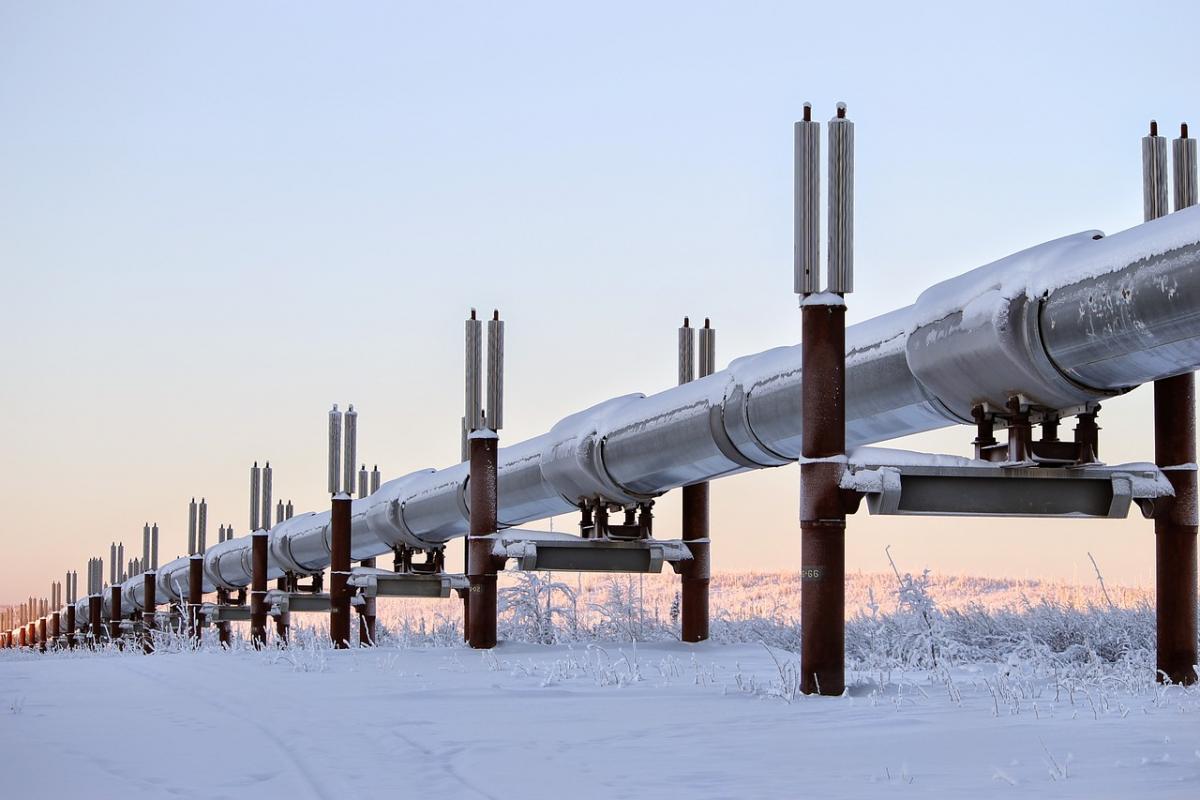
In Episode 75 of the CounterVortex podcast, Bill Weinberg examines distorted reportage on the shutdown of the Colonial Pipeline by Russian hackers. The disaster illustrates the urgent need for a crash conversion from fossil fuels—but also from digital technology. Signs of hope are seen in the cancellation of the Keystone XL pipeline, the recent indigenous-led protests against the Line 3 Pipeline in Minnesota, and the gas bill strike launched by Brooklyn residents to oppose the North Brooklyn Pipeline that would cut through their neighborhoods. Listen on SoundCloud or via Patreon. (Map: US Energy Information Administration)

Planet Watch
lakota

Keystone XL pipeline cancelled —struggle continues

Calgary-based TC Energy Corporation (formerly TransCanada) confirmed that it has terminated the Keystone XL Pipeline Project. Construction on the project was suspended following the revocation of its presidential permit in January. The pipeline, which was to transport tar sands oil from western Canada, has been a critical concern in the fight against climate change. It has been especially opposed by Native American peoples whose lands lie along the project’s path. Dallas Goldtooth  of the Indigenous Environmental Network reacted to the announcement on Twitter: “We took on a multi-billion dollar corporation and we won!!” However, Canadian oil exports to the US are still expected to rise to over 4 billion barrels per day in the next years—a fourfold increase over levels in 2004, when Canada surpassed Saudi Arabia as the top US foreign supplier. (Photo of Lakota protest against Keystone pipeline: Victor Puertas/Deep Roots United Front via Intercontinental Cry)