Iran
baghdad

Baghdad under pressure on militia repression

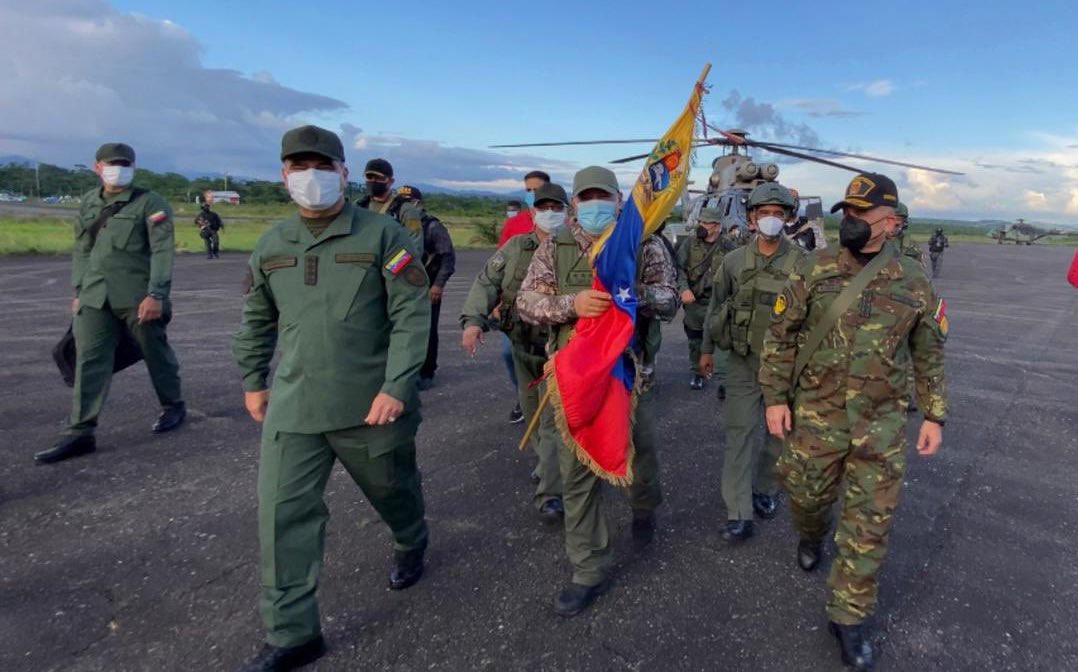
One protester was killed and dozens injured as security forces opened fire on a rally in Baghdad, where thousands had gathered to demand accountability in the murder of Iraqi activists and demonstrators. Video footage on social media showed live fire, tear-gas and street-fighting reminiscent of October 2019, when the nationwide uprising first broke out. Since then, almost 600 protesters have been killed and at least 30 activists slain in targeted killings. Many of these have been carried out by paramilitary militias, which were formed to fight ISIS, but have since been used to repress protests. The US has placed sanctions on militias held responsible for internal repression in Iraq, but one senses the real issue for Washington is Tehran’s role in backing this paramilitary apparatus. (Photo via Twitter)

The Amazon
Madre de Dios

Podcast: indigenous survival and the crisis in Peru

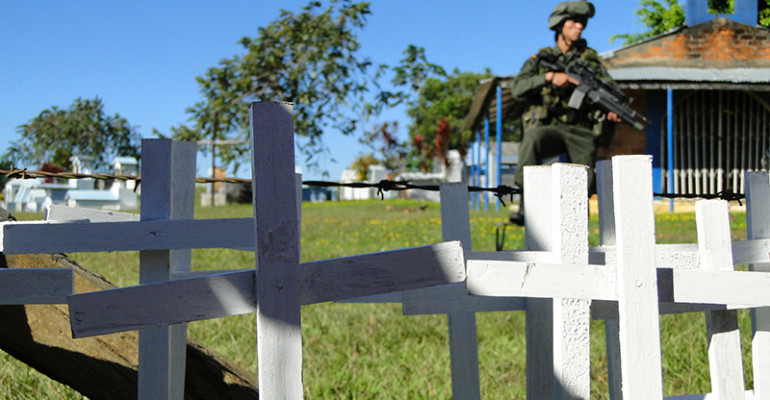
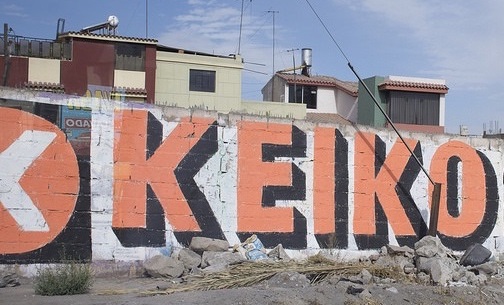
In Episode 73 of the CounterVortex podcast, Bill Weinberg interviews Thomas Moore, anthropologist, advocate for indigenous cultural survival, and author of the newly released book, Madre de Dios: Refugio de Pueblos Originarios. The remote rainforest region of Madre de Dios in Peru’s southern Amazon is a last refuge for isolated indigenous peoples, but is now massively threatened by mining, timber and other resource interests that operate in a semi-legal gray zone in a nexus with criminal networks. Peru has made some progress in complying with international norms on protection of isolated peoples, but these advances stand to be dramatically reversed if far-right candidate Keiko Fujimori comes to power in the pending run-off election. Listen on SoundCloud or via Patreon. (Image: Amarakaeri)

Europe
Lesvos

Greece urged to end pushback of asylum seekers

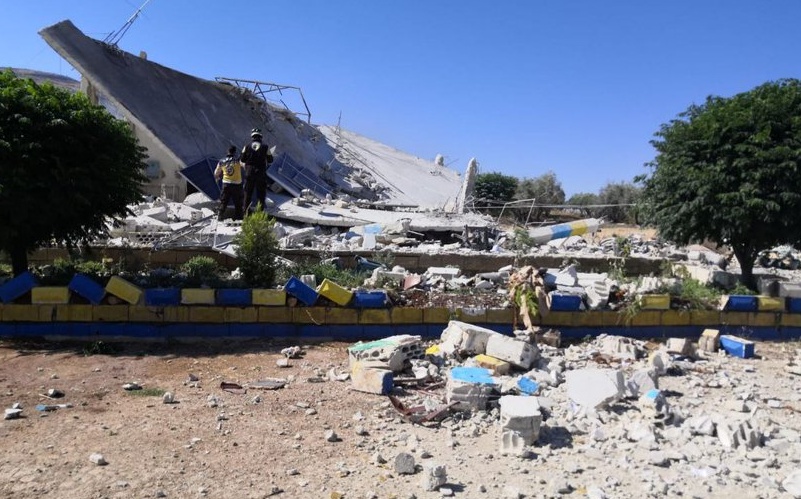
The Council of Europe Commissioner for Human Rights urged the Greek government to end its practice of illegal “pushbacks” of asylum seekers at both the land and sea borders with Turkey. Commissioner Dunja Mijatovic said she had “received a number of consistent and credible allegations concerning acts by the Greek Coast Guard to prevent boats carrying migrants reaching the Greek islands.” Following reports of verbal and physical abuse inflicted on migrants being pushed back to Turkey, she indicated that acts of the Greek state may be in breach of Article 3 of the European Convention on Human Rights, on prohibition of torture. (Photo: WikiMedia Commons)

North Africa
algeirs police

Algeria: police disperse Friday Hirak protests

Security forces in Algeria moved to put down weekly protests in the capital and cities across the country, detaining hundreds of would-be demonstrators. Protests had been held every Friday since the Hirak pro-democracy movement emerged in February 2019. In early May, just as the protests were starting to re-mobilize after a period of abeyance due to the pandemic, the Interior Ministry announced new rules barring unauthorized demonstrations. This past Friday marked a second consecutive week that police flooded the streets of the capital to head off the protests. Said one activist on the scene: “For the 118th Friday [since the first Hirak protests], ‘Algiers the White’ has turned police blue.” (Photo via Twitter)

North Africa
tarhouna_collage

Libya: UK slaps sanctions on Haftar-aligned militia

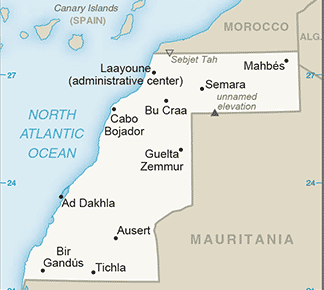
The UK government imposed sanctions on Libya’s al-Kaniyat militia and its leaders for violations of international law. The militia is reportedly responsible for 27 mass gravescontaining the remains of hundreds of residents reported missing in the Libyan town of Tarhuna, on the southern outskirts of Tripoli. The group, aligned with the forces of eastern warlord Khalifa Haftar, is additionally held responsible for atrocities such as torture, murder, arbitrary detention, and enforced disappearance. Of the five permanent members of the UN Security Council, the UK and the US are the two that have imposed sanctions on the militia. A Security Council resolution that would have placed international sanctions on the militia was blocked by Russia last November. (Map: CIA)

Palestine
gaza

Podcast: Gaza and genocide

In Episode 72 of the CounterVortex podcast, Bill Weinberg repudiates the propaganda line that “Israel has a right to defend itself,” exposing this as justification of war crimes, and obfuscation of the reality of apartheid both sides of the Green Line. He also examines the United Nations definition of “genocide” to ask whether Israel’s war on Gaza may now be crossing the “genocidal threshold” that Israeli society has long been approaching, in both rhetoric and action that dehumanize the Palestinians. Listen on SoundCloud or via Patreon. (Photo: Ma’an News Agency)

Palestine
Gaza

Palestine: ICC prosecutor warns of ‘war crimes’

Individuals involved in the new outbreak of Israeli-Palestinian fighting may be targeted by an International Criminal Court investigation now underway into possible war crimes in earlier eruptions of the conflict, top prosecutor Fatou Bensouda said in an interview with Reuters. Bensouda said she would press ahead with her inquiry even without the cooperation of Israel, which rejects the ICC’s jurisdiction. “These are events that we are looking at very seriously,” Bensouda stated. “We are monitoring very closely and I remind that an investigation has opened…” She also warned in a tweet of the “possible commission of crimes under the Rome Statue.” (Photo: Maan News)

Southeast Asia
Khet Thi

Burma: poet killed under military interrogation

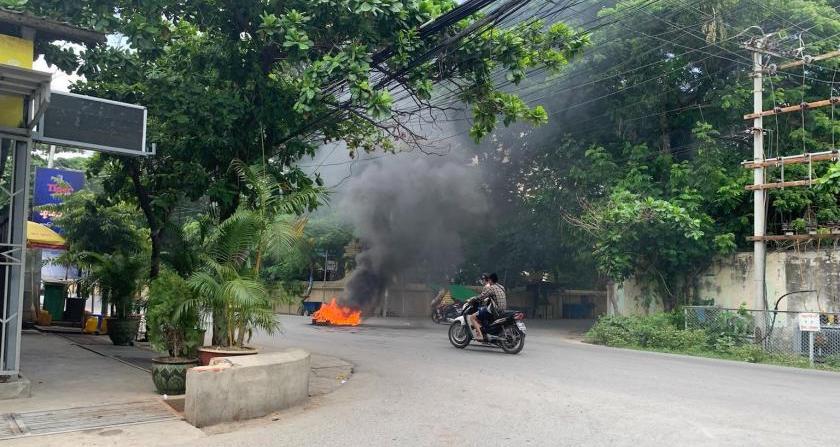
Ko Zaw Tun, a poet who wrote under the pen-name Khet Thi, was tortured to death in military custody, according to family members after his bruised and mutilated body was returned to them. Khet Thi was arrested at his home in Shwebo, Sagaing region, along with his wife who was later released. He was an outspoken opponent of the February coup d’état, in which the military removed the civilian government of Aung San Suu Kyi. A line from one of his poems has been taken up as a slogan by the pro-democracy movement: “They shot us in the head; They don’t know the revolution dwells in our hearts.” (Photo via Myanmar Now)

New York City
Bill Weinberg

Podcast: Bill Weinberg’s oral history

In Episode 71 of the CounterVortex podcast, host Bill Weinberg is himself interviewed by Kimberly Springer, curator of the Oral History Archives at Columbia University. Weinberg traces his life trajectory, from his early radicalization as a teenage anarchist, through the Tompkins Square uprising on the Lower East Side in the 1980s, his 20 years as co-producer of the Moorish Orthodox Radio Crusade on WBAI, his purge from the airwaves for his political dissent, and finally his contemporary work as an organic historian with the Museum of Reclaimed Urban Space. Listen on SoundCloud or via Patreon. (Photo: MoRUS)

Africa
tigray protest

Podcast: solidarity with Tigray

In Episode 70 of the CounterVortex podcast, Bill Weinberg interviews Daniel Woldu, US representative of Omna Tigray, an international network calling for action to halt the genocide in the Tigray region of Ethiopia. Woldu discusses the abrogation of Tigray’s self-rule under the Ethiopian regime of Abiy Ahmed, atrocities that have taken place under cover of an information blockade, the ongoing plunder and weaponization of humanitarian aid, why Eritrea has intervened on the side of the Ethiopian central government, and the urgent need for accountability and an independent investigation into war crimes and genocide. Listen on SoundCloud or via Patreon. (Photo: Omna Tigray via Twitter)

Mexico
Squadron 421

Zapatistas launch symbolic ‘invasion’ of Spain

Seven indigenous Maya members of Mexico’s Zapatista movement set sail from Isla Mujeres, off the coast of the Yucatán Peninsula, on a trans-Atlantic voyage meant to symbolically reverse the Spanish conquest of Mexico 500 years ago. Sailing in a wooden vessel they built themselves, christened La Montaña, the delegation hopes to reach Madrid by Aug. 13, anniversary of the 1521 fall of Tenochtitlán, Mexico’s ancient capital, to the conquistador Hernan Cortés. The delegation intends to land at Vigo, on Spain’s northern coast, and then continue to Madrid, beginning a tour of some 20 European countries. (Photo: Pie Página)

Inner Asia
kyrgyzstan

Kyrgyz-Tajik border clash over control of water

The armed forces of Kyrgyzstan and Tajikistan clashed at a disputed section of their border, leaving 30 dead and thousands displaced before a ceasefire was declared. The fighting broke out near the strategic Golovnoi water pumping facility, in the Tajik-controlled exclave of Vorukh. Kyrgyz protesters gathered on their side of the de facto border after Tajik authorities installed surveillance cameras at the facility. The two sides began hurling rocks across the line before military troops intervened. The Golovnoi facility pumps water from the Isfara River, a tributary of the Syr Darya, to irrigate agriculture in the area. It is in the Fergana Valley, a small fertile pocket in the arid Central Asia region. Soviet authorities drew the boundaries so that Kyrgyzstan, Tajikistan and Uzbekistan each got a portion of it. However, this meant intricate, twisting borders, and territorial disputes have arisen. Tajik authorities accuse Kyrgyzstan of seeking to seize the Vorukh exclave. (Map: Perry-Castañeda Library)