

Planet Watch

UN calls for ‘global ceasefire’ in response to COVID-19

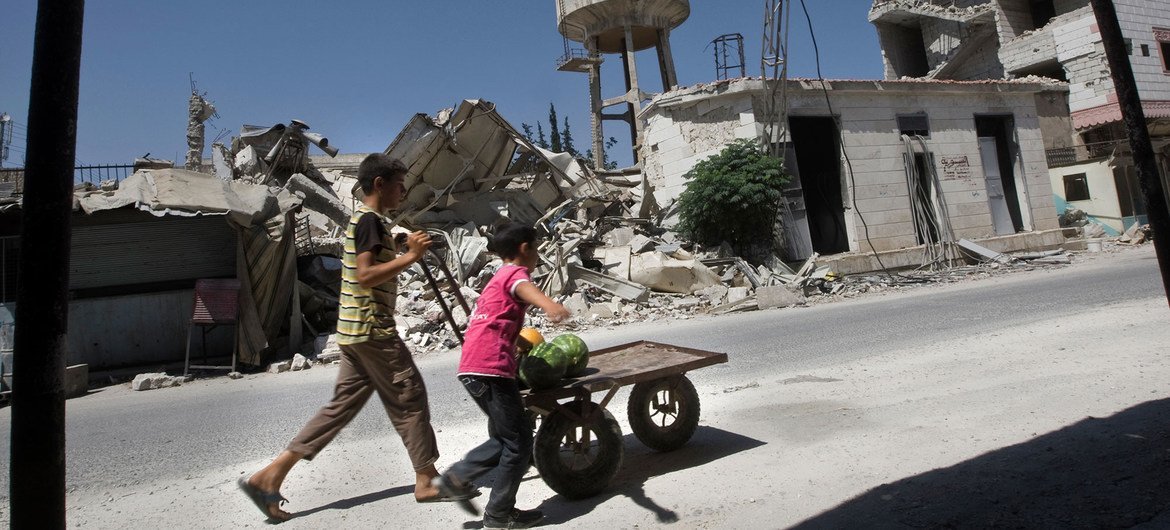
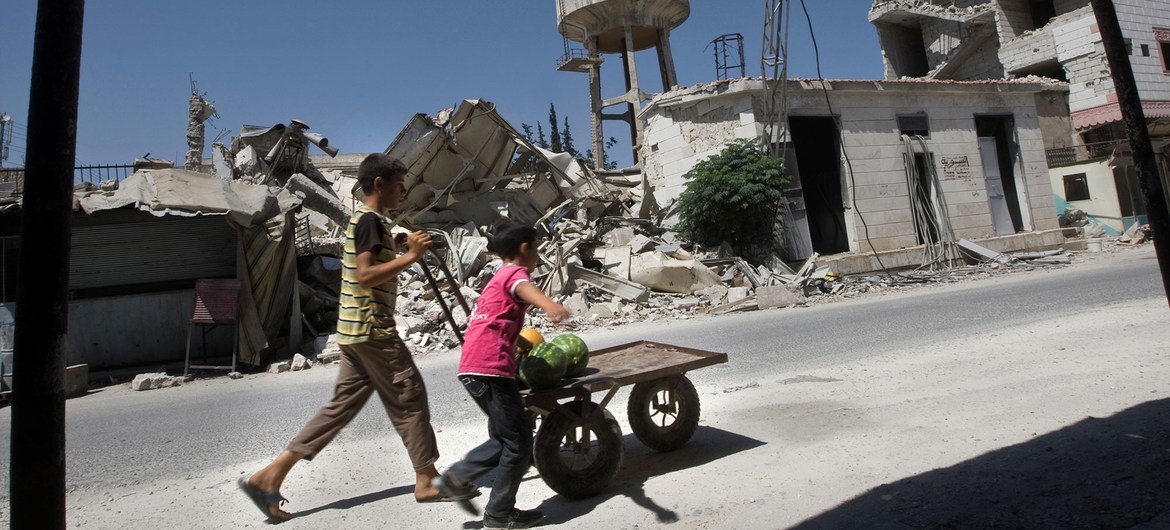
UN Secretary-General António Guterres is calling for warring parties across the world to lay down arms in support of the battle against COVID-19. “The fury of the virus illustrates the folly of war,” he said. “That is why today, I am calling for an immediate global ceasefire in all corners of the world. It is time to put armed conflict on lockdown and focus together on the true fight of our lives… Silence the guns, stop the artillery, end the air-strikes. It is crucial to help create corridors for life-saving aid, to bring hope to places among the most vulnerable to COVID-19.” (Photo of Aleppo ruins from UNHCR)

Planet Watch
refinery

Will COVID-19 mean oil industry bailout?

Already depressed oil prices are now plummeting in response to COVID-19 pandemic. Global oil consumption is said to be in “free-fall,” now predicted to lead to the largest “annual contraction in history.” Canada’s federal government is preparing a bailout package for the oil and gas sector, with a possible value of $15 billion. Among the proposals is a share buyout along the lines of the US Troubled Asset Relief Program (TARP) for banks and automotive companies during the 2008 financial crisis. (Photo: kris krüg)

Greater Middle East

Egyptian revolution rebooted

Anti-government protests broke out across Egypt, with thousands joining demonstrations calling for the ouster of President Abdel Fattah el-Sisi—a rare show of defiance since he established his dictatorship four years ago. Demonstrators filled Cairo’s Tahrir Square, center of the 2011 uprising that toppled longtime autocrat Hosni Mubarak. Protesters also gathered in Alexandria, Suez and Gharbiya. Videos posted on social media showed demonstrators chanting “rise up, fear not, Sisi must go” and, reviving the slogan of the 2011 Arab Revolution, “the people demand the downfall of the regime.” Hundreds of protesters were finally dispersed from Tahrir Square by the riot police. (Photo via Twitter)

Iran

Oil shock, wider war after Saudi refinery attack?

With some some 5% of the daily global supply wiped out by the drone attack on Saudi facilities, a new oil shock now appears imminent—putting paid to the conventional wisdom that such spikes are a thing of the past due to increased US domestic production. The Persian Gulf reserves remain determinant in global political power. How realistic is the fear of a new shock—or Western military confrontation with Iran? (Map: myket)

Greater Middle East
yemen

Yemen: now a three-way war —or four?

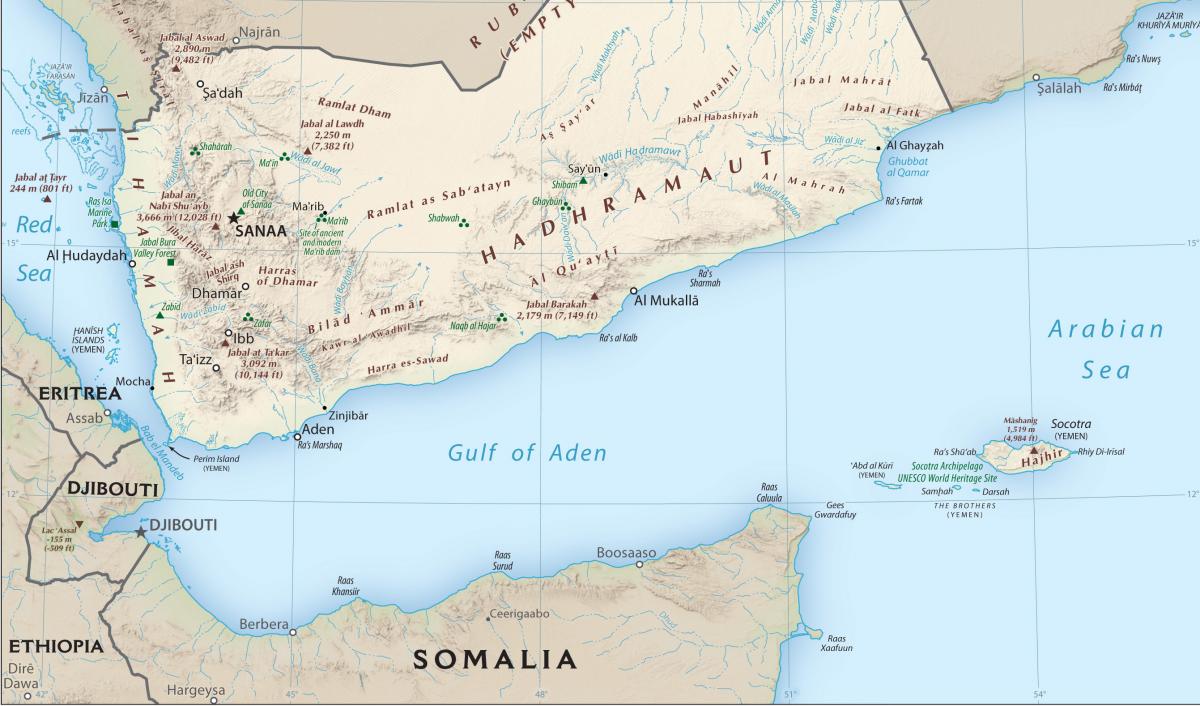
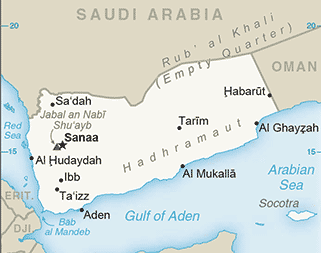
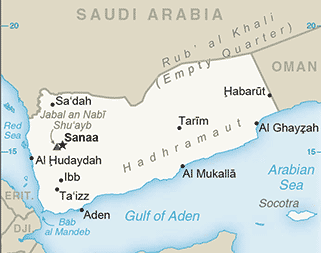
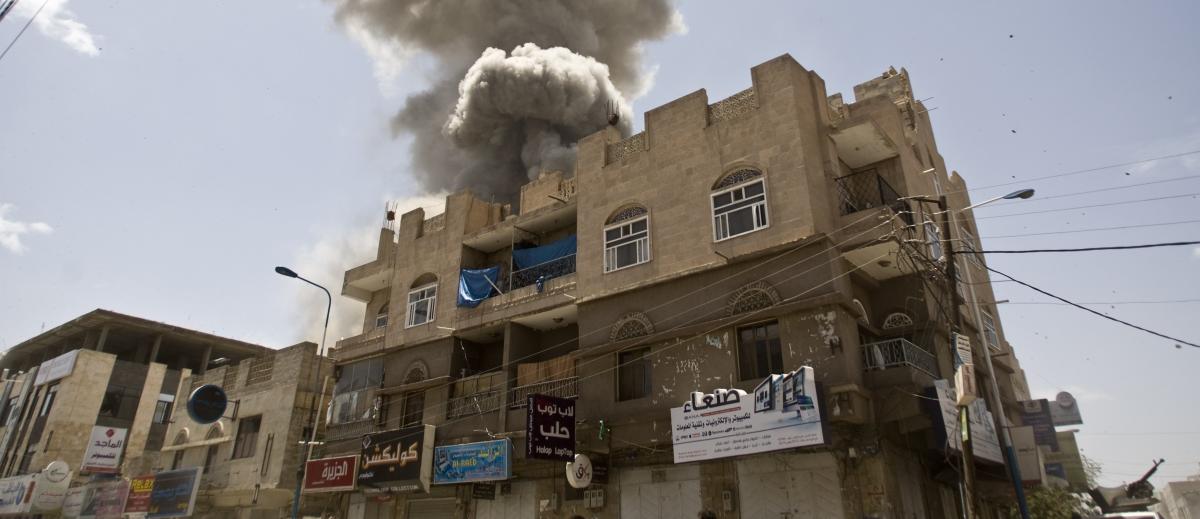
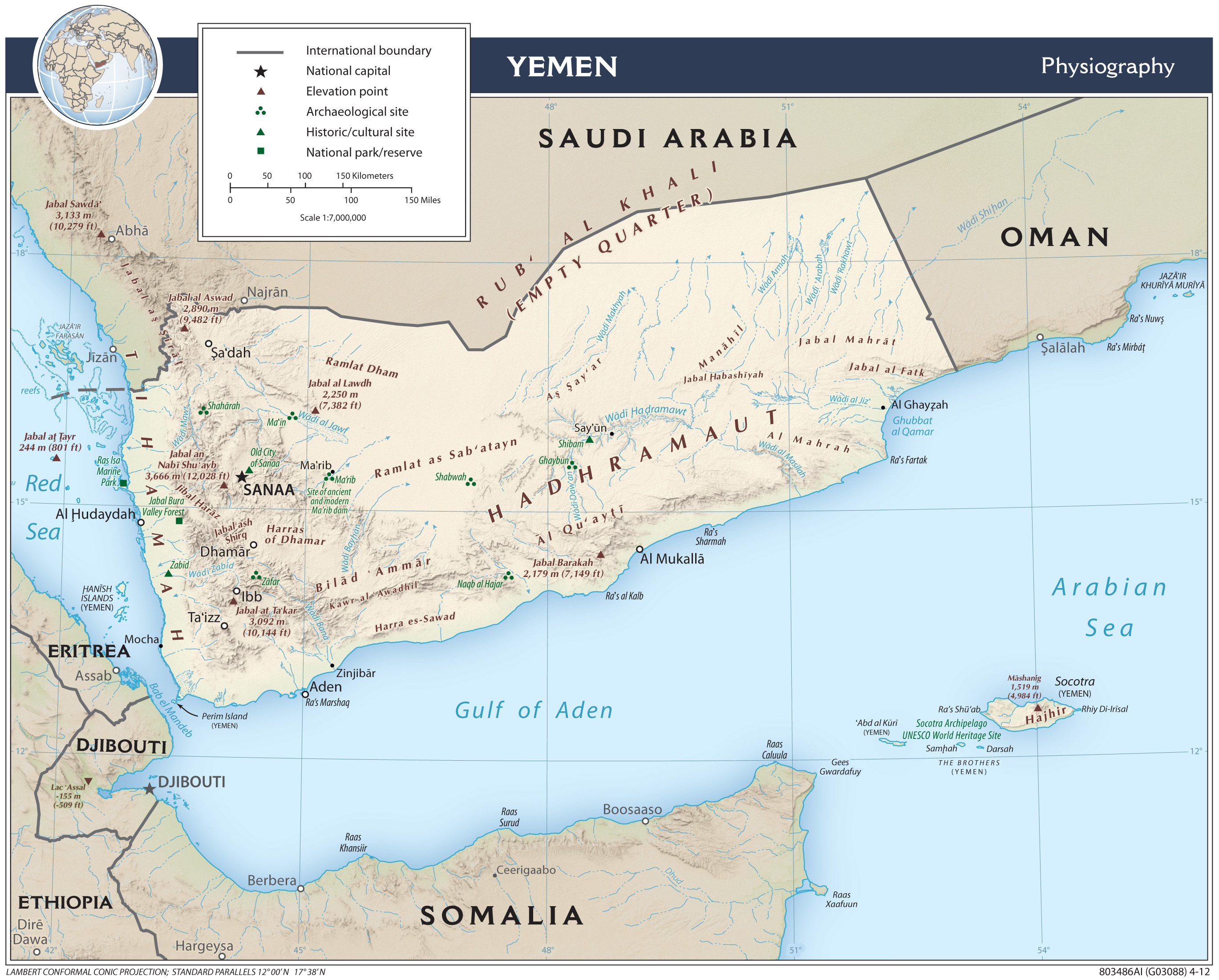
Over the past weeks, the two biggest members of the international coalition supporting the official government of Yemen against the Houthi rebels have fallen out, with Saudi Arabia continuing to back President Abd-Rabbu Mansour Hadi and the United Arab Emirates switching its support to southern separatists. UAE-backed forces of the Southern Transitional Council (STC) seized control of the port city of Aden after days of fighting with Saudi-backed forces of the official government. Hadi’s government had been based in Aden since Iran-backed Houthi rebels sezied the capital Sanaa in 2014. Aden had been the capital of South Yemen before it united with North Yemen in 1990. In addition to Hadi’s government, the STC and the Houthis, militants of al-Qaeda in the Arabian Peninsula (AQAP) continue to wage an insurgency in the south. (Map via  Perry-Castañeda Library)

Inner Asia
Uighurs

Uighurs as pawns in the Great Game

In a perverse spectacle, the Trump administration, which is establishing its own incipient concentration camp system for undocumented immigrants, makes a great show of feigning concern with the mass detention of the Uighurs in China’s “re-education camps.” Secretary of State Mike Pompeo called China’s treatment of the Uighurs the “stain of the century,” and accused Beijing of pressuring countries not to attend a US-hosted conference on religious freedom then opening in Washington. At the conference, Donald Trump actually met at the Oval Office with Jewher Ilham, daughter of the imprisoned Uighur scholar Ilham Tothi. It is hard to fault the Ughurs for being heartened by this international attention, but it is clear that they are being exploited for propaganda purposes. (Photo: Mvslim.com)

Iran

Iran war fever: real or charade?

Trump retreats from military action against Iran after a US surveillance drone is shot down in the Strait of Hormuz. Was the man who destroyed Raqqa and Mosul suddenly concerned with a possible 150 human casualties, as he claimed in his tweet explaining the balk? Or do Washington and Tehran have too much invested in pursuing their common wars against ISIS and other Sunni militants in Syria and Iraq to want the encumbrance of war with each other? (Photo of Global Hawk drone via Wikipedia)

Africa

Russia blocks UN statement against Sudan massacre

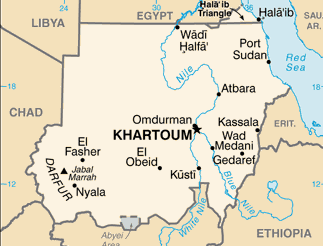
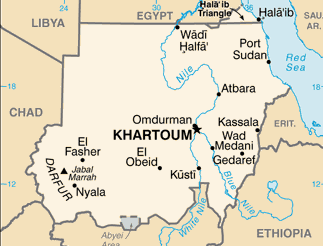
Russia, joined by China, blocked a bid at the UN Security Council to condemn the killing of civilians in Sudan and to issue a pressing call for an immediate halt to the violence. According to the latest update by the Central Committee of Sudan Doctors, over 100 people were killed by militiamen of the Rapid Support Forces who stormed the sit-in site in Khartoum and opened fire on the protesters. (Photo: Radio Tamazuj)

Iran

Orwellian ironies of US Persian Gulf war moves

Amid alarmingly sketchy accounts of Iranian attacks on Saudi oil tankers in the Strait of Hormuz, Trump has dispacthed the USS Abraham Lincoln Carrier Strike Group to the Persian Gulf. An oil pipeline that runs across Saudi Arabia was also hit by drones, according to the kingdom’s energy ministry. Meanwhile, Iran-backed war crimes and “sectarian cleansing” in Syria and Iraq are safely invisible to the outside world. Well, oil matters; people do not. We already knew that. But adding to the Orwellian nature of it all—the US and Iran are on the same side in Syria and Iraq. De facto in the former (where the US has tilted to Assad, rhetoric notwithstanding), de jure in the latter (where Washington and Tehran alike openly back the Baghdad regime). Let’s hope that Trump’s mutuality of interest with the ayatollahs (however sinister) will compel both sides to retreat from the brink before they blunder into total disaster. As always, US war moves put the civil opposition in Iran in a more difficult position, making it easier for the regime to paint them as pawns of Washington. Any anti-war position must be clear on solidarity with the people of Iran, including in their democracy struggle—emphatically not with the regime. (Photo via Stars & Stripes)

Greater Middle East

Yemen war death toll surpasses 70,000

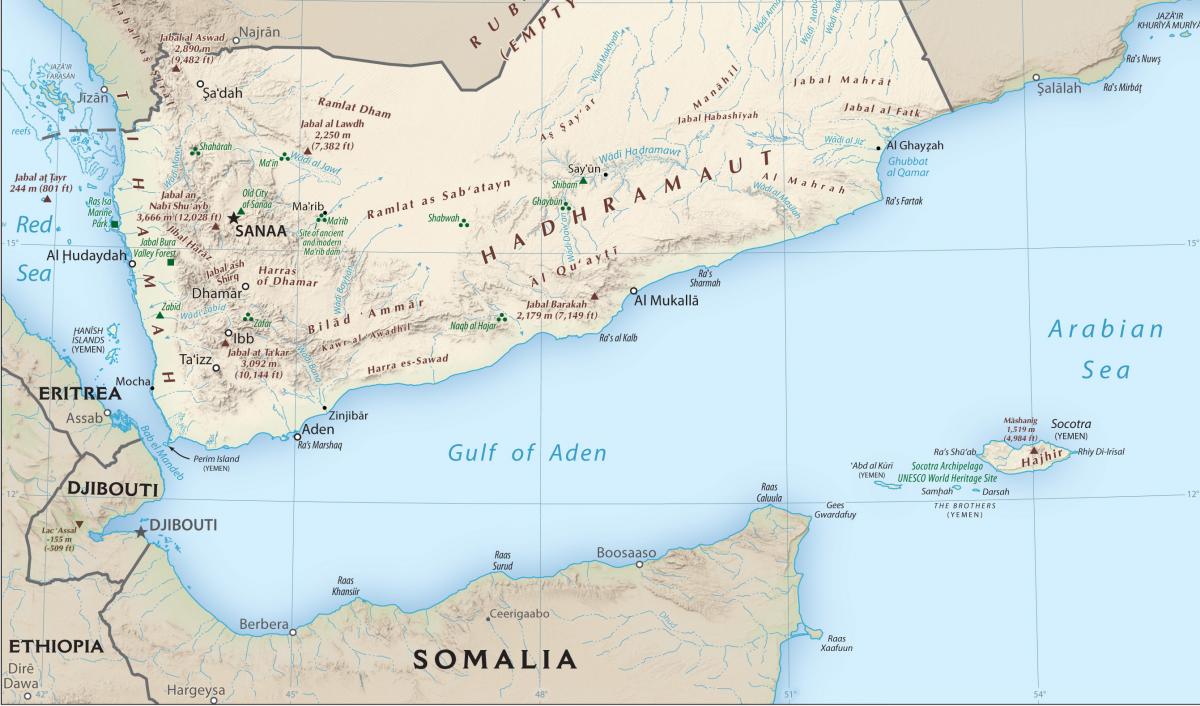
More than 10,000 people have been reported killed in Yemen over the last five months, bringing the war’s total death toll to over 70,000 since 2016, according to the Armed Conflict Location & Event Data Project (ACLED). While overall reported fatalities have trended downward this year amid a UN-backed peace process, fighting continues across the country and has even intensified in some areas, including the governorates of Taiz and Hajjah. The Saudi-led coalition is responsible for the highest number of reported civilian fatalities from direct targeting. (Photo: UNHCR via  New Humanitarian)

Iran

Saudi nuke deal: Mike Flynn’s revenge?

Revelations of Trump administration efforts to transfer sensitive nuclear material to Saudi Arabia bring into focus the grim implications of the pull-out from the Iran nuclear deal. Iranian Foreign Minister Mohammad Javad Zarif takes the opportunity to tweet about "US hypocrisy," while the Jerusalem Center for Public Affairs, an Israeli security think-tank, gleefully quotes a recent comment by hardline Ayatollah Ahmad Khatami that Tehran possess the "formula" to build a nuclear bomb. The outrage was revealed when the House of Representatives Committee on Oversight issued a report, after receiving whistleblower complaints of "efforts inside the White House to rush the transfer of highly sensitive U.S. nuclear technology to Saudi Arabia in potential violation of the Atomic Energy Act (AEA) and without review by Congress as required by law—efforts that may be ongoing to this day." The report reveals the key figure pushing for the transfers as Trump's hard-right ex-National Security Advisor Mike Flynn, who now awaits sentencing on charges of lying to the FBI. (Photo: WikiMedia via Jurist)

Europe

The Yellow Vests and the carbon wars

The Yellow Vest movement in France scored a victory, as President Emmanuel Macron agreed to suspend a controversial fuel tax after weeks of increasingly violent protests. This may be concretely a win for the working class, but the fact that Macron imposed the tax in the name of reducing carbon emissions has provided fodder for anti-environmental content to the movement. Exploiting this moment, Donald Trump blamed the uprising on the Paris climate accord, tweeting: “The Paris Agreement isn’t working out so well for Paris. Protests and riots all over France. People do not want to pay large sums of money, much to third world countries (that are questionably run), in order to maybe protect the environment. Chanting ‘We Want Trump!’ Love France.” (Photo via CrimethInc)