

Greater Middle East
Yemen

Ceasefire confusion as COVID-19 arrives in Yemen

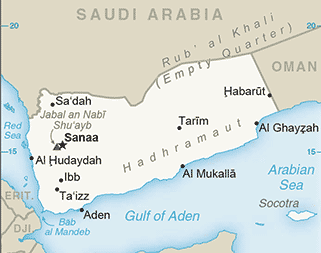
Yemeni government officials reported the country’s first case of COVID-19, shortly after the Saudi Arabia-led coalition announced that it would be observing a two-week unilateral ceasefire, in part to help confront the pandemic. The move was welcomed by the UN, and the office of Special Envoy for Yemen Martin Griffiths said he was working with the warring parties on a “comprehensive initiative” to end the five-year war. But a Houthi rebel spokesperson said coalition air-strikes have continued after the truce’s onset, and dismissed the initiative as a “political and media manoeuvre.” The past weeks have seen an increase in violence, including Saudi air-strikes on the Houthi-controlled capital city of Sana’a, and the shelling of a prison in the province of Taiz that killed at least five women and one child. (Map: Perry-Castañeda Library)

Oceania
cyclone-harold

Pacific megastorm complicates COVID-19 response

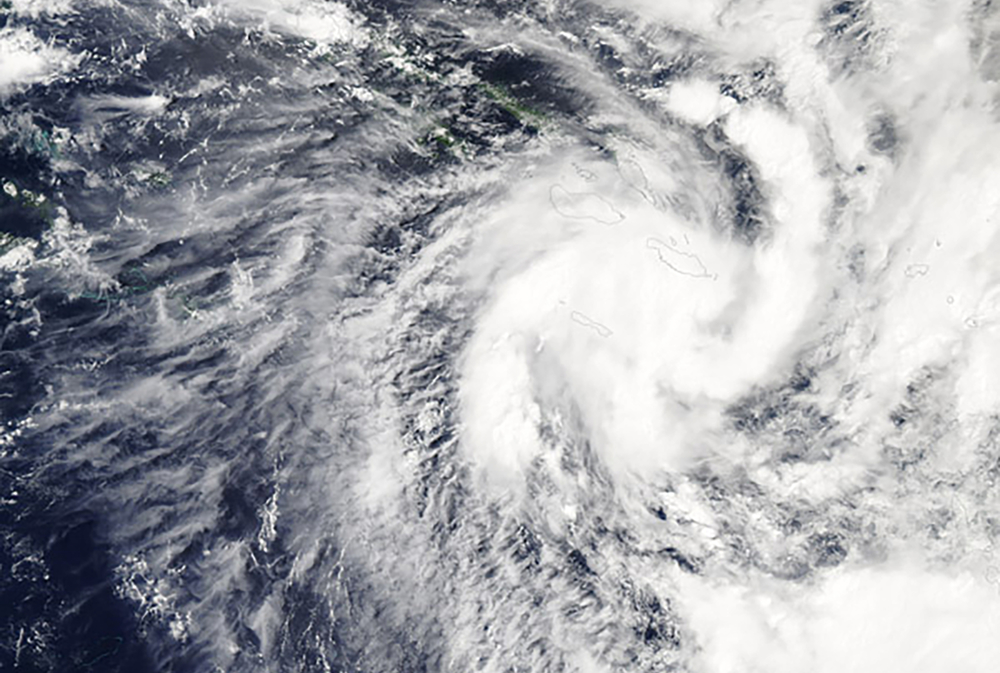
A powerful storm that ripped across four Pacific Island nations raises an uncomfortable question for humanitarians on lockdown: how do you respond to a disaster during a pandemic? Cyclone Harold was the first Category-5 storm to make landfall in the Pacific since the World Health Organization declared the coronavirus a pandemic in March. Vanuatu, Tonga and the Solomon Islands saw extensive damage, while some 6,000 people were evacuated in Fiji. COVID-19 has forced the global aid sector to rethink how it responds to disasters when faced with flight cancellations and closed borders. (Photo: NASA via The New Humanitarian)

Planet Watch
Ghana soldiers

Growing police-state measures in face of COVID-19

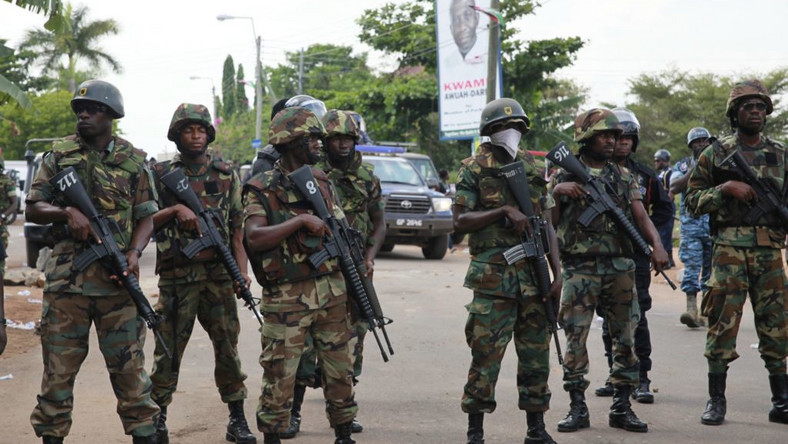
As nations across the globe remain under lockdown, more sweeping powers are being assumed by governments in the name of containing the COVID-19 pandemic. Facing demands for relief from poor barrios running out of resources under his lockdown orders, Philippine President Rodrigo Duterte threatened to shoot protesters in the streets. Police have opened fire on lockdown violators in Nigeria, Ghana and Peru. In Tunisia, remote-controlled wheeled robots have been deployed to accost lockdown violators. States of emergency, including broad powers to restrict movements and control the media, have been declared from the Philippines to Serbia. Amnesty International warns that the restrictive measures could become a “new normal.” (Photo: Pulse, Ghana)

East Asia
Wang_Quanzhang

China: freed dissident placed in distant ‘quarantine’

Prominent Chinese human rights lawyer Wang Quanzhang, imprisoned for four and a half years for “subversion,” was released—but immediately placed under “quarantine,” barred from reuniting with his wife and son in Beijing. His wife, Li Wenzu, fears that authorities are using the COVID-19 pandemic as an excuse to hold him under de facto house arrest indefinitely. She said that upon his release, authorities sent Wang to his home town in Shandong province, some 400 kilometers south of Beijing, for quarantine. “They used the pretext of the epidemic as an excuse to quarantine him for 14 days when he should have been able to return to his home in Beijing according to the relevant legal guidelines,” Li said. “I am really worried they plan on putting him under long-term house arrest and will prevent us from being reunited as a family.”  (Photo: Amnesty International)

The Andes
riberalta-marcha

Protesters demand food across Bolivia

Ten days into a national “quarantine” declared in Bolivia, protesters are taking to the streets to demand food in working-class districts of cities across the country—in defiance of lockdown orders. Residents are calling for either flexibility in the lockdown, which has paralyzed the economy, or food distribution in their barrios. The interim government of Jeanine Áñez has pledged one-time payments of $60 for elders, the disabled, pregnant women and others with special needs. Her supporters on social media are portraying the protests as fomented by the ousted Movement Toward Socialism (MAS). (Photo via Los Tiempos, Cochabamba)

North America
Mashpee Wampanoag

Mashpee Wampanoag nation ‘disestablished’

The chairman of the Mashpee Wampanoag Tribe announced that the US Secretary of the Interior has issued an order disestablishing its reservation on Massachusetts’ Cape Cod and taking its land out of federal trust. The move stems from a legal challenge brought by nearby residents to the tribe’s plan to establish a casino on newly acquired reservation lands. A district judge ruled in 2016 that the addition of these lands to the reservation violated a Supreme Court decision limiting new tribal land acquisitions. The Interior Department has now gone beyond that ruling by applying the principle to the tribe’s entire reservation. The Mashpee Wampanoag have filed a court motion seeking an emergency order to delay removal of its land from trust pending judicial review. (Image: Mashpee Wampanoag Tribe)

The Amazon
uncontacted

COVID-19 threatens Amazonian peoples

As COVID-19 spreads around the globe, with more than 200 deaths already reported in Brazil, an evangelical Christian organization has purchased a helicopter with plans to contact and convert isolated indigenous groups in the remote Western Amazon. Ethnos360, formerly known as the New Tribes Mission, is notorious for past attempts to contact and convert isolated peoples, having spread disease among the Zo’é living in northern Pará state. Once contacted in the 1980s, the Zo’é, lacking resistance, began dying from malaria and influenza, losing over a third of their population. Ethnos360 is planning its conversion mission despite the fact that FUNAI, Brazil’s indigenous affairs agency, has a longstanding policy against contact with isolated groups. The so-called “missionary aviation” contact plan may also violate Brazil’s 1988 constitution and international treaties. (Photo: “Uncontacted” tribe in Acre state photographed from FUNAI helicopter in 2011. Via Mongabay.)

Planet Watch
#QuedeteEnCasa

Worldwide police-state measures in face of COVID-19

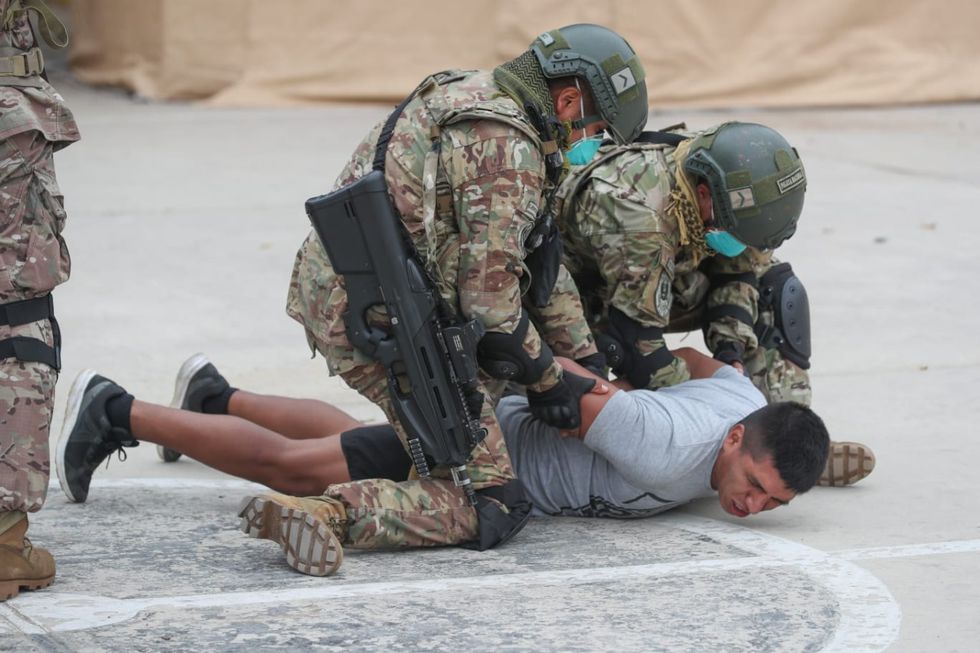
With whole nations under lockdown, sweeping powers are being assumed by governments across the world in the name of containing the COVID-19 pandemic. Hungary’s parliament voted to allow Prime Minister Viktor Orbán to rule by decree. The Russian parliament has approved an “anti-virus” package that includes up to seven years imprisonment for serious violations of quarantine rules. Israel has joined South Korea in authorizing use of personal cellphone data to track the virus. Chilean President Sebastian Piñera has declared a “state of catastrophe,” sending the military to public squares recently occupied by protesters. Military patrols are also enforcing the lockdown in Peru, Italy, Romania and South Africa. “We could have a parallel epidemic of authoritarian and repressive measures following close on the heels of a health epidemic,” said Fionnuala Ni Aolain, UN Special Rapporteur on counterterrorism and human rights. (Photo: Peruvian army demonstration video, via YouTube)

The Andes
Modelo prison riot

COVID-19 sparks prison massacre in Colombia

Inmates’ fears that prison authorities are not doing enough to prevent COVID-19 outbreaks inside Colombia’s notoriously overcrowded and unhygienic prisons exploded into violence, with uprisings reported at facilities across the country. The Justice Ministry acknowledged “revolts at different penitentiary centers in the country,” including the prisons in Ibague, Jamundi and Combita, two prisons in Medellín and another two in the capital Bogotá. Justice Minister Margarita Cabello said 23 had been killed in suppressing a “massive and criminal escape attempt” at Bogotá’s La Modelo prison, one of the country’s largest and most overpopulated. Local residents reported hearing gunfire and explosions at the facility. (Photo: Colombia Reports)

The Andes
cartel de los soles

Venezuela: does the ‘Cartel of the Suns’ exist?

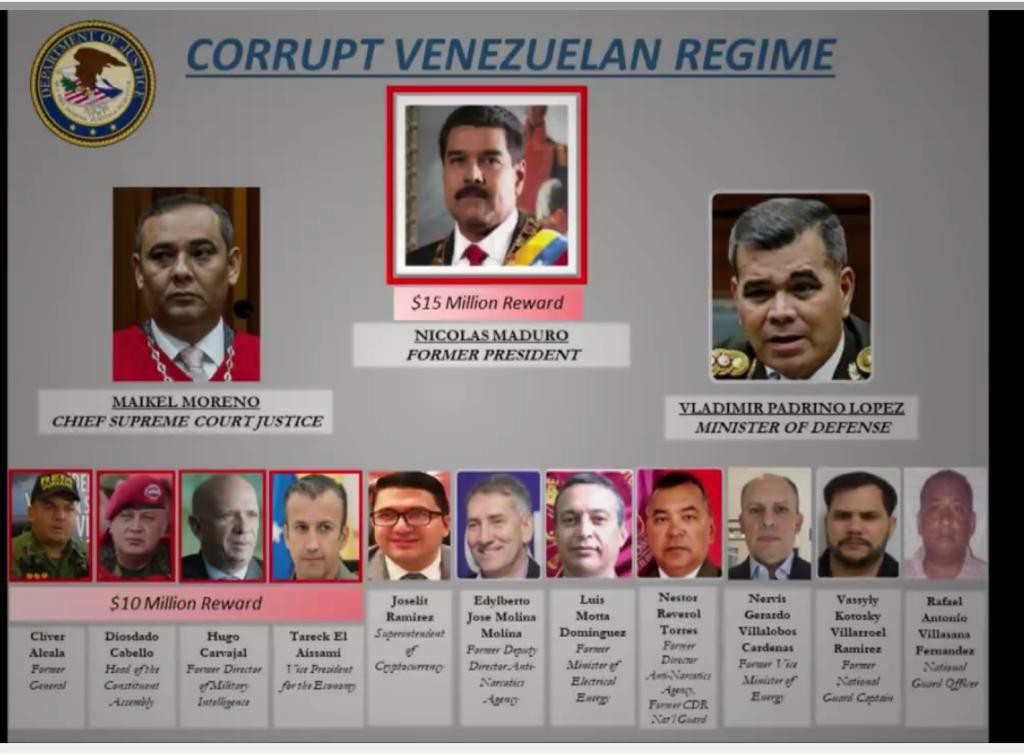
In a rare move, the US Department of Justice issued an indictment against Venezuelan President Nicolás Maduro, charging him and 14 officials with narco-terrorism, corruption, drug trafficking and other crimes. The DoJ alleges that Maduro conspired with Colombia’s FARC guerrilla army prior to becoming the president, and continued to do after assuming power. The indictment charges that this nexus has congealed under the name “Cartel of the Suns,” and that Maduro continues to collude with dissident factions of the FARC that remain in arms despite the Colombian peace accords. Attorney General William Barr said the aim of the conspiracy is “to flood the United States with cocaine.” (Image: DoJ)

Syria
Syria prisoners

Demand urgent action to protect Syrian detainees

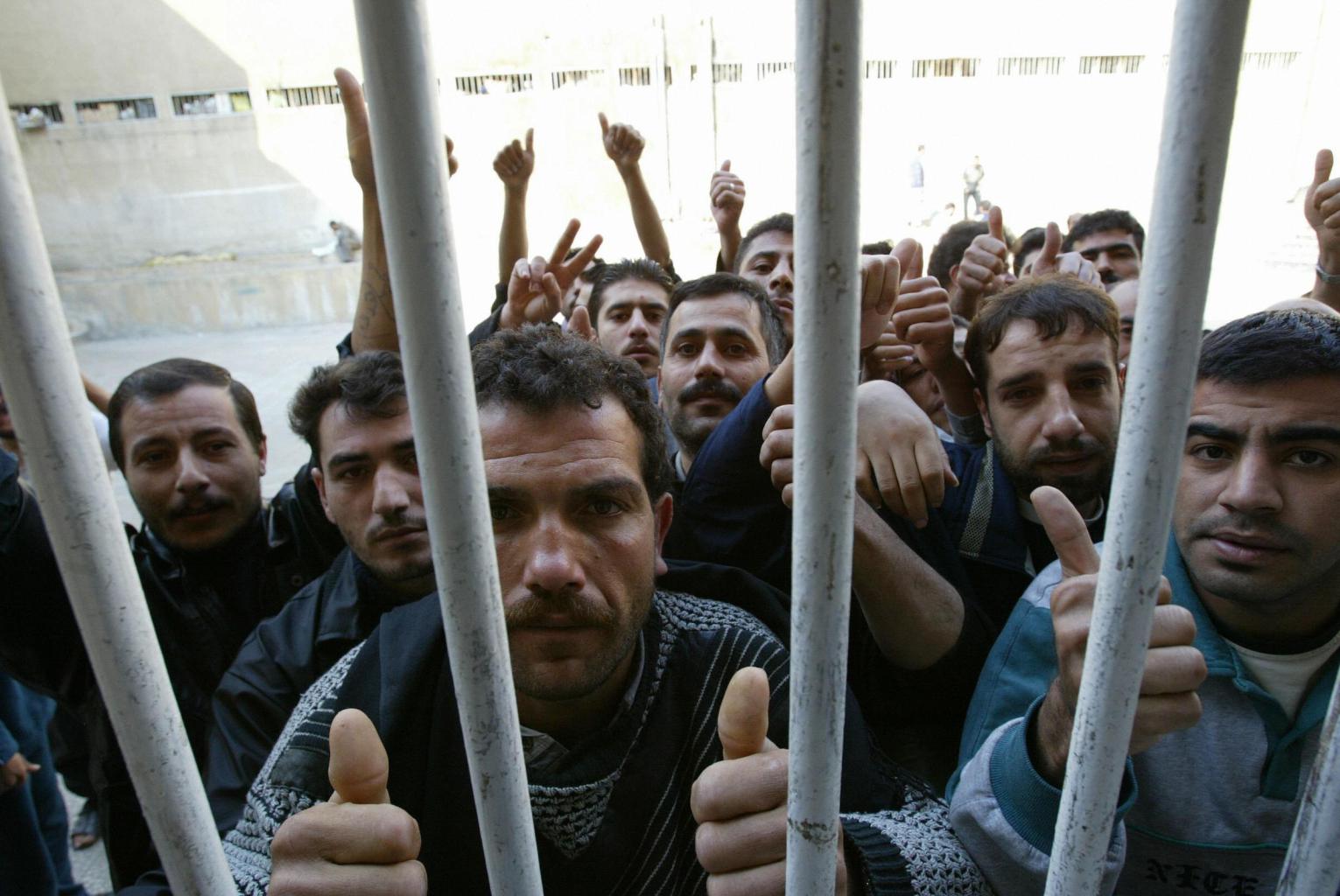
The Syrian regime has announced the first case of COVID-19 in the country after weeks of denial, and advocates in the diaspora believe the real number of cases is likely higher. The UK-based Syria Campaign writes that an outbreak in Syria could mean “horror beyond imagination.” Thousands of displaced families living in overcrowded camps cannot self-isolate. Health infrastructures in the country have collapsed due to the systematic targeting of hospitals by the regime and Russia. Especially vulnerable are the nearly 100,000 detainees and forcibly disappeared, many of whom are held in cramped underground centers where they are exposed to horrific conditions including torture and deprivation of proper food, water, hygiene, and medical care. These cells are already perfect breeding grounds for viruses and illnesses, and if coronavirus spreads containment will be impossible. (Photo of hunger strikers at Syrian prison via Foreign Policy. Credit: Louai Beshara/AFP/Getty Images)

North America
Central Processing at McAllen Border Patrol facility

Demand detainee release amid COVID-19 outbreak

The American Civil Liberties Union (ACLU) filed a lawsuit against US Immigration & Customs Enforcement (ICE) calling for the immediate release of at-risk immigrant detainees in the face of the COVID-19 outbreak. The suit was brought on behalf of 13 immigrants that are currently held in California detention centers. The suit calls for the immediate release of these immigrants due to their “advanced age and underlying medical conditions” that make them “especially vulnerable to the potentially fatal COVID-19 infection while they are confined in crowded and unsanitary conditions where social distancing is not possible.” (Photo: US Customs and Border Control via Jurist)