Libya: roadmap to resolve division of country
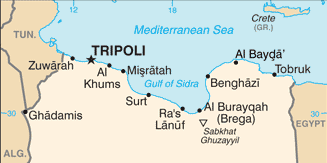
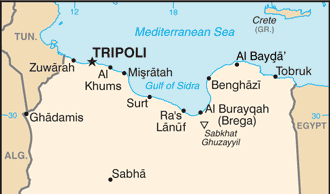
LibyaLibya's rival governments agreed to hold national elections within the next two years with a view to re-unifying the country. After months of UN-sponsored talks, representatives from the country's eastern and western administrations—known as the 4+4 Committee—signed an pact on terms to restructure the electoral commission and address disputes over the process. However, representatives of Libya's Amazigh (Berber), Tuareg and Tebu (Toubou) communities have issued a declaration stating they have lost confidence in the UN Support Mission in Libya, rejecting the legitimacy of the 4+4 Committee and threatening to boycott any elections held under the current framework. (Map: Perry-Castañeda Library)
Demand EU halt migration collaboration with Libya

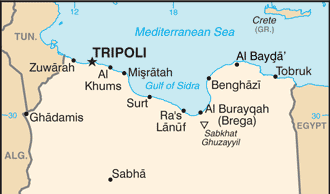
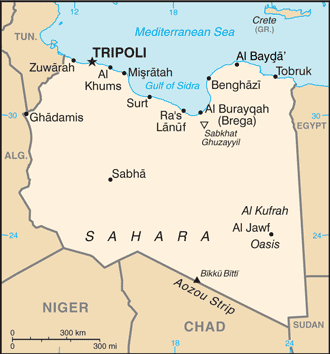
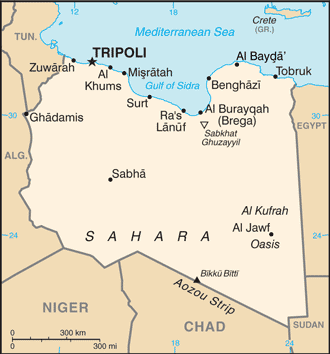
LibyaA group of 31 international human rights organizations called on the EU and its member states to end their cooperation with Libyan authorities on migration control. The groups expressed alarm at plans to strengthen cooperation with the rival authorities in Eastern and Western Libya, which both have a longstanding record of grave rights abuses against refugees, asylum seekers and migrants.  (Map: Perry-Castañeda Library)
UAE-backed network in Libya fuels Sudan war

RSFA new Lighthouse Reports investigation has brought to light new evidence of the United Arab Emirates' role in sustaining Sudan's civil war by backing the Rapid Support Forces (RSF) through a covert logistics and training network based in eastern Libya. The report draws on social media analysis, geolocation data, satellite imagery, and witness interviews to trace alleged RSF-linked camps, convoy routes, and transfers of weapons and fuel between Libya and Sudan. The investigation identified four previously unknown RSF staging areas in Libya, including one near Benghazi. RSF defectors described training alongside Libyan National Army soldiers and UAE-contracted Colombian mercenaries before being sent back to Sudan. (Photo of RSF forces in Darfur via Sudan Tribune)

Libya: ‘rampant crimes’ by Hafar-aligned militia

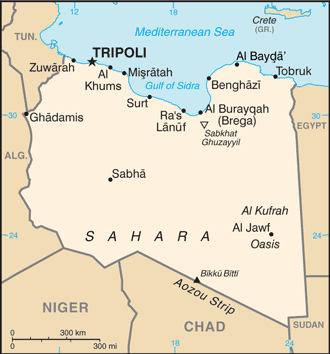
LibyaAmnesty International accused armed group Tariq Ben Zeyad (TBZ) of committing "rampant" war crimes and human rights abuses to enforce the rule of the so-called Libyan Arab Armed Forces (LAAF) and its leader Khalifa Haftar. The report details incidences of forced disappearances, unlawful killings, torture, and mistreatment of detained migrants and refugees. The LAAF, previously known as the Libyan National Army, controls the eastern portion of Libya and several cities, including Benghazi, Derna, Sirte, Tobruk, and areas outside Tripoli. The TBZ is headed by Haftar's son Saddam, and Amnesty states that it exists primarily to enforce his rule through a campaign of terror.  A UN report earlier this year charged that Haftar's forces are being backed by a contingent of mercenaries from Russia's Wagner Group. (Map: Perry-Castañeda Library)
North Africa

Libya: ‘official’ regime to lose control of Tripoli?

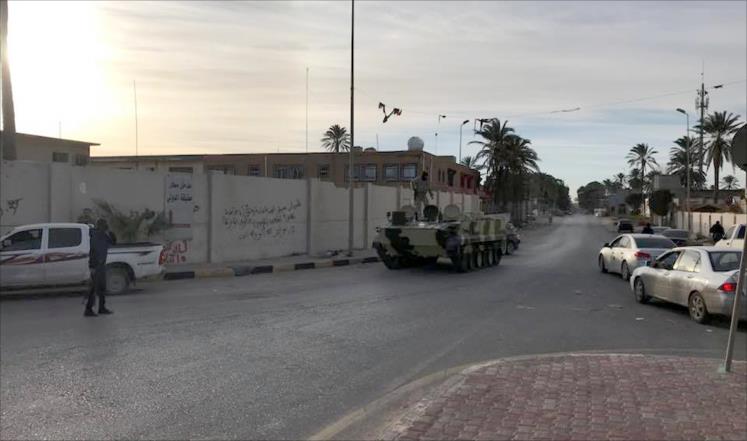
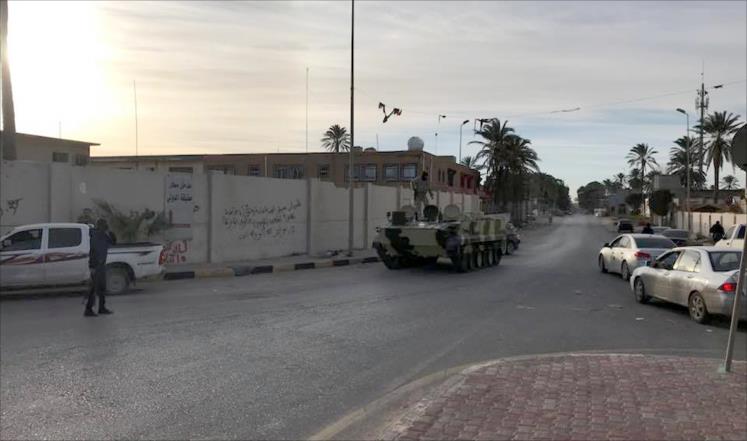
TripoliArmed street clashes have rocked Tripoli over the past week, as militias linked to the UN-backed Government of National Accord (GNA) have vied for control of the Libyan capital with rival militias that have launched an offensive on the city from the southeast. The most significant of these is the 7th Brigade from the town of Tarhuna, which has rejected a truce, vowing to continue fighting until it "cleanses Tripoli of militias." The city's electricity has intermittently gone out amid the fighting, and access to Facebook—the only news source for most Libyans—has been blocked, although it is unclear by whom. The GNA has declared a state of emergency in the city, and Prime Minister Fayez al-Sarraj has formed a "crisis committee" to try to broker peace. But warlord Khalifa Haftar in Benghazi, who is loyal to Libya's unrecognized eastern government, anticipated the fall of Tripoli, saying that "liberating the Libyan capital is inevitable." (Photo: Libya Observer)

North Africa

War crime seen in Benghazi mosque attack

LibyaHuman Rights Watch condemned the deadly mosque attack in eastern Benghazi that left 34 people dead and 90 wounded, the majority of whom were civilians including three young children. The twin car blasts, within 30 minutes of each other, were timed to coincide with evening prayers. The second blast was intended to target first responders. No group has yet taken credit for the attack. "Planting bombs outside a civilian mosque, in particular when the timing is likely to inflict maximum casualties among civilians, is a war crime," the HRW statement said. "Civilians in Benghazi are unacceptably bearing the brunt of this conflict." (Map: CIA)

North Africa

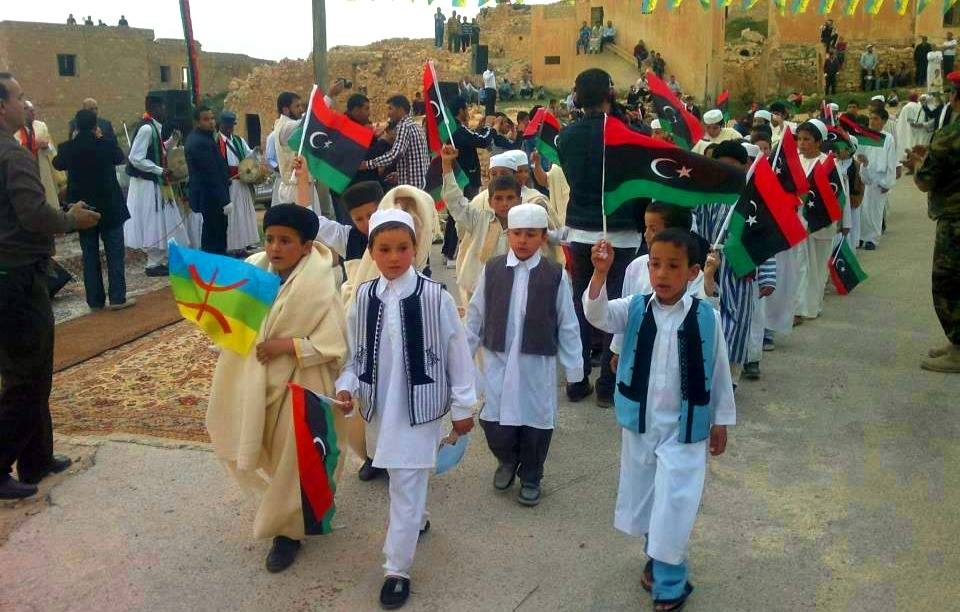
Algeria, Libya mark Berber new year —at last

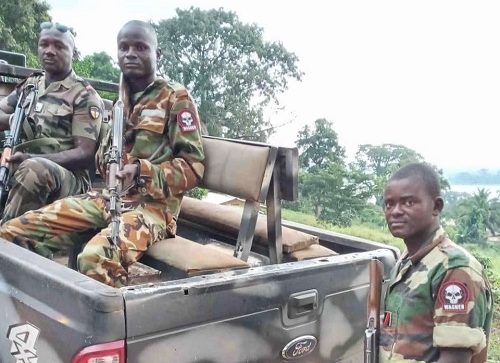
CAR soldiersBurkina Faso's ruling military authorities summoned Ghana's ambassador over accusations that they have hired Russian mercenaries from the Wagner Group to help fight jihadists. Speaking alongside US Secretary of State Antony Blinken at the US-Africa Leaders Summit in Washington, Ghana's President Nana Akufo-Addo said: "Today, Russian mercenaries are on our northern border. Burkina Faso has now entered into an arrangement to go along with Mali in employing the Wagner forces there." Calling the mercenaries' presence "distressing," Akufo-Addo also alleged that Burkina Faso had offered Wagner control of a gold mine as payment. Meanwhile, a Russian national said to be closely linked to the Wagner Group was injured in an apparent assassination attempt in the Central African Republic. Wagner Group's parent company Concord named French agents as behind the attack. Burkina Faso, Mali and the CAR alike have recently broken long-standing security ties with France, their former colonial ruler—with Russian mercenaries moving in as French soldiers go home. (Photo of CAR army troops wearing the Wagner Group insignia via Corbeau News Centrafrique)

North Africa

Benghazi suspect convicted on terror charge

LibyaA jury in Washington DC acquitted the accused ringleader of the 2012 Benghazi attacks of murder but convicted him on terrorism charges. After five days of deliberations, the jury found Ahmed Abu Khatallah guilty on four counts of related to the assault on a US mission and CIA compound in the Libyan city. US Ambassador Christopher Stevens and two CIA men were killed in the attack. Abu Khatallah may face life imprisonment. A sentencing date has not yet been set.

North Africa

Libya: videos capture summary executions

LibyaForces of the Libyan National Army, loyal to the country's unrecognized eastern government, appear to have executed captured fighters in Benghazi and desecrated corpses, Human Rights Watch charges. Videos posted online seem to show LNA fighters carrying out summary executions of "extremists," who are seen blindfolded with their hands tied behind their backs in orange jumpsuits. The International Criminal Court has issued a warrant for the commander of the unit.

North Africa

Massacre reported in battle for Libyan airbase

Up to 130 soldiers are reported to have been summarily executed after a force loyal to Libya's Tripoli-based government took an airbase controlled by eastern warlord Khalifa Haftar.