

Africa
Sahel

Mounting massacres across Africa’s Sahel nations

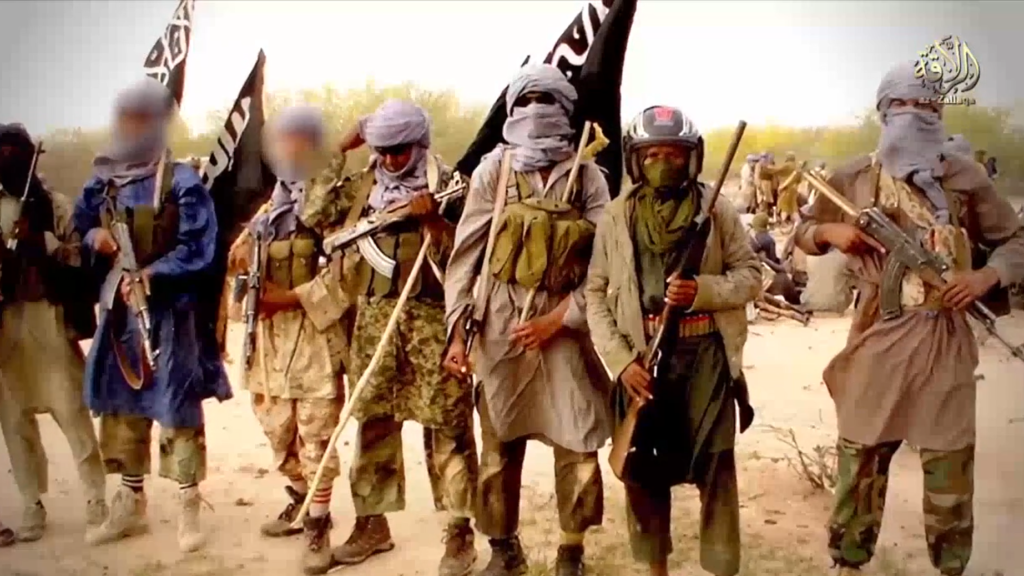
The tri-border region where the Sahel countries of Niger, Mali and Burkina Faso come together is the scene of fast-mounting massacres by presumed Islamist militants. Attacks on civilians and security forces alike have left hundreds dead this month. In Niger, peasants were gunned down while working their fields in Banibangou village—an attack attributed to a local ISIS franchise. In Mali, ongoing deadly attacks have caused a massive population exodus in several regions of the country, including Menaka, Mopti, Gao, Timbuktu and Sikasso. “Violence is spreading so rapidly across Mali that it threatens the very survival of the state,” said UN human rights expert Alioune Tine after a visit to the country. (Map: Wikivoyage)

Afghanistan
kabul protest

Afghanistan: Taliban unleash first terror

As the Taliban, now in full control of Kabul, pledge an “inclusive” Afghan government in prepared press statements, deadly repression against anti-Taliban protesters is reported from the eastern city of Jalalabad. The day before Afghanistan’s independence day, protesters took to the streets of Jalalabad waving the black, red and green national flag—and tearing down the white and black Tawhid flag of the Taliban. Witnesses said Taliban fighters fired on protesters indiscriminately, and at least three were killed. On the day that Afghanistan won full independence from Britain in 1919, a similar protest was held in Khost, where social media videos again show Taliban fighters firing on demonstrators. No casualties were reported, but the city has been placed under a 24-hour curfew. A small demonstration by women demanding that their rights be respected was held  outside a police precinct in Kabul. “We want the rights we’ve had for the past 20 years,” signs read.  (Photo via Twitter)

Afghanistan
afghanistan

Afghanistan: ousted VP launches resistance

The first vice president of Afghanistan under the government just ousted from Kabul by the Taliban, Amrullah Saleh, has taken refuge in the Panjshir Valley north of the capital and declared himself the country’s legitimate president. Defense Minister Bismillah Mohammadi has reportedly joined Saleh in the Panjshir Valley, as has Ahmad Massoud—son of the martyred resistance commander Ahmad Shah Massoud. Many ethnic Tajiks in the Afghan army are said to have arrived with their equipment, including armed vehicles and tanks, after withdrawing from the nearby frontlines. Ethnic Hazara families have reportedly walked 200 kilometers to reach the Valley, fearing persecution as the Taliban seize their homeland in Bamiyan province. (Map: Perry-Castañeda Library)

Palestine
Daraa

Syria: southern ceasefire breaking down

Fighting has erupted again in the southern Syrian town of Daraa, where an opposition-controlled neighborhood is resisting pressure to disarm. Assad regime forces placed the area, Daraa al-Balad, under military siege in late June, and escalated to intermittent shelling of the enclave. A new ceasefire was brokered by pro-regime Russian forces, under which the opposition would begin the process of disarming but maintain some autonomy within the area. However, the ceasefire broke down almost immediately—allegedly due to violations by Iran-backed militias fighting for the regime. Shelling of the neighborhood has since resumed. The UN relief agency UNRWA has especially expressed concern for the some 3,000 Palestinian refugees living in a camp within the besieged area. UNRWA reports that water and electricity are completely cut off inside the camp. (Map: Wikimedia Commons)

Africa
Nigeria

Sectarian massacre in Nigeria’s Plateau state

Nigerian authorities imposed a curfew in Jos, capital of north-central Plateau state, after at least 20 Muslim travelers passing through the city were massacred by a presumed Christian militia. The Muslims, mostly of the Fulani ethnicity, were in a convoy of vehicles, returning to their homes in Ondo and Ekiti states from a celebration in neighboring Bauchi state marking the start of Muharram, the Islamic new year. In Jos, the convoy was caught in a traffic jam, and the vehicles set upon by militiamen, the occupants slain with machetes, daggers and other weapons. The assailants were apparently Christians of the Irigwe ethnicity. Northern and central Nigeria have for years seen growing violence between Muslim semi-nomadic herders and Christian farmers over control of land and water. (Map: Perry-Castañeda Library)

Iraq
kurdish march

Protest ongoing Turkish military intervention in Iraq, Syria

Kurdish rebels launched a mortar attack on a Turkish military position in northern Iraq, killing one soldier. The troops were stationed at the outpost as part of Ankara’s “Operation Claw-Lightning” to hunt down fighters of the Kurdistan Workers’ Party (PKK). Turkey’s Defense Ministry said its forces immediately retaliated, and three PKK fighters were “neutralized” (killed). The following day, thousands of Kurds marched in Dusseldorf, Germany, to protest ongoing Turkish military operations in Turkey’s eastern Kurdish region, in northern Iraq, and in Syria’s Rojava region. The demonstration was timed for the 37th anniversary of the start of the PKK’s armed struggle against the Turkish state. (Photo: Defend Kurdistan via Twitter)

Planet Watch
CounterVortex

CounterVortex meta-podcast: our special offer!

In Episode 84 of the CounterVortex podcast, Bill Weinberg unveils a special offer for new Patreon subscribers. Become a Supporter for two dollars per weekly podcast, and you get to choose a topic for Bill to rant about for an episode. Any conflict anywhere on the planet, any hot political issue, any aspect of Bill’s far-ranging interests and work: human rights, indigenous peoples, drug policy, ecology, pro-autonomy and anti-militarist movements worldwide. Choose a book to review, ask Bill any question about his life, research, activism or analysis. We want to make CounterVortex a more interactive and participatory project, and we need your support to sustain us! Listen on SoundCloud or via Patreon.

Africa
cabo delgado

Rwanda’s quick win in Mozambique: how real?

Rwandan and Mozambican troops retook the port city of MocĂ­mboa da Praia from Islamist militants—their last stronghold in Mozambique’s northern Cabo Delgado province. The 1,000 Rwandan troops, who arrived in the country last month to help the government battle a four-year insurgency, have proved their effectiveness in a series of skirmishes. They are also being joined by units from regional neighbors Angola, Botswana, Lesotho, South Africa, Tanzania, and Zimbabwe. But analysts are warning that the insurgents—known colloquially as al-Shabab—are choosing not to stand their ground, preferring to retreat into the countryside. Military force doesn’t address the drivers of the conflict, nor does it prevent ill-disciplined Mozambican troops—who often struggle to distinguish between insurgent and civilian—from stoking further tensions through abuses of the populace. More than 3,000 people have been killed and 820,000 displaced by the conflict. (Map via Moscow Times)

Afghanistan
afghanistan

Afghanistan: Taliban seize provincial capitals

Taliban forces have dramatically stepped up their rapid advance across Afghanistan, seizing 11 capitals of the country’s 34 provinces. Herat and Ghazni, a strategic gateway to the national capital Kabul, were the most recent to fall. The northern city of Mazar-e-Sharif is besieged, and India’s military is mobilizing an airlift to evacuate the country’s nationals there. Kandahar, in the Taliban’s southern heartland, is also the scene of heavy fighting, as is Lashkar Gah, capital of adjoining province of that name. Reports of rights violations that “could amount to war crimes and crimes against humanity” have emerged from areas under Taliban control. More than 359,000 Afghans have been displaced this year, bringing the total displaced in the country to over 5 million. (Map: Perry-Castañeda Library)

Planet Watch
Amazon burning

Brazil: Bolsonaro accused of crimes against humanity

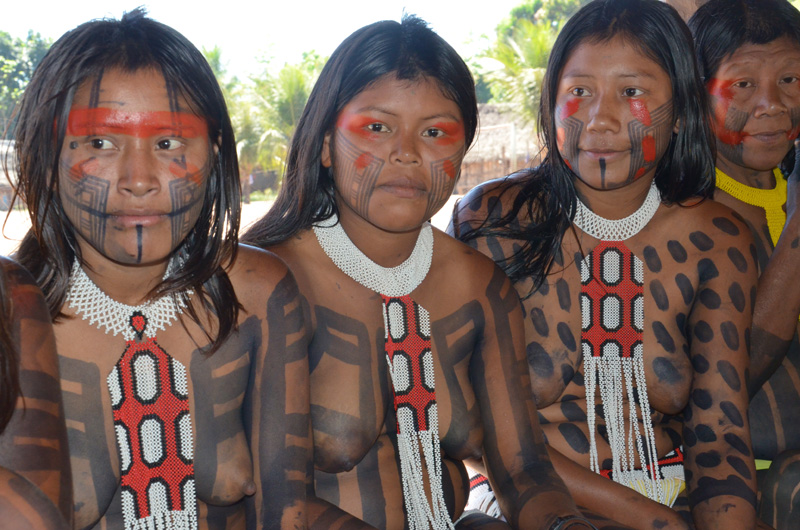
The Articulation of Indigenous People of Brazil (APIB) filed a statement before the International Criminal Court (ICC) requesting an investigation into genocide and crimes against humanity committed by President Jair Bolsonaro. The complaint centers on “systematic anti-indigenous” policies enacted by Bolsonaro since his term began in January 2019, and deepened during the COVID-19 pandemic. APIB claims that Bolsonaro’s government has dismantled protections for indigenous communities and their territories, resulting in increased invasion of indigenous lands and consequential deforestation, fires, and illegal mining. The complaint further charges that Bolsonaro has directly encouraged attacks against indigenous peoples, and that his actions amount to the crimes of genocide and ecocide. (Photo: pixundfertig/Pixabay via Jurist)

Planet Watch
DixieFire

UN climate report: ‘Code Red for Humanity’

Climate change is “unequivocal” and rapidly intensifying, and some of the changes already in motion—such as continued sea level rise—are irreversible over hundreds to thousands of years, finds the latest report from the Intergovernmental Panel on Climate Change (IPCC). The report concludes that human influence has warmed the planet at a rate that is unprecedented in at least the last 2,000 years. Human-induced climate change is already affecting many weather and climate extremes in every region across the globe—including heatwaves, droughts, and tropical cyclones. Atmospheric concentrations of CO2 are higher than at any time in at least two million years. (Photo: CalFire)

Africa
south sudan

Pre-emptive repression in South Sudan

Two prominent activists in South Sudan—Augustino Ting Mayai of the local Sudd Institute and Kuel Aguer Kuel, former governor of Northern Bahr el-Ghazal State—were arrested for calling for a peaceful uprising to end the country’s state of “political bankruptcy.” They were part of a coalition of civil society groups that declared South Sudan has “had enough” of a decade of failed leadership, marked by civil war and widespread hunger. The coalition called for the resignation of both President Salva Kiir and his deputy Riek Machar, arch-rivals now uneasy bedfellows in a unity government. (Map: Perry-Castañeda Library)