Europe
mariupol ruins

Podcast: Grozny, Aleppo, Mariupol

In Episode 144 of the CounterVortex podcast, Bill Weinberg notes Putin’s annexation of Ukraine’s Donbas region not only came on exactly the same day as the 1938 Munich Agreement, which approved Hitler’s annexation of Czechoslovakia’s Sudetenland—it was also the same day that Putin launched two of his previous criminal military adventures. On Sept. 30, 1999, Russian tanks rolled into Chechnya, marking the start of the Second Chechen War, with massive aerial bombardment of the region’s capital city of Groazny. On Sept. 30, 2015, Russian began air-strikes in Syria, marking the start of a massive military intervention on behalf of the Bashar Assad dictatorship, in which the city of Aleppo would be virtually destroyed by bombardment. And in Putin’s new war of aggression in Ukraine, the Azov seaport of Mariupol has been similarly nearly obliterated. A review of this history reveals Vladimir Putin as a serial city-destroyer, who must be deposed and put on trial for his crimes against humanity. Listen on SoundCloud or via Patreon. (Photo via Twitter)

Africa
Central African Republic

ICC war crimes trial for CAR militia leader opens

The International Criminal Court (ICC) opened a trial against Mahamat Said Abdel Kani, a leader of the Séléka rebel group, for crimes humanity and war crimes in violation of the Rome Statute. Said allegedly committed these crimes in Bangui, capital of the Central African Republic (CAR), in 2013. The Séléka carried out widespread reprisals against supporters of ousted president François Bozizé after taking the capital that year. Said pleaded not guilty to all charges. The CAR is also to carry out its own war crimes trials related to the internal conflict. (Map via Perry-Castañeda Library Map Collection)

Africa
ethiopia

Eritrea in mass mobilization for Tigray offensive

More than a month after renewed clashes broke out in Ethiopia’s northern Tigray region, there are few signs of de-escalation. New air-strikes hit Tigray’s capital of Mekelle, while the region’s ruling party, the Tigray People’s Liberation Front (TPLF), accused Eritrea of launching a full-scale offensive in support of the Ethiopian government. There are reports that Eritrea (which has a historical enmity against the TPLF) is mobilizing army reservists, with notices handed out in Asmara, the capital. The return to combat came after a five-month truce that saw back-channel meetings between Mekelle and Addis Ababa but no formal talks. The risk that fresh fighting poses to civilians was underscored by UN investigators, who submitted their first report on the two-year conflict, accusing Ethiopia’s government of war crimes in Tigray, and of using starvation as a counterinsurgency tool. (Map: Political Geography Now)

Iran
Zahedan

Iran: uprising spreads to Baluchistan

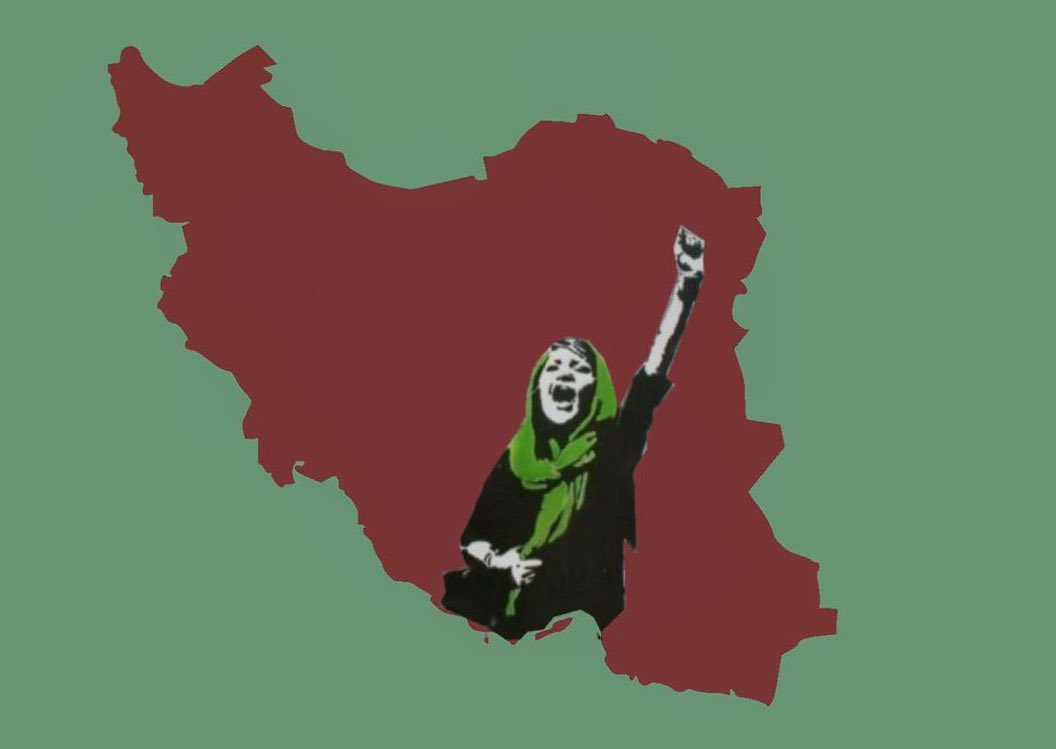
The nationwide uprising in Iran spread to the restive eastern province of Sistan & Baluchistan as residents gathered in provincial capital Zahedan to protest the reported rape of a 15-year-old Baluch girl by the police chief of the nearby town of Chabahar. Security forces opened fire, and at least 41 protesters were killed, local rights monitors report. According to Iran Human Rights, this brings the total dead since the uprising began two weeks earlier to 133. Iran Human Rights director Mahmood Amiry-Moghaddam said: “The killing of protesters in Iran, especially in Zahedan, amounts to crimes against humanity. The international community has a duty to investigate this crime and prevent further crimes from being committed by the Islamic Republic.” (Image: Iran Human Rights)

Iran
KRG

Iran strikes targets in Iraqi Kurdistan

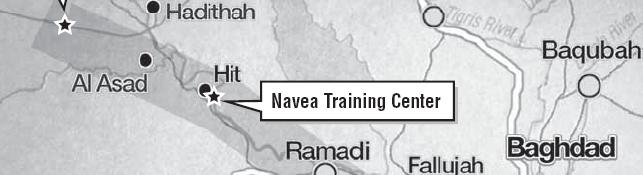
At least 13 people were reported killed in Iranian missile and drone strikes on the Kurdish region of northern Iraq. UNICEF said a pregnant woman was killed and two children were among those injured as one missile struck a school in the refugee settlement of Koya. Iran’s Islamic Revolution Guard Corps (IRGC) said it had struck Kurdish “separatist terrorists” who backed “riots,” referring to the anti-government protests that have swept the country over the past two weeks. The IRGC named the targeted groups as Komala, the Democratic Party of Iranian Kurdistan (PDKI) and the Kurdistan Freedom Party (PAK). Komala confirmed that 10 drones landed the Zargwez area, PAK said its headquarters in Sherawa was hit, and the PDKI said its bases in Koy Sanjaq were struck. (Map: UNHCR via ReliefWeb)

Europe
ICBM

Russia keeps escalating nuclear war threats

As Russia suffers more territorial losses on the ground in eastern Ukraine, figures close to the Putin regime are escalating both the frequency and blatancy of their threats to use nuclear weapons. Ramzan Kadyrov, head of Russia’s region of Chechnya who has mobilized his regional forces to fight in Ukraine, stated on social media platform Telegram: “In my personal opinion, more drastic measures should be taken, right up to the…use of low-yield nuclear weapons.” Kadyrov’s comment came as Russian forces retreated from Lyman, a key city in Donetsk oblast—mere days after Putin had declared the entire oblast as annexed. Former president Dmitry Medvedev stated that if Kyiv continues its offensive on annexed territory, Russia could be “forced to use the most fearsome weapon against the Ukrainian regime.” (Photo: Russian Ministry of Defense via BAS)

Europe
Smyrna

Erdogan invokes burning of Smyrna

Amid rising tensions between NATO allies Turkey and Greece, Turkish President Recep Tayyip Erdogan explicitly invoked the burning of Smyrna at the end of the Greco-Turkish War. “We have only one word to tell Greece: Do not forget Izmir,” Erdogan warned, using the Turkish name for the coastal city that was the scene of atrocities targeting the substantial Greek populace after it was taken by Turkish forces in September 1922. “We may come suddenly one night,” Erdogan added. The current dispute stems from a treaty signed the year after the attack on Smyrna/Izmir, which gave offshore islands to Greece on condition that they remain unarmed. Ankara charges that Greece is militarizing the islands, in violation of the 1923 Treaty of Lausanne. (Photo via HALC)

Europe
Munich

Podcast: Donbas = Sudetenland

In Episode 143 of the CounterVortex podcast, Bill Weinberg notes the all too telling irony that Putin’s annexation of Ukraine’s Donbas region came on exactly the same day as the 1938 Munich Agreement, which approved Hitler’s annexation of Czechoslovakia’s Sudetenland region. Russian annexation of the Donbas was preceded by that of Crimea, just as the Nazi annexation of Sudetenland was preceded by that of Austria. This is the same pattern of escalation toward world war—only this time Putin’s overt nuclear threats make the stakes even higher. Signs of hope include the anti-draft uprising in Russia and mass exodus of Russian youth, which undermine Putin’s war effort and threaten his very regime. War Resisters International has issued a petition demanding that European states offer asylum to all Russian deserters and conscientious objectors to military service. Alas, much of the Western “left” continues to make excuses for Putin’s criminal aggression. Dissident websites such as CounterVortex and Balkan Witness debunk the Russian war propaganda being recycled by Putin’s internet partisans on the pro-fascist pseudo-left. Listen on SoundCloud or via Patreon. (Photo of Benito Mussolini, Adolf Hitler, interpreter, and Neville Chamberlain meeting in Munich, September 1938: German Federal Archives via Encyclopedia Britannica)

Inner Asia
Uyghurs

Uyghur Tribunal accuses China of genocide

The Uyghur Tribunal, a “people’s tribunal” established in the UK, appended a December 2021 judgment, incorporating nearly 300 additional pages of historical background, legal definitions and evidence. The initial judgment found that hundreds of thousands of Uyghur Muslims have been detained in China’s western Xinjiang region, and many been subject to torture. The appended judgment accuses Chinese authorities of genocide. It acknowledges that, in contrast to treatment of Jews during the Holocaust, the detained Uyghurs are allowed to eventually return to society in most cases. However, it notes that, coinciding with mass detention, mosques have been destroyed and religious activity suppressed. Those who use the Uyghur language in public are punished, and child separation from families is common. The appended judgment concludes that taken together, these practices constitute genocide. (Photo: Leonhard Lenz/Wikimedia Commons)

Europe
Izyum

UN inquiry sees Russian war crimes in Ukraine

The UN Independent International Commission of Inquiry on Ukraine informed the Human Rights Council that based on the evidence gathered, Russia has committed war crimes in Ukraine. The Commission noted use of explosive weapons in populated areas without “distinguishing between civilians and combatants.” The Commission also reported a large number of probable executions carried out in the areas it visited, citing “visible signs of executions on bodies, such as hands tied behind backs, gunshot wounds to the head, and slit throats.” The Commission also found that some Russian soldiers had committed sexual and gender-based violence, and that it had documented cases of children raped, tortured, unlawfully confined, and killed or injured in indiscriminate attacks. (Photo via Twitter)

Europe
Georgia

Mass exodus of Russian youth

Tens of thousands of conscription-age Russian men have fled to neighboring countries since Vladimir Putin announced a mobilization of military reserve troops to fight in Ukraine. The tide has grown in recent days amid fears that the Kremlin will impose an exit ban. The sense of a closing window has led to chaotic scenes on Russia’s land borders with Georgia, Kazakhstan and Mongolia—countries that do not require a visa for visiting Russians. But Poland, Finland and the Baltic states have stopped issuing visas for Russians entirely. Among European Union countries, only Germany is offering refuge to Russians seeking to escape the war. Anti-war groups including War Resisters International, International Fellowship of Reconciliation and the European Bureau for Conscientious Objection have issued a petition calling on EU leaders to extend asylum for deserters and objectors to military service from Russia, Belarus and Ukraine. (Photo: Verhniy Lars via Moscow Times)

Europe
dagestan

Russia: anti-draft uprising spreads

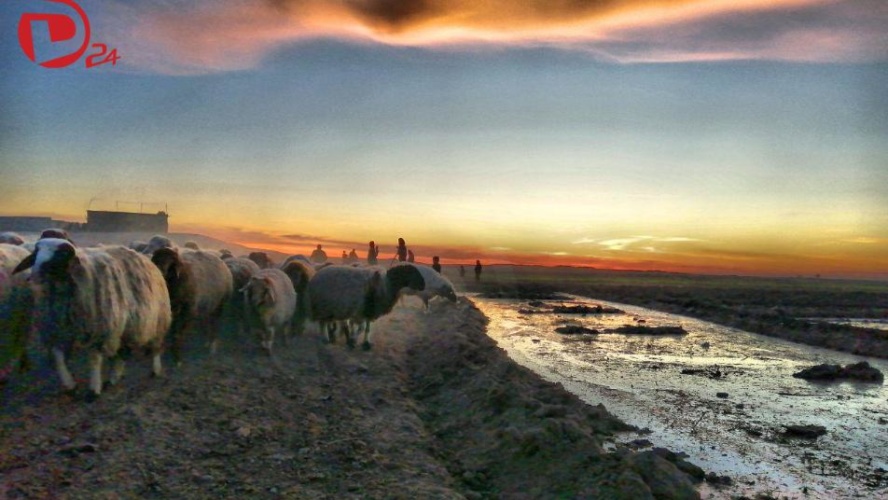
More than 2,000 people have been detained in protests across Russia since President Vladimir Putin announced a mobilization of military reserve troops to fight in Ukraine. The demonstrators are risking long prison terms under laws passed shortly after the Ukraine invasion was launched, which have facilitated a harsh crackdown on dissent. At least 20 were detained in the North Caucasus republic of Dagestan, where police fired in the air to disperse local villagers who were blocking a highway. But the following day, the protests spread to the regional capital of Makhachkala, where demonstrators shouting “No to war” were attacked by riot police. Reports indicate that it is not only military reservists who are being called up, and that a general conscription is actually underway in some areas. There are also reports of disproportionately high numbers called up in poor regions populated by ethnic minorities, such as the North Caucasus. (Photo via Moscow Times)