Afghanistan
ICC

ICC rules Afghanistan investigation may proceed

Pre-Trial Chamber II of the International Criminal Court (ICC) authorized prosecutors to resume their investigation into atrocities committed in Afghanistan since May 1, 2003, following a two-year hiatus. The Chamber found “that Afghanistan is not presently carrying out genuine investigations.” The Chamber emphasized that the authorization is limited to crimes falling within the conflict as it existed at the time of the original investigation request in November 2017. The Chamber rejected that request in April 2019. This decision was overturned by the Appeals Chamber in March 2020. However, the investigation was halted following a request from the government of Afghanistan. ICC prosecutor Karim AA Khan sought to review the deferral in September 2021. At that time, Khan said he concluded,“there is no longer the prospect of genuine and effective domestic investigations into Article 5 crimes within Afghanistan.” (Photo: ICC)

Africa
Burkina Faso

‘War footing,’ paramilitary drive in Burkina Faso

Burkina Faso’s new military government said that the country is on a “war footing,” and launched a drive to recruit 50,000 civilian defense volunteers to help the overstretched army fight jihadist insurgents. The recruits receive two weeks of basic training and then join the Volunteers for the Defense of the Fatherland (VDP), a village-based militia network.  But the VDP has been accused of targeting the pastoralist Fulani people in extra-judicial killings. A campaign of hate speech on social media has described all Fulani as “terrorists”—even though they are also often the victims of jihadist attacks. (Map: Perry-Castañeda Library)

Southern Cone
Lula

Tough congress for Brazil’s new indigenous caucus

In Brazil’s general elections, five self-identified indigenous candidates won seats as federal deputies and two as senators—the highest number in the country’s history. The most celebrated victory was that of SĂ´nia Guajajara, a leader of her own Guajajara people in MaranhĂŁo state who has emerged as a voice for indigenous peoples on the national stage, and now takes a seat as deputy. But this new “Bancada do Cocar” (Feathered Headdress Caucus) will face tough odds in a generally more conservative National Congress. More seats were won by supporters of the reactionary outgoing president Jair Bolsonaro, and especially the Bancada Rural (Rural Caucus, dominated by the agribusiness lobby), in both the lower and upper houses. (Photo of indigenous leaders with president-elect Lula da Silva via Mongabay)

Syria
Hassakeh

Syria faces ‘dire water crisis’

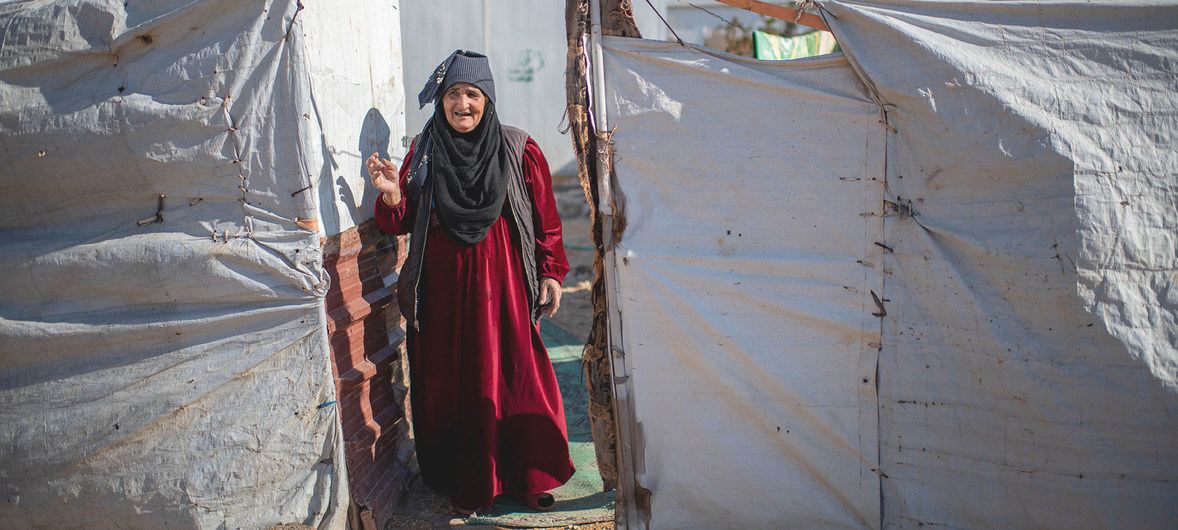
Syria’s cholera outbreak has now spread to every one of the country’s 14 provinces, with 24,000 suspected cases and more than 80 deaths since early September. Severe water shortages—exacerbated by war, politics, and climate change—have forced people to drink unsafe water and allowed cholera bacteria to spread in the extremely low Euphrates River. There are other dangerous impacts from what the UN calls an “already dire water crisis” that is likely to get worse: Pastures dry up, and farmers have to sell their livestock. Crop yields are low, prices go up, and more families are forced to skip meals. This has especially grim implications as winter comes to northern Syria, where some 1.7 million are displaced and living in camps—already facing privation and harsh conditions. (Photo: Daniela Sala/TNH)

Europe
Borodianka

UN documents damage to cultural sites in Ukraine

A preliminary report from the United Nations Educational, Scientific & Cultural Organization (UNESCO) revealed the extent of damage to Ukraine’s cultural heritage since Russia invaded in February. UNESCO verified damage to 207 cultural sites, including 88 religious sites, 15 museums, 76 buildings of historic or artistic interest, 18 monuments, and 10 libraries. The report is sourced from satellite images taken before and after the start of the war by both the UN and private companies. UNESCO defines cultural properties under Article 1 of the 1954 Hague Convention. The worst damage was found to be in Donetsk region, now declared annexed by Russia, with 59 damaged sites. (Photo: damaged statue of Ukrainian national poet Taras Shevchenko in Borodyanka. Via Euromaidan Press)

Europe
Kremlin

Russia: from ‘denazification’ to ‘desatanization’

Since launching its invasion of Ukraine in February, the Kremlin has been using the rhetoric of “denazification” to justify its war of aggression. It now appears to be updating its nomenclature. Aleksey Pavlov, assistant secretary of the Security Council of the Russian Federation, told state news agency RIA Novosti that Ukraine has become a “totalitarian hypersect” where citizens have abandoned Orthodox Christian values. He added that the “desatanization” of Ukraine should be a goal of the “special military operation.” Jews in Ukraine and Russia alike are aghast that Pavlov named the Chabad-Lubavitch Hasidic group as one of the “hundreds of sects” that need to be purged from Ukraine, calling it a “supremacist cult.” (Photo: Wikipedia)

Planet Watch
Chad

Podcast: climate change and the global struggle II

In Episode 147 of the CounterVortex podcast, Bill Weinberg notes the recent statement from the UN Environment Program that “only a root-and-branch transformation of our economies and societies can save us from accelerating climate disaster.” Studies from similarly prestigious global bodies have raised the prospect of imminent human extinction. An International Energy Agency report released last year warned that new fossil fuel exploration needed to halt by 2022 in order to keep warming within the limits set by the 2015 Paris Agreement. Adoption of new technologies and emissions standards does mean that CO2 emissions from energy generation (at least) are likely to peak by 2025. But the IEA finds that this would still lead to global temperatures rising by 2.5 C above pre-industrial levels by century’s end—exceeding the Paris Agreement limits, with catastrophic climate impacts. And the catastrophic impacts, already felt in places like Chad and Cameroon, win but scarce media coverage. Climate-related conflict has already escalated to genocide in Darfur. Climate protests in Europe—at oil terminals and car shows (as well as, less appropriately, museums)—do win some attention. But the ongoing resistance to oil mega-projects in places like Uganda and Tanzania are comparatively invisible to the outside world. The dire warnings from the UN and IEA raise the imperative for a globalized resistance with an explicitly anti-capitalist politics. Listen on SoundCloud or via Patreon. (Photo of Tantaverom region of Chad via UNDP)

Planet Watch
air pollution

UN: no ‘credible pathway’ to Paris climate goals

There is “no credible pathway to 1.5C in place” today, the UN Environment Program (UNEP) states in its new Emissions Gap Report 2022, despite legally binding promises made at the 2015 Paris Climate Conference to prevent average temperatures rising by more than 1.5C above pre-industrial levels. “This report tells us in cold scientific terms what nature has been telling us all year, through deadly floods, storms and raging fires: we have to stop filling our atmosphere with greenhouse gases, and stop doing it fast,” said Inger Andersen, executive director of UNEP. “We had our chance to make incremental changes, but that time is over. Only a root-and-branch transformation of our economies and societies can save us from accelerating climate disaster.” (Photo: Ralf Vetterle, Pixabay)

Greater Middle East
Turkey

Turkey: hundreds of refugees deported to Syria

Human Rights Watch reports that Turkish authorities arbitrarily arrested, detained and deported hundreds of Syrian refugees between February and July 2022. The report found that refugees are arrested in their homes, workplaces and on the street, then detained in harsh conditions, and forced over the border to Syria. According to the UN, Turkey hosts the world’s largest refugee population with 3.7 million Syrians under temporary protection. The deportation of refugees is contrary to the prohibition of refoulement under international law—meaning the return of refugees to a place where they would face a real risk of persecution, torture or other ill-treatment, or a threat to life. HRW says the EU must “acknowledge that Turkey does not meet its criteria for a safe third country and suspend its funding of migration detention and border controls until forced deportations cease.” (Map: CIA)

Iraq
Bordeaux

Turkey accused of chemical attacks in Iraqi territory

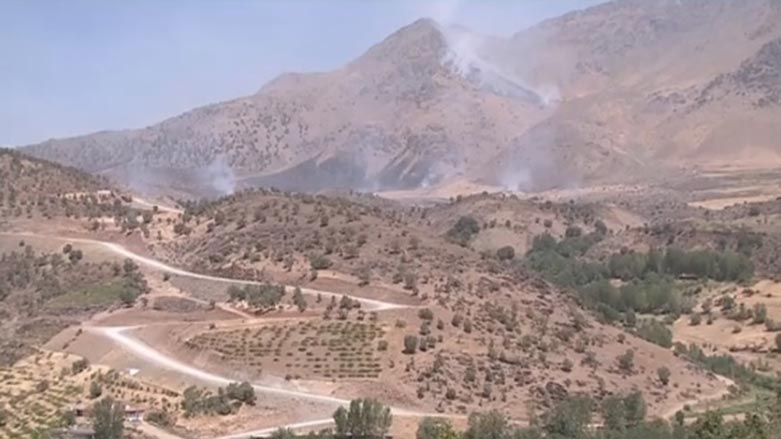
Kurdish communities in cities across Europe held protests demanding action on claims that the Turkish military has repeatedly used chemical weapons in its ongoing air-strikes against strongholds of the Kurdistan Workers Party (PKK) in northern Iraq. The Nobel-winning International Physicians for the Prevention of Nuclear War (IPPNW) said it found evidence of chlorine and other “improvised chemical agents” during an investigative mission to Iraq. The IPPNW urged international bodies including the Organization for the Prohibition of Chemical Weapons (OPCW) to launch formal investigations. The PKK has released the names of 17 guerrillas it says were killed by Turkish chemical attacks in Southern Kurdistan (northern Iraq) over the past year. Kurdish news outlets published a video that has been circulating on social media, showing two PKK fighters apparently suffering under influence of a chemical agent. The Turkish defense ministry dismissed the claims as “completely baseless and untrue.” Iraq’s parliament has established a commission to examine the charges. (Photo: ANF)

East Asia
Bridge Man

Xi Jinping consolidates self-coup —amid repression

After years of centralizing power in his own person, China’s president and party secretary Xi Jinping secured a third leadership term at the 20th National Congress of the Chinese Communist Party. The new seven-member Politburo Standing Committee is stacked with loyalists, abandoning the practice of balancing rival tendencies within the body. This cements Xi’s place as China’s “paramount leader” in the autocratic tradition of Mao Zedong. On the eve of the Congress, a lone protester draped a banner from a Beijing overpass calling for strikes to bring down “dictator” Xi. He was immediately arrested, but his brief action quickly became a sensation on Chinese social media—before all such content was censored by authorities. Some who expressed support online for “Bridge Man” have been harassed by the police. The lead-up to the National Congress saw another wave of arrests and “pretrial detention” of dissidents and human rights defenders. (Photo via China Change)

Watching the Shadows
internet ban protest

Internet censorship laws advance worldwide

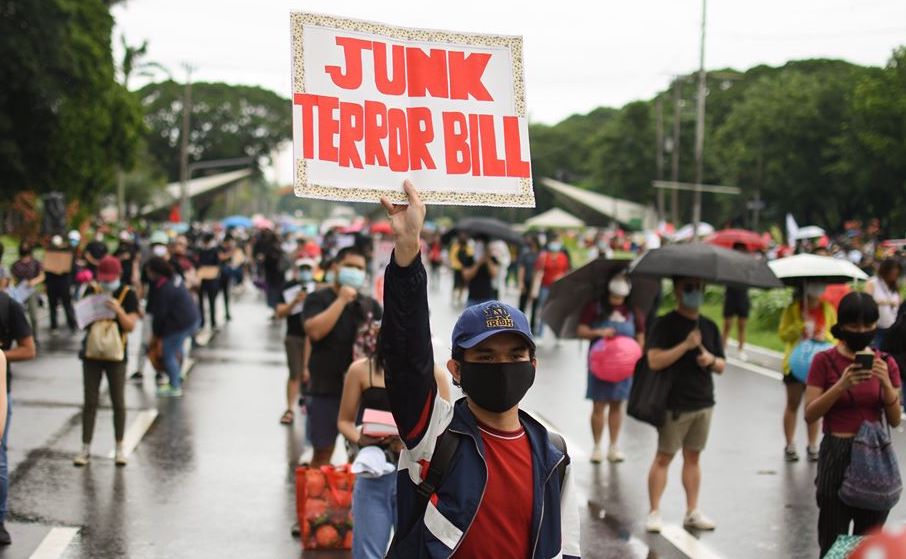
The United Nations Human Rights Office expressed concern over Turkey’s adoption of legal measures “that risk substantially curtailing freedom of expression in the country.” A package of laws passed by the Turkish parliament could see journalists and activists imprisoned for up to three years for spreading “disinformation.” Ugandan President Yoweri Museveni meanwhile signed the Computer Misuse (Amendment) Act into law, which advocacy group Unwanted Witness called a “looming nightmare to the freedom of expression and speech.” Last month, Tunisian authorities promulgated Decree No. 54 on Combating Crimes Related to Information & Communication Systems, imposing five years imprisonment for spreading “fake news.” (Photo of Turkish free-speech demonstration via Wikimedia Commons)