Syria
Aleppo

End impunity for chemical weapons use in Syria

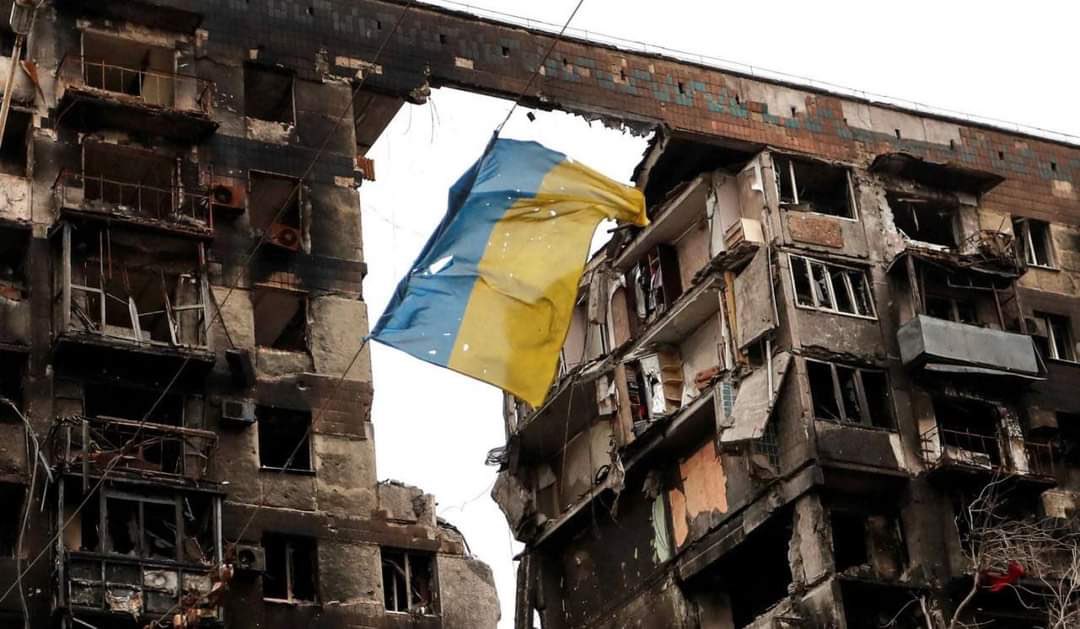
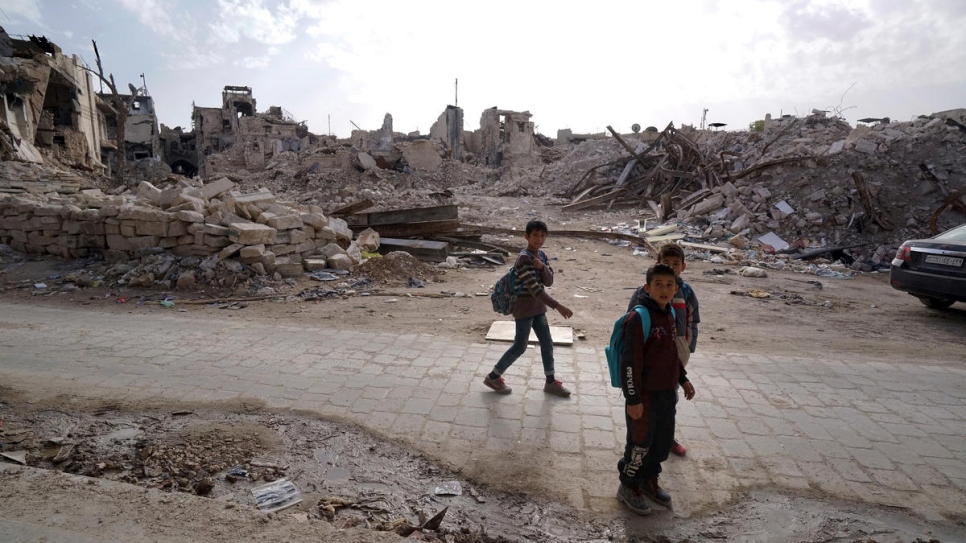
The United Nations’ top disarmament official stressed the urgent need to identify those who have used chemical weapons in Syria, and hold them accountable for their deeds. “Without such an action, we are allowing the use of chemical weapons to take place with impunity,” Izumi Nakamitsu, UN High Representative for Disarmament Affairs, told the Security Council in a virtual briefing. Nakamitsu was briefing Council members on implementation of Resolution 2118, in which unanimous agreement was reached in 2013 to condemn “in the strongest terms” any use of chemical weapons in Syria. Yet the country has seen continued chemical attacks since then. In a new report, the Organization for the Prohibition of Chemical Weapons (OPCW) summarized 19 “outstanding issues” that remain, six-and-a-half years after the Bashar Assad regime claimed that it had handed over all chemical agents and destroyed all facilities. The OPCW expressed concern that at least one chemical weapons production facility in the country remains operational. (Photo of ruins of Aleppo, where chemical weapons were used in 2017: OCHA/Halldorsson via UN News)

Syria
Derik

US forces sent back in to northern Syria?

Two days after President Biden’s inauguration, a large convoy of US military vehicles reportedly entered northern Syria from across the Iraqi border. The convoy, consisting of some 40 trucks and armored vehicles accompanied by helicopters, was reported by Syrian state media, citing sources on the ground. The putative sighting raises speculation that Biden is reversing the withdrawal of US troops from northern Syria, which had been ordered by Trump in 2019. The report comes as the uneasy peace between Kurdish forces in the region and the Assad dictatorship is breaking down, with new fighting in the town of Qamishli, shattering a de facto power-sharing arrangement. (Photo: North Press Agency)

Watching the Shadows
Podcast: Rule of the Strongmen

In Episode 59 of the CounterVortex podcast, Bill Weinberg takes stock of Trump’s evident preparation for a coup d’etat and what could be a culminating moment for the current crisis of American democracy. In the context of this dilemma, he discusses two very timely new books with similar titles that both examine the mechanics by which dictators seize and maintain power: Strongman: The Rise of Five Dictators and the Fall of Democracy by Kenneth C. Davis and Strongmen: Mussolini to the Present by Ruth Ben-Ghiat. Listen on SoundCloud or via Patreon. (Image via Macmillan)

Africa
Somaliland

Russia seeks naval base in Sudan —and Somaliland?

Just after Russia finalized plans to establish a naval base on the Red Sea in Sudan, Moscow’s UN ambassador for the first time weighed in diplomatically on the dispute between Somalia and the separatist enclave of Somaliland, urging both sides to find a compromise solution. The move sparked speculation within the region that Russia is seeking a second naval facility at Somaliland’s port of Berbera, on the Gulf of Aden which guards the southern mouth of the Red Sea. This would allow Russia to establish a counter-presence to US, French and Chinese bases in Djibouti, just across the land border to the northwest, as well as Turkish military forces in Somalia proper to the south. (Map: Somalia Country Profile)

Watching the Shadows
Kremlin

Katie Halper: ‘Useful Idiot’ or Russian ‘infiltrator’?

Popular vlogger and comedian Katie Halper, whose journalistic take-downs of the Democratic Party establishment have been deftly exploited by the Kremlin propaganda machine, wears the accusation that she is a “useful idiot” for Russia as a badge of pride—”Useful Idiots” is actually the sarcastic name of the podcast she co-hosts with the equally problematic Matt Taibbi. We’ve always wondered if such figures really are useful idiots, or something more sinister—knowing propagandists for Vladimir Putin’s reactionary global ambitions. The debate has suddenly exploded onto the left-wing vlogosphere. (Photo: Wikipedia)

Watching the Shadows
headlines

Targeted disinformation neutralizes US left

Progressives in the United States show little awareness of the disinformation specially targeting them. Denialism about Russian interference in the US elections is now translating into denialism about how dangerous the Trump presidency is. In 2016, we saw Russian-promoted “left” sites and writers post memes and articles that trashed Hillary Clinton, equated Clinton and Trump, or even portrayed Clinton as the worse choice. They dominated “Leftbook” social media and helped depress the progressive vote—a decisive factor in Trump’s win. We are seeing a replay now. Biden and Harris are denounced far more than Trump on some “left” sites, while Trump’s incipient fascism is downplayed. This influence has also been felt in the appalling lack of protest against Trump. Through his round-ups of undocumented immigrants, his abandonment of climate and arms control treaties, the impeachment, progressives failed to fill the streets—until the Black Lives Matter uprising, bringing a new and different leadership to the fore. In a presentation for Women’s March Minnesota, longtime activist Terry Burke examines how the US left is in danger of being manipulated and neutralized by a sophisticated online propaganda campaign, facilitated by the Kremlin and its media arms and corporate enablers like Facebook. (Image: TerryBurke)

Iraq
Yazidis

Yazidis call Middle East indigenous alliance

In a meeting hosted by the Yazidi autonomous territory of Ezidikhan in northern Iraq, representatives of tribal peoples and ethnic minorities from across the Middle East and North Africa agreed on a framework for a region-wide alliance of stateless nations struggling for self-determination and autonomy. The meeting at the Ezidikhan seat of Shingal was attended by representatives of the Mandaeans and Zoroastrians as well as Yazidis. Messages of support were also sent by the Shabaks of Iraq, Ahwazi Arabs of Iran, Berbers of Libya, and Palestinian Bedouins residing in the state of Israel. Delegates announced formation of a Confederation of Indigenous Nations of the Middle East open to all stateless peoples of the region. The Confederation pledges to seek greater recognition for stateless peoples of the Middle East at the UN Permanent Forum on Indigenous Issues, and to seek redress for persecution, exclusion and genocide. (Photo of Yazidi delegates: Ezidikhan.net)

Syria
Daraa

Armed struggle re-emerges in regime-controlled Syria

Bashar Assad’s Russian-backed reconquest of most of Syria over the past two years is beginning to look like a Pyrrhic victory, as protest and even armed resistance re-emerge in regime-controlled territory. Insurgency is especially mounting in southern Daraa province—where the revolution first began in 2011. Brig. Gen. Talal Qassem of the army’s 5th Division was shot dead this week by gunmen on a motorcycle in the northeast of Daraa. He was the second regime general slain in the province since Assadist forces retook southern Syria in July 2018. They were among more than 200 regime soldiers and officials slain in attacks over this period, and the pace of the attacks is fast escalating. Among regime figures slain in the past month are the mayor of the town of Lajat, a military intelligence officer, and a member of the “reconciliation committees” attempting to rebuild regime support. (Photo: EA Worldview)

Afghanistan
Afghan army

Iraq and Afghanistan: US troops out, Chevron in?

Playing to anti-war sentiment just in time for the election, the Trump administration announces a draw-down of thousands of troops from Iraq and Afghanistan. This comes as Chevron has quietly signed an agreement with Iraq for the development of the massive Nassiriya oil-field. Chevron has also announced a new initiative with Kazakhstan, with an eye toward oil exports through a trans-Afghan pipeline. We’ve been hearing talk of a US “withdrawal” from Iraq and Afghanistan for years—but military advisors and contractors have always remained, and ground troops have always been sent back in again as soon as things start to get out of hand. And as long as oil money follows the military, that will always be the case. Don’t be fooled. (Photo: Army Amber via Pixaby)

Syria
Khan Sheikhoun

Syrian opposition marks seven years of chemical terror

On the seventh anniversary of the chemical weapon attack on the Damascus suburb of Ghouta, which left 1,400 civilians dead, the Syrian opposition issued a statement protesting that the responsible parties are still yet to be held accountable—while gas attacks have continued in Syria. The National Coalition of Syrian Revolutionary & Opposition Forcesdemanded that the perpetrators of the attack be tried by the International Criminal Court. “The collapsed international system is the one that allowed this massacre to happen and left those responsible unjudged,” the statement said. The regime of Syrian dictator Bashar Assad has carried out hundreds of chemical attacks since 2013. (Photo from April 2017 Khan Sheikhoun attack via EA Worldview)

Syria
Tal Al-Zahab

Syria: US troops clash with Assad regime forces

US troops clashed with an Assad regime unit in northeast Syria, an incident that illustrates the uneasy patchwork of power in the region. One regime soldier was reportedly killed and two wounded. Both Pentagon and Damascus accounts agreed the confrontation began when a joint convoy of US and Kurdish forces encountered a regime roadblock, but differed on which side fired first. The regime also claimed a US warplane fired on the roadblock, contrary to the Pentagon account. US-backed Kurdish forces have controlled much of the northeast since driving out the Islamic State last year. However, the regime, supported by Russia, also occupied part of the area as ISIS was defeated. (Photo: QalaatM via Twitter)

Syria
Syria oil map

Rojava Kurds cut deal with US oil company

In the imperial carve-up of northern Syria, US troops have since late last year been controlling the oil-fields of Deir ez-Zor province, in collaboration with the Kurdish-led Syrian Democratic Forces. Now reports are emerging that the Kurdish autonomous administration in the region has signed a 25-year contract with a little-known US company for exploitation of the oil. The company, Delta Crescent Energy, received a waiver from US sanctions on Syria from the Treasury Department. The deal was confirmed by Secretary of State Mike Pompeo in testimony before the Senate Foreign Relations Committee. (Map: Energy Consulting Group)