Syria

Book review: Impossible Revolution

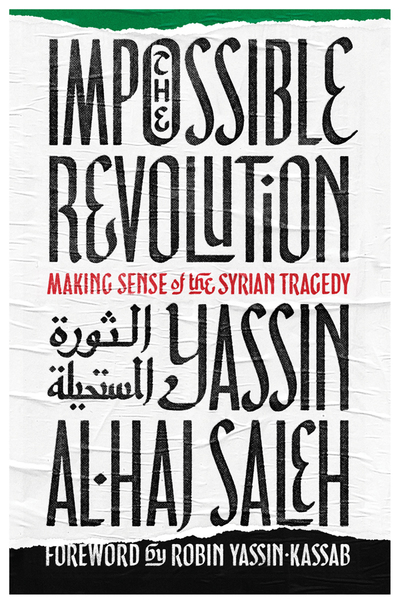
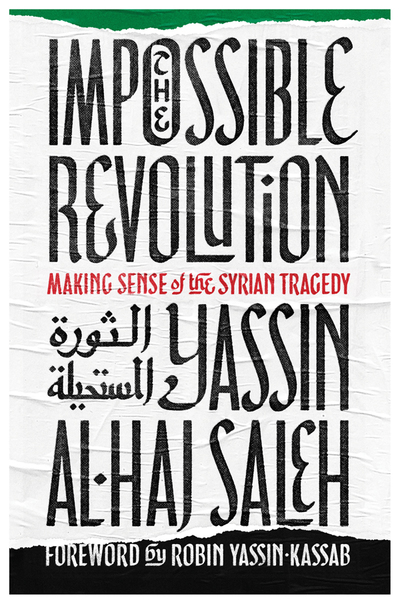
This book is a necessary corrective to the dominant perception—left, right and center—that the opposition in Syria are all jihadists and dictator Bashar Assad the best bet for “stability.” Long a left-wing dissident in Assad’s Syria, Saleh is a veteran of the dictator’s prisons. Here, he traces the origins of the Syrian revolution to agony caused by the regime’s “economic liberalization” (socialist phrases aside), describes the initially unarmed opposition’s popular-democratic nature, and discusses the struggle to keep the Free Syrian Army accountable to this grassroots base after it became clear a military dimension to the revolution was necessary. He makes the case that the Assad regime can be termed “fascist” even by the most rigorous definition, and has been making good on its pledge to “burn the country” before ceding power. (Image: Haymarket Books)

Syria

Syria endgame: whither Idlib?

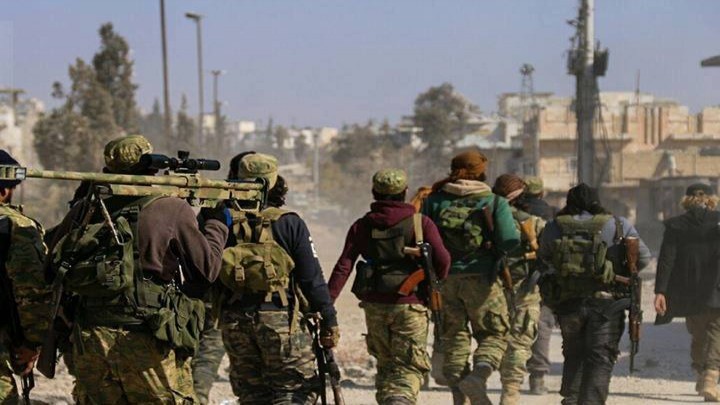
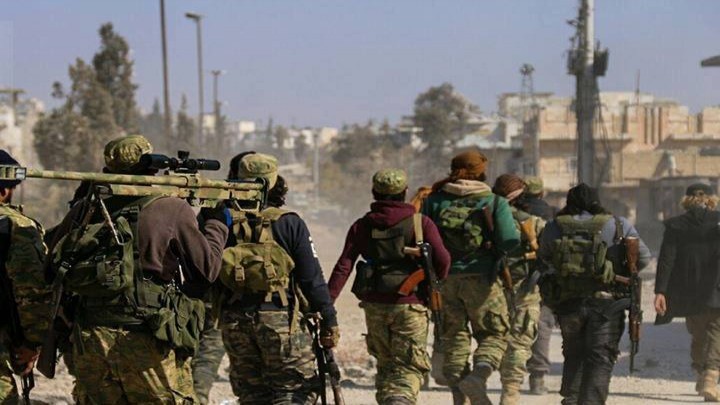
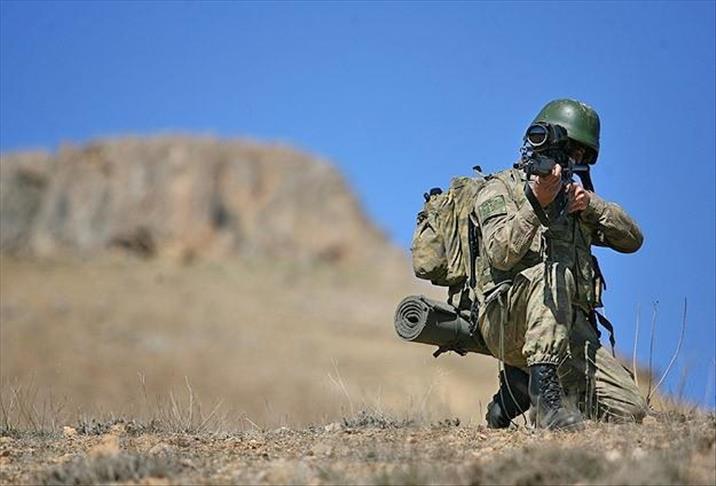
With the fall of Syria’s southern province of Daraa to Assad regime forces, only Idlib in the north remains as a last pocket of opposition control. The besieged rebel forces there are anticipating a final offensive by Assad and his Russian backers. But a complicating factor is that Turkey is occupying areas of Idlib, which means an offensive there threatens international escalation. Speaking to reporters before heading for a summit of emerging market countries in South Africa, Turkey’s Recep Tayyip Erdogan said he would speak there with Vladimir Putin about how to resolve “the issue of Idlib.” This points to a possible carve-up deal, in which the bulk of Syria falls under Assad with Russian protection, Idlib remains under rebel control with Turkish protection, and the northeastern Rojava region will remain a Kurdish autonomous zone under US protection. (Photo: Syria News)

Syria

Multiple forced population transfers in Syria

Reports have been mounting for months that Assad is replacing those displaced from his reconquered territories with Iranians and Iraqi Shi’ites, in a form of “sectarian cleansing.” Now come reports that Turkey is replacing the Kurds displaced from its conquered “buffer zone” in Syria’s north with those displaced by Assad—specifically, the Kurdish residents who fled the town of Afrin are being replaced by Sunni Arabs that fled Eastern Ghouta. Since the fall of Eastern Ghouta, the regime has turned its campaign of aerial bombardment on Yarmouk refugee camp outside Damascus, causing thousands of the camp’s already once-displaced Palestinians to flee. (Photo of Yarmouk via UNWRA)

Syria

Southern Front rebels next in Assad regime sights

Since the Douma chemical attack terrorized the rebel defenders of Eastern Ghouta enclave into accepting a “surrender deal” and evacuating to Idlib province, the Assad regime and its Russian allies have been preparing a final offensive on the last remaining areas of Syria still under rebel control. These of course include Idlib in the north, the largest rebel-held area. But mounting reports suggest the regime may first focus its firepower on Daraa province in the south, where the Free Syrian Army’s Southern Front continues to hold territory. And while the rebel militias that hold Idlib are mostly conservative Islamists, the Southern Front is secular-nationalist in its leadership. (Southern Front logo via Wikipedia)

Syria

Afrin and Ghouta: fearful symmetry

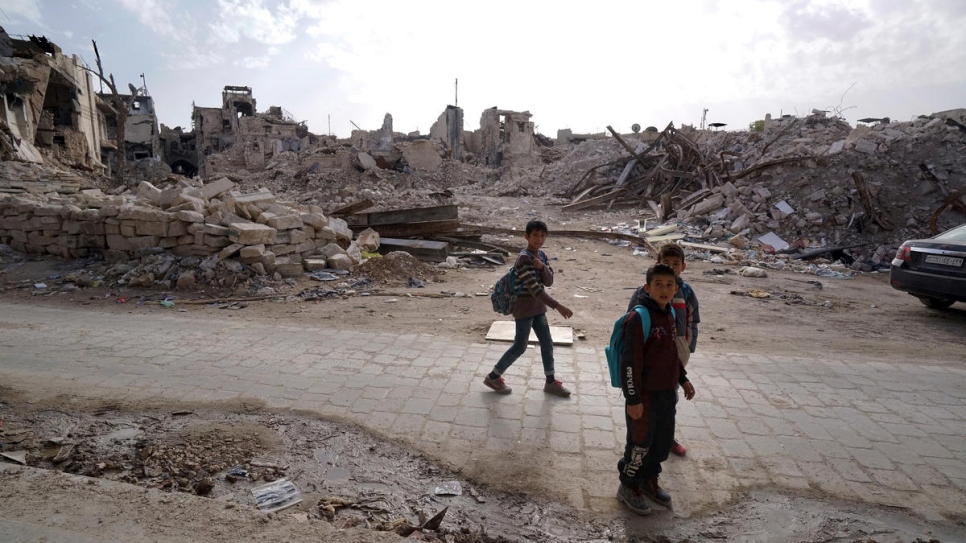
The imminent fall of rebel-held Ghouta to Russian-backed Assad regime forces approaches just after the fall of Kurdish-held Afrin to Turkish-backed rebel forces. As Arab and Kurd are pitted against each other, the Great Powers carve up Syria. But both sides are preparing to advance on Idlib next. Even as Trump talks of getting the US out of Syria, potential builds for a superpower confrontation.  (Photo of Aleppo ruins from UNHCR)

Syria

Syria: impunity in ongoing Ghouta war crimes

Medical facilities supported by Doctors Without Borders (MSF) in besieged Eastern Ghouta report receiving 1,000 dead and upwards of 4,800 wounded over the past two weeks. Up to 20 of MSF’s facilities in the enclave have been hit by bombing or shelling. The regime is accused of using chemical and phosphorus weapons in its offensive. France has threatened “intervention measures” if claims of gas attacks are proved true. But Russia has repeatedly used its Security Council veto to block any investigation into Syrian chemical attacks.

Syria

Tragedy: Rojava Kurds close ranks with Assad

In a political tragedy that bodes more poorly than ever for any eventual return of peace to Syria, Assad regime forces joined the Kurdish militia defending the northern enclave of Afrin from Turkish aggression. This obviously heightens the threat of Arab-Kurdish ethnic war, as the regime continues its savage bombardment of rebel-held Idlib and Ghouta. And with the entry of regime forces into Afrin, there is now risk of NATO member Turkey directly engaging Assad’s troops, with obvious threat of international escalation. Of course, with Orwellian irony, Ankara is calling the offensive Operation “Olive Branch.”  (Photo: BasNews)

Syria

Afrin and Idlib offensives signal Syrian endgame?

As Turkey and its Syrian rebel allies continue their advance on Kurdish-held Afrin, Russia and its Syrian regime allies continue their advance on rebel-held Iblib. Both offensives are taking a horrific toll in civilian casualties, but the parallels don’t end there. Even as they ostensibly oppose each other, both Turkey and Assad are accused of conniving with ISIS forces to weaken the defenders of the respective enclaves. And the twin aggressions in Afrin and Idlib come amid a sudden and rapid internationalization of the Syrian war. (Photo: Kurdish militia figher at Afrin, via ANF)

Syria

Syria: ‘de-escalation’ zones become kill zones

The so-called “de-escalation” zones declared under Russia’s “peace plan” for Syria have actually become kill zones, as Moscow and the Assad regime continue their bombardment, citing the presence in the rebel enclaves of jihadist factions not covered by the deal. But the rebels and civil resistance forces have little ability to expel the jihadists—and sometimes the air-strikes continue even after they have.

Syria

Further internationalization of Syrian war

Turkey sends more troops into Syria to fight jihadist factions in Idlib province, while Russia delivers more missiles to its military base at Tartus, and the US steps up bombardment of Raqqa in support of Kurdish forces in their drive to take the city from ISIS. Can these multiple foreign forces avoid attacking each other, even if accidentally, and sparking a wider war beyond Syria’s borders?

Syria

Syria: al-Qaeda taking over Idlib governorate?

Al-Qaeda affiliate Hayat Tahrir al-Sham (HTS) took over the city council building in Idlib, capital of the governorate of that name in northwest Syria and the biggest opposition-held city in the country. HTS has in recent weeks won control of much territory in Idlib governorate, in ongoing battles with rival factions. However, HTS continues to face resistance from local residents, with demonstrations against their rule by civil resistance activists in many areas.

Syria

Who is behind attack on White Helmets?

Seven volunteers of the White Helmets civil defense organization were killed by a gang that raided their headquarters in Sarmin, Idlib province, in northwest Syria. No one has claimed responsibility for the attack, but it came as Idlib province is being rocked by clashes between Hayat Tahrir al-Sham (HTS, aligned with al-Qaeda) and the rival Ahrar al-Sham. Sarmin is controlled by HTS, which recently warned that it had uncovered ISIS sleeper cells in Idlib province.