The Caribbean
Coast Guard

Condemn ongoing US air-strikes on vessels in Caribbean

Human Rights Watch released a statement condemning the “unlawful use of lethal force outside any context of armed conflict” by the US military over the past months. The organization stressed that the ongoing deadly strikes on vessels thought to be carrying illegal drugs in the Caribbean and eastern Pacific amount to “extrajudicial executions.” The statement came in response to an announcement from the Pentagon’s Southern Command that the US carried out a “lethal kinetic strike” on a boat allegedly engaged in drug trafficking. The strike killed three individuals, and was the 47th such strike  carried out since September, resulting in 163 total deaths. (US Coast Guard via Wikimedia Commons)

Iran
Minab

Demand accountability for US strike on Iran school

Amnesty International called for those responsible for a US strike on an Iranian school to be held accountable. The Feb. 28 strike on the girls’ school in Minab, in southern Iran, killed over 100 children. Amnesty’s Evidence Lab conducted an investigation into the strike, analyzing over 30 satellite images and reviewing official statements, media reports, and witnesses accounts. The group found that the school was hit by precision-guided munitions, and additionally uncovered that the US may have relied on outdated intelligence to conduct the strike. This would constitute a violation of international law—specifically the duty to verify that an intended target is a military objective. While the school was located adjacent to a military compound of the Islamic Revolutionary Guard Corps, satellite images show that the building had been physically separated from the compound by construction of perimeter walls at least since from 2016. (Photo: Mehr via Wikimedia Commons)

Iran
Tehran

‘Black rain’ falls on Tehran amid US-Israeli strikes

United Nations officials said that US and Israeli airstrikes on fuel depots in Tehran have released large amounts of toxic pollutants, producing acidic “black rain” across parts of the capital. Officials from the World Health Organization warned that the burning of depots has released hydrocarbons, sulphur oxides, and nitrogen compounds into the atmosphere. The released pollutants have caused darkened skies in Tehran, prompting authorities to adviseresidents to remain indoors due to respiratory risks and potential water contamination. (Photo: Mehr via Wikimedia Commons)

Greater Middle East
Minab

UN demands civilian protection amid Middle East escalation

The United Nations urgently called for civilian protection amid growing violence and instability in the Middle East—and particularly in regard to the ongoing US and Israeli military operations against Iran. The UN urged a thorough investigation into a deadly strike on a girls’ school in Iran, and requested the disclosure of all relevant information. The attack in the southern coastal city of Minab reportedly killed 168 people. According to Iran’s Ministry of Education, the overwhelming majority of the slain were schoolgirls aged seven to 12. The strike came on the first day of coordinated US and Israeli airstrikes officially targeting Iranian infrastructure and military facilities. (Photo: Mehr via Wikimedia Commons)

Planet Watch
Rakhine

Deadly strikes on hospitals: the new norm?

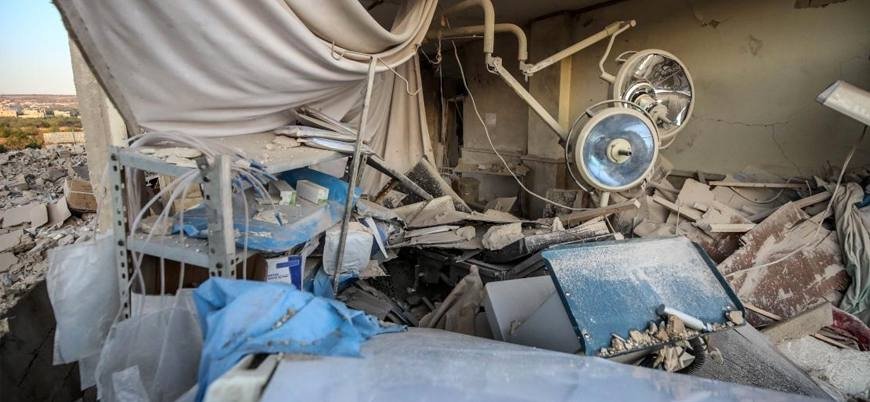
On World Humanitarian Day in August, World Health Organization director-general Tedros Adhanom Ghebreyesus released a statement calling attention to intensifying attacks on healthcare workers and facilities, which constitute war crimes under international humanitarian law. “We must stop this becoming the norm,” he wrote. The events of the past weeks suggest such attacks are now already the norm. In Sudan, the WHO reported that over 100 people, including 63 children, were killed when drone strikes attributed to the Rapid Support Forces hit a kindergarten and nearby hospital in South Kordofan. In Burma’s Rakhine state, a military airstrike destroyed the Mrauk-U general hospital, killing at least 31 people and wounding dozens more. It was the 67th attack on a healthcare facility in Burma this year, according to the WHO. Attacks on healthcare facilities killed a record 3,600 people in 2024, mainly in Gaza, Ukraine, Lebanon, Burma and Sudan. This year is on course to surpass that toll. In Gaza alone, at least 917 people were killed by Israeli attacks on healthcare facilities between Oct. 7. 2023 and June of this year. (Photo: Myanmar Now)

Greater Middle East
warplanes

Civilian toll of US bombing in Yemen

A late May ceasefire between Yemen’s Houthi rebels and the US appears to be holding, although Israel and the Houthis are still in conflict, with the latter saying this week that they have joined Iran’s war effort. A new report from casualty monitor AirWars looks at the civilian death toll during the 53 days of “Operation Rough Rider,” when Trump escalated a long-running US bombing campaign in Yemen. The monitor says at least 224 civilians were killed between the operation’s start in mid-March until the May truce, marking a massive escalation from previous US campaigns. If you also include the 258 civilians counted as killed in the previous 23 years of US operations against the Houthis, al-Qaeda, and other groups, it takes the overall civilian toll from US bombing in Yemen to almost 500. (Photo: CENTCOM)

Greater Middle East
Yemen

Signal breach exposes flippant attitude to civilian deaths

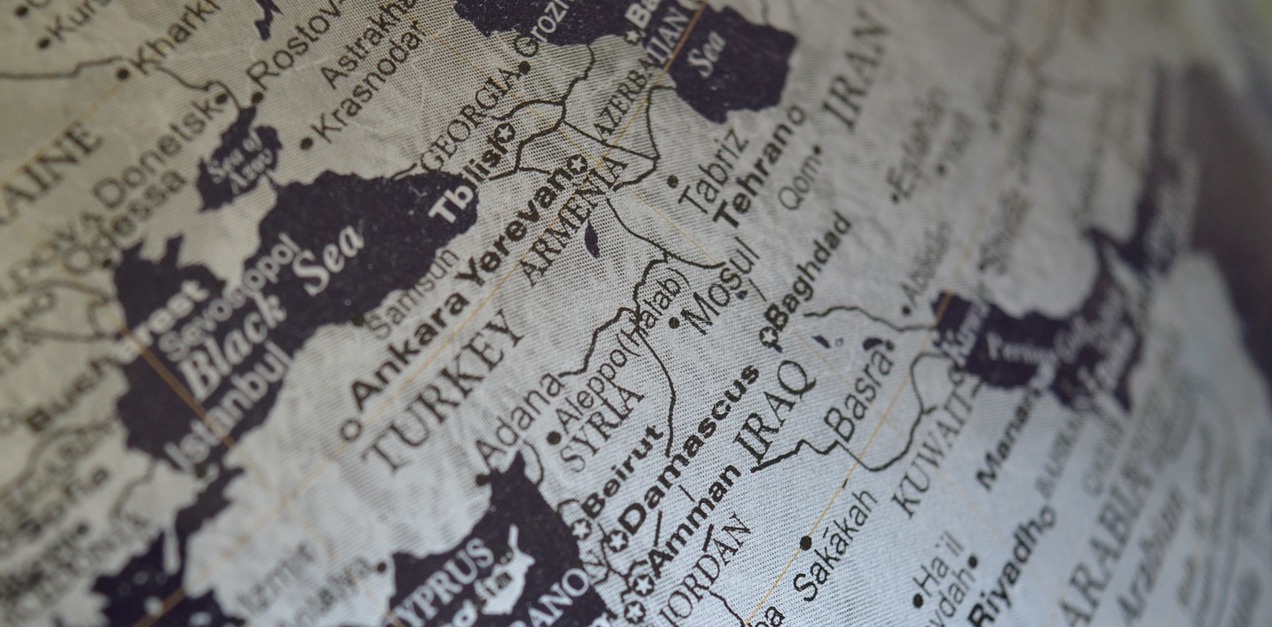
Nearly 60 people, including children, have been killed as the United States expands its two-week bombing campaign in Yemen to include (according to a review by the Associated Press) “firing at ranking personnel as well as dropping bombs in cities.” This comes as recently exposed Signal messages between senior US officials discussing the air-strikes demonstrated a flippant attitude towards the lives of Yemeni civilians. In one disturbing exchange concerning an apparent strike on a civilian apartment building, National Security Advisor Mike Waltz writes: “The first target—their top missile guy—we had positive ID of him walking into his girlfriend’s building and it’s now collapsed.” “Excellent,” comes the reply from Vice President JD Vance. The messages, which were brought to light after a journalist from The Atlantic was mistakenly added to the officials’ group chat in a staggering breach of normal security protocols, show a callous indifference to the ethical implications of bombing civilian areas. This is perhaps unsurprising for a country that provided many of the planes and trained many of the pilots involved in the Saudi-led bombing campaign that killed over 9,000 Yemenis between 2015 and 2022. (Map via PCL)

Afghanistan
ICC

ICC rules Afghanistan investigation may proceed

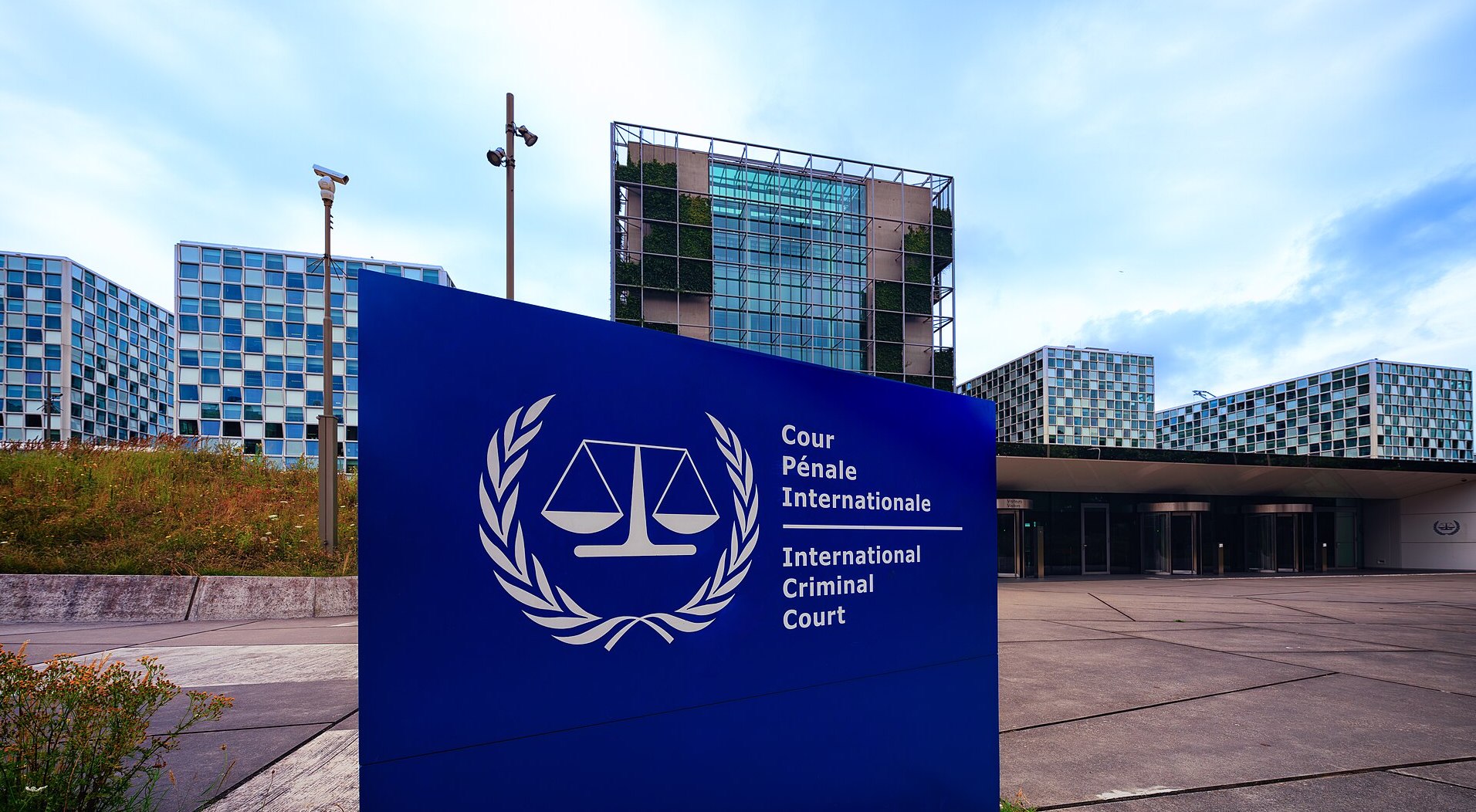
Pre-Trial Chamber II of the International Criminal Court (ICC) authorized prosecutors to resume their investigation into atrocities committed in Afghanistan since May 1, 2003, following a two-year hiatus. The Chamber found “that Afghanistan is not presently carrying out genuine investigations.” The Chamber emphasized that the authorization is limited to crimes falling within the conflict as it existed at the time of the original investigation request in November 2017. The Chamber rejected that request in April 2019. This decision was overturned by the Appeals Chamber in March 2020. However, the investigation was halted following a request from the government of Afghanistan. ICC prosecutor Karim AA Khan sought to review the deferral in September 2021. At that time, Khan said he concluded,“there is no longer the prospect of genuine and effective domestic investigations into Article 5 crimes within Afghanistan.” (Photo: ICC)

Syria
Aleppo ruins

UN: more than 300,000 civilians dead in Syria war

More than 306,000 civilian were killed in Syria between March 2011 and March 2021, according to new estimates released by the United Nations Human Rights Council. According to the latest findings, civilians represent an overwhelming majority of the estimated 350,209 total deaths identified since the start of the civil conflict. UN High Commissioner for Human Rights Michelle Bachelet emphasized that this “does not include the many, many more civilians who died due to the loss of access to healthcare, to food, to clean water and other essential human rights, which remain to be assessed.” This is compounded by estimates from the World Bank that more than half the country’s pre-war population has been displaced. (Photo of Aleppo ruins from UNHCR)

Afghanistan
afghanistan

Afghanistan: no, the war is not over

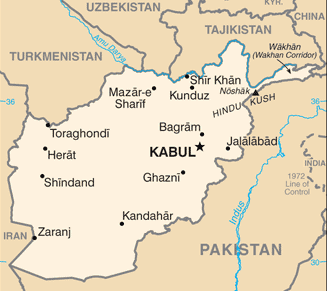
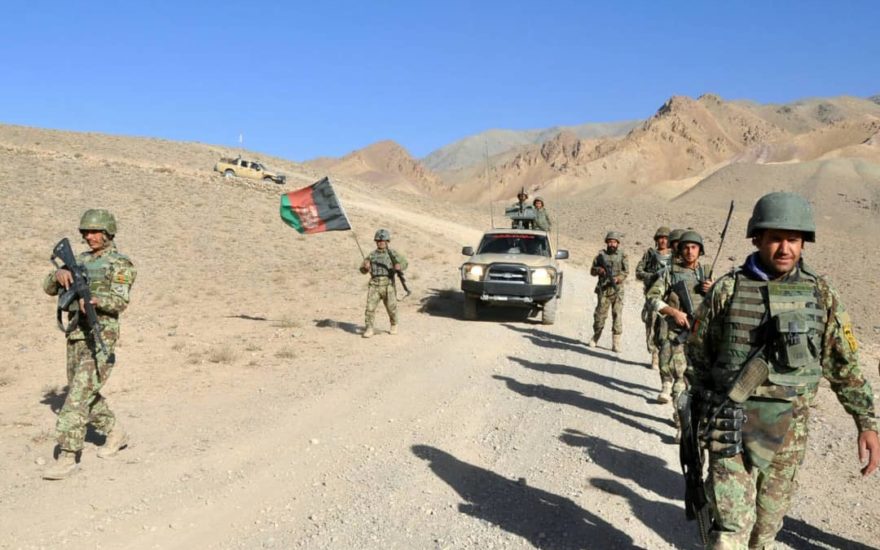
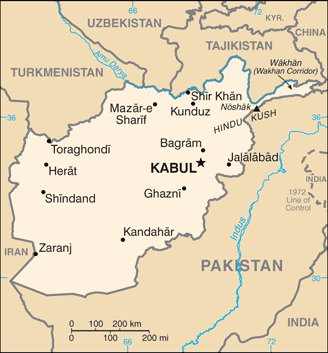
With absurd hubris, Biden in his speech as the last US troops left Kabul declared that “the United States ended 20 years of war in Afghanistan.” It’s perverse enough that he called the US evacuation of some 120,000 Afghans and Americans an “extraordinary success”—despite the fact that more than 100 US nationals and many thousands of desperate Afghans were left behind. But this reality-denying “ended the war” rhetoric is being uncritically echoed by media accounts. The war in Afghanistan began in 1979, with the massive Soviet military intervention to put down the Mujahedeen, and the country hasn’t seen a moment of peace since then. Nor is there much prospect for peace any time in foreseeable future. This is the same imperial narcissism we heard with the much-hyped US “withdrawal” from Afghanistan in 2014, and the “withdrawal” from Iraq in 2011. But this time, Afghanistan is essentially being turned over to the Taliban as a US-collaborationist or even near-proxy force to fight ISIS. The Taliban remain a brutal, intolerant and ultra-reactionary Islamist entity, but are now baited as co-opted moderates by the even more extremist ISIS. (Map: Perry-Castañeda Library)

Syria
Raqqa

Survivors struggle four years after battle of Raqqa

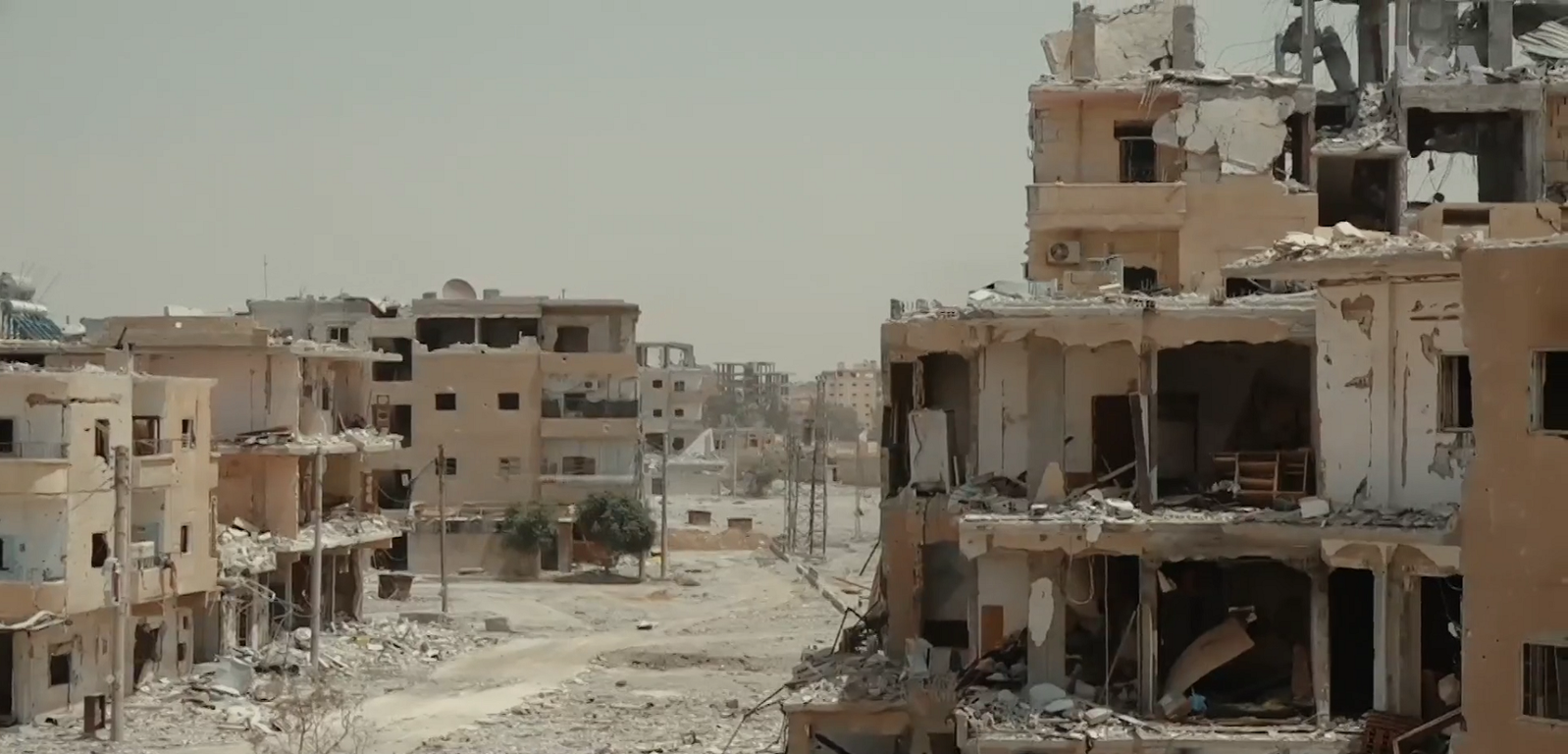
Children in Raqqa, northeast Syria, are still living among ruins, with limited water, electricity, and access to education, four years after the city was taken from ISIS, according to a new report by Save the Children. Thousands of people have returned to Raqqa since the battle for the city ended in 2017. But levels of rebuilding and rehabilitation of housing remain low, with children living in constant fear of their homes collapsing on top of them. Research estimates that 36% of the city’s buildings remain entirely destroyed. At the peak of the bombing campaign, Raqqa faced 150 air-strikes a day. (Photo: Mahmoud Bali/VOA via Wikimedia)

Iraq
mosul

ISIS regroups amid slow rebuilding in Iraq

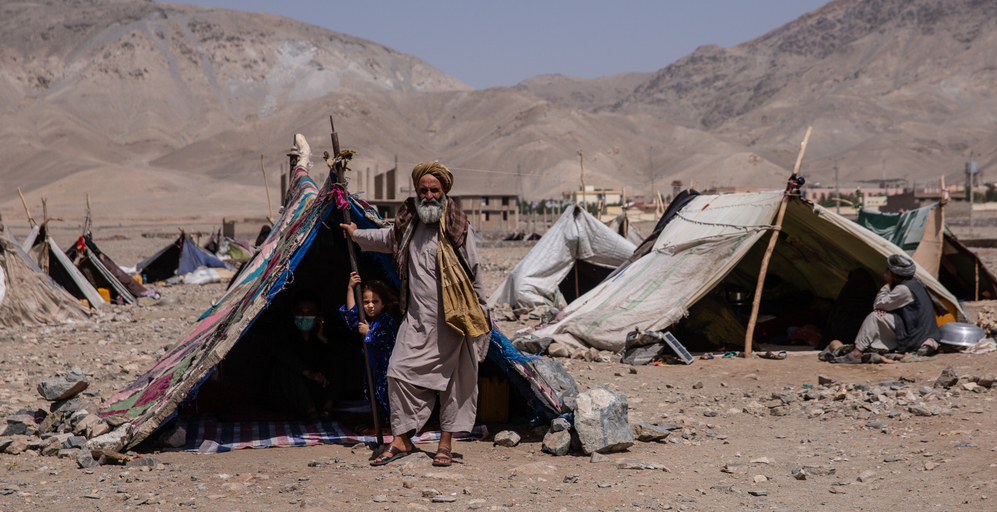
A suicide bomb killed at least 30 in Baghdad, exploding in a busy market as people prepared for the Eid al-Adha holiday. The so-called Islamic State claimed responsibility for the blast. Nearly four years after the liberation of Mosul, remnants of the militant organization are regrouping to stage scattered attacks across the country. And Iraq has yet to recover from the fight against ISIS. In a new report from the Norwegian Refugee Council, Mosul residents offer sobering testimony on the challenge of trying to restart their lives despite a failure to rebuild much of the city’s devastated homes, infrastructure, and economy. There are still around 1.2 million Iraqis displaced across the country, including 257,000 in Nineveh province, where Mosul sits. Aid groups warn that these people are being exposed to new risks as camps close, leaving some with nowhere to go. (Photo: Tom Peyre-Costa/NRC via ReliefWeb)