The Caribbean
Esequibo

Venezuela revives claim to Guyana territory

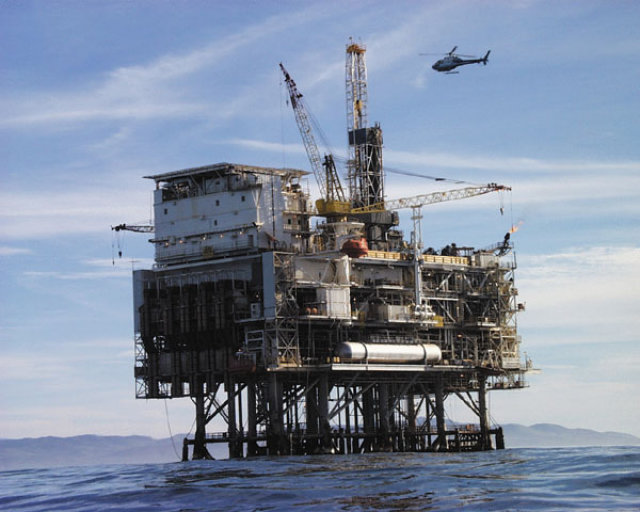
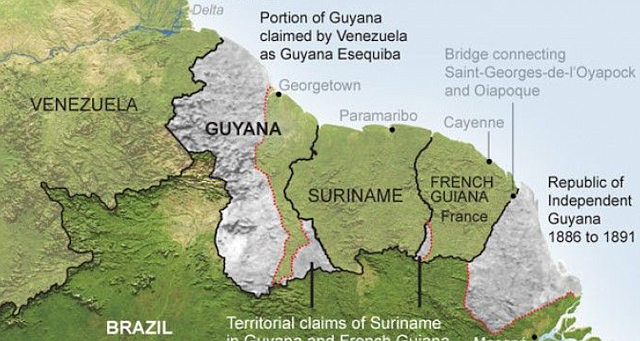
Venezuelan prosecutors finally announced charges against opposition leader Juan Guaidó for “high treason”—but not for colluding with foreign powers to overthrow the government. No, Guaidó is to face charges for his apparent intent to renounce Venezuela’s claim to a disputed stretch of territory that has been controlled by neighboring Guyana since the end of colonial rule. The Esequibo region covers 159.000 square kilometers—nearly two-thirds of Guyana’s national territory. The old territorial claim languished for generations—until  2015, when ExxonMobil announced discovery of a big offshore deposit in waters off the Esequibo coast. This came just as Venezuela was sliding into crisis, providing President Nicolás Maduro with a nationalist rallying cry. (Map via El Tiempo Latino)
Syria

Did Assad sign off on Israeli air-raid in Syria?

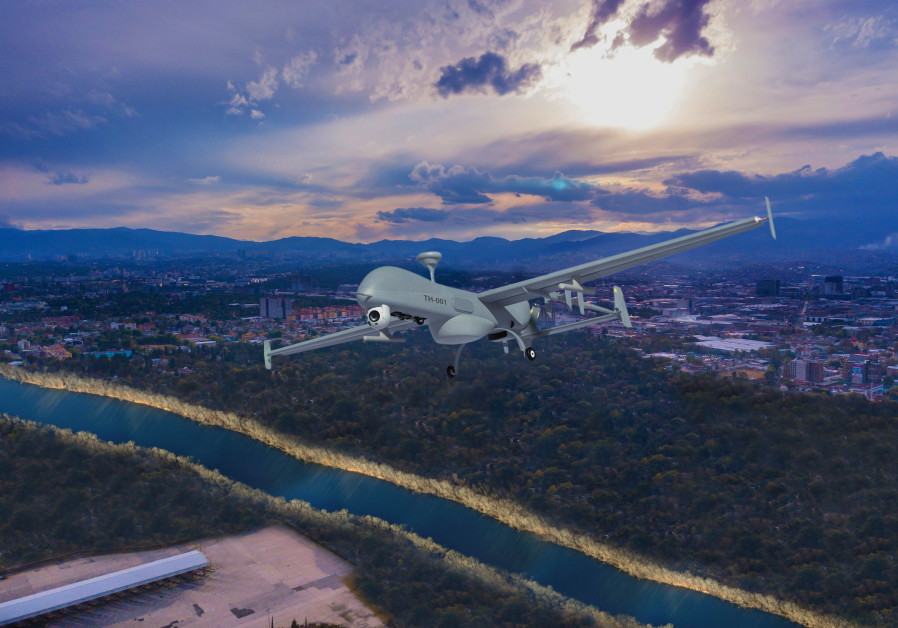
After years of presumed Israeli air-strikes on Iranian forces in Syria, the IDF finally carried out air-strikes that were publicly acknowledged, hitting a compound near Damascus supposedly shared by the Revolutionary Guards’ elite Quds Force and Hezbollah militants. The strikes follow reports in the Israeli press that there is an “undeclared pact” between Assad and Netanyahu allowing Israel to strike Iranian targets in Syria in exchange for diplomatic assistance in regional “normalization” of the Assad regime. (Photo: Israel Aerospace Industries via Jerusalem Post)

South Asia
Kashmir

Militarization as Delhi prepares to dismantle Kashmir

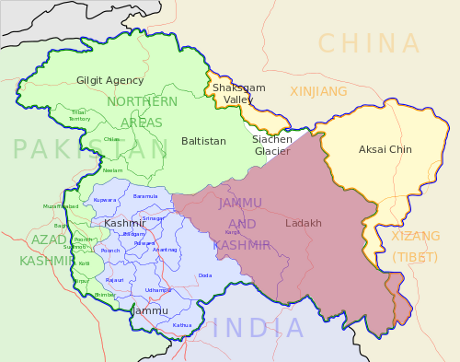
India’s government has flooded the northern state of Jammu & Kashmir with troops and cut off internet access upon announcing the revocation of its constitutionally protected autonomy, and plans to divide the disputed territory into two new political entities with reduced power. Article 370 of India’s constitution grants Jammu & Kashmir a high degree of autonomy, a concession to the demands of the territory’s Muslim majority, many of whom favor independence or union with Pakistan. In addition to abrogating Article 370, Delhi announced plans for a bill to divide India-controlled Kashmir into two “union territories,” which have lesser powers of self-government than states. A reduced Jammu & Kashmir Union Territory would continue, at least, to have a legislature. But it would be separated from the Buddhist-majority region of Ladakh, which is to become its own union territory, without a legislature. Complicating matters further is that the populace of Ladakh itself is divided along sectarian and regional lines. News of the plan to separate Ladakh from Jammu & Kashmir was met with jubilation in the principal Buddhist town of Leh, but with foreboding in Kargil, an enclave within Ladakh inhabited by Ismaili Muslims.  (Map via Wikipedia)

Africa

General Assembly: UK must return Chagos Islands

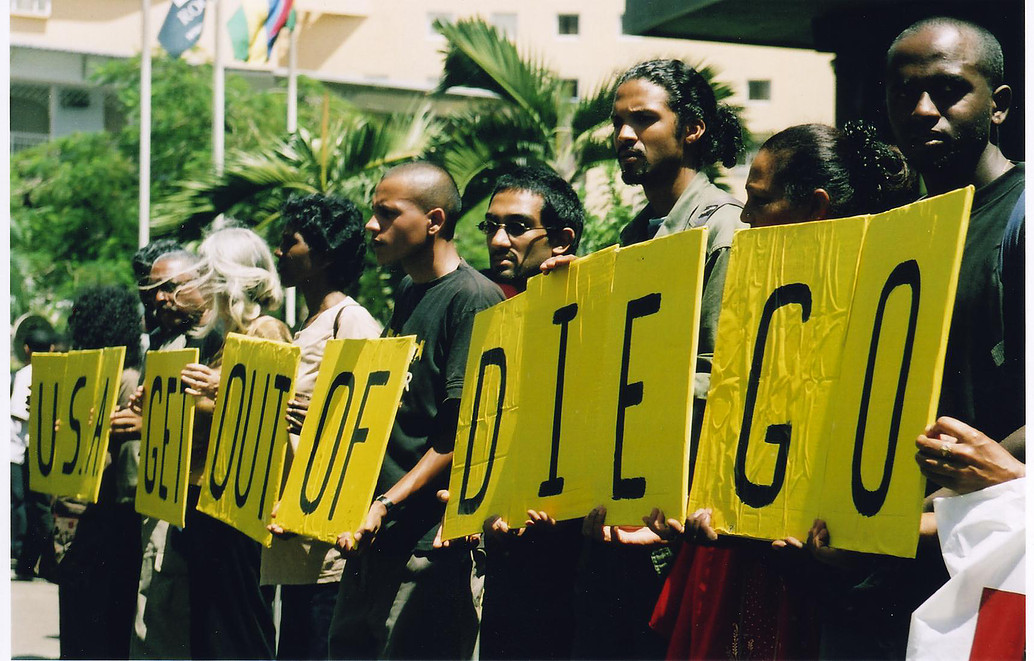
The UN General Assembly passed a resolution demanding the United Kingdom return control of the Chagos Islands to Mauritius within six months. The non-binding resolution follows an advisory opinion issued by the International Court of Justice in February, finding that the UK is “under an obligation” to end its administration of the islands “as rapidly as possible.” The UK retained control over the islands after Mauritius gained its independence from Britain in 1968, following a supposed compensation deal between the two states. Mauritius now rejects the deal as having been imposed unilaterally. The entire Chagossian population was forcibly removed from the territory between 1967 and 1973 to make way for a joint US-UK military base, which is still in place on the island of Diego Garcia. Before the UN vote, Mauritian Prime Minister Pravid Kumar Jug-Nauth told the General Assembly the forcible eviction of Chagossians was akin to a crime against humanity. (Photo: WILPF)

The Andes

Bolivia: did opposition call for US ‘intervention’?

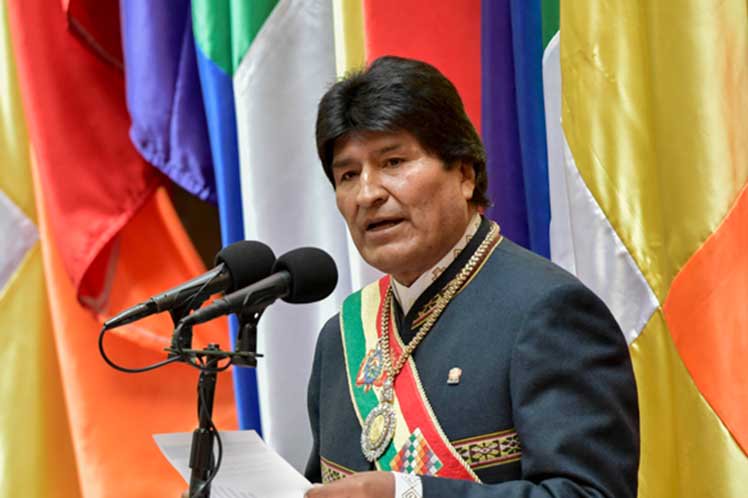
Bolivian President Evo Morales launched his campaign for a fourth term with a massive rally in the Chapare region where he began his career as a peasant leader a generation ago. But the country’s political opposition charges that Morales is defying a 2016 referendum, in which voters rejected a fourth consecutive term. The referendum results were later overturned by the Plurinational Constitutional Court—sparking a wave of protest. The campaign begins amid controversy surrounding accusations that opposition lawmakers have sent a letter to Donald Trump jointly calling for his “intervention” against Morales’ re-election. (Photo: Apporea)

Africa

Ethiopia in peace pact wth Oromo Liberation Front

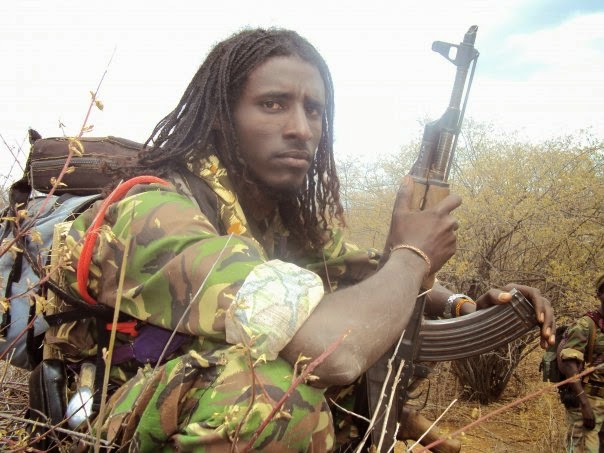
Following peace talks hosted by Eritrea, the government of Ethiopia announced a peace deal with the Oromo Liberation Front rebels. The deal guarantees rebel leaders the right to participate in Ethiopia's political process in exchange for laying down arms. The OLF has long been backed by Eritrea, and the pact comes one month after a formal end was declared to the two-decade state of war between Ethiopia and Eritrea, with Ethiopia ceding its claim to the contested border town of Badme. This points to a softening of positions under Ethiopia's new prime minister, Abiy Ahmed. The Badme deal was also said to have been quietly brokered by the United Arab Emirates, which has emerged as politically isolated Eritrea's most significant foreign patron, part of an apparent design to encircle Yemen. (Photo: Yassin Juma

South Asia

China expands Indian Ocean military footprint

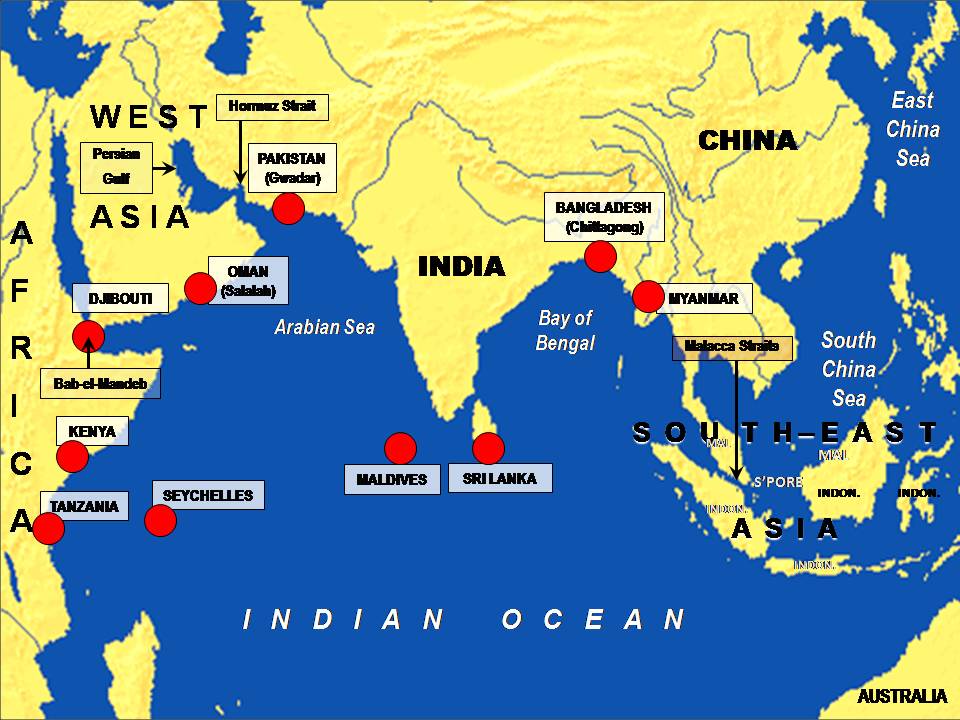
In addition to stationing troops on the disputed islands it claims in the South China Sea, Beijing is rapidly expanding its network of commercial ports across the Indian Ocean. This comes as China is sending warships into the Ocean with growing frequency, leading to fears that the commercial ports could presage military bases, The latest addition is the port of Hambantota in Sri Lanka, acquired in a debt swap deal—the Colombo government was forgiven $1 billion in debt to Beijing in exchange for the Hambantota facility. China has also gained access to facilities in Burma, Bangladesh, Pakistan, the Maldives, Seychelles and Oman as part of the maritime component of its Silk Road trade and infrastructure initiative. While the Silk Road is an ostensibly civilian project, China has also established its first foreign military base at Djibouti, leading Western wonks to warn that Beijing is seeking a "string of pearls" network of bases across the Indian Ocean.  (Map via CIMSEC)

North America

Bay of Fundy flashpoint for US-Canada war?

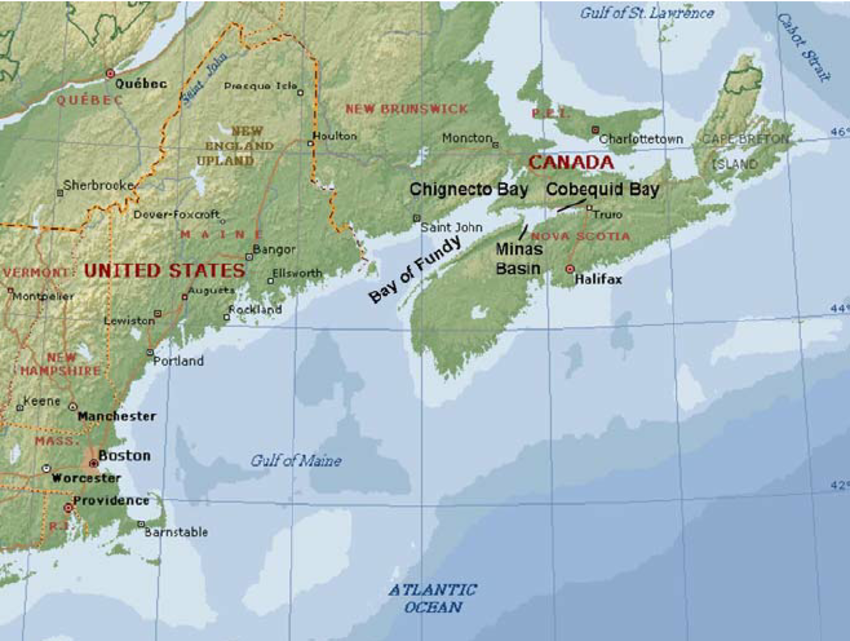
In what the New York Times somewhat hyperbolically calls a “clash,” US Border Patrol vessels have over the past two weeks stopped at least 10 Canadian fishing boats in the Bay of Fundy between Maine and New Brunswick. Canada has responded by beefing up its Coast Guard patrols in what is being termed a “disputed gray zone” between the two countries’ territories. The maritime dispute dates back to the 1783 Treaty of Paris that ended the American Revolution, and is one of several between the US and Canada—including fishing waters at Dixon Entrance between Alaska and British Columbia, and areas of the petroleum-rich Beaufort Sea, near the Arctic Ocean. (Map: ResearchGate)

East Asia
South China Sea

Brink looms closer in East Asia maritime theaters

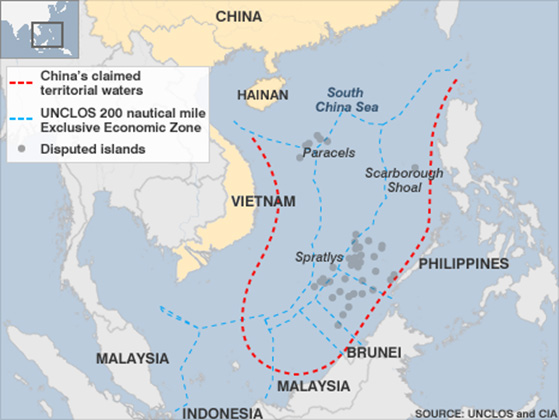
Japan has activated its first amphibious marine unit since World War II, which conducted practice drills to defend the disputed Senkaku Islands from an anticipated Chinese military seizure. Meanwhile, the USS Theodore Roosevelt aircraft carrier, with a group of Philippine generals onboard, entered disputed waters in the South China Sea, where China is building military defenses on islands claimed by the Philippines and Vietnam. Another carrier, the USS Carl Vinson, patrolled the contested waters last month, taking part in anti-submarine drills with Japanese forces and visiting Vietnam with its 5,000-strong crew—the largest such US military presence there since the Vietnam War ended in 1975. (Map via IDSA)

The Andes

Colombia: ELN ‘armed strike’ as talks break down

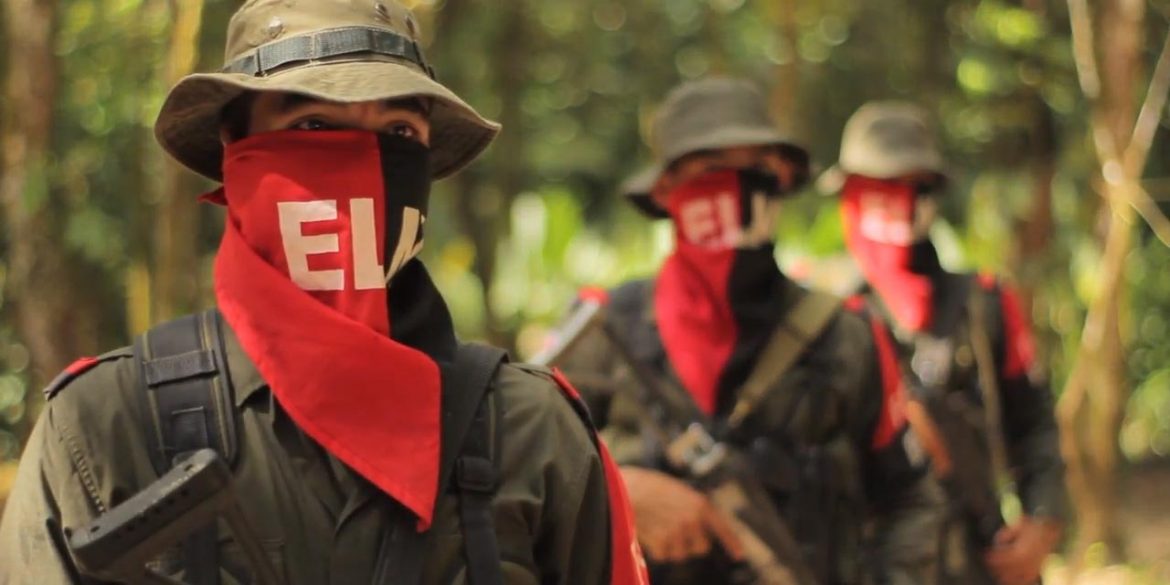
Colombia's ELN guerillas carried out a string of attacks in a new offensive aimed at shutting down the South American country, mostly targeting transportation infrastructure.  The four-day "armed strike" was called weeks after a ceasefire broke down and days after the government suspended peace talks with the ELN. Bogotá has responded to the campaign by issuing arrest warants for ELN leaders, including two top negotiators at the suspended Quito talks. The new violence has also occasioned the latest inflammation of Colombia's ongoing tensions with Venezuela, as Bogotá's defense minister Luis Carlos Villegas charged migrants from the neighboring country with involvement in the ELN attacks. Caracas, in turn, accused Colombia of preparing a "military invasion." (Photo: Colombia Reports)

Syria

Will US betray Rojava Kurds —or NATO ally Turkey?

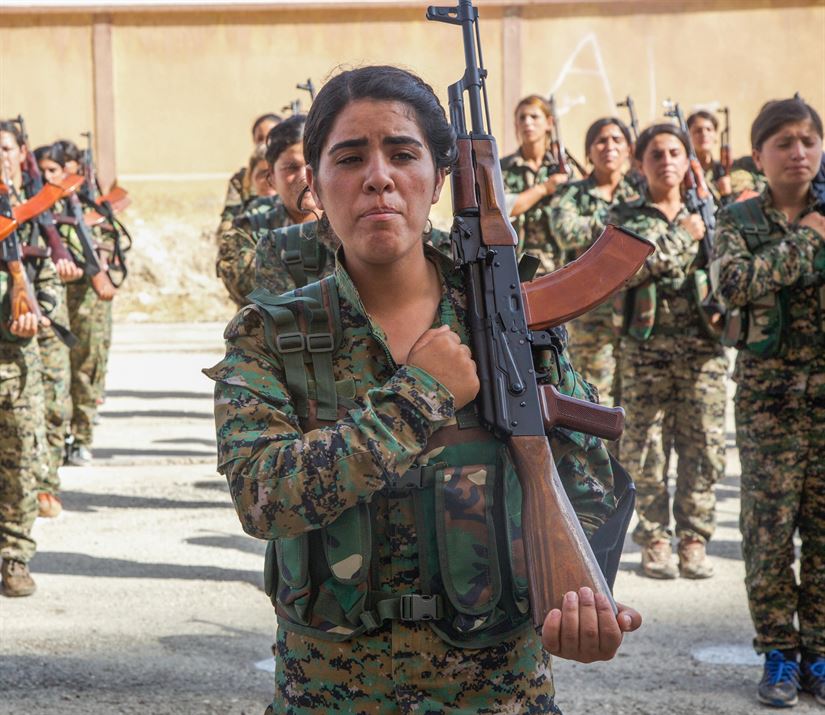
The Kurdish question in northern Syria has really put US imperialism in a bind—its most effective anti-ISIS allies on the ground are the Kurdish-led Syrian Democratic Forces (SDF), regarded as “terrorists” by longtime NATO ally Turkey. Now, just weeks after the White House announced it would be demanding back the weapons it has supplied to the SDF to fight ISIS, comes the news that the Pentagon intends to train SDF fighters as a special force to control the northern border zone. Ankara reacted angrily, threatening to attack SDF-held territory. If it comes to open war between Turkey and the SDF, the US will have to stop equivocating and throw its lot in with either one or the other. (Photo: SDF fighters via CentCom)

Planet Watch

Oil prices surge: vindication is tedious

We've been told for the past several years now that the depressed oil prices were permanent, thanks to fracking and the surge in US domestic production. Now prices are rising again, due to a convergence of crises in major producers: escalating tensions among the Gulf states, labor unrest in Nigeria, deepening instability in Venezuela. The US was able to contain the price spike after the ISIS irruption in 2014 by boosting its own production. This trick isn't going to work forever.