Watching the Shadows
neo-Nazis

State Department sees global ‘white supremacist’ threat

The US State Department’s newly released “Country Reports on Terrorism 2019” makes special note for the first time of an international white supremacist threat. The report states that the Department’s Counterterrorism Bureau “increased its efforts to combat racially or ethnically motivated terrorism (REMT). REMT, in particular white supremacist terrorism, continues to be a threat to the global community, with violence both on the rise and spreading geographically.” Given that this report is released just as Trump is becoming more blatant than ever in his own espousal of white supremacy, we must ask if this is not another example of the “Deep State” (read: those elements of the bureaucracy not completely co-opted by his dictatorial agenda) acting independently of the White House—or even, as the deplorables love to fear, actually seeking to subvert it. (Photo via Germ)

Syria
Atmeh

Syria: protests against ex-Nusra rule in Idlib

Protesters gathered in the town of Atmeh in Syria’s opposition-held Idlib province to demand the release of a locally based British aid worker arrested by Hay’at Tahrir al-Sham (HTS), the Islamist militia formerly known as the Nusra Front that now controls much of the province. Tauqir Sharif, a British Muslim, was working with a grassroots aid and media group called Live Updates from Syria. He was detained by HTS in a raid on his home. Footage of the protest showed many women and children among dozens chanting and holding banners calling for Sharif to be freed. The crowd finally gathered outside the closed gates of a compound guarded by masked militiamen. Demonstrators also protested the closure of education and social services by HTS, chanting “We want schools to open.” (Photo via Middle East Eye)

Africa
Mali troops

Sahel security forces accused of war crimes

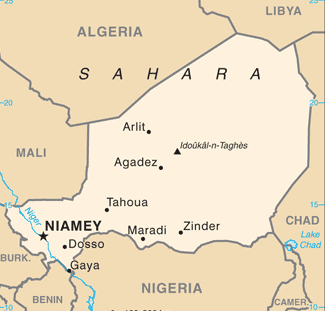
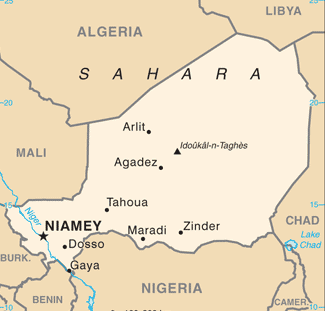
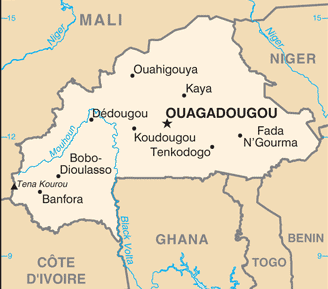
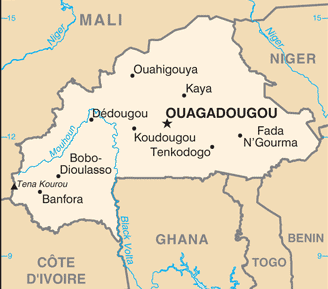
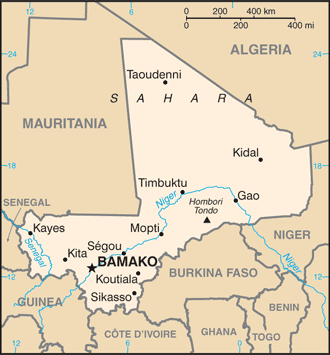
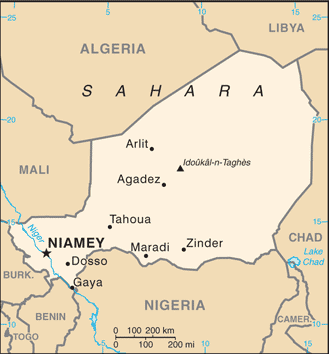
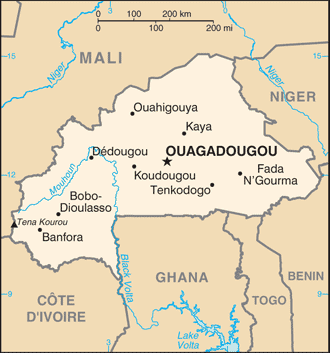
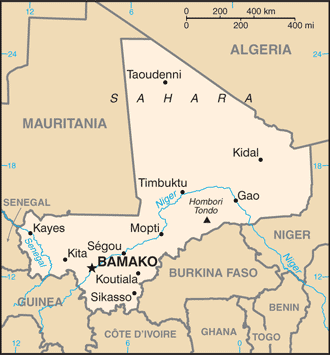
Soldiers rampaging through villages in Mali, Niger and Burkina Faso have unlawfully killed or forcibly disappeared at least 199 people between February and April 2020, Amnesty International said in a new briefing. Some of the killings amount to extrajudicial executions and among the victims are internally displaced persons. The deliberate killings of unarmed civilians by security forces could meet the qualification of war crimes. (Photo: Magharebia via Wikimedia Commons)

North Africa
Intikane

Deadly attack on Niger refugee camp

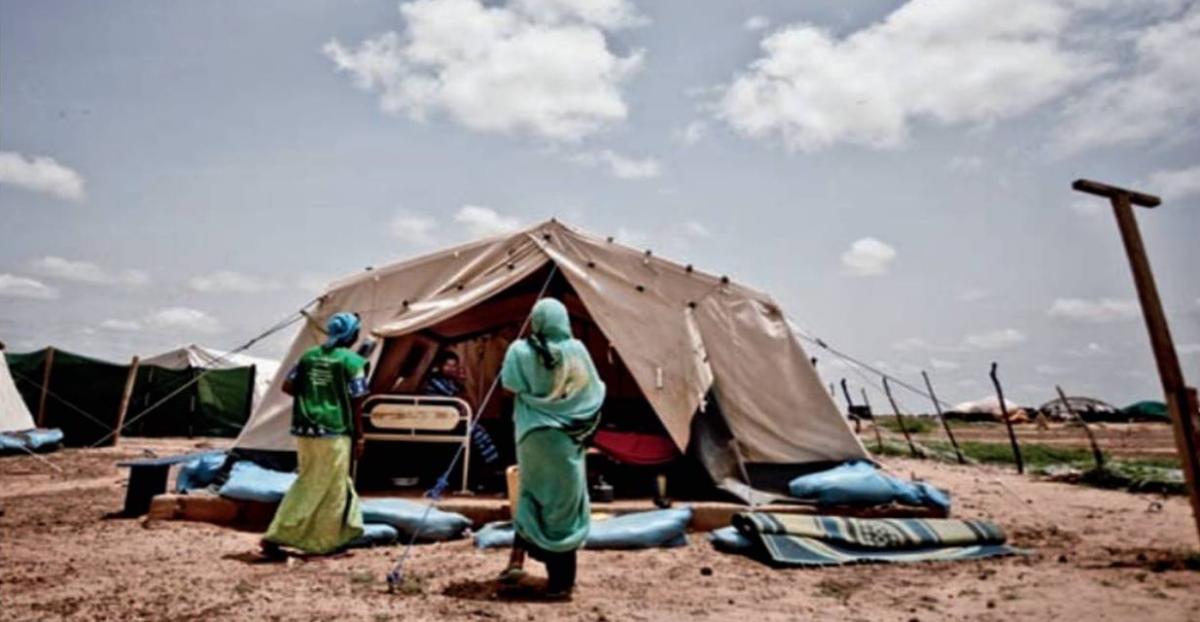
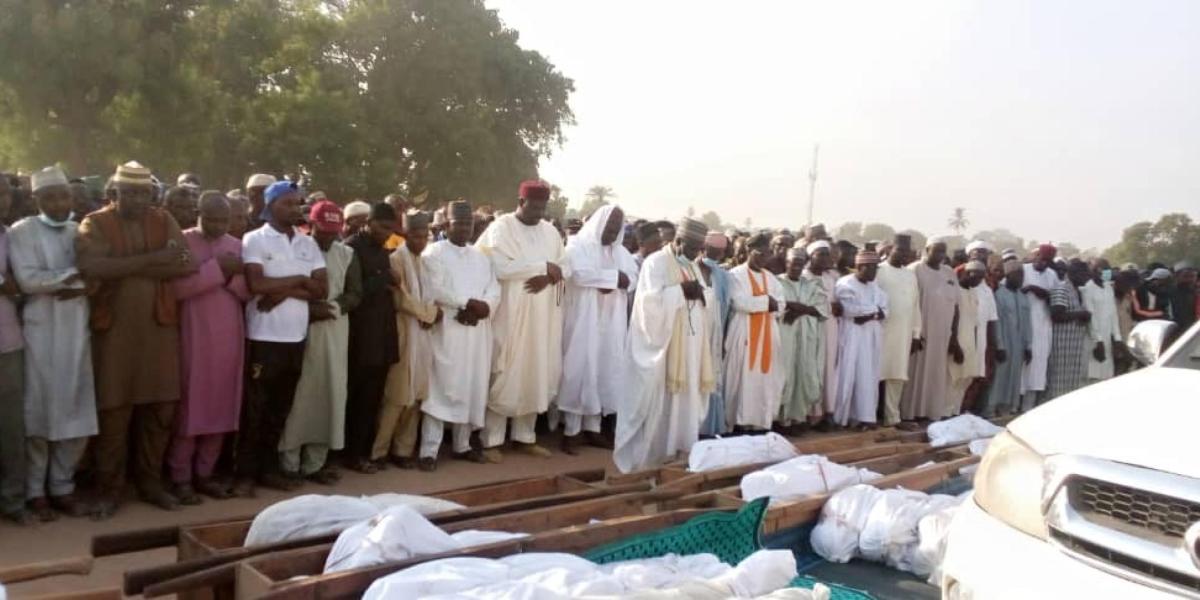
More than a thousand people are on the run following a brutal attack on a camp for refugees and displaced persons in western Niger. Three were killed and several others wounded as over 50 gunmen on motorbikes swarmed into the camp at Intikane village, near the Malian border. The camp housed some 20,000 refugees from Mali and an additional 15,000 internally displaced persons from within Niger, including many ethnic Tuaregs, who have fled fighting in their own communities. In addition to killing three, the assailants torched food supplies and other aid. They also destroyed mobile phone towers and the main water pumping station and pipes. Although no group has been named in the attack, numerous armed factions with links to either al-Qaeda or ISIS have been mounting an insurgency across the Sahel over the past years, despite the presence of thousands of regional and foreign troops in a multinational military campaign to suppress them. (Photo: UNHCR via Flickr)

Africa
ivorian troops

Sahel insurgency reaches Ivory Coast borderlands

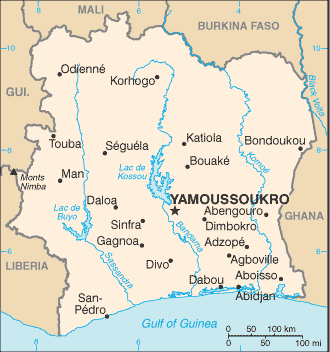
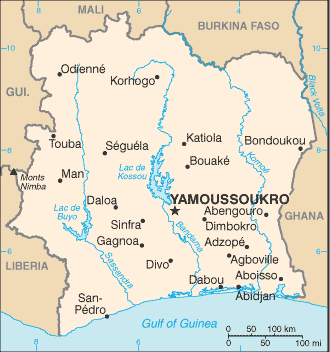
In another sign of the Islamist insurgency in the Sahel reaching West Africa’s littoral states, the armed forces of Ivory Coast announced the completion of a joint operation with the military of neighboring inland Burkina Faso, to clear out a Qaedist camp that had been established on the border between the two countries. Some 1,000 Ivorian soldiers took part in the operation, in which eight militants were reported killed and 38 others detained—24 in Burkina Faso and 14 in Ivory Coast. More are thought to have escaped on motorbikes through the bush. The militants are said to be followers of the Group for the Support of Islam and Muslims (JNIM), al-Qaeda’s West African franchise. (Photo: Ecofin Agency)

Africa
Sudan

SCOTUS: Sudan liable for terrorism damages

The US Supreme Court ruled in Opati v. Republic of Sudan that the Foreign Sovereign Immunities Act permits a punitive damages award against Sudan for the role it played in the 1998 bombings at the US embassies in Kenya and Tanzania. Plaintiffs in the case argued that Sudan had harbored al-Qaeda leaders who plotted the attacks, including Osama bin Laden. Officials in Khartoum have been seeking a settlement with the victims outside the court. Sudan is in a precarious economic situation following the ouster of long-ruling strongman Omer Hassan al-Bashir, now exacerbated by the COVID-19 pandemic. The Trump administration made it clear that Sudan must settle all terrorism-related claims to get off the US list of “state sponsors of terrorism”—a precondition for Washington’s support for debt relief for the African country. (Map: Perry-Castañeda Library Map Collection)

Africa
Niger displaced

Niger counterinsurgency sparks displacement crisis

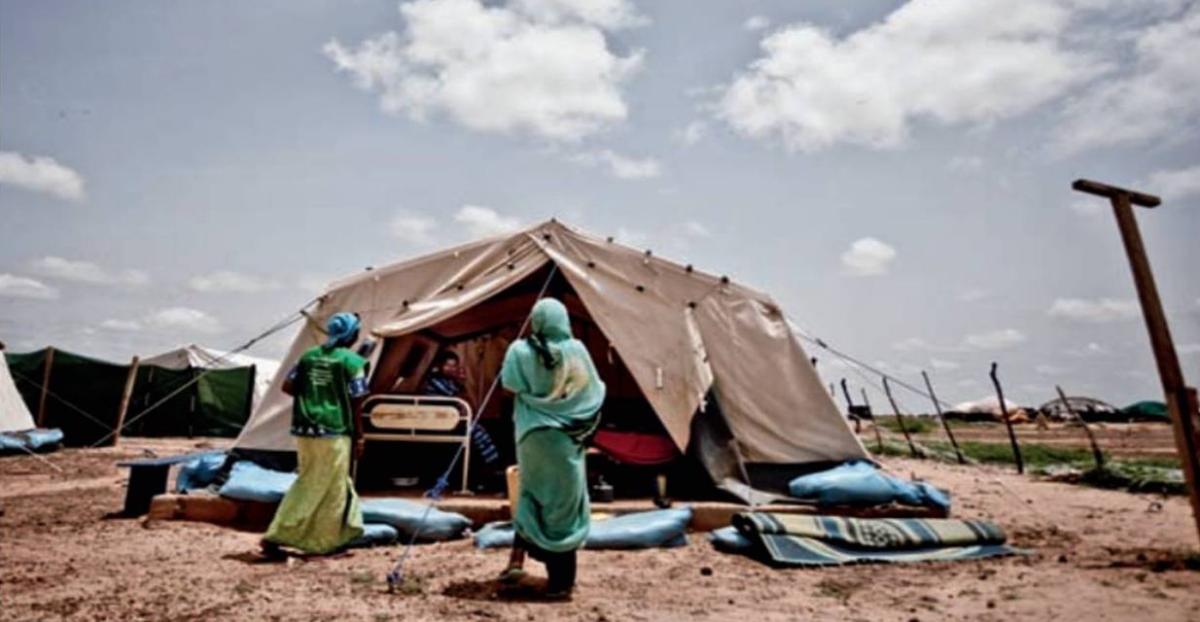
The French-backed military campaign against Islamist militants in Niger is claiming victories against the insurgency that has mounted in the country since 2015. Niger’s defense ministry claims that over the past month, “120 terrorists have been neutralized,” a presumed euphemism for killed. The operation has centered on the Tillabéri region near the borders with Mali and Burkina Faso, where a state of emergency has been in place for two years. The claimed progress comes amid a massive displacement crisis, however. According to UNICEF, nearly 78,000 people have been displaced in Tillabéri and adjoining regions. Nearly 3 million people in Niger, more than half children, are said to be in need of humanitarian assistance, amid risks posed by insecurity, malnutrition, recurrent disease epidemics and outbreaks, cyclical floods, droughts and displacement. (Photo: UNHCR)

Africa
minusma

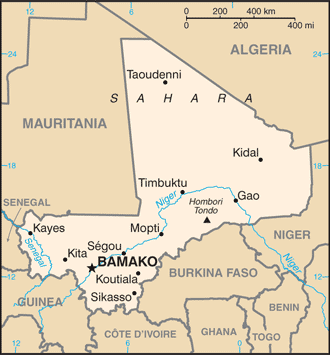
Insurgency mounts on Mali-Burkina borderlands

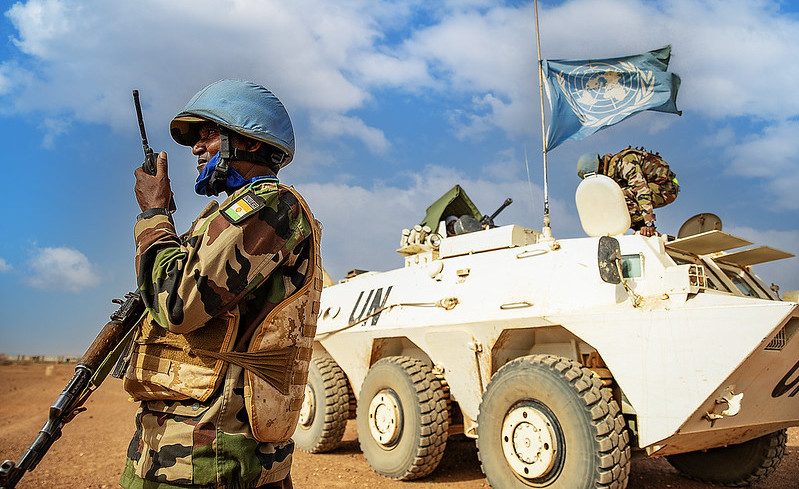
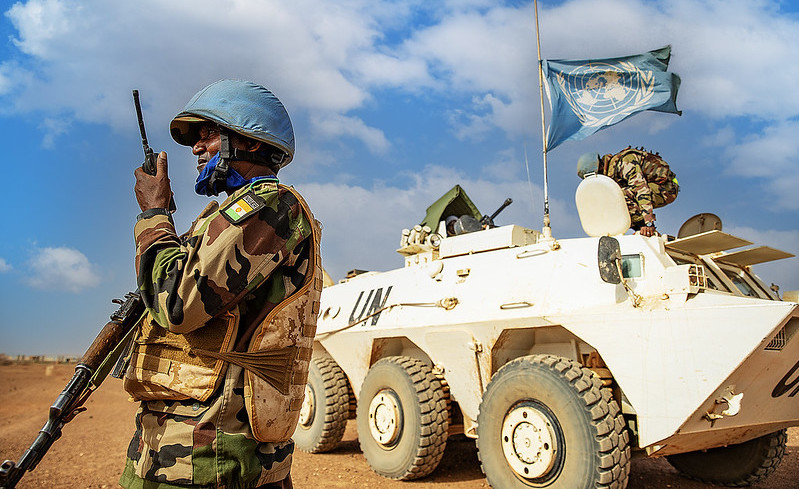
At least 25 Malian soldiers are dead and more than 60 others missing after two assaults on bases in central Mali, near the border with Burkina Faso. Jihadist forces simultaneously targeted a Malian army base and a G5 Sahel force camp. The G5 Sahel group includes Mali, Burkina Faso, Niger, Chad and Mauritania, and receives logistical support from the UN Stabilization Mission in Mali (MINUSMA). Malian officials say the insurgents used “heavy weapons” in the assaults, and that at least 15 militants were killed. Local reports indicate the militants were able to briefly hold the bases and capture large amounts of weapons and equipment. Mali has now launched a joint operation with Burkina Faso and French forces in the region to hunt down the militants. (Photo:  UN News)

North Africa
drone

Drone wars over Libya

With the forces of eastern strongman Khalifa Hifter stalled outside Tripoli in his drive to oust Libya’s Government of National Accord (GNA), both sides have been sniping at each other with drone strikes. Experts say that Haftar has procured Chinese-made Wing Loong drones from his main backer, the United Arab Emirates. The GNA, meanwhile, has turned to Ankara, its own increasingly open backer, which is believed to be supplying Turkish Bayraktar drones. Over 1,000 have been killed, close to 6,000 injured, and 120,000 displaced in the battle for Tripoli, which opened a year ago. (Photo of Wing Loong II drone via Xinhua)

Afghanistan

Trump-Taliban schmooze: don’t call it ‘peace’

The utterly surreal news that Taliban leaders were invited to Camp David—a week before the 9-11 commemoration, no less!—will further fuel the perverse fantasy that Trump is a hippie pacifist. But the supposed “peace” talks with the Taliban completely sidelined Afghanistan’s actual government and civil society alike—and were bitterly protested by Afghan women and their advocates. It was to be a “peace” crafted by genocidal clerical-reactionaries and imperialists, with the actual aim to prosecute a war on their mutual enemy, the ISIS insirgency that has now emerged in the country.  ISIS are now the “bad” (undomesticated) clerical reactionaries, who will not abandon their ambitions to attack the West. This only sends the message (entirely accurate, from the imperial persepctive) that Western lives matter, and Afghan lives do not.  (Photo: Khaama Press)

Syria

Trump joins Putin in bombardment of Idlib

US warplanes struck a position outside the capital of Syria’s northern Idlib province, targeting a faction named as Huras al-Din and reportedly killing some 40 militants. Huras al-Din split from Hayat Tahrir al-Sham, the leading insurgent front in much of Idlib, after HTS broke ties with al-Qaeda in 2016. The US air-strikes come amid an ongoing massive aerial assault on Idlib by Russia and the Assad regime. Two days earlier, at least 13 civilians were killed in Russian and regime air-strikes on the town of Marat al-Numan. Hundreds of Syrians meanwhile attempted to storm a border crossing with Turkey in Idlib, demanding refuge from the relentless bombardment. (Photo via EA Worldview)

Greater Middle East
yemen

Yemen: now a three-way war —or four?

Over the past weeks, the two biggest members of the international coalition supporting the official government of Yemen against the Houthi rebels have fallen out, with Saudi Arabia continuing to back President Abd-Rabbu Mansour Hadi and the United Arab Emirates switching its support to southern separatists. UAE-backed forces of the Southern Transitional Council (STC) seized control of the port city of Aden after days of fighting with Saudi-backed forces of the official government. Hadi’s government had been based in Aden since Iran-backed Houthi rebels sezied the capital Sanaa in 2014. Aden had been the capital of South Yemen before it united with North Yemen in 1990. In addition to Hadi’s government, the STC and the Houthis, militants of al-Qaeda in the Arabian Peninsula (AQAP) continue to wage an insurgency in the south. (Map via  Perry-Castañeda Library)