Africa
congo

Confused DRC peace dialogue in Kenya

The first round of talks between armed groups and the government of the Democratic Republic of the Congo concluded in Nairobi. The Islamist Allied Democratic Forces (ADF) wasn’t invited, however, while the Ituri-based CODECO was approached but didn’t attend. M23 representatives were meanwhile ordered out after their forces resumed clashes with the DRC military. The talks followed an East African Community summit in which heads of state agreed to set up a regional military force to fight rebels unwilling to lay down their arms. A UN peacekeeping mission operates in the DRC but is making drawdown plans. The Ugandan army is also intervening in the country, while martial law has been declared in the volatile eastern provinces for a year. Rebel attacks and abuses by soldiers continue, and nearly three million people were displaced last year alone. (Image: Pixabay)

Africa
Niger

French forces out of Mali, into Niger

Lawmakers in Niger have approved a bill that clears the way for more foreign troops to be deployed in the country, which is fighting several jihadist insurgencies. The move comes as French and European forces withdraw from neighboring Mali, having fallen out with the ruling junta there. Niger’s President Mohamed Bazoum had already announced plans in February to absorb some of the departing soldiers. But passing the bill through parliament formalizes the decision, amid rising anti-French sentiment in the country and the wider region. (Map: PCL)

North Africa
Libya

ICC reveals Libya investigation strategy

International Criminal Court (ICC) prosecutor Karim AA Khan revealed a new strategy for the ongoing investigation into the situation in Libya to the UN Security Council. The ICC investigation focuses on accusations of war crimes and crimes against humanity committed in Libya since the outbreak of the revolution against Moammar Qaddafi’s government in February 2011. The investigation also covers three unexecuted arrest warrants issued by the ICC. The ICC began its investigation in March 2011. Libya is not a party to the Rome Statute. Therefore, the ICC derives its jurisdiction for this investigation from a unanimous reference by the Security Council in Resolution 1970. (Map: Perry-Castañeda Library)

Europe
russonazis

Russian ‘denazification’ goes full Nazi

Russian Foreign Minister Sergei Lavrov, just days after issuing blatant nuclear threats, now engages in the classic anti-Semitic trope of blaming Nazism on the Jews. Speaking to Italian TV, Lavrov responded to a reminder that Ukraine’s President Volodymyr Zelensky is Jewish thusly: “When they say ‘What sort of nazification is this if we are Jews,’ well I think that Hitler also had Jewish origins, so it means nothing. For a long time now we’ve been hearing the wise Jewish people say that the biggest anti-Semites are the Jews themselves.” This as Russian state media voices are openly calling for the “total annihilation” of Ukraine, and more mass graves are being discovered daily. Russia will be glorifying this campaign of extermination in massive military parades next week, commemorating the Soviet Union’s 1945 victory over Nazi Germany. (Photo via Twitter)

Planet Watch
Chernobyl

Podcast: Chernobyl and nuclear fear in Ukraine

In Episode 121 of the CounterVortex podcast, Bill Weinberg notes the grim irony that on the week of International Chernobyl Disaster Remembrance Day, Russian regime and state media figures issued blatant threats to use nuclear weapons in the Ukraine war. This follows criminal recklessness by Russian forces at the Chernobyl and Zaporizhzhya nuclear plants, which itself constituted an escalation on the ladder of nuclear terror. These events clearly illustrates how nuclear power and weapons constitute a single unified threat, and make imperative our deconstruction the industry propaganda about how the “no safe dose” dictum is now obsolete (no, it isn’t, actually), and sophistries such as the “Banana Equivalent Dose.” Amid the relentless plans to revive the nuclear industry in US, China is undertaking a major thrust of nuclear development, with similar plans afoot in France. And this as economies are increasingly based on energy-intensive and socially oppressive activities like “crypto-mining.” Nonetheless, respectable environmentalists now advocate a continuance of reliance on nuclear power as an alternative to fossil fuels. But their assumptions are predicated on the continuance of dystopian “normality“—exactly what needs to be challenged. Listen on SoundCloud or via Patreon. (Photo: Wikipedia)

Africa
Mali

‘False flag’ plot behind Mali mass grave?

The junta in Mali is accusing France of spying after the French military used a drone to film footage that Paris says shows Russian mercenaries burying bodies in a mass grave near a military base. The French government says the bodies were buried outside the base at Gossi, Tombouctou region, in a scheme to falsely accuse its departing forces of leaving behind mass graves. Video from the drone was released after pixelated images appeared on social media of corpses being buried, with text accusing France of atrocities in Mali. France claims the bodies were brought to Gossi from Hombori, a town to the south, where Malian troops and Russian mercenaries have been carrying out an operation against jihadi insurgents. The junta acknowledges that numerous militants were killed in the operation. (Map: PCL)

Central America
Archipelago of San Andrés

Win for Nicaragua in maritime dispute with Colombia

The International Court of Justice (ICJ) at The Hague ruled that Colombia must end its “interference” in parts of the Caribbean off the coast of Nicaragua, and bring under control fishing and other activities in the zone. This culminates a long conflict between Nicaragua and Colombia. In two rulings in 2007 and 2012, the ICJ recognized the sovereignty of Colombia in the islands constituting the Archipelago of San Andrés. However, the rulings also recognized the jurisdiction of Nicaragua in the surrounding waters. Colombia continued its activities in those waters, prompting Nicaragua to file a new complaint with the Court in 2013. Colombia argued that its actions were necessary to fight drug trafficking and secure environmental protection of the waters. In its new ruling, the ICJ found that these waters are within the exclusive economic zone of Nicaragua, and the “intervention” of another state is contrary to international law. (Map: Wikipedia)

Southeast Asia
detention

Malaysia: calls to end mass detention of refugees

Rights groups in Malaysia are calling for the release of thousands of detained refugees and asylum-seekers, after a deadly incident in the northern state of Penang. Six Rohingya refugees were struck by vehicles and killed when hundreds fled a detention center after breaking through barriers and attempted to escape across an adjacent highway. “There is no discernible reason as to why so many of them were cramped into a makeshift depot in the first place,” stated advocacy group Lawyers for Liberty. Malaysia has long been a destinationfor Rohingya fleeing persecution in Burma, but the government has cracked down on asylum-seekers during the COVID-19 pandemic. (Photo: Hasnoor Hussain/TNH)

Africa
Central African Republic

CAR war crimes trial delayed —again

A court created seven years ago to prosecute war crimes in the Central African Republic was due to open its first trial this month. But a no-show by defense lawyers means victims’ associations and others pushing for justice will have to wait a little longer. The Bangui-based Special Criminal Court (SCC) is a hybrid tribunal composed of national and international jurists tasked with prosecuting war crimes, genocide, and crimes against humanity. It took time to become operational because of staff recruitment challenges, insecurity, and limited resources. Arrest warrants have also not been executed, and the government has released high-profile suspects without SCC authorization. Its inaugural trial—set to resume in April—concerns three members of the 3R rebel group accused of involvement in a 2019 massacre. Rebel groups remain active across the CAR, which has one of the highest per capita humanitarian caseloads in the world. (Map via Perry-Castañeda Library Map Collection)

Africa
Kereinik

Sudan: 150 killed in new Darfur massacre

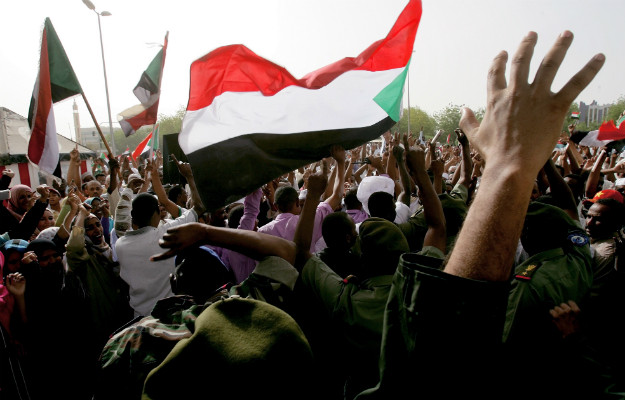
At least 150 were killed as paramilitary troops attacked a village in Sudan’s conflicted Darfur region. Fighters from the Rapid Support Forces, many riding motorbikes or driving vehicles mounted with machine-guns, swept in on the village of Kereinik, torching houses and shops and firing on residents. More than 80,000 families fled their homes to seek refuge at the army headquarters in the village center. Hostilities between the Arab-dominated RSF and Masalit villagers began days earlier, after two Arab herders were reportedly killed by former rebel fighters. The fighting has since spread to the nearby town of Geneina, capital of West Darfur state. Sudan’s central government is said to be sending in military reinforcements and warplanes to contain the situation. (Photo: Sudan Tribune)

Europe
druzbha

Transnistria blasts signal spread of Ukraine war

A series of blasts tore through the building of the de facto “Ministry of State Security” in Tiraspol, capital of Moldova’s Russian-backed separatist enclave of Transnistria. Officials said the building was fired on by unknown assailants with grenade launchers. Ominously, the attack came one day after a Russian military commander openly broached extending Moscow’s war in Ukraine to neighboring Moldova, to “give the Russian army access to Transnistria.” The blasts also came on the same day as large explosions in Bryansk, a Russian town near the Ukrainian border which is serving as a key staging area for the invasion. Bryansk is a hub on the Druzhba oil pipeline, and the flames engulfed a petroleum depot. Russian officials are speculating that Kyiv’s forces were behind the blasts, while Ukrainian officials speculate they were Russian “false flag” operations. (Photo of Druzhba blasts: Anonymous Operations)

Africa
Camp-Levieux

Protests over fuel price hikes shake Mauritius

The African island nation of Mauritius exploded into angry protests, with residents of poor Kreol communities erecting roadblocks and fighting the police. The island had seen days of peaceful demonstrations over a sudden and drastic increase of petrol and gas prices, centered on the town of Camp-Levieux. Things turned violent after the arrest of “Darren,” a young protest leader, on charges of “participation in illegal demonstrations.” The police headquarters where he was being held was besieged, and protests spread quickly to other towns across the island. Police deployed anti-riot units and armored vehicles against youth hurling stones and Molotov cocktails. Things calmed when Darren was released on bail. But it remains to be seen if the increasingly debt-burdened government can strike a deal with the newly mobilized popular movement. (Photo: Zinfos Moris)