


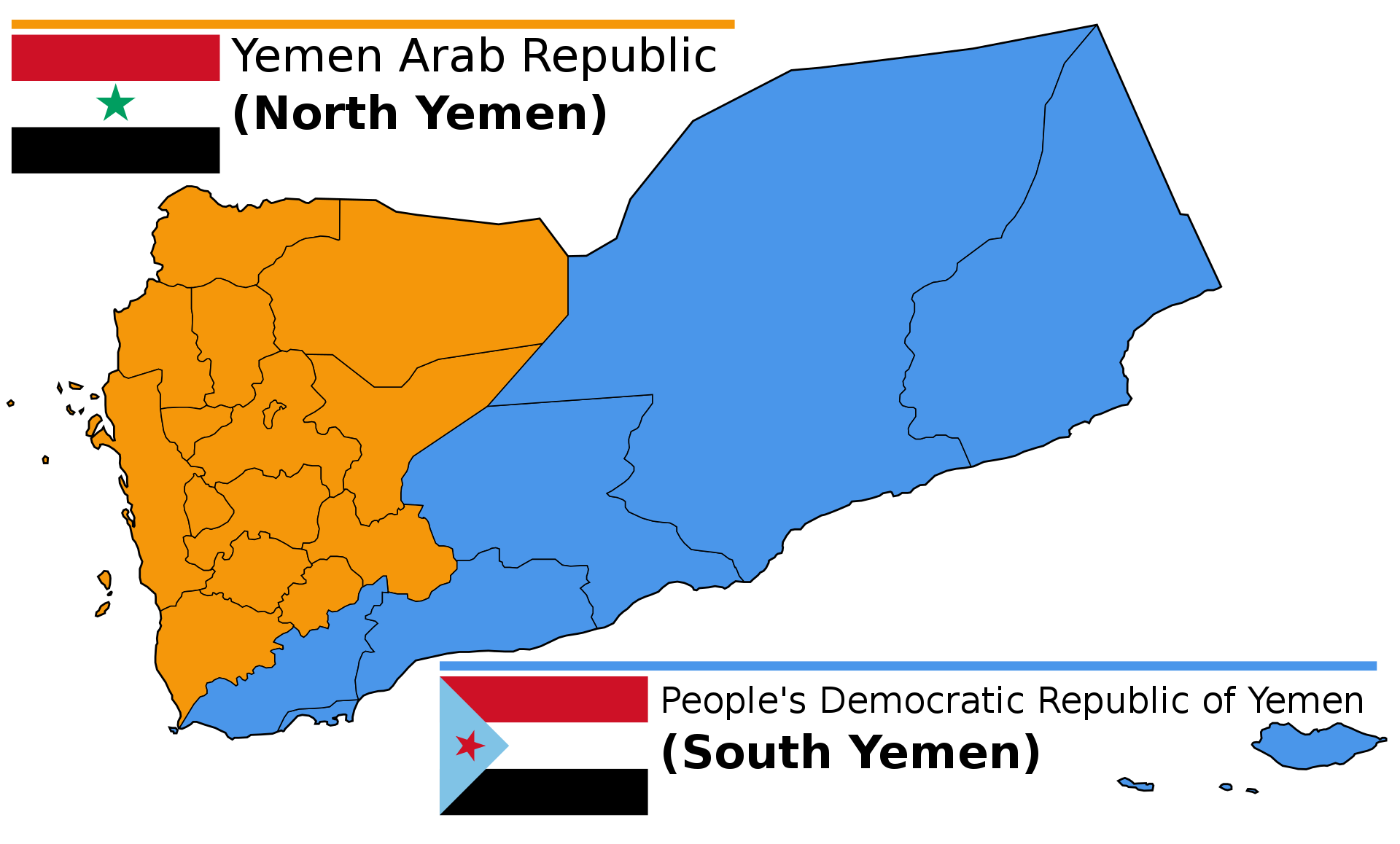
Yemen’s separatist Southern Transitional Council (STC), which is said to be backed by the United Arab Emirates, has been rapidly advancing through large parts of the country’s south and east, in Hadramawt, al-Mahra and Shabwa provinces. They are taking over control from groups backed by Saudi Arabia, including the Hadramawt Tribal Alliance (HTA). While all forces involved are supposed to be on the same side in a broader anti-Houthi alliance, the move is yet another reminder that Yemen’s war is not over, and that it involves a variety of actors and local grievances. (TNH)
The STC was excluded from the peace talks between the Houthis and Saudi Arabia that opened in 2023. It has been widely accused of human rights violations, including running clandestine prisons in conjunction with UAE forces. It declared self-rule in its areas of control in 2020.
Map of Yemen before 1990 unification via Wikipedia


Saudi Arabia bombs Yemen port held by STC
Saudi Arabia bombed Yemen’s port city of Mukalla on Dec. 30, targeting a shipment of weapons from the United Arab Emirates to the Southern Transitional Council. The UAE later said it would withdraw its forces from Yemen. (AP)
Yemen: reversals for STC, UAE
The last month of tensions between Saudi Arabia and the UAE—which played out in Yemen with clashes over territory and control of the country’s south—have resulted in a significant power shift. Saudi Arabia and the forces it backs now control both most of the land taken by UAE-backed separatist Southern Leadership Council (SLC), as well as the power in Yemen’s internationally recognised government. This week, the Presidential Leadership Council appointed a new prime minister and dismissed the second of two SLC members from its ranks, replacing them with politicians who are seen as pro-Saudi. (TNH)
New humanitarian crisis looms in Yemen
Yemen faces its most dangerous food security phase in years, according to a Jan. 19 report by the IRC. Over 18 million people are expected to experience worsening food insecurity by early 2026, and an additional one million are at risk of life-threatening hunger. The cause is not escalating conflict but collapsed household purchasing power and sharp cuts in humanitarian aid. Nearly 80% of households report severe hunger, and half of households with young children have at least one malnourished child. The IRC is urging immediate donor action to restore food security and nutrition assistance. (TNH)