The Andes
ELN

US ‘committed’ to ‘dismantle’ Colombia’s ELN

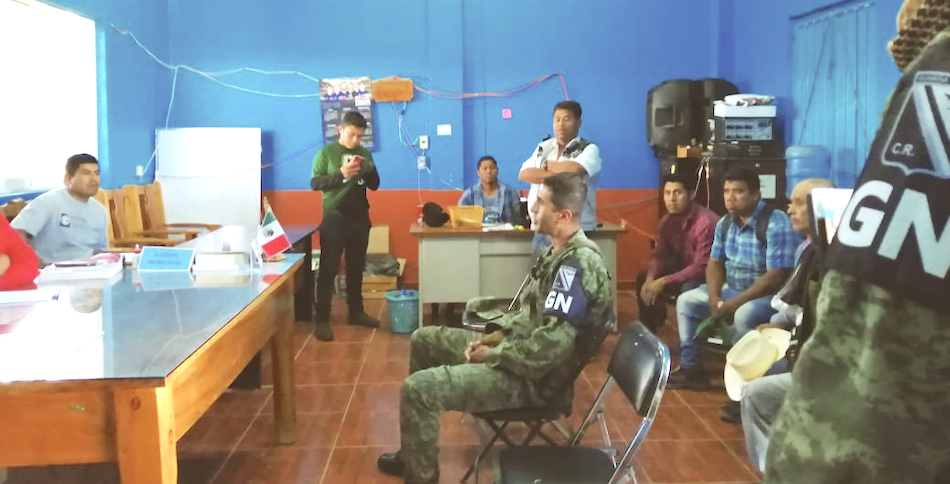
The United States government is “committed” to “dismantle” Colombia’s remaining significant guerrilla group, the National Liberation Army (ELN), federal prosecutor Zachary Terwilliger said. The US attorney for the Eastern District of Virgina made the comment after he and six other federal prosecutors met with President Ivan Duque on a visit to Bogotá to discuss cooperation “to fight narco-terrorism.” Terwilliger said the Colombian government “counts on the full support of the United States Department of Justice in the common cause to destabilize, decimate and ultimately dismantle the ELN.” The guerilla group has been active since 1964 and is currently believed to have 4,000 fighters. The ELN was engaged in peace talks with Duque’s predecessor, Juan Manuel Santos, but the talks were suspended by Duque when he took office a year ago. (Photo: Colombia Reports)

The Andes

Indigenous target in Colombia human rights crisis

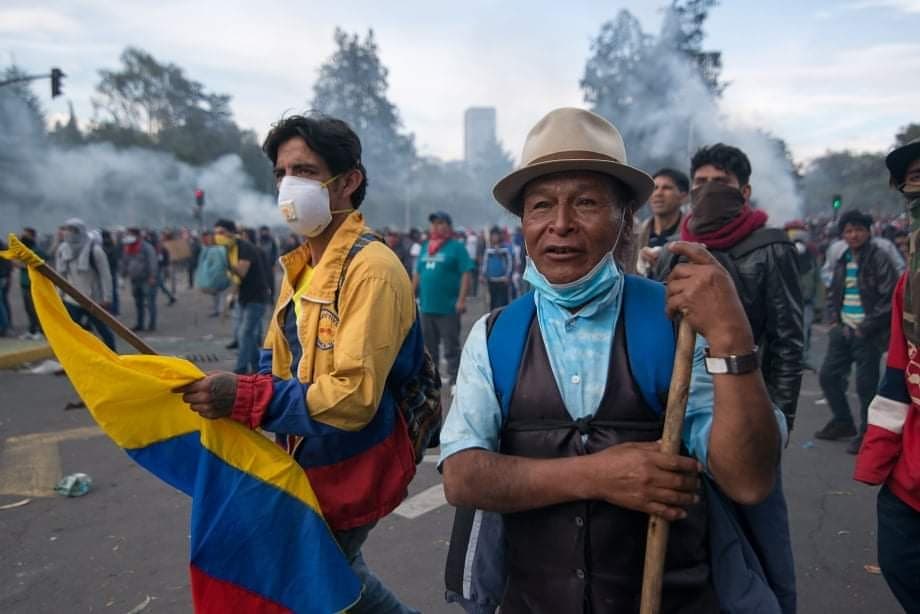
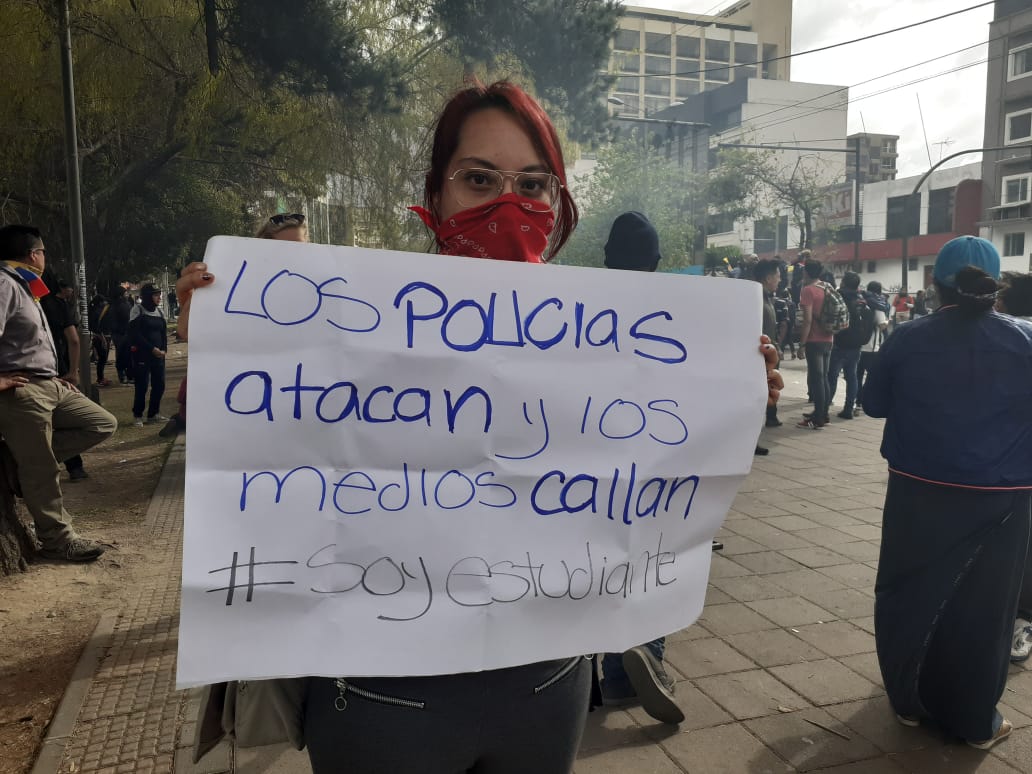
The Colombia office of the UN High Commissioner for Human Rights urged the government to effectively protect the lives and physical and cultural integrity of the Nasa indigenous people amid a wave of assassinations in their territory in the southern department of Cauca. The statement noted attacks on members of the Nasa Indigenous Guard over the past 24 hours, in which two were killed—Gersain Yatacué in the community of Toribio and Enrique Güejia in the community of Tacueyo. These brought to 36 the members of the Nasa people killed so far this year, according to Alberto Brunori, the UN human rights officer for Colombia, who said there is now an “alarming situation” in Cauca. (Photo: Colombia Informa)

The Andes

Venezuela further opens oil sector to China

The Venezuelan government has announced an expansion of Chinese investment in the country’s oil industry, with the aim of increasing production by 120,000 barrels per day. The investment, placed at $3 billion, will underwrite the construction of a new oil blending plant inaugurated this month as the first part of the two-stage plan. The “Jose” plant, in Barcelona, Anzoátegui state, is to be run by Sinovensa, a joint venture 49% owned by the China National Petroleum Corporation (CNPC) and 51% by Venezuela’s PDVSA state oil company. The facility will blend extra-heavy grades from Venezuela’s Orinoco Oil Belt into the exportable Merey crude, primarily for Asian markets. (Photo via VenezuelAnalysis)

The Andes
ADEPCOCA

Internecine cocalero violence in Bolivia

Violent tensions are flaring in Bolivia’s capital between rival factions of one of the country’s coca-grower unions, which oversee sales to the legal market. Clashes broke out in early August between two factions of the Departmental Association of Coca Producers of La Paz (ADEPCOCA)—one loyal to President Evo Morales and his ruling Movement Toward Socialism (MAS), the other to imprisoned union leader Franklin Gutiérrez. The former group staged “parallel” elections for new union leaders in late July, but the latter refuses to recognize the poll, and demands the release of Gutiérrez and other imprisoned unionists. The first clashes came as MAS supporters besieged the ADEPCOCA headquarters in La Paz, demanding that the Gutiérrez supporters surrender the offices.  (Photo: La Razón)

Watching the Shadows
Tulsi Gabbard

Podcast: Tulsi Gabbard, paradoxical hippie fascist

Is Democratic presidential hopeful Tulsi Gabbard a pseudo-peacenik fraud who supports US military adventures as long as they target Islamist terrorists but not the bloody dictators she is enamored of? Actually, yes. In Episode 38 of the CounterVortex podcast, Bill Weinberg traces Gabbard’s trajectory, from a youthful devotee of a Hare Krishna schism to her current embrace of the Hindu fascism of Narendra Modi and political love affair with the genocidal Bashar Assad. Based on Weinberg’s profile of Gabbard on Freedom Leaf website. Listen on SoundCloud, and support our podcast via Patreon. (Image via Freedom Leaf)

The Caribbean

Puerto Rico: climate change to regime change

Puerto Rico swore in its third governor in less than a week, Wanda Vázquez Garced, after the removal of Pedro Pierluisi by order of the commonwealth’s Supreme Court, which ruled unanimously that his appointment was unconstitutional. Pierluisi had been the chosen successor of Ricardo Rosselló, who stepped down following weeks of mass protests. The protest wave began after group chats between Rosselló and his staff were made public, disclosing ugly homophobic and misogynistic comments aimed at political rivals—and even victims of Hurricane Maria, which devastated the island in 2017. New research links the unprecedented destruction of Maria to climate change—with grim implications for the future of the island and Caribbean region as a whole. (Photo of NYC rally for Puerto Rican independence by CounterVortex)

North America

Kentucky: unpaid miners block rail line

For over a week now, some 100 laid-off miners and their families have occupied a railroad track in Kentucky’s Harlan County, blocking a train loaded with coal that the workers dug out of the earth but never got paid for. The miners want their jobs back, if possible—but first of all, they want their wages for the work they already did. Blackjewel LLC abruptly shut down all its mines and filed for Chapter 11 bankruptcy. Partway through a shift, workers were told the bad news and sent home. The miners never got their last paycheck. And their second-to-last paycheck, already deposited, disappeared from their bank accounts. The miners also never received any paper notice of their layoff, which proved a bureaucratic obstacle when they filed for unemployment. Another major Kentucky coal producer, Cambrian Coal LLC, also plans to sell off its assets in a Chapter 11 bankruptcy case that could impact hundreds of coal miners in Eastern Kentucky. (Photo: Megan Roark-Halcomb via Labor Notes)

East Asia

Worker protests in China’s automotive sector

Employees at Hubei Meiyang Automobile Industry Co staged a demonstration to protest “illegal dismissals, wage arrears and compensation payments.” Meiyang Auto, a “new energy” start-up based in the central city of Xiangyang, had been in production for less than two years before halting operations. Workers at Eastone Automotive in Shanghai’s Pudong district also staged a protest claiming they were owed around 40 million yuan in wages in arrears stretching back to the beginning of the year. Employees claimed they were being forced to leave without any compensation, and appealed to the local government for help. So far this year, China Labour Bulletin’s Strike Map has recorded 25 collective protests by workers in the automotive sector, up from just five in the same period last year. The protests, mostly related to layoffs and wage arrears, have occurred in car plants, components factories, dealerships and service centers, and even car rental agencies. (Photo via China Labor Bulletin)

Syria

Idlib bombardment resumes after brief respite

Russia and the Assad regime resumed attacks on opposition-held northwest Syria, breaking a four-day pause declared by Damascus. Russian and regime forces, whose spring offensive shattered a “demilitarized zone” announced last September by Moscow and Turkey, again began bombing and shelling both rebel positions and civilian areas. The regime’s military said last week that it was halting operations, which have killed more than 700 civilians and wounded more than 2,200 since late April, while giving an ultimatum to anti-Assad forces to withdraw from the 20-kilometer “demilitarized zone” through Idlib and northern Hama province. As the new air-strikes were launched, an army statement said: “The agreement to a truce was conditional… This did not happen… We resume our military operations against terrorist organizations.” (Photo via EA Worldview)

South Asia
Kashmir

Militarization as Delhi prepares to dismantle Kashmir

India’s government has flooded the northern state of Jammu & Kashmir with troops and cut off internet access upon announcing the revocation of its constitutionally protected autonomy, and plans to divide the disputed territory into two new political entities with reduced power. Article 370 of India’s constitution grants Jammu & Kashmir a high degree of autonomy, a concession to the demands of the territory’s Muslim majority, many of whom favor independence or union with Pakistan. In addition to abrogating Article 370, Delhi announced plans for a bill to divide India-controlled Kashmir into two “union territories,” which have lesser powers of self-government than states. A reduced Jammu & Kashmir Union Territory would continue, at least, to have a legislature. But it would be separated from the Buddhist-majority region of Ladakh, which is to become its own union territory, without a legislature. Complicating matters further is that the populace of Ladakh itself is divided along sectarian and regional lines. News of the plan to separate Ladakh from Jammu & Kashmir was met with jubilation in the principal Buddhist town of Leh, but with foreboding in Kargil, an enclave within Ladakh inhabited by Ismaili Muslims.  (Map via Wikipedia)

Iran

Iran: women’s rights activists get 16 years

Three women in Iran received prison sentences of at least 16 years, for offenses such as not wearing hijab and handing out flowers on a Tehran subway train on International Women’s Day. Civil rights activists Yasaman Aryani, Monireh Arabshahi and Mojgan Keshavarz were condemned by a Revolutionary Court in Tehran. Each was given 10 years for “encouraging and promoting corruption by de-veiling,” five years for “collusion and assembly to act against national security,” and one year for “propaganda against the state.” Keshavarz was given an additional seven years and six months for “blasphemy.” The attorney for the women said lawyers were not allowed to attend the trials, which were scheduled without notice. The court said no attorney access would be granted until an appeal is scheduled. (Photo via HRANA)

The Amazon
Wajãpi

Brazil: garimpeiros kill indigenous leader

Brazilian authorities are investigating the murder of an indigenous leader in the northern state of Amapá, in the Amazon region, where violence has escalated since a group of some 50 heavily armed men—believed to be garimpeiros, or outlaw gold-miners—reportedly invaded the Wajãpi indigenous reserve. Indigenous chief Emyra Wajãpi was found stabbed to death close to the village where he lived, according to the Council of Wajãpi Villages (APINA). Three days later, the group of armed men appeared in the neighboring Yvytotõ indigenous village and threatened residents, forcing them to flee, according to APINA. Invasion of indigenous territories by ostensibly illegal mining outfits has escalated dramatically under current Presdent Jair Bolsonaro. (Photo of Wajãpi indigenous people via Mongabay)