Africa
mumuila

Angola: drought threatens traditional pastoralists

Millions of people in southern Angola are facing an existential threat as drought continues to ravage the region, Amnesty International said. The organization highlighted how the creation of commercial cattle ranches on communal lands has driven pastoralist communities from their territories since the end of the civil war in 2002. This shift has left huge sections of the population food-insecure, and especially vulnerable as the acute drought persists for over three years. As food and water grow increasingly scarce, thousands have fled their homes and sought refuge in neighboring Namibia. (Photo of Mumuila woman: Pixabay)

North Africa
Libya detainee

Libya: ‘horrific violations’ in migrant detention

Fresh evidence of harrowing violations, including sexual violence, against men, women and children intercepted while crossing the Mediterranean Sea and forcibly returned to detention centers in Libya, highlights the grave consequences of Europe’s ongoing cooperation with Libyan authorities on migration and border control, said Amnesty International in a report. Since late 2020, Libya’s Directorate for Combatting Illegal Migration, a department of the interior ministry, has “legitimized abuse” by integrating two new detention centers under its structure where hundreds of refugees and migrants had been “forcibly disappeared” in previous years by militias. Amnesty is calling on European states to suspend cooperation on migration and border control with Libya. (Photo: Alessio Romenz/UNICEF)

Iran
Ahwazis protest

Iran: protests over water rights in Ahwazi region

Two were killed as Iranian security forces opened fire on Ahwazi Arab protesters in Ahvaz, capital of southwestern Khuzestan province. The deaths came after days of demonstrations in the Arab-majority region, which is stricken by withering drought. Hundreds of sheep, cattle, buffalo and other livestock have died over the past weeks. The protests began a week ago, with a peaceful vigil outside the governor’s office, demanding that authorities open the sluice gates on the network of massive hydroelectric dams built upstream on the region’s main rivers, which divert some 90% of the waters to other regions of Iran. Protesters held up placards in Arabic, Persian and English, with messages including: “Water is a human right”, “We are thirsty–give us water!”, “Stop killing our environment!”, and “Stop drying out the Ahwazi rivers and marshlands!” The protesters also chanted slogans condemning Iran’s central government, such as “The regime keeps us in poverty in the name of religion!” (Photo: Dur Untash Studies Center)

The Caribbean
Havana

Podcast: how do we respond to the Cuba protests?

In Episode 80 of the CounterVortex podcast, Bill Weinberg examines the actual politics of the Cuban protests—and how much of the response by supposedly progressive forces in the United States has been highly problematic. While opposing the embargo, and the inevitable attempts by US imperialism to exploit and co-opt the protests, we must guard against words and actions that abet the repression. Hundreds have been detained and at least one person killed as the protests have been put down by security forces. By uncritically rallying around the regime and portraying the protests as CIA astroturf, we not only make ourselves complicit with rights abuses—we help bring about exactly what we fear, showing the protesters that their only allies in the US are on the political right. Listen on SoundCloud or via Patreon. (Photo via Mal Salvaje)

Afghanistan
afghanistan

‘Imminent humanitarian crisis’ in Afghanistan

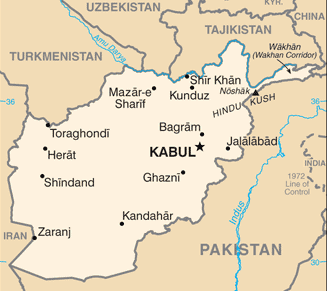
The Office of the UN High Commissioner for Refugees (UNHCR) warned of an “imminent humanitarian crisis” in Afghanistan as mounting conflict gives rise to suffering and displacement. An estimated 270,000 have been newly displaced since January, bringing the total uprooted population to over 3.5 million. The number of civilian casualties has risen 29% during the first quarter of this year compared to 2020. The UNHCR stressed its underfunded financial appeal for Afghanistan, which now stands at 43% of the total $337 million required. The agency urged the international community to support Afghanistan “in a spirit of solidarity and burden-sharing.” (Photo of displaced persons camp in Herat: Stefanie Glinski/TNH)

Syria
syria refugees

Syria: Russia plays ‘political games’ with aid access

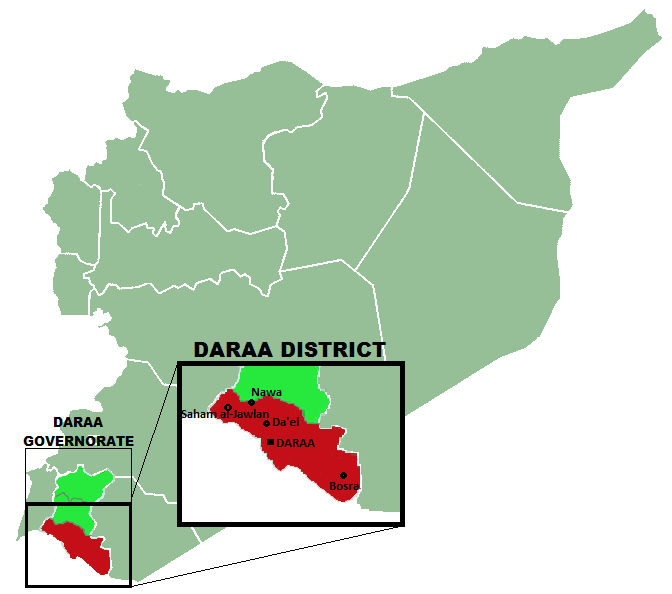
The UN Security Council unanimously voted to extend the sole humanitarian aid crossing into Syria—one day before it was set to close. The vote on the Bab al-Hawa crossing came after weeks of intense negotiations between Washington, which wants to expand the number of aid corridors into Syria, and Moscow, which had threatened to block continuation of the aid program altogether in the name of protecting Syrian sovereignty. Some 1,000 truckloads of aid pass through Bab al-Hawa each month—and humanitarian agencies say this is insufficient to address the scale of the disaster in Syria’s north. In 2014, the Security Council approved four border crossings for aid into Syria. But Russia has since used its veto to restrict aid access to the rebel-held north, leaving only Bab al-Hawa open. (Photo: UNICEF via UN News)

The Caribbean
Capitolio

Mass protests break out across Cuba

Seemingly spontaneous protests broke out in Cuba, with demonstrations reported across the island—from Pinar del Río in the west to Santiago in the east. In Havana, hundreds gathered along the Malecón seawall, which was the scene of a brief uprising known as the Maleconazoin August 1994, amid the economic agony of the “Special Period.” The demonstrators later marched on the iconic Capitolio building. Slogans included “Freedom,” “Down with the dictatorship,” “We are not afraid,” “Homeland and life” (a reference to the official slogan “Homeland or death“), and “Díaz-Canel singao [jerk, asshole],” a reference to President Miguel Díaz-Canel. (Photo: Marcos Evora via Havana Times)

Europe
srebrenica

Podcast: against Bosnia revisionism

In Episode 79 of the CounterVortex podcast, Bill Weinberg marks the 26th anniversary of the Srebrenica massacre in Bosnia, and reads selections from Surviving the Peace: The Struggle for Postwar Recovery in Bosnia-Herzegovina by Peter Lippman. In his final chapter, “Atrocity Revisionism,” Lippman deftly deconstructs the rank genocide denial we have seen from paradoxical icons of the “left” such as Noam Chomsky and Edward Herman. Presaging the similar denialism now seen concerning Syria, these “left” pundits created an impression among their gullible admirers that there was no genocide at Srebrenica—despite the fact that the remains of over 7,000 of the presumed 8,000 victims of the massacre have now been exhumed from mass graves and identified by the International Commission on Missing Persons (ICMP). Listen on SoundCloud or via Patreon. (Photo of Srebrenica surviviors with images of the slain and missing: The Advocacy Project via OpenDemocracy)

Africa
eswatini

Uprising and repression in Eswatini

The government of Eswatini, Africa’s last absolute monarchy, has launched what Amnesty International calls a “ruthless crackdown” in response to pro-democracy protests, with dozens killed and many others tortured, detained or abducted. Protests broke out last month, following the mysterious death of a 25-year-old law student, Thabani Nkomonye, in May, allegedly at the hands of the police. In late June, these protests grew into daily marches in several cities and towns around the kingdom. While the demonstrations were mostly peaceful, there were instances in which businesses linked to the monarchy were looted and torched. The protests have waned since the wave of repression was unleashed, but the opposition People’s United Democratic Movement (PUDEMO) pledges to carry on the struggle. (Photo: Swazi students from University of Pretoria protest at Eswatini embassy. Via Twitter)

The Caribbean
Cherizier

Haiti: president killed amid paramilitary strife

An apparent squad of mercenaries, arriving in nine brand-new Nissan Patrol vehicles, staged a night raid on the home of Haiti’s President Jovenel Moïse in the upscale Port-au-Prince suburb of Pèlerin, and shot him dead. His wife, Martine, was also gravely wounded. The seemingly professional hit job followed weeks of rapidly rising violence in Port-au-Prince. Days earlier, three gunmen on motorcycles killed 15 people in the Delmas 32 area. Shortly later, gunmen believed to be from the same group carried out the targeted assassinations of women’s rights activist Marie Antoinette “Netty” Duclaire and radio journalist Diego Charles, in the Christ-Roi neighborhood. A year-long truce between the city’s gangs was broken in early June, setting off neighborhood battles across the capital. (Photo: Haiti Liberte)

The Caucasus
Tbilisipride

Tbilisi Pride cancelled after right-wing attacks

LGBT activists in Georgia cancelled a Pride march in the capital Tbilisi after violent attacks from right-wing groups. Activists began five days of Pride celebrations last week which were to culminate in a “March for Dignity” in central Tbilisi, despite opposition from the Orthodox Church and conservatives who said the event had no place in Georgia. But as marchers were gathering, they were set upon by counter-protesters, who ransacked the office of the organizers. “The situation is really bad,” Tbilisi Pride director Giorgi Tabagari told Thomson Reuters by phone, saying he is still being stalked and threatened by mobs, and that some members of his team have gone into hiding in fear for their lives. (Photo: Openly)

Afghanistan
Ghor women

Afghan women take up arms against Taliban

As the US withdraws and the Taliban advance across large stretches of Afghanistan, women are taking up weapons in local militias to defend their villages. In Ghor province, ethnic Hazara women posed for social-media photos wielding rifles and rocket-launchers, pledging to resist by arms a return to “the dark era of Taliban.” With US and NATO forces evacuating Bagram Air Base, prelude to a full withdrawal by September, the Taliban are rapidly seizing territory. Since launching a spring offensive, the Taliban have doubled their area of control, and now hold nearly 100 of Afghanistan’s 407 districts. In retreat, the central government is calling upon civilians to form militias to fight back. (Photo via Twitter)