


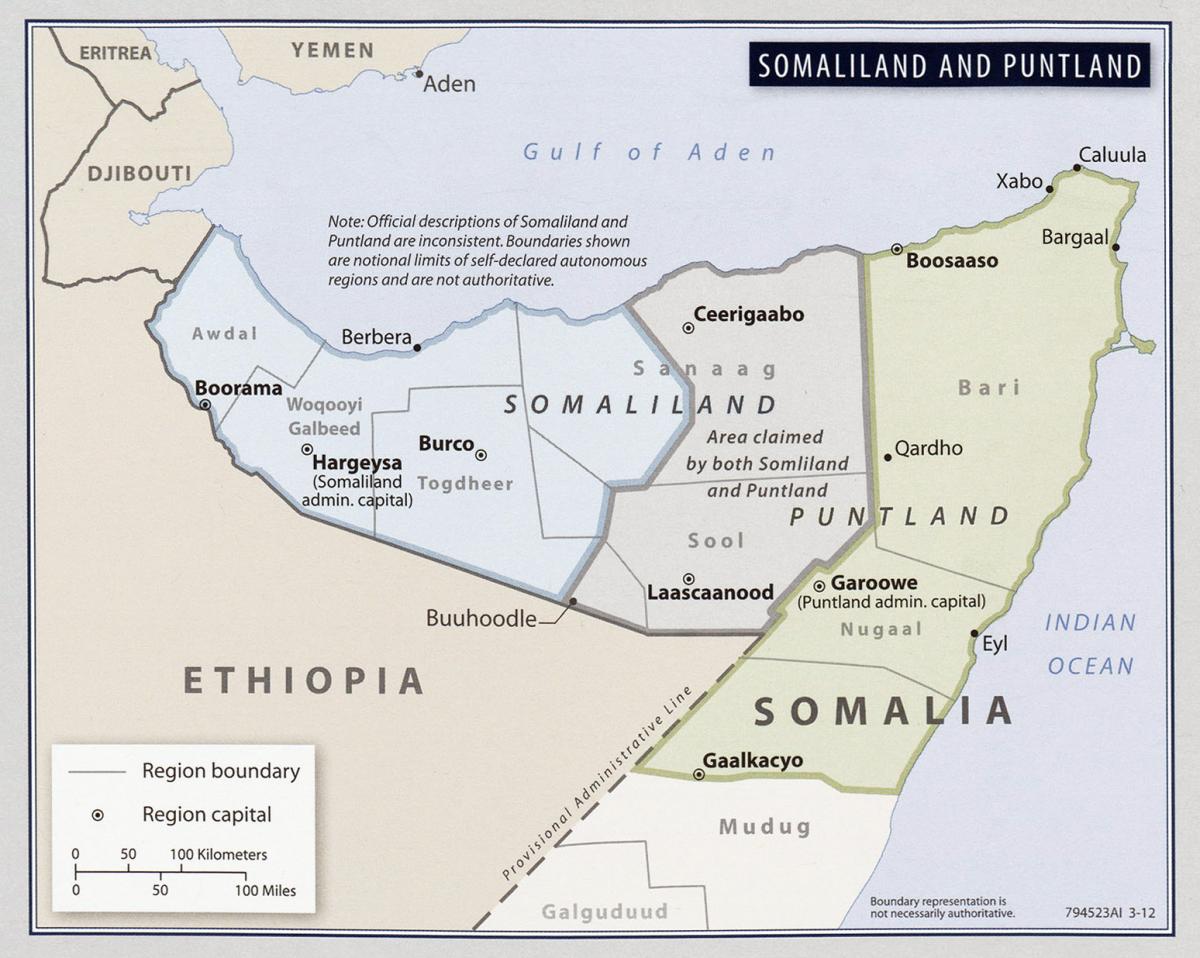
A group of 21 Arab, African and Islamic nations on Dec. 27 issued a joint statement formally rejecting Israel’s recognition of Somaliland as an independent state. The statement asserted that recognizing Somaliland as a nation independent of Somalia constitutes a grave violation of international law, emphasizing the “serious repercussions of such [an] unprecedented measure on peace and security in the Horn of Africa, the Red Sea, and its serious effects on international peace and security as a whole.”
The statement also rejected potential linkage between the recognition and “any attempts to forcibly expel the Palestinian people out of their land.”
This statement followed a joint declaration signed one day earlier by Israeli President Benjamin Netanyahu and Somaliland President Abdirahman Mohamed Abdullahi, making Israel the first country on earth to recognize Somaliland. As part of the deal, Somaliland is expected to recognize Israel under the Abraham Accords. US President Donald Trump brokered the Abraham Accords in his first term, seeking to establish diplomatic ties between Israel and Arab nations.
Somaliland unilaterally declared independence from Somalia in May 1991, during a period of conflict unleashed by the fall of the long-ruling Siad Barre dictatorship. Despite having its own government and currency, Somaliland had not been formally recognized by any nation as an independent country until Israel did so. According to analysts from the Council on Foreign Relations, Somaliland’s claim to independence stems in part from being a “relatively stable democracy” that “is attracting major foreign investors.” In contrast, Somalia, despite having an internationally recognized government, “hasn’t been a functioning country in decades.”
Other countries around the globe have also expressed their disapproval of Israel’s recognition of Somaliland. Notably, despite the Trump administration’s failed proposition earlier this year for Somaliland to take in Palestinians from Gaza, the US State Department announced Dec. 27 that Washington will continue to recognize the territorial integrity of Somalia, “which includes the territory of Somaliland.”
The EU also issued a statement emphasizing its disapproval of Israel’s recognition of Somaliland, saying that it threatens peace and security in the African region. The statement concluded with a call for Somalia’s government to resolve the long-standing dispute with Somaliland.
From JURIST, Dec. 28. Used with permission.
See our last report on the contradictions of the Abraham Accords.
See also our podcast, Somalia in the Great Game


Security Council holds emergency meeting over Israel recognition of Somaliland
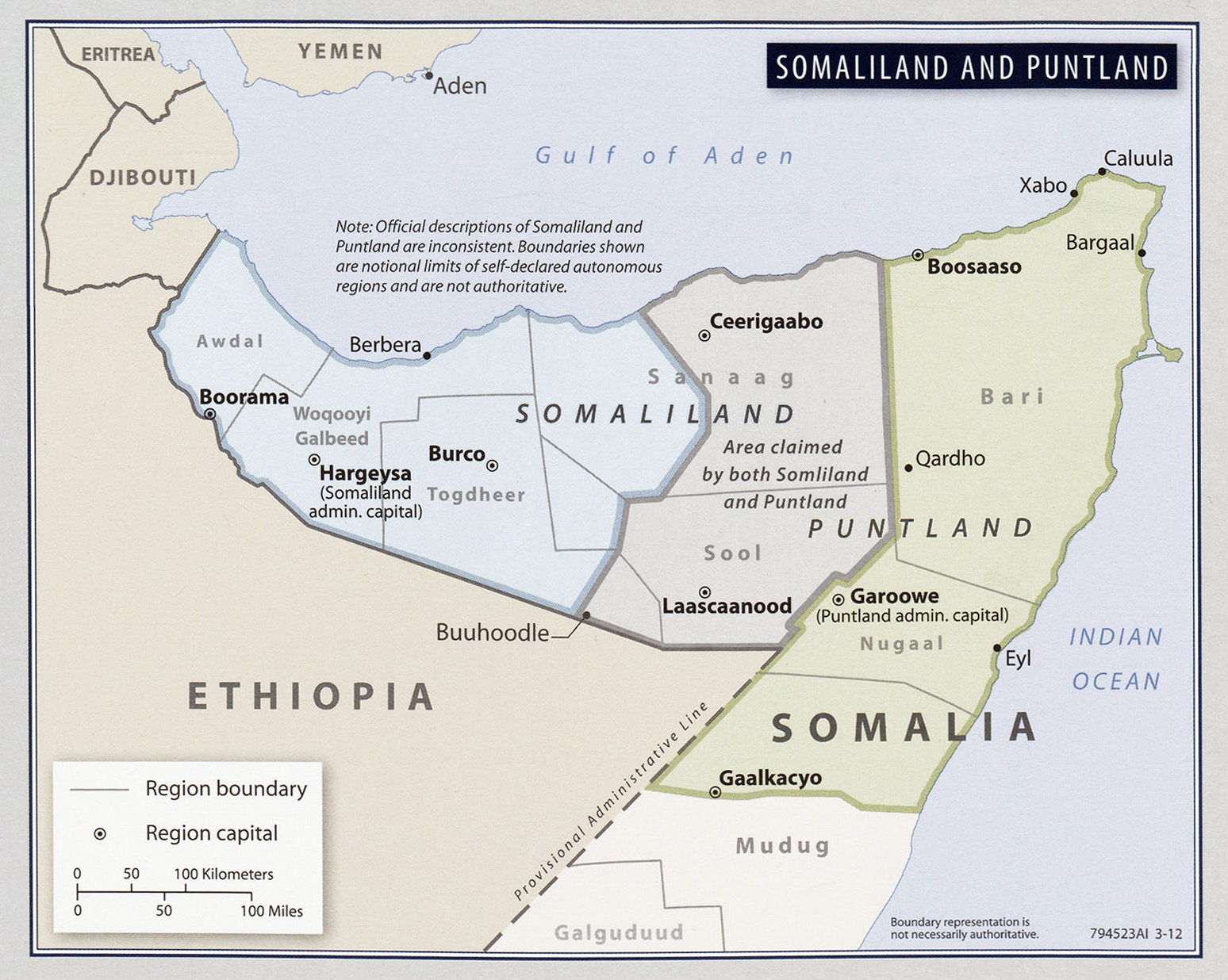
The United Nations Security Council (UNSC) held an emergency meeting Dec. 29 to discuss Israel’s announced recognition of Somaliland.
Somalia opened the discussion, denouncing Israel’s action as a “flagrant assault” on its unity and territorial integrity, and asserting that Somaliland is “legally incapable of entering into any agreement or arrangement with another country.” The representative, Abukar Dahir Osman, stated that the decision was in “direct violation of established international norms and legal principles,” describing it as an act of “aggression.” He also cited remarks by Israeli officials that, in his view, alluded to a forced relocation of Palestinians to Somaliland and the establishment of military bases in the territory. Somalia’s position was echoed by representatives of several African and Arab countries, as well as by statements from the African Union and the League of Arab States.
Israel and the US defended the move. The US delegate, deputy representative Tammy Bruce, argued that Somaliland has the same right as any other state to conduct diplomatic relations and noted that the recognition by several countries of what he described as a “non-existent Palestinian state” had not prompted an emergency UNSC meeting. However, the US refrained from itself taking a stance for Somaliland’s recognition, stating that “there has been no change in American policy.”
Israel itself stated that it has had longstanding relations with Somaliland and formerly recognized its independence in 1960, when the territory briefly “emerged as an independent state.” This referred to five days in 1960 when the State of Somaliland proclaimed independence, before accepting union with the Somali Republic (today the Federal Republic of Somalia). This short-lived state was a predecessor to the current Republic of Somaliland declared in 1991.
Other speakers, including Denmark and other European states, criticized Israel’s decision for setting a “dangerous precedent” that could exacerbate tensions in the Horn of Africa. They emphasized that any resolution of Somaliland’s status should occur in the framework of Somalia’s recognized national borders. The United Kingdom’s delegate proposed that the leaders of Somalia and Somaliland collaborate to curb al-Shabaab and other terrorist groups in the region who might benefit from internal divisions.
Statehood under international law is assessed by the 1933 Montevideo Convention, which sets out four conditions: a permanent population, a defined territory, an effective government, and the capacity to enter into foreign relations. The convention seeks to balance territorial integrity and sovereignty with the right of peoples to self-determination. Customary international law, however, generally sets a high threshold for unilateral declarations of independence, typically recognizing such declarations only in cases of severe rights violations perpetrated by the central government. (Jurist)
Somalia lynchpin of regional rivalries
Türkiye’s President Recep Tayyip Erdogan—a significant player in the bubbling Horn of Africa crisis—turned up the heat this week by condemning Israel’s recognition of breakaway Somaliland. The territorial integrity of Somalia, the newly assertive role of Israel, and Ethiopia’s growing tensions with Eritrea are all part of a bundle of interlinked disputes involving governments in the Horn and Middle East. Two broad coalitions exist: an Emirati-backed and Israeli-supported “axis of revisionists,” and a fluid alliance of “status quo” African states aligned with Egypt, Saudi Arabia and Türkiye.
Strategically located Somalia is a lynchpin. Last month, Türkiye sent upgraded F-16 fighter jets to Somalia—officially to help Mogadishu battle al-Shabab insurgents, but also, observers say, a case of power projection with Israel in mind. Ankara’s economic interests aren’t far behind either, with a deep-sea oil and gas drilling ship on its way. Somalia has also recently signed military cooperation agreements with Qatar and Saudi Arabia. The Riyadh deal is seen as a counter to Israel’s interests in a potential Somaliland base, but also as related to Saudi Arabia’s regional feud with the UAE. (TNH)