Syria
kronstadt

Syria: Lessons from Kronstadt 1921

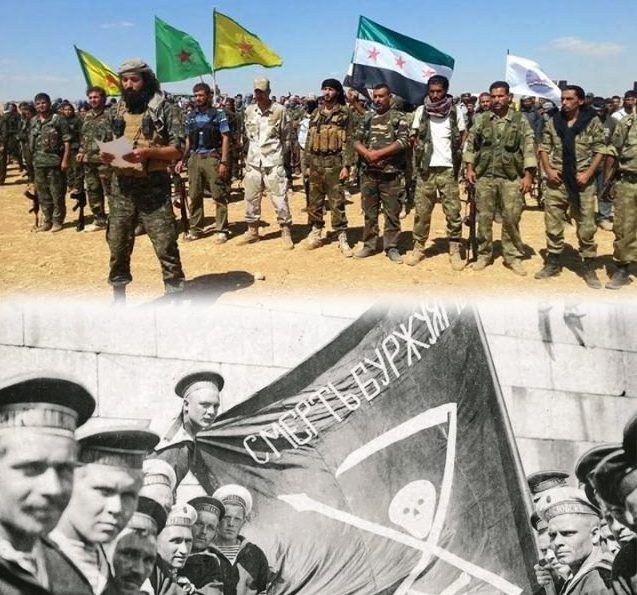
In Episode 65 of the CounterVortex podcast, Bill Weinberg offers his presentation on the panel “Kronstadt 1921 and the Social Crises of 2021,” part of the online conference Kronstadt as Revolutionary Utopia, 1921-2021 and Beyond, marking the centenary of the Kronstadt uprising in revolutionary Russia. In March 1919, Russian naval troops mutinied and took over their island garrison as an autonomous zone, in solidarity with striking workers in Petrograd, and to demand greater freedom and power for democratic soviets (worker councils) against the consolidating one-party state of the Bolsheviks. When the uprising was brutally put down, this marked the first time that international leftist forces found themselves on the side of repression rather than rebellion. A century later, all too many on the international “left” similarly find themselves on the side of repression rather than rebellion in Syria. And the dictatorship of Bashar Assad, unlike the Russia of 1921, is by no stretch of the imagination a revolutionary state. Listen on SoundCloud or via Patreon. (Photo mash-up with images from Rojava Breaking News and RFE/RL)
Syria
syria betrayed

Ten years after: the Syrian Revolution betrayed

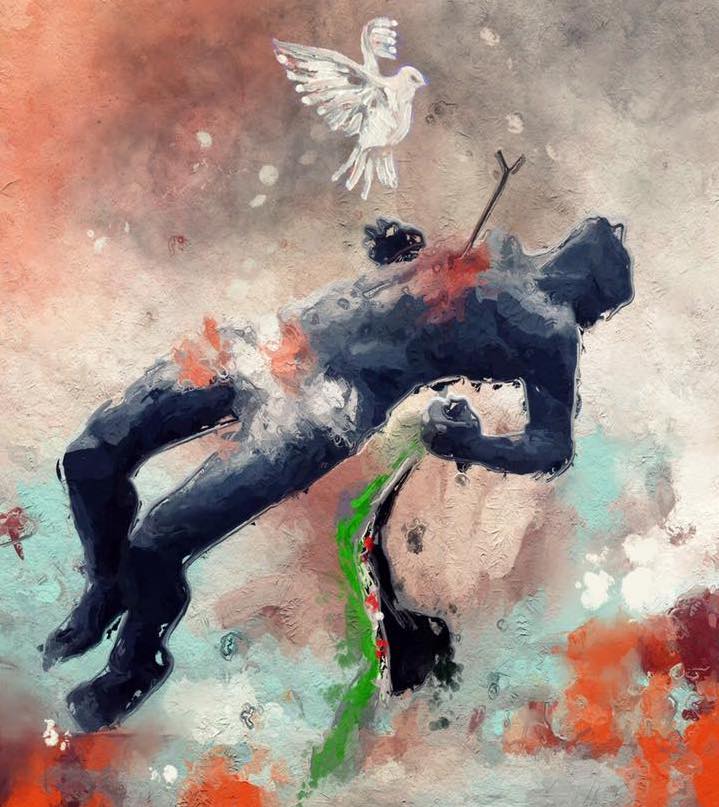
Ten years after the Syrian Revolution began with peaceful anti-regime protests, the UN Human Rights Commission released a report finding that actions by the Assad regime and its Russian allies over the course of the Syrian war have likely constituted “crimes against humanity, war crimes and other international crimes, including genocide.” The UN and human rights groups have issued such findings repeatedly—to little media coverage. The charge of genocide officially requires the world to act under the Genocide Convention. But the world is no longer even paying attention. (Image: Delawer Omar)

Afghanistan
afghan army

Afghanistan: US withdrawal on hold?

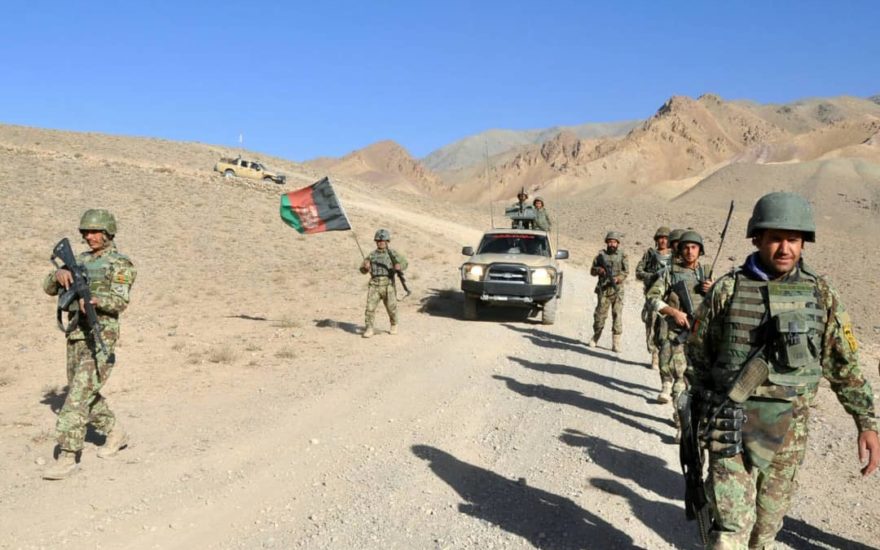
With a May 1 deadline for withdrawal of US forces from Afghanistan approaching but a final peace deal stalled, the White House is said to be considering an extension beyond this date for removal of its 2,500 troops remaining in the country. “Intra-Afghan” negotiations between the Taliban and Kabul opened in Doha in September, but remain deadlocked over fundamentals of the power-sharing deal—with the Taliban rejecting President Ashraf Ghani’s insistence on remaining in office for the remainder his five-year-term. Predictably, they haven’t even got around to discussing protection of minority and women’s rights, or the role of sharia law in the new order. Meanwhile, civilian casualties are mounting, and the Taliban has just launched a spring offensive. (Photo: Khaama Press)

Syria
jarabalus

Russia bombs oil facilities in Syria’s north

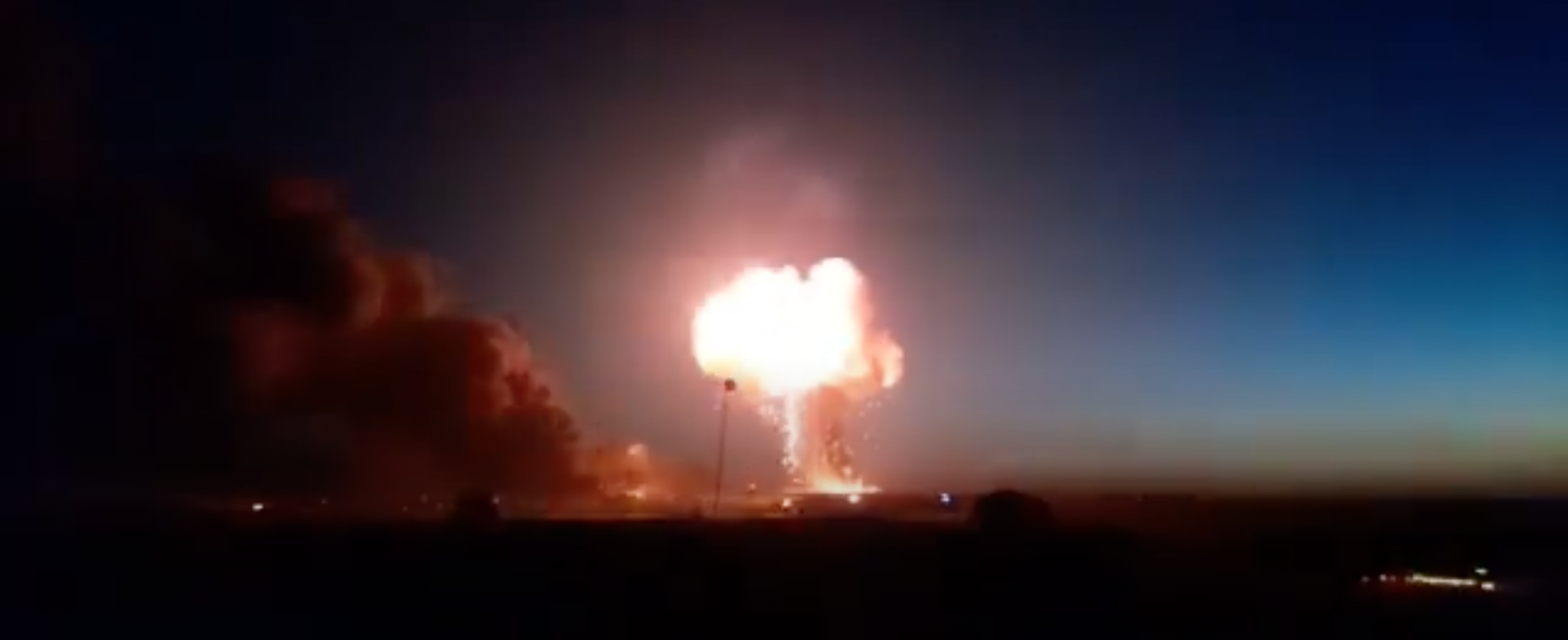
A missile attack on an oil refinery at al-Hamaran, near Jarabulus in Syria’s rebel-held northern pocket, was launched from Russian warships off the country’s coast, according to a monitoring group, the Syrian Observatory for Human Rights. At least one person is known to have been killed in the the three-missile strike, which also hit a nearby market, possibly as “collateral damage.” In a similar strike last month, rockets fired from the Russian coastal military base at Khmeimim struck an oil refinery in the town of Tarhin, also within the Jarabulus pocket. The pocket is in the hands of the Turkish-backed Syrian National Army (SNA), and the strikes appear aimed at preventing SNA forces from resuming oil production in the region for black-market export to Turkey. Under a Moscow-Damascus deal announced in 2018, Russia is to have exclusive rights to exploit hydrocarbons in Syria in exchange for military support to the Bashar Assad regime. (Image via YouTube)

North Africa
Haftar

Libya: Blackwater CEO trafficked arms to Russia-backed warlord

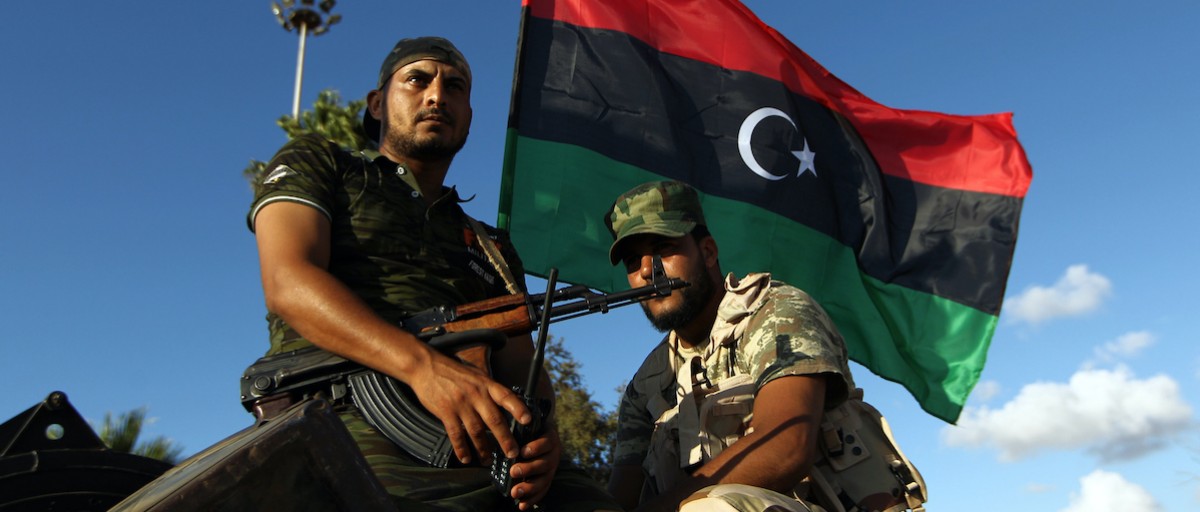
Erik Prince, former CEO of the notorious private military company Blackwater, violated the UN arms embargo on Libya with a clandestine pipeline to a rebel warlord, according to a confidential report to the Security Council obtained by the New York Times. The report found that in 2019 Prince deployed a force of foreign mercenaries and weapons to renegade military commander Khalifa Haftar, who has been fighting to depose the UN-recognized Libyan government—and is also being aggressively backed by Russia. (Photo via ISS Africa)

Syria
Derik

US forces sent back in to northern Syria?

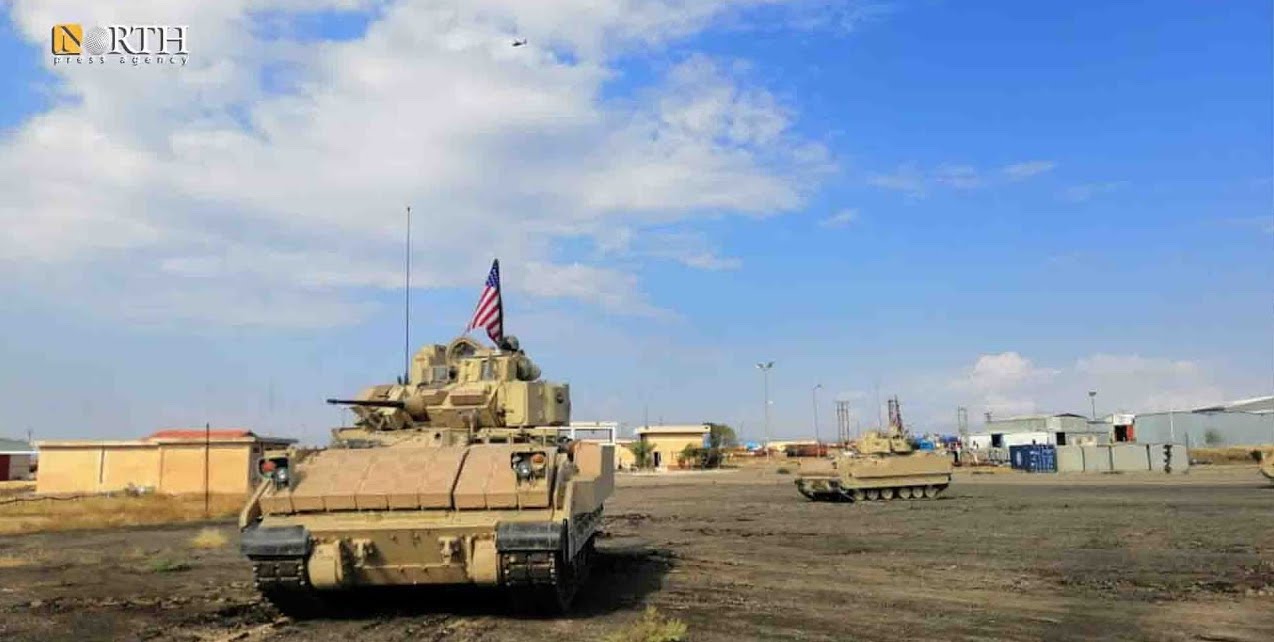
Two days after President Biden’s inauguration, a large convoy of US military vehicles reportedly entered northern Syria from across the Iraqi border. The convoy, consisting of some 40 trucks and armored vehicles accompanied by helicopters, was reported by Syrian state media, citing sources on the ground. The putative sighting raises speculation that Biden is reversing the withdrawal of US troops from northern Syria, which had been ordered by Trump in 2019. The report comes as the uneasy peace between Kurdish forces in the region and the Assad dictatorship is breaking down, with new fighting in the town of Qamishli, shattering a de facto power-sharing arrangement. (Photo: North Press Agency)

The Andes
sillazo

Bolivia: Evo Morales warns of new coup

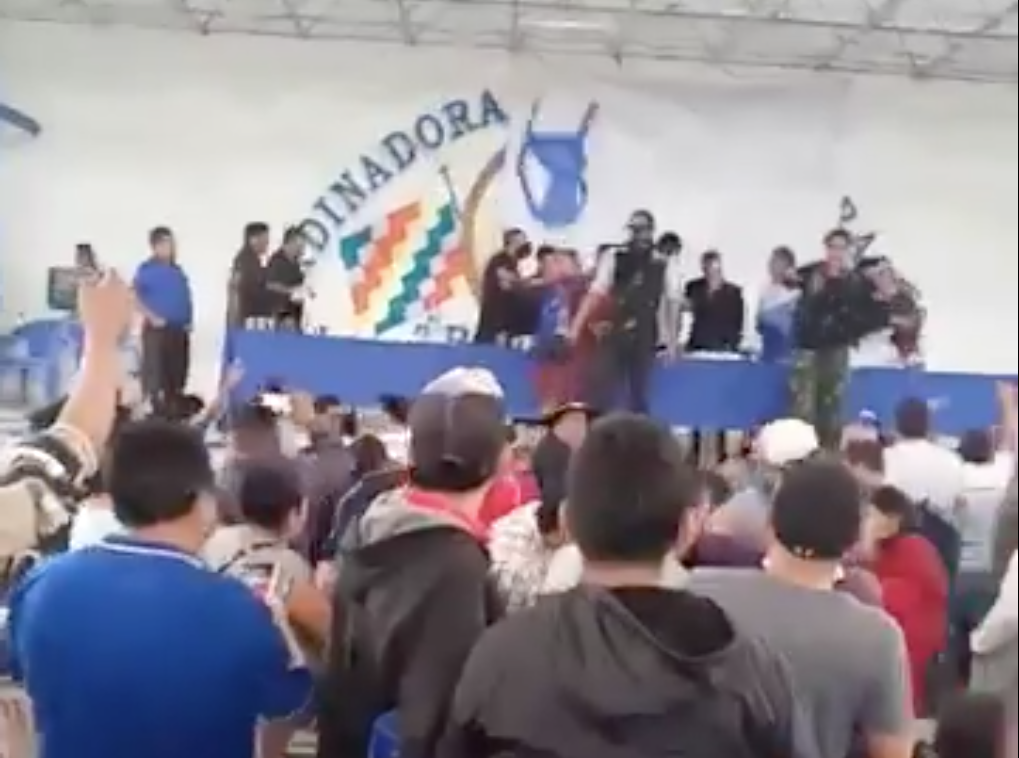
Former Bolivian president Evo Morales, back in his country from exile in Argentina after October’s elections returned his Movement to Socialism (MAS) to power, warned of the ongoing danger of a new coup d’etat and asked his followers to debate how to best defend new President Luis Arce and the “process of change.” The comments came at a meeting of the MAS in Chapare region, Morales’ traditional heartland of support. Recalling his own ouster in November 2019, Morales said: “The issue of the coup is still compelling; it is an ideological, programmatic struggle; it is a cultural, social, communal and, of course, an electoral struggle.” Invoking divided loyalties in the military, he added: “I am also convinced that in the Armed Forces there are not only those who respect and admire the MAS, but there are also anti-imperialist soldiers.” However, he added that “they are not many,” and others have “submitted to the North American empire.” (Photo: Los Tiempos de Cochabamba via Twitter)

Watching the Shadows

Podcast: Rule of the Strongmen

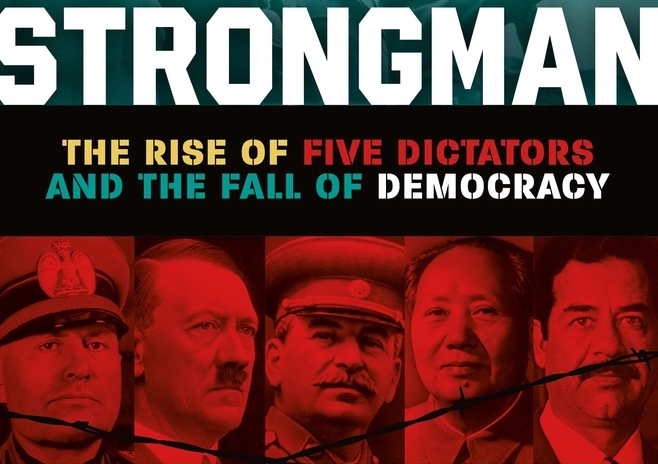
In Episode 59 of the CounterVortex podcast, Bill Weinberg takes stock of Trump’s evident preparation for a coup d’etat and what could be a culminating moment for the current crisis of American democracy. In the context of this dilemma, he discusses two very timely new books with similar titles that both examine the mechanics by which dictators seize and maintain power: Strongman: The Rise of Five Dictators and the Fall of Democracy by Kenneth C. Davis and Strongmen: Mussolini to the Present by Ruth Ben-Ghiat. Listen on SoundCloud or via Patreon. (Image via Macmillan)

North Africa
Libya

Libya: Turkish troop presence threat to ceasefire

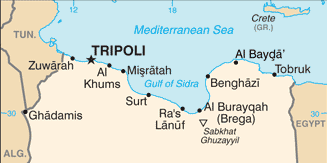
Libya’s eastern warlord Gen. Khalifa Haftar, who launched an offensive last year to capture the capital Tripoli from the UN-recognized Government of National Accord (GNA), threatened to launch attacks on Turkish forces if Ankara doesn’t withdraw troops and mercenaries sent in to back up the GNA. Haftar’s comments came in response to the Turkish Parliament’s move to extend for 18 months a law that allows the deployment of Turkish troops in Libya. Turkey’s defense minister responded that any attack by Haftar on its personnel would be met with force. “A war criminal, murderer Haftar and his supporters must know that they will be seen as a legitimate target in case of any attack on Turkish forces,” Hulusi Akar said in an address to Turkish units in Tripoli. The ultimatum is a threat to the ceasefire that has largely held since it was signed in October. (Map: CIA)

Africa
Somaliland

Russia seeks naval base in Sudan —and Somaliland?

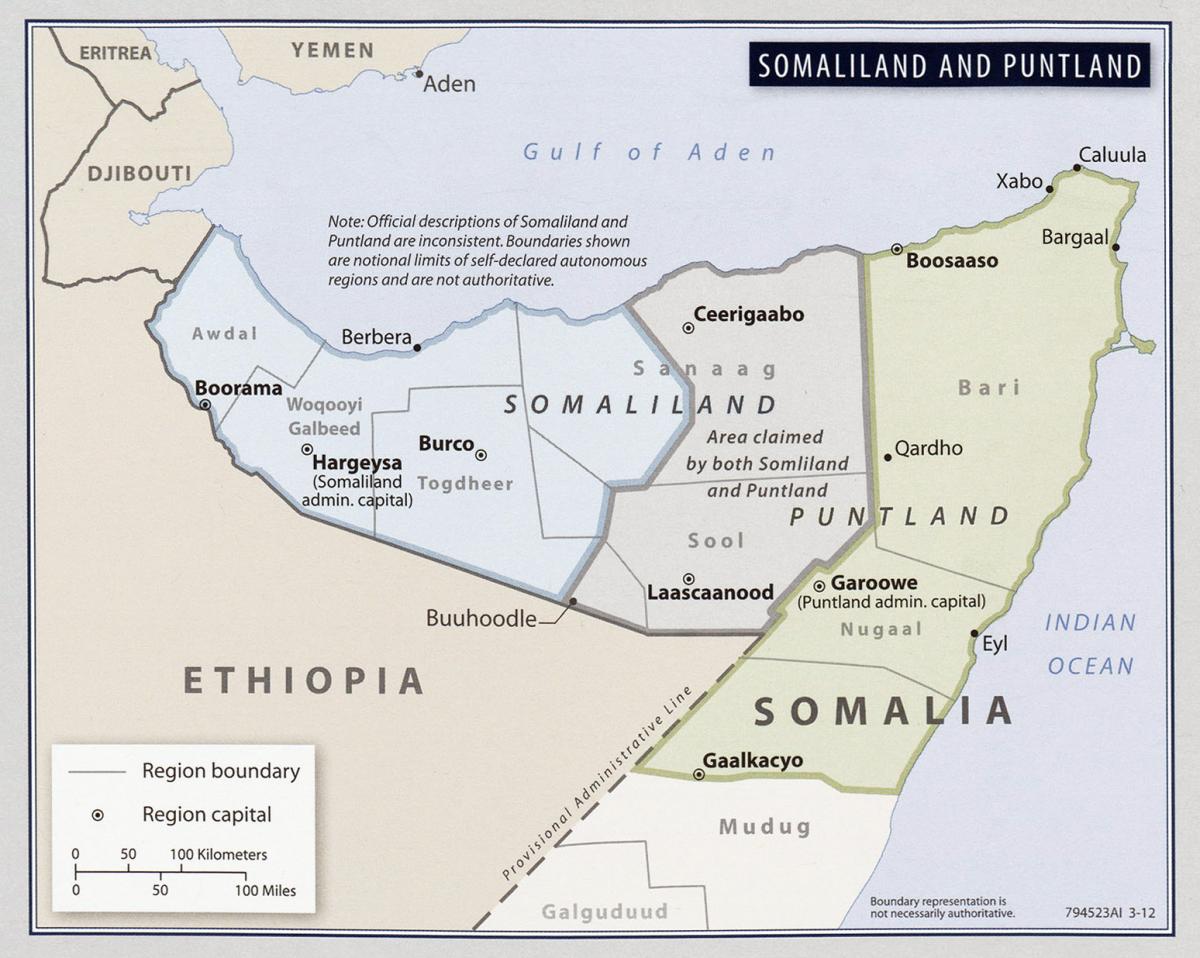
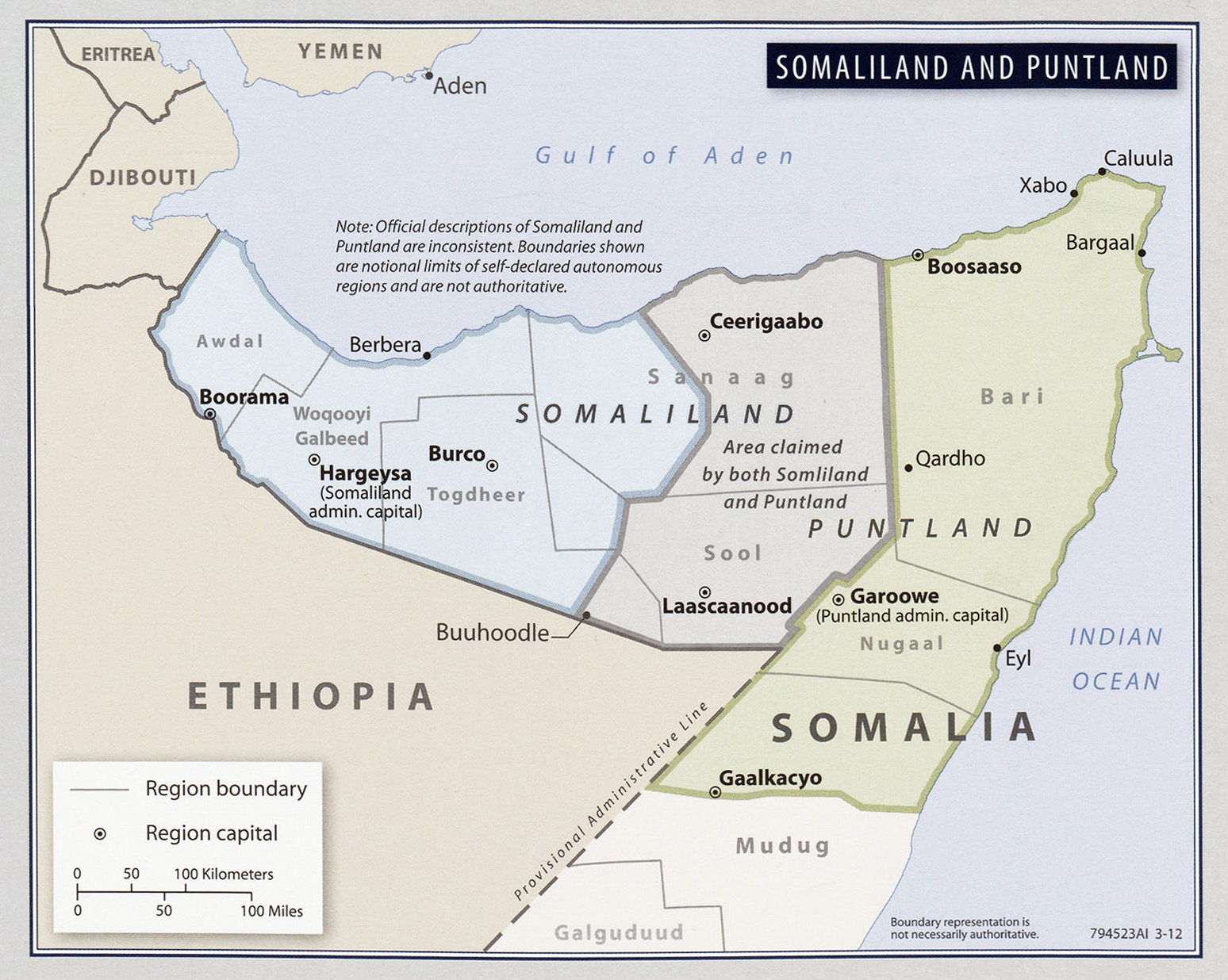
Just after Russia finalized plans to establish a naval base on the Red Sea in Sudan, Moscow’s UN ambassador for the first time weighed in diplomatically on the dispute between Somalia and the separatist enclave of Somaliland, urging both sides to find a compromise solution. The move sparked speculation within the region that Russia is seeking a second naval facility at Somaliland’s port of Berbera, on the Gulf of Aden which guards the southern mouth of the Red Sea. This would allow Russia to establish a counter-presence to US, French and Chinese bases in Djibouti, just across the land border to the northwest, as well as Turkish military forces in Somalia proper to the south. (Map: Somalia Country Profile)

Watching the Shadows
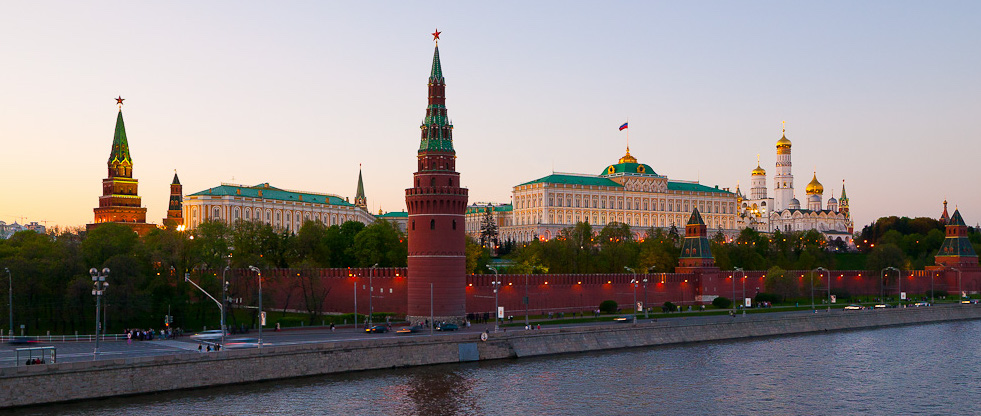
Kremlin

Katie Halper: ‘Useful Idiot’ or Russian ‘infiltrator’?

Popular vlogger and comedian Katie Halper, whose journalistic take-downs of the Democratic Party establishment have been deftly exploited by the Kremlin propaganda machine, wears the accusation that she is a “useful idiot” for Russia as a badge of pride—”Useful Idiots” is actually the sarcastic name of the podcast she co-hosts with the equally problematic Matt Taibbi. We’ve always wondered if such figures really are useful idiots, or something more sinister—knowing propagandists for Vladimir Putin’s reactionary global ambitions. The debate has suddenly exploded onto the left-wing vlogosphere. (Photo: Wikipedia)

Watching the Shadows
headlines

Targeted disinformation neutralizes US left

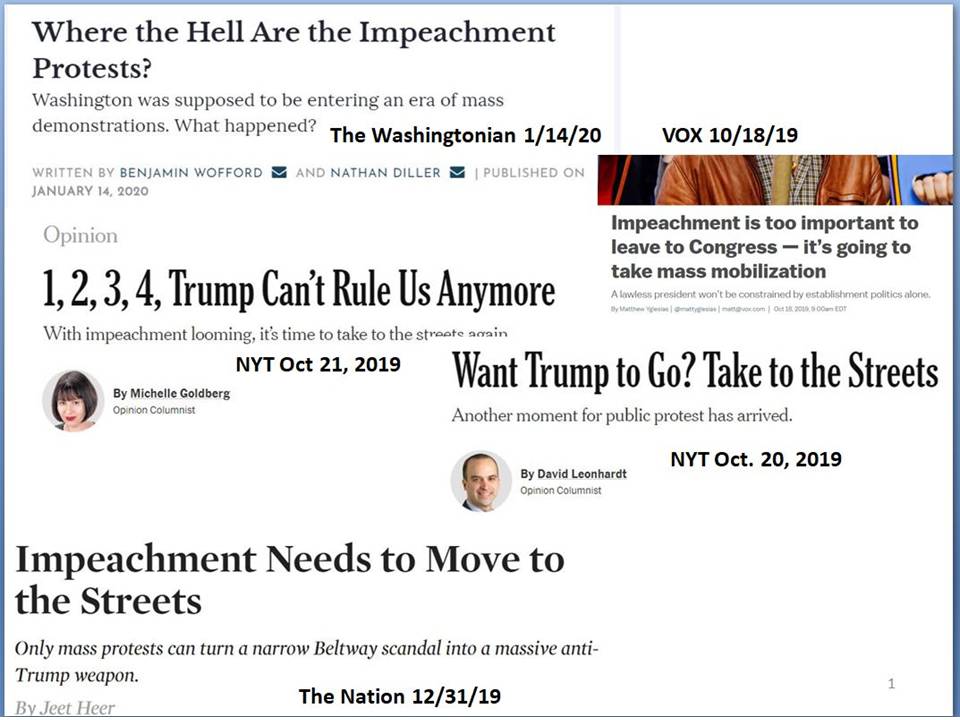
Progressives in the United States show little awareness of the disinformation specially targeting them. Denialism about Russian interference in the US elections is now translating into denialism about how dangerous the Trump presidency is. In 2016, we saw Russian-promoted “left” sites and writers post memes and articles that trashed Hillary Clinton, equated Clinton and Trump, or even portrayed Clinton as the worse choice. They dominated “Leftbook” social media and helped depress the progressive vote—a decisive factor in Trump’s win. We are seeing a replay now. Biden and Harris are denounced far more than Trump on some “left” sites, while Trump’s incipient fascism is downplayed. This influence has also been felt in the appalling lack of protest against Trump. Through his round-ups of undocumented immigrants, his abandonment of climate and arms control treaties, the impeachment, progressives failed to fill the streets—until the Black Lives Matter uprising, bringing a new and different leadership to the fore. In a presentation for Women’s March Minnesota, longtime activist Terry Burke examines how the US left is in danger of being manipulated and neutralized by a sophisticated online propaganda campaign, facilitated by the Kremlin and its media arms and corporate enablers like Facebook. (Image: TerryBurke)