The Caribbean
Osorbo

Imprisoned Cuban rapper on hunger strike

Supporters of imprisoned Cuban rap artist Maykel Castillo, better known by his stage name “El Osorbo,” warn that his life is in danger one week into a hunger strike, and that he has been removed to a “punishment cell” where he is being held incommunicado. Castillo is a leader of the San Isidro Movement, a collective of Cuban dissident artists and intellectuals, and co-author of the viral song “Patria y Vida,” which became an anthem of the protest wave across the island in July. He has been repeatedly arrested since 2015, including for protesting the controversial Decree 349, which places restrictions on artistic expression. He has been held at the maximum-security Pinar del Río prison since his May arrest for the vague crimes of “resistance” and “contempt.” He launched his total hunger and thirst strike in protest of his own detention and the crackdown on freedom of expression in Cuba. (Image: FreeMuse)

The Caribbean
Habana

Cuba: pre-emptive repression stifles protests

Plainclothes State Security in Havana pre-emptively shut down a “Civic March” that had been called by opposition networks. In addition to heavy deployment in the parks and squares, armed agents were stationed on rooftops around the iconic Capitolio building. What opposition website 14ymedio called pro-regime “vigilante groups” also gathered on street corners. According to independent human rights organization CubaLex, police arrested 11 people, while some 50 identified as key organizers were effectively “besieged” in their homes to forestall any public gathering. Those arrested had apparently attempted to gather in defiance of the security measures. A small group of youth was detained on the Paseo del Prado while shouting “Patria y Libertad“, slogan of the protest wave that shook Cuba in July. (Photo: 14ymedio)

North Africa
sfax

Tunisia: uprising over waste disposal crisis

Anger over a regional garbage crisis in Tunisia exploded into street clashes after a man died following exposure to tear-gas during protests against the reopening of a landfill site. Abderrazek Lacheheb, 35, died in the town of Aguereb in the coastal region of Sfax, punctuating weeks of demonstrations over a growing waste and public health crisis. The powerful UGTT trade union confederation announced a general strike the day after his passing, condemning the “savage intervention by security forces.” (Photo: Leaders.com.tn)

Greater Middle East
egypt police

State of emergency lifted in Egypt —charade?

The ending of Egypt’s nearly four-year state of emergency, announced by President Abdel Fattah al-Sisi, was hailed by international human rights groups as a positive step. But Sisi is now trying to make permanent a more recent, and officially temporary, national security law that would give the military powers normally used during a state of emergency. The amendments to the national terrorism law, which have been approved by the House of Representatives, would give the president the authority to take “measures necessary to preserve security and public order,” including the ability to impose curfews. It would also expand the purview of military courts, giving them power over any crimes concerning “public infrastructure.” A related measure passed by the House would impose penalties for conducting “research” on the military. (Photo via Wikipedia)

Palestine
DCIP

Israel outlaws human rights organizations

Israeli Defense Minister Benny Gantz declared six Palestinian human rights groups to be terrorist organizations, claiming they are “secretly linked” to the Popular Front for the Liberation of Palestine (PFLP)–a leftist resistance group that Israel has long designated a “terrorist organization.” The groups on Gantz’s list are Addameer, al-Haq, the Bisan Center, Defense for Children Palestine (DCIP), the Union of Agricultural Work Committees (UAWC), and the Union of Palestinian Women’s Committees (UPWC). International rights groups Humans Rights Watch and Amnesty International released a joint statement calling the announcement a “brazen attack on human rights.” The Israeli rights group B’Tselem called the declaration “an act characteristic of totalitarian regimes, with the clear purpose of shutting down these organizations.” (Photo of raid on DCIP office via YouTube)

Africa
Sudan

Counter-revolutionary coup in Sudan

Sudan’s interim prime minister Abdalla Hamdok and his senior officials were arrested as the military seized full power in a coup d’etat and imposed a state of emergency. The two principal pro-democracy formations, the Forces for Freedom & Change and Sudanese Professionals Association, have called for a popular mobilization to overturn the coup, and thousands have answered the call, filling the streets of Khartoum, Omdurman and other cities. Troops fired on protesters outside the army headquarters in Khartoum, killing at least three and injuring more than 80. The paramilitary Rapid Support Forces have also been mobilized. The military head of the now officially dissolved joint civilian-military Transitional Sovereign Council, Lt Gen Abdel Fattah al-Burhan, is apparently behind the coup and in control. The putsch follows days of rival demonstrations in Khartoum, with pro-democracy protesters demanding full civilian rule and pro-army counter-demonstrators demanding that the military take complete control. (Map: Perry-Castañeda Library Map Collection)

Europe
Riace

Italian mayor imprisoned for sheltering immigrants

Hundreds of residents in the southern Italian town of Riace took to the streets to express support for their mayor, Domenico (Miimmo) Lucano, after he was sentenced to 13 years in prison on charges related to his policy of providing safe harbor for immigrants. Following a probe dubbed “Xenia” (ironically, the ancient Greek word for hospitality), Lucano was charged with “aiding and abetting illegal immigration” among other crimes. Riace, on the Ionian coast of Calabria region, was facing population decline, like many small towns in Italy’s South, and Lucano sought to arrest this trend by welcoming migrants and asylum-seekers to settle there. Under his proclaimed modello di accoglienza (model of welcoming), the municipal government helped hundreds of migrants and asylum-seekers from Africa and the Middle East to establish themselves in Riace. Despite his conviction, Lucano remains a candidate for regional president in Calabria’s upcoming elections. (Photo: Wikipedia)

East Asia
Hong Kong

Hong Kong: ‘patriots’ in, democrats out

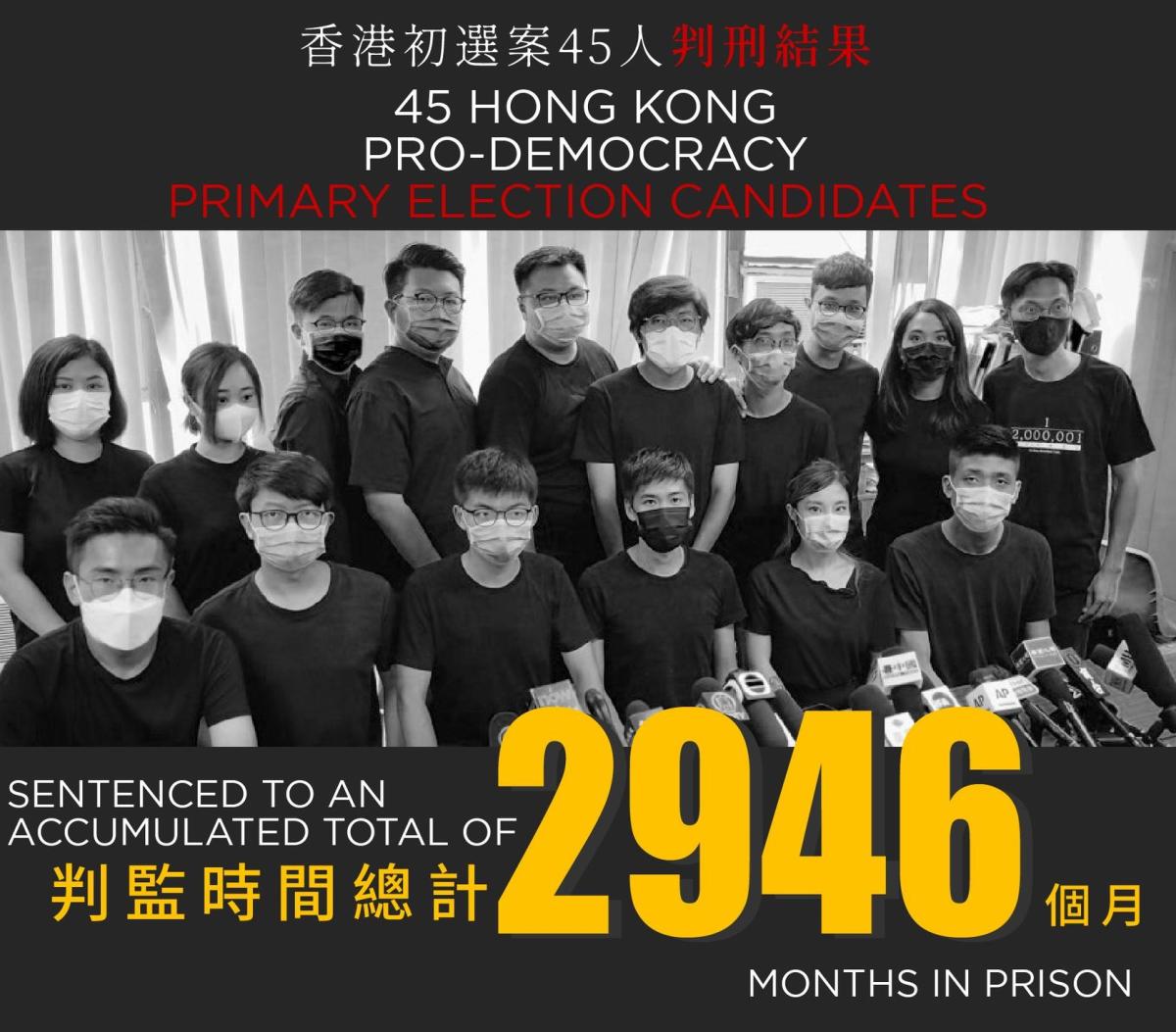
The first “patriots only” vote under Hong Kong’s new political system was held to choose members for a 1,500-member Election Committee—although only some 360 of the seats were actually contested. Voting was restricted to some 5,000 individuals representing different professions and industries, chosen under a principle of “patriots administering Hong Kong.” The Election Committee is tasked with electing 40 members of the enlarged 90-seat Legislative Council in December as well as choosing the city’s new chief executive next March. The new and more controlled electoral system was adopted by an overwhelming majority vote of the National People’s Congress in Beijing this March. (Photo: HKFP)

South Asia
adivasis

India: tribal rights activists accused as ‘Naxals’

The Bombay High Court issued a notice to India’s National Investigation Agency (NIA), directing it to file a reply to the bail plea of Anand Teltumbde, a Goa-based professor and civil rights activist who faces charges under the draconian Unlawful Activities Prevention Act (UAPA) in relation to the notorious Bhima Koregaon case. In the case, dating to 2018, several advocates for Dalits (“untouchables”) and Adivasis (tribal peoples) are accused of links to the Maoist guerillas known as the Naxalites. Fifteen face lengthy prison terms and are still being denied bail. The case was back in the news in July, when a 16th among the accused, Jesuit priest Father Stan Swamy, 84, died in a hospital in Mumbai after taking ill in jail. His medical bail plea was still pending when he expired. (Photo via Intercontinental Cry)

Central America
antibitcoin

Anti-Bitcoin protests shake El Salvador

Protests repeatedly erupted in El Salvador as the country became the first to make Bitcoin legal tender. The US dollar also remains official currency, but the law pushed through by President Nayib Bukele mandates that all vendors also accept Bitcoin. Small merchants and especially those in the informal sector complain of problems in trying to download the official phone app needed to use the currency. Protesters say the new law will deepen poverty by further excluding the already marginalized from the economy. They also assert that it will further enable corruption. “This is a currency that’s not going to work for pupusa vendors, bus drivers or shopkeepers,” one protester told Reuters. “This is a currency that’s ideal for big investors who want to speculate with their economic resources.” (Photo via Twitter)

East Asia
tiananmen vigil

Members of HK Tiananmen vigil group arrested

Four key members of the Hong Kong Alliance in Support of Patriotic Democratic Movements of China, the group behind the city’s annual Tiananmen Massacre vigil, were arrested in an early-morning raid on the June 4 Memorial Museum. The arrests came the morning after the activists publicly refused a police demand for information as part of a “national security” probe into the 32-year-old group. Police confirmed the arrests, saying the four are being held for failing to comply with Article 43 of the National Security Law, which compels cooperation with investigations. The police had requested information from the group in a letter in late August under provisions of Article 43. The force also alleged that the group had been working with foreign agents, a potential violation of the Beijing-imposed legislation. (Photo: Tam Ming Keung/United Social Press via HKFP)

South Asia
kashmir

Kashmir under internet blackout —again

Indian-administered Kashmir was plunged back into internet darkness as India’s central authorities enforced lockdowns and a news blackout following the death of Syed Ali Geelani, a prominent separatist leader. Geelani’s body was immediately seized by authorities, and buried in a quiet funeral held under harsh restrictions. His son, Naseem Geelani, said the family had planned to bury him at the main martyrs’ cemetery in Srinagar, as specified in his will, but was not allowed to do so. Police also charged family members under an anti-terrorism law for wrapping his body in the Pakistani flag and raising anti-India slogans. Kashmir spent months without internet following an August 2019 crackdown. High-speed mobile internet was only restored earlier this year. (Photo: Kashmir Global via Nationalia)