Europe
antiwar

Anti-war protests sweep across Russia

Thousands have taken to the streets of cities across Russia in open protest of Putin’s invasion of Ukraine—from Kaliningrad in the west to Vladivostok in the east. What began as isolated “solo pickets”—essentially the only legal form of public protest in Russia—quickly snowballed into mass unpermitted marches and rallies. The largest demonstrations were reported from Moscow and St Petersburg, where they were met with riot police in full body armor. In Moscow, Red Square was closed off by military vehicles, preventing protesters from marching on the seat of government power. Independent monitoring group OVD-Info counted some 1,800 protesters arrested by security forces in some 60 cities, including Tyumen, Kazan, Rostov-on-Don, Novgorod, Novosibirsk, Irkutsk and Yekaterinburg. Popular slogans include “No to war” and “Hands off Ukraine.” Many demonstrators were heard to shout “Arrest Putin, not me!” as they were dragged away by police. (Photo of St Petersburg protest: OVD-Info)

Europe

Russian anarchists call for anti-war resistance

As Putin finally ordered his forces across the Ukrainian border into the breakaway Donbas region, the Russian anarchist group Autonomous Action issued a statement to the world, entitled “Against annexations and imperial aggression.” It reads: “We urge you to counter the Kremlin’s aggression by any means you see fit. Against the seizure of territories under any pretext, against sending the Russian army to the Donbas, against militarization. And ultimately against the war. Take to the streets, spread the word… Do not be silent. Take action. Even a small screw can jam the gears of a death machine.” (Banner reads: “No war between peoples, no peace between classes.” Via Autonomous Action)

Inner Asia
GBAO

Tajikistan: internet darkness in Gorno-Badakhshan

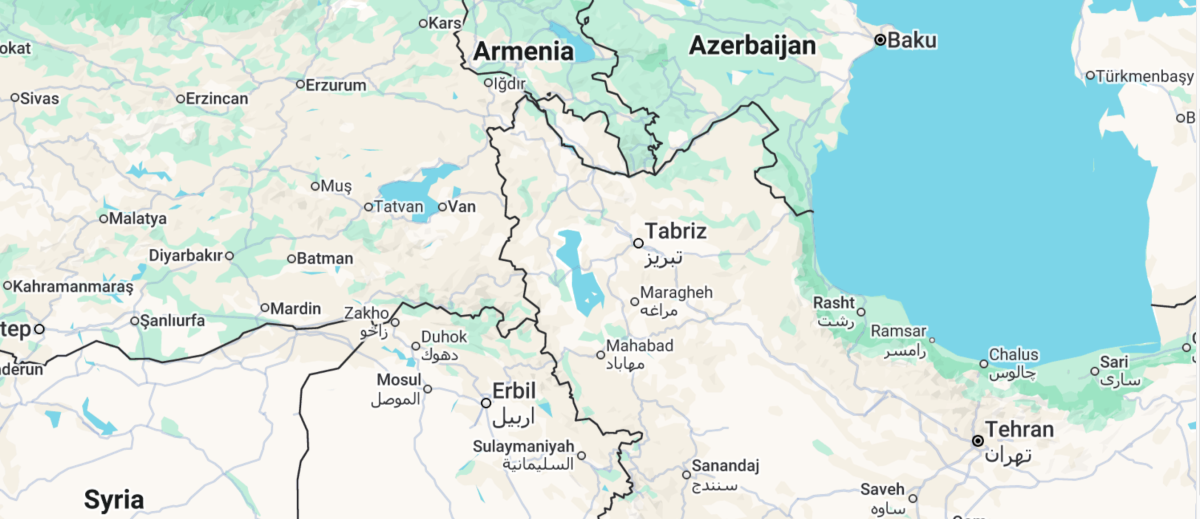
Human Rights Watch urged Tajikistan’s authorities to restore internet connectivity in Gorno-Badakhshan Autonomous Region (GBAO, by its Russian acronym), and called on the national government to ensure due process for detained political activists. The trouble in the GBAO began in late November, when the shooting of a local man during an arrest sparked protests in the regional capital, Khorog. Protests calmed several days later, after local authorities vowed to undertake an investigation into the shooting, as well as the deaths of two demonstrators. The government also pledged that it would not prosecute arrested protesters, and would restore internet connectivity—but two months on, it has not done so. The GBAO is the home of the increasingly restive Pamiri ethnic minority, and was recently the scene of Russian-led military maneuvers on the border with Afghanistan. (Map: Wikipedia)

North Africa
Tunis

Tunisia: president dissolves Supreme Judicial Council

Tunisian President Kais Saied officially dissolved the Supreme Judicial Council, sending police to seal the chamber where the body meets. The Council’s head, Youssef Bouzakher, called the dissolution “illegal,” and said it is aimed at bringing Tunisia’s jurists under control of the executive. Established in 2016, the Council is a constitutional body entrusted with ensuring the independence of the judiciary, responsible for appointing judges and taking disciplinary action. Bouzakher said the Council intends to continue working in defiance of the president’s announcement. The move is a further consolidation of Saied’s power following his “self-coup” last year, in which Tunisia’s parliament was suspended. (Photo: XLR Media via Twitter)

Europe
anti-war

Glimmers of anti-war dissent in Russia

More than 100 Russian writers, activists and academics have signed a petition in protest of the war drive on Ukraine, which was published on the independent news site Echo of Moscow. The “Declaration by supporters of peace against the Party of War in the Russian government” charges: “The citizens of Russia are…becoming prisoners of criminal adventurism.” It has especially harsh words for Russia’s state media: “On state TV there is only one point of view, and that is the point of view of the supporters of war… [A]ggression pours out, and hate towards Ukraine, America, and Western countries… [W]ar is treated as an acceptable and inevitable development of events.” Some signatories have been officially designated as “foreign agents” by the Russian government, limiting their right to political activity. (Photo: Sign reads “Putin, hands off Ukraine!” Moscow, March 2014. Via RS21)

Iran
Baktash Abtin

Iran: political prisoners on hunger strike

Six political prisoners began a hunger strike at Tehran’s notorious Evin Prison after poet and filmmaker Baktash Abtin died of COVID-19 at the facility. Abtin, who expired after being put into an induced coma during temporary transfer to a hospital, had been serving a five-year sentence on the charge of “assembly and collusion against national security.” Ardeshir Zarezadeh, director of the Toronto-based International Centre for Human Rights (ICHR), said in a statement: “The government of Iran must immediately and unconditionally release the political prisoners, and prisoners of conscience, specially due to the serious concern over the spread of coronavirus (COVID-19) in Iran’s overcrowded jails.” Abtin was the second known political prisoner to die in Iran in the first week of 2022. On New Years Day, writer Kian Adelpour died at Sheiban Prison in Ahvaz province after going on hunger strike a week earlier to protest being imprisoned without a fair trial. (Photo: Center for Human Rights in Iran)

The Caribbean
11J

Cuba: prisoners on hunger strike as mass trials begin

Reports from opposition activists in Cuba indicate that trials are opening in several cities for some 60 who were arrested during last year’s protest wave that began July 11, now popularly known as “11J.” The defendants are said to include at least five minors as young as 16. Those facing charges of “sedition” could be sentenced to up to 30 years in prison. More than 620 detainees are ultimately to stand trial over the 11J protests. Ten prisoners in Holguin who were already convicted and face high sentences are reported to have started a hunger strike. Sentences in their cases are expected next month. Trials are also said to be underway in Santa Clara, Mayabeque and Havana. (Photo: Havana Times)

East Asia
Tiananmen

‘Great Leap Backward’ for press freedom in China

Reporters Without Borders issued a new report, The Great Leap Backwards of Journalism in China, revealing the extent of the regime’s campaign of repression against the right to information. At least 127 journalists (professional and non-professional) are currently detained by the regime. Simply reporting on a “sensitive” topic or publishing censored information can result in years of detention. The report especially examines the deterioration of press freedom in Hong Kong, which was once a world model but has now seen an increasing number of journalists arrested and prosecuted in the name of “national security.” (Photo: chinaworker.info)

East Asia

Podcast: China Unbound with Joanna Chiu

In Episode 102 of the CounterVortex podcast, Bill Weinberg interviews Joanna Chiu, author of China Unbound: A New World Disorder, on the precipitous rise of the People’s Republic as a world power, and the dilemmas this poses for human rights and democracy around the planet. How can we reconcile the imperatives to resist the globalization of China’s police state and to oppose the ugly Sinophobia which is rising in the West, especially in the wake of the COVID-19 pandemic? Some Chinese dissidents living in exile in the US have even been co-opted by Trumpism. Chiu argues that stigmatization and misinterpretation of Chinese, whether in the People’s Republic or the diaspora, plays into the hands of Beijing’s propaganda. Listen on SoundCloud or via Patreon. (Image: House of Anansi)

Southeast Asia
burma protest

Burma: resistance escalates as Suu Kyi sentenced

Ousted Burmese leader Aung San Suu Kyi was found guilty of “incitement” and breaking COVID restrictions—the first of a series of 11 charges that could see her imprisoned for life.Despite harsh repression, protests continue against the junta—now usually organized through social media as “flash mobs.” The day before Suu Kyi’s sentencing, a military truck rammed into a crowd of protesters in Yangon, with troops firing on the fleeing demonstrators. At least five were killed. The armed resistance network known as the People’s Defense Force (PDF) has meanwhile carved out a liberated zone in the northern Irrawaddy plains. Thousands of locals have fled their homes amid attacks by junta soldiers as part of Operation Anawrahta, a military campaign aimed at crushing the armed resistance. (Photo: Myanmar Now)

Central America
Mélidas

Feminist, humanitarian groups raided in El Salvador

Agents of El Salvador’s Fiscalía, backed up by police troops, raided seven non-governmental organizations, ostensibly on the grounds of investigating “corruption.” The Salvadoran popular movement describes the raids as the latest in an escalating campaign of political persecution by President Nayib Bukele against voices critical of the regime. Among the groups targeted were Las Mélidas, a long-standing women’s rights organization, and PRO-VIDA, a humanitarian association that works in areas of healthcare, ecology, and strengthening of democratic institutions. In a statement following the raids, a representative of Las Mélidas condemned them as “unjustified” and meant to “criminalize” the group’s initiatives, which include literacy, violence prevention, sexual health campaigns, and other programs serving the country’s most marginalized women. (Photo via Twitter)

Africa
khartoum

Sudan: civil resistance rejects ‘power-sharing’ deal

Sudan’s ousted Prime Minister Abdalla Hamdok, who had been placed under house arrest with last month’s military coup, appeared on TV to sign a new power-sharing agreement with putsch leader Gen. Abdel Fattah al-Burhan. But the deal officially restoring Hamdok as prime minister was immediately rejected by the pro-democracy movement in the streets. Just after the announcement, security forces in Khartoum fired tear-gas at protesters marching toward the presidential palace to demand the military’s complete withdrawal from politics. “The future of the country will be determined by the young people on the ground,” said Siddiq Abu-Fawwaz of the Forces for Freedom & Change coalition. (Photo via Twitter)