Africa
Guinea

Guinea: deadly repression amid fear of power-grab

A new Amnesty International report warns of rising political violence in Guinea amid growing public concern that President Alpha CondĂ© will amend the constitution to run for a third term. Nine protestors were killed last month alone, and scores arrested, inlcuding leaders of pro-democracy movements. Dozens of protesters have been sentenced to a year in prison for attending an “illegal assembly.” (Map: Perry-Castañeda Library Map Collection)

The Andes
lithium fields

Bolivia: lithium interests at play in Evo’s ouster?

Bolivia’s government issued a decree cancelling a massive joint lithium project with German multinational ACI Systems Alemania—just days before the ouster of President Evo Morales. The move came in response to protests by residents in the southern department of PotosĂ­, where the lithium-rich salt-flats are located. PotosĂ­ governor Juan Carlos Cejas reacted to the cancellation by blaming the protests on “agitators” seeking to undermine development in the region. Plans for lithium exploitation were first announced over a decade ago, but have seen little progress—in large part due to the opposition of local communities, who fear the region’s scarce water resources will be threatened by mining. (Photo: Wikipedia)

South Asia
Ayodhya

India: high court rules for Hindus in Ayodhya dispute

The Supreme Court of India issued a unanimous ruling in the decades-long Ram Janmabhoomi-Babri Masjid land case, finding for the Hindus. A small plot of land in the city of Ayodhya, Uttar Pradesh, has traditionally been believed by Hindus to be the birthplace of the god Ram. The location is also venerated by Muslims because it was the site of the Babri Masjid, a mosque built in the sixteenth century by the first Mughal emperor Babur. Both religious communities have fought over the site, and the ruling was issued with India’s security forces on high alert. (Photo: रूही via Wikimedia)

The Andes
Evo Morales

Bolivia: Evo Morales resigns amid ‘civic coup’

Following a statement fom the OAS calling for last month’s disputed elections in Bolivia to be “annulled,” Evo Morales flew from La Paz to the provincial city ChimorĂ© in his traditional heartland of Cochabamba department, where he issued a televised statement announcing his resignation. The statement decried the “civic coup” that had been launched against him, noting more than two weeks of increasingly violent protests. He later tweeted from Chimoré that his home in Cochabamba had been attacked by a mob of opponents, and that he had been informed that arrest orders have been issued against him. Leaders of the Supreme Electoral Tribunal have already been arrested. (Photo: Unitel.tv)

Afghanistan
Afghan paramilitary

CIA-backed Afghan forces commit ‘grave’ abuses

Human Rights Watch charges in a new report that US Central Intelligence Agency-backed Afghan forces have committed summary executions, disappearances, attacks on medical facilities, and other “grave” offenses. These paramilitary forces are officially under the Afghan National Directorate of Security (NDS), but have been recruited, trained, equipped and overseen by the CIA. The CIA provides logistical support, as well as intelligence and surveillance for targeting during “kill-or-capture” operations. US special forces personnel, usually Army Rangers, often are deployed alongside the paramilitary forces. (Photo: IRIN)

Africa
Uganda protests

Uganda: military crackdown on student protests

Ugandan police and military troops have responded harshly to students protesting fee increases at Makerere University in Kampala. Human Rights Watch reports that troops have “fired tear-gas into student residences, raided dormitories, and beaten and arrested students.” Security forces have also been arresting journalists and detaining students for days without charge. The military says a board of inquiry has been set up to look into the campus violence, but HRW demanded a full and transparent investigation. (Photo: Nile Post, Kampala)

The Amazon
Pachamama

‘Dubia Cardinal’ rages against Pachamama

Cardinal Walter BrandmĂĽller, one of the two remaining “dubia cardinals” who dissented from a perceived liberal tilt in the Catholic Church, praised the men who stole the controversial “Pachamama statues” from a church in Rome during last month’s Amazon Synod and threw them into the Tiber River. The German cardinal hailed the perpetrators as “courageous prophets of today.” The statues, representing the Earth Mother deity of many traditional peoples in South America, had been used in events and rituals during the Amazon Synod, which brought together 185 bishops from across the Amazon Basin. The Synod was also attended by indigenous leaders, and issued a final statement stressing the threat of climate change and the need for a concept of “ecological sin.” (Photo: National Catholic Reporter)

Iraq
Sinjar

Iraq: Turkish jets attack Yazidi villages

The Yazidi village of Bara in northern Iraq was struck by Turkish warplanes for the second time in two days, injuring at least three. There were also strikes on the nearby village of Khanasor, targeting a base of the Shingal Protection Units (YBS), a Yazidi militia operating in the area. The YBS played a key role in liberating the area from ISIS after the Islamic State’s genocide against the Yazidis in 2014. Turkey calls the YBS an affiliate of the Kurdistan Workers Party (PKK), and justifies its strikes by claiming the area is host to PKK positions. (Photo: Provisional Government of Ezidikhan)

Palestine
Great March of Return

Gaza: Great March of Return still faces repression

More than a year and a half after it was launched, the Great March of Return continues to mobilize weekly on the Gaza Strip border. The last Friday in October saw the 80th such mobilization—and was met with gunfire by Israeli security forces. Hundreds of Palestinians protested at various points near the border fence, with some setting tires on fire and throwing stones, Molotov cocktails and firecrackers at the Israeli forces—who responded by launching tear-gas canisters and opening fire with both rubber bullets and live rounds. According to the Palestinian Centre for Human Rights, 95 civilians—including 43 children, a woman, two paramedics and a journalist—were injured by Israeli troops. (Photo: PCHR)

New York City
Yoseph Needleman-Ruiz

Podcast interview: Yoseph Needleman-Ruiz

In Episode 42 of the CounterVortex podcast, Bill Weinberg interviews Yoseph Leib Needelman-Ruiz (Ibn Mardachya), author of Cannabis Chassidis: The Ancient and Emerging Torah of Drugs. In a far-ranging meeting of the minds, the pair explore the dilemmas of Jewish identity in both Israel and the diaspora, Zionism and gentrification (with parallels from the West Bank to Williamsburg), nationalism and anarchism, and such contradictions as the embrace of cannabis by Israel’s right-wing political establishment. Listen on SoundCloud, and support our podcast via Patreon. (Photo by Adam Gregory)

The Amazon
Forest Guardian

‘Forest Guardian’ assassinated in Brazilian Amazon

A young indigenous Guajajara leader was murdered in the Brazilian Amazon, raising concerns about escalating violence against forest protectors under the government of President Jair Bolsonaro. Paulo Paulino Guajajara, 26, was shot in the head and killed in an ambush in the AraribĂłia Indigenous Reserve, in the northeast state of MaranhĂŁo. Paulo was a member of “Guardians of the Forest,” a group of 120 indigenous Guajajara that organize volunteer patrols to fight illegal logging in the AraribĂłia reserve, one of the country’s most threatened indigenous territories. (Photo of Paulo Paulino Guajajara via Mongabay)

The Andes
Cauca massacre

‘Genocide’ charges follow Colombia massacre

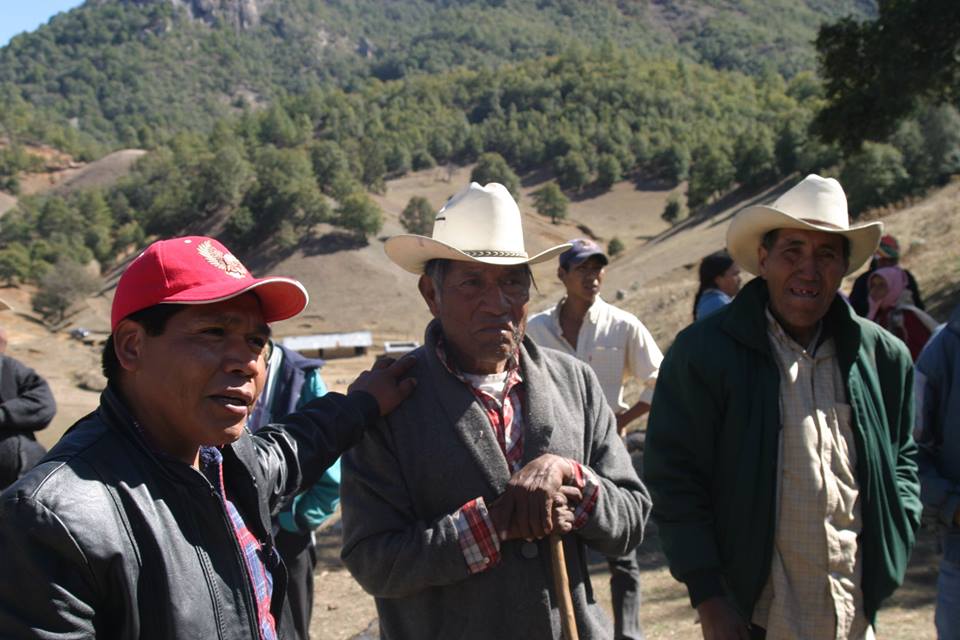
Indigenous leaders in Colombia are raising accusations of “genocide” following the latest massacre, in which five members of the Nasa people were killed in southwestern Cauca department. Cristina Bautista, a Nasa traditional authority, or neehwesx, was killed along with four members of the Indigenous Guard, an unarmed community self-defense patrol, when they tried to stop a car of gunmen at a checkpoint. Indigenous peoples have been particularly targeted in the ongoing wave of deadly attacks on social leaders across Colombia. The National Indigenous Organization of Colombia (ONIC) names President Ivan Duque as complicit, for his refusal to talk to indigenous authorities, and his opposition to implementation of the peace deal with the FARC rebels. (Photo: Colombia Reports)