


Cambodia’s prime minister, Hun Manet, nominated Donald Trump for the Nobel Peace Prize on Aug. 7, citing his “crucial role” in restoring peace after bloody border fighting with Thailand. The gushy statement praised Trump’s “extraordinary statesmanship” and “innovative diplomacy.” (NYT)
Cambodia now becomes the third country to nominate the bellicose Trump for the Peace Prize after Israel and Pakistan. Islamabad’s nomination followed Trump’s supposed involvement in the ceasefire deal with India that ended several days of mutual missile strikes in May. The problem is that India denies that the US or any other foreign power had a hand in its decision to accept a truce. (Hindustan Times)
The Thai-Cambodia truce, agreed to at July 29 talks in Malaysia, was jointly mediated by the US and China. So Xi Jinping deserves as much credit as Trump—whose main role was threatening to withhold trade deals from the two countries as long as the fighting continued.
Fighting erupted along the Thai-Cambodian border on July 24, ultimately killing at least 40 people, and displacing over 250,000. Both sides typically said the other took the first shot. Things quickly escalated as Bangkok sent F-16 fighter jets to launch air-strikes on Cambodian territory, and Thailand’s acting prime minister, Phumtham Wechayachai, warned: “If the situation escalates it could develop into war.” Cambodia accused Thailand of violating international law by using cluster munitions for attacks on its territory, while Bangkok accused Cambodia of an “inhumane attack” on a hospital in Surin province. (TNH, AP)
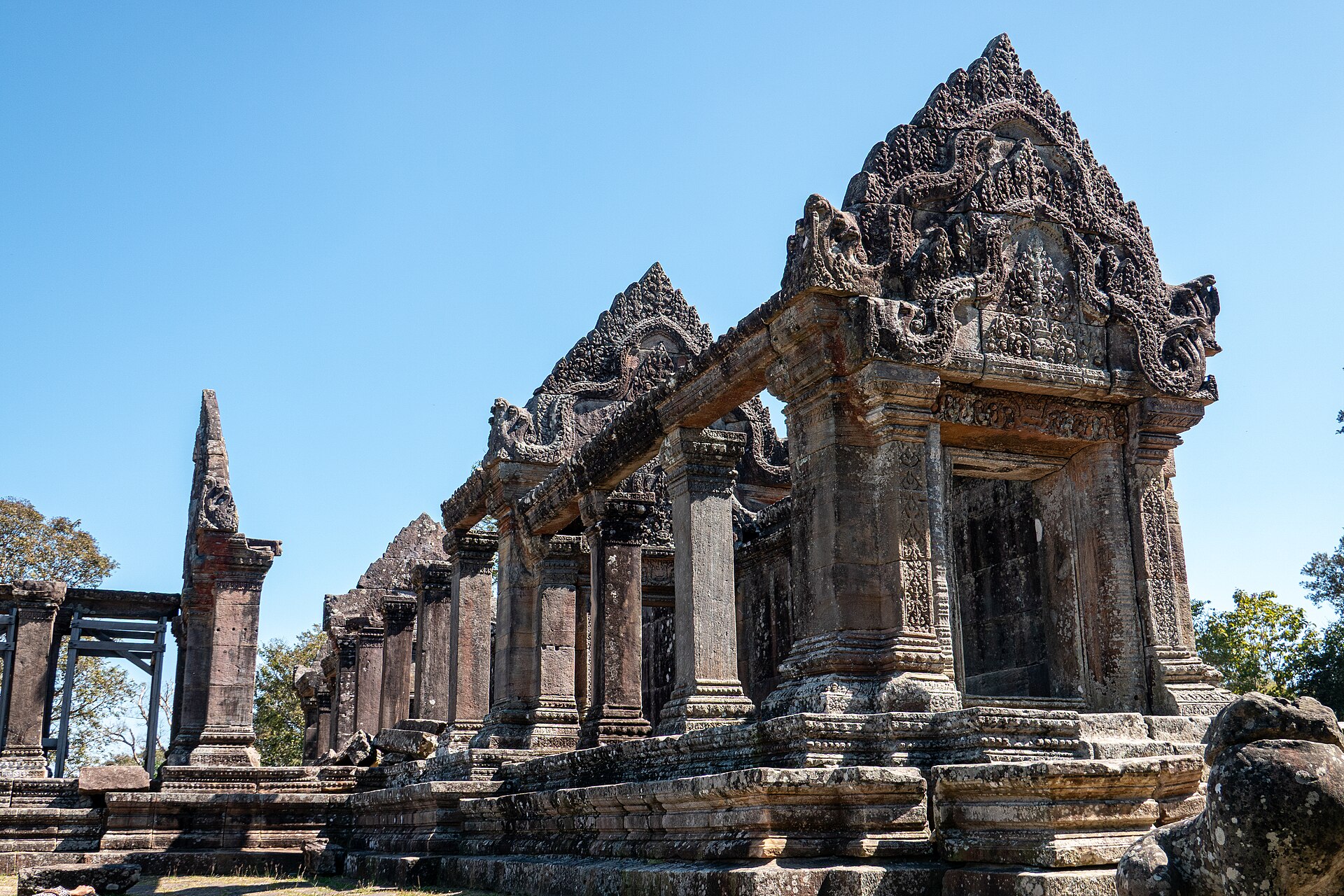
Thailand and Cambodia have had an almost century-long dispute over Preah Vihear, an 11th century Hindu temple, which sits along the nations’ shared border. The temple has triggered numerous border skirmishes over the years, the latest occurring when a Cambodian soldier was killed on the border in May. The new fighting followed Thailand’s prime minister Paetongtarn Shinawatra being suspended after a leaked phone call with Cambodian leader Hun Sen was deemed a national security threat. (Jurist)
Hun Manet is the son of current Cambodian senate president (and longtime strongman) Hun Sen, and we suspect that this perverse Nobel nomination actually emerges from the elder Hun. Under Hun Sen’s leadership, Cambodia has long been under China’s effective suzerainty, and repression has been unleashed against peasants protesting land-grabs by Chinese agbiz interests. Xi is well-assured of the stability of this relationship, and does not need buttering up. Trump, in contrast, needs to have his ego appeased to keep textiles and other export goods produced in Cambodia’s sweatshops flowing to the US without prohibitive tariffs. That’s why it’s called a Great Game.
The game is a dangerous one for the general world political climate and propaganda environment, however. Giving the Nobel Prize to Obama in 2009 was Orwellian enough. But that pales before the perversity of giving it to Trump. And indeed, Trump craves the Nobel prize precisely because Obama got it. So Cambodia is not merely appeasing Trump’s ego, but (whether intentionally or not) lubricating his dictatorial ambitions and the racist backlash that has been the motor of his entire political project.
We submit that if the Nobel committee wishes to weigh a Peace Prize in regard to this conflict, it should consider the citizen anti-war activists who have been mobilizing on either side of the border in repudiation of their own governments, under the hashtag #PeaceForCambodiaAndThailand.
Image of the contested Preah Vihear archeological site via Wikipedia


Thai-Cambodia conflict explodes again
A US-brokered ceasefire between Cambodia and Thailand unravelled on Dec. 7 amid a renewed exchange of air and artillery strikes that have killed around two dozen people, including some civilians, and displaced hundreds of thousands on both sides of the border. On Dec. 12, Thailand’s Prime Minister Anutin Charnvirakul announced the dissolution of parliament, paving the way for snap elections and averting a potential no-confidence vote. (Jurist)
Thailand and Cambodia sign a new ceasefire agreement
Thailand and Cambodia on Saturday signed a new ceasefire agreement, ending weeks of military conflict over disputed territories. Thai Defense Minister General Natthaphon Narkphanit and Cambodian Deputy Prime Minister Tea Seiha signed the joint agreement at the third special meeting of the General Boundary Committee (GBC), reaffirming a previous ceasefire in July and outlining 16 de-escalation measures intended to stabilize the region.
The agreement’s key provisions include an immediate halt to all hostilities effective from noon on Dec. 27. In line with principles of the Kuala Lumpur Joint Declaration signed in October, Thailand will return 18 Cambodian soldiers after 72 hours of sustained ceasefire.
Thailand and Cambodia have been locked in a protracted border dispute rooted in colonial-era mapping from the Franco-Siamese Treaty of 1907, which ambiguously defined the boundaries between Thailand and French Indochina (present-day Cambodia, Vietnam and Laos). A focal point of the tensions is the 11th-century Preah Vihear temple, which the International Court of Justice (ICJ) ruled belongs to Cambodia in 1962, a decision reaffirmed in 2013. While Thailand officially recognizes Cambodian ownership of the ancient Khmer temple, it claims some surrounding lands under Cambodian control. Some Thai nationalists continue to assert claims to the temple itself, which has contributed to ongoing tensions. (Jurist)