Southeast Asia
indonesia strike

Mass strike against neolib reform rocks Indonesia

Riot police used tear-gas and water cannons in Indonesia’s capital to disperse large protests against a sweeping new law that rolls back protections for workers and the environment. Hundreds were arrested in Jakarta, and rallies took place in cities across the archipelago nation. The National Police have issued a notice to regional departments with directives on how to control the protests. The “Job Creation” Omnibus Law was passed despite calls for a general strike by the trade unions. It revises more than 70 laws and regulations in an effort to cut “red tape” and improve the investment climate. Most controversially, it abolishes the national minimum wage, reduces severance pay, and relaxes the criteria for environmental impact statements on development projects. (Image: Global May Day)

Africa
Guinea

Guinea: violence mounts ahead of election

Weeks ahead of elections in Guinea, where Alpha Condé is running for a controversial third presidential term, Amnesty International released a report documenting harsh repression of the political opposition by his security forces. The crackdown on protests has claimed at least 50 lives in less than a year, Amnesty said. The protest wave was unleashed when Condé proposed a constitutional change allowing him to seek a third term. This was approved by referendum in March amid an atmosphere of terror, and a boycott by the opposition. According to a second report, issued by Human Rights Watch, the violence has taken on an ethnic dimension. Victims and witnesses told HRW that armed gangs of Guerzé, a group seen as sympathetic to the opposition, are facing off with equally well-armed ethnic Konianké and Malinké, largely considered ruling-party supporters. (Map: Perry-Castañeda Library)

East Asia
Kamchatka

Mysterious ‘ecological catastrophe’ in Kamchatka

Fears are mounting over an environmental disaster of still unknown origin in Russia’s Far East after residents reported dozens of dead sea animals washed onto a beach from the Pacific. Greenpeace Russia said tests conducted on water samples taken from Khalaktyrsky beach in Kamchatka krai showed petroleum levels four times higher than usual, and phenol levels 2.5 times higher. “The scale of the contamination has not yet been determined, but the fact that dead animals are found all along the coast confirms the seriousness of the situation,” the organization said in a statement, warning of an “ecological catastrophe.” Residents who used local beaches also complained of vomiting, fever and rashes. Krai authorities have launched an investigation. Some scientists suggest that rocket fuel may have leaked into the sea from the military’s Radygino firing range, which is six miles from the seashore and was used for missile tests as recently as August. (Photo: Einar Fredriksen via WikiTravel)

The Andes
jorge 40

Colombia: paramilitary boss returns to face justice

Rodrigo Tovar AKA “Jorge 40,” one of Colombia’s most wanted paramilitary leaders, was flown back to his home country after 12 years in US prisons for drug trafficking. Once an official in his hometown of Valledupar, Tovar became commander of the feared “Bloque Norte” of Colombia’s right-wing paramilitary network. Revelations upon his demobilization in 2006 triggered the so-called “parapolitics” scandal, with his testimony implicating top government figures in the officially illegal armed networks. But Tovar stopped cooperatingwith Colombian justice after his brother was assassinated in 2009, a year after his extraditionto the US. He now faces multiple charges of war crimes and human rights violations in Colombia, most notoriously the 2000 massacre of 60 civilians at the village of El Saldado. (Photo via Colombia Reports)

New York City
Bronx

Human rights violations seen in NYPD repression

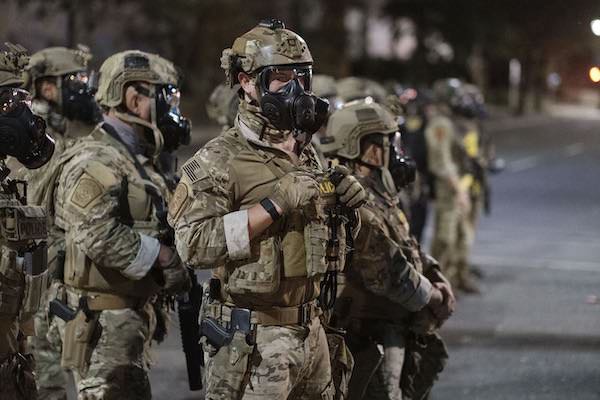
The NYPD’s violent mass arrest of peaceful protesters in the South Bronx violated international human rights law and will likely cost New York City taxpayers millions of dollars in lawsuits, according to a new investigation by Human Rights Watch. The in-depth report examines the June incident in the Mott Haven district, where hundreds of demonstrators were “kettled” behind barricades before being arrested. As riot police blocked protesters’ path minutes before Mayor Bill de Blasio’s 8 PM curfew, a second line of officers charged them from behind, “unprovoked and without warning, wielding batons, beating people from car tops, shoving them to the ground, and firing pepper spray into their faces before rounding up more than 250 people for arrest.” The report documents at least 61 cases of protesters, legal observers and bystanders who sustained injuries in the operation. HRW counts the incident as “among the most aggressive police responses to protests across the United States following the police killing of George Floyd in Minneapolis.” (Image: Human Rights Watch)

Mexico
Bloque Negro

Mexico City: militant protest for reproductive rights

A march for abortion rights turned violent in Mexico City as a group of women wearing ski-masks and armed with hammers clashed with police. Members of the Bloque Negro feminist collective joined the protest after departing from the headquarters of the National Human Rights Commission (CNDH), which they had been occupying for weeks and had turned into a shelter for victims of gender violence. With their path to the city’s historic center blocked by riot police, some threw Molotov cocktails and charged the police lines. Some of the women also bared their breasts, even as they wore goggles and helmets. Authorities said 11 police were injured in the confrontation. The demonstration was part of a Day for Decriminalization of Abortion in Latin America & the Caribbean on the eve of International Safe Abortion Day. In Mexico, abortion is only legal in the Federal Distriact and southern state of Oaxaca during the first 12 weeks of pregnancy. In the rest of the country, it only permitted under limited circumstances, such as if a woman has been raped. (Photo via Mexico News Daily)

Central America
Maria Elena Cuadra Movement

Nicaragua: sweeps target opposition activists

Over 30 opposition figures were detained by the National Police in nationwide sweeps across Nicaragua. Most were released after questioning, but some are still being held. The majority of the detained were members of a newly formed opposition body, the National Coalition, which brings together three political parties and several dissident organizations. Among the detained were 17 indigenous Rama and Kriol (Afro-Nicaraguan) activists from the Caribbean coast, including Kriol environmentalist Princess Barberena and Jaime McCrea Williams, president of the Territorial Government of Rama & Kriol. In Managua, police surrounded the offices of the Maria Elena Cuadra Movement, which advocates for the rights of working women, and interrogated the group’s representative Sandra Ramos when she arrived on the scene. Ramos told reporters she believed the group was targeted for its work representing the mothers of political prisoners since the protest wave of 2018. “We’re not a terrorist organization or anything resembling one,” said Ramos. “We’re a shitload of women who defend other women.” (Photo of Sandra Ramos confronting police via Nicaragua Confidencial)

Inner Asia
Chamdo

Report: forced labor and relocation in Tibet

A new report by the Inter-Parliamentary Alliance on China and the Jamestown Foundation, a DC-based policy think-tank, has found evidence of a system of forced displacement and labor in Tibet, mirroring that put in place over the past two years in Xiinjiang. The report, entitled “Xinjiang’s Militarized Vocational Training System Comes to Tibet,” finds that over half a million people received instruction at “military-style” training centers as part of the program in the first seven months of 2020—around 15% of the region’s population. Of this total, almost 50,000 have been transferred to jobs away from their homes within Tibet, and several thousand have been sent to other parts of China. Many end up in low-paid labor, including textile manufacturing, construction and agriculture. Those targeted for the program are designated “rural surplus laborers,” which according to the report usually refers to traditional pastoralists and nomads. (Photo: military-style training of “rural surplus laborers” in the Chamdo region of Tibet, June 2016, via Phayul)

The Andes
Belalcázar

Monumental controversy hits Colombia

Local indigenous people toppled the statue of conquistador Sebastián de Belalcázar in Popayán, capital of Colombia’s southwestern Cauca department. The statue came down 84 years after local authorities had erected it atop Morro de Tulcán, a hill that had been a sacred site for the Misak indigenous people. The Movement of Indigenous Authorities of the Southwest issued a statement saying the move to overturn the monument was taken following a decision by traditional elders of the Misak community. Many Colombians have celebrated the toppling of the statue, calling it “historic.” Left-opposition senator Gustavo Petro said, “The monuments to the conquistadors and slaveholders are an insult to the people of Colombia, its indigenous and its Black ethnicity.” Supporters of right-wing President Iván Duque, however, are appalled. Misak leaders report an increase in threats and harassment from National Police troops since the statue was brought down. (Photo via Colombia Reports)

Inner Asia
New York Tibetans

Cop spied on NYC Tibetans for China: feds

An NYPD officer and Army reservist was arrested by federal authorities on charges that he has been acting as an agent of China’s government and surveilling Tibetans living in the New York City area. Baimadajie Angwang of Nassau County worked as a community liaison officer at the 111th Precinct in Queens and held a “secret” security clearance as a member of the Army Reserves at Fort Dix, according to court documents. Prosectuors say Angwang, a native Tibetan and naturalized US citizen who served three tours in Iraq and Afghanistan, sent information to officials at the Chinese consulate in Manhattan about the activities of local ethnic Tibetans. Angwang was allegedly working with officials at the consulate since 2014, including one who was part of the Chinese Communist Party’s United Front Work Department, responsible for “neutralizing sources of potential opposition” to the government of China, court documents state. (Photo: Central Tibetan Administration)

Africa
sudan workers

Solidarity with striking Sudan sugar workers

Over a thousand workers at Kenana Sugar Company in Sudan are starting their second month on strike to demand basic trade union rights, increased wages to offset the spiralling cost of living, the removal of figures associated with the old regime from company management, and reinstatement of 34 workers sacked for taking part in the uprising against dictator Omar el-Bashir. Other demands include improvements to health services in the company town, and investment in education for workers’ children. According to Sudan Labour Bulletin, the strike is now the longest in Sudan’s history as an independent republic. Sudanese activists say that solidarity is urgently needed, warning that “the government may be contemplating the option of breaking up the workers’ strike by the force of arms.” (Photo via MENA Solidarity Network)

Iraq
Yazidis

Yazidis call Middle East indigenous alliance

In a meeting hosted by the Yazidi autonomous territory of Ezidikhan in northern Iraq, representatives of tribal peoples and ethnic minorities from across the Middle East and North Africa agreed on a framework for a region-wide alliance of stateless nations struggling for self-determination and autonomy. The meeting at the Ezidikhan seat of Shingal was attended by representatives of the Mandaeans and Zoroastrians as well as Yazidis. Messages of support were also sent by the Shabaks of Iraq, Ahwazi Arabs of Iran, Berbers of Libya, and Palestinian Bedouins residing in the state of Israel. Delegates announced formation of a Confederation of Indigenous Nations of the Middle East open to all stateless peoples of the region. The Confederation pledges to seek greater recognition for stateless peoples of the Middle East at the UN Permanent Forum on Indigenous Issues, and to seek redress for persecution, exclusion and genocide. (Photo of Yazidi delegates: Ezidikhan.net)