Africa
west africa

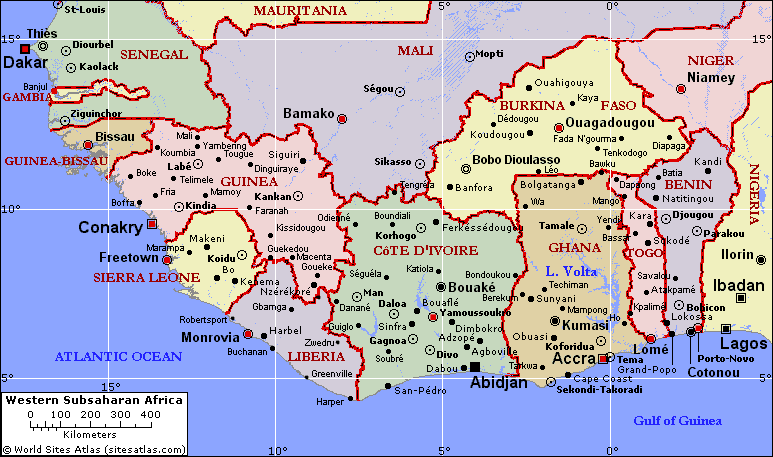
West Africa jihadist insurgency reaches Togo

At least eight Togolese soldiers were killed in an assault on a military base in the north of the West African country—marking the first fatal attack in Togo by the jihadist rebel militias waging an insurgency across the wider region. Some 60 gunmen on motorcycles attacked the base at Kpinkankandi, near the border with Burkina Faso. According to locals, the battle over the base raged most of the night before the assailants retreated. No group has claimed responsibility for the raid, but suspicion has fallen on the Group for Support of Islam & Muslims (JNIM), a Qaeda-aligned faction active in Burkina Faso. (Map: World Sites Atlas)
Africa
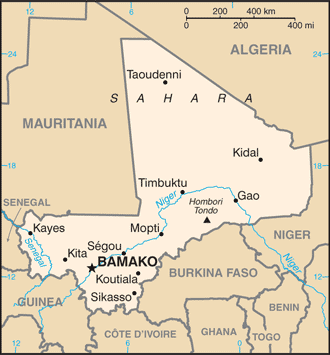
Mali

Russian mercenaries accused in Mali massacre

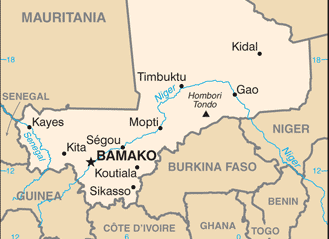
Malian armed forces and associated foreign soldiers are believed to have summarily executed an estimated 300 civilian men in a town they occupied in late March, Human Rights Watch says in a new report, calling it “worst single atrocity reported in Mali’s decade-long armed conflict.” The men were detained at a marketplace in the central town of Moura, Mopti region, during a military raid. Army troops and foreign soldiers—identified by several sources as Russians—are said by witnesses and survivors to have broken the detainees up into small groups and marched them to an area outside town before putting them to death. The Malian regime is battling an insurgency by jihadist militants linked to ISIS and al-Qaeda with the help of private military contractors from Russia’s Wagner Group. (Map: PCL)

Africa
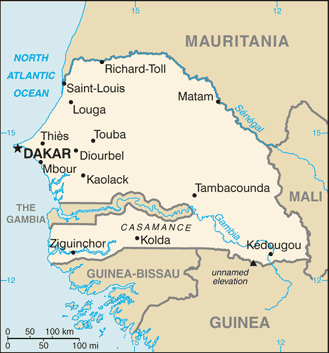
Senegal

Senegal: new offensive against Casamance rebels

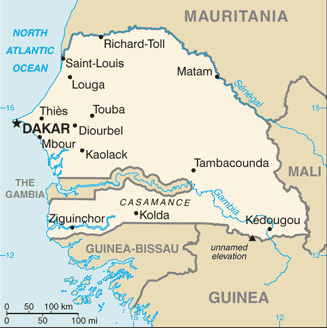
Senegal’s military has launched a new offensive against a faction of the separatist Movement of Democratic Forces of Casamance (MFDC). The operation follows the death of four soldiers and the capture of seven others in fighting with the MFDC faction led by Salif Sadio, which has remained in arms in defiance of a 2014 ceasefire. A military statement said the offensive aims to “destroy all armed gangs conducting criminal activities” and “preserve the integrity of the national territory at all costs.” Casamance—the narrow southern strip of Senegalese territory sandwiched between Gambia to the north and Guinea-Bissau to the south—has seen a pro-independence insurgency since 1982, making it Africa’s longest-running conflict. Tens of thousands have been displaced, the rural economy is devastated, and large stretches of territory have become no-go zones due to landmines. (Map: PCL Map Collection)

Planet Watch
nuclear power

Podcast: Nuclear power? No thanks!

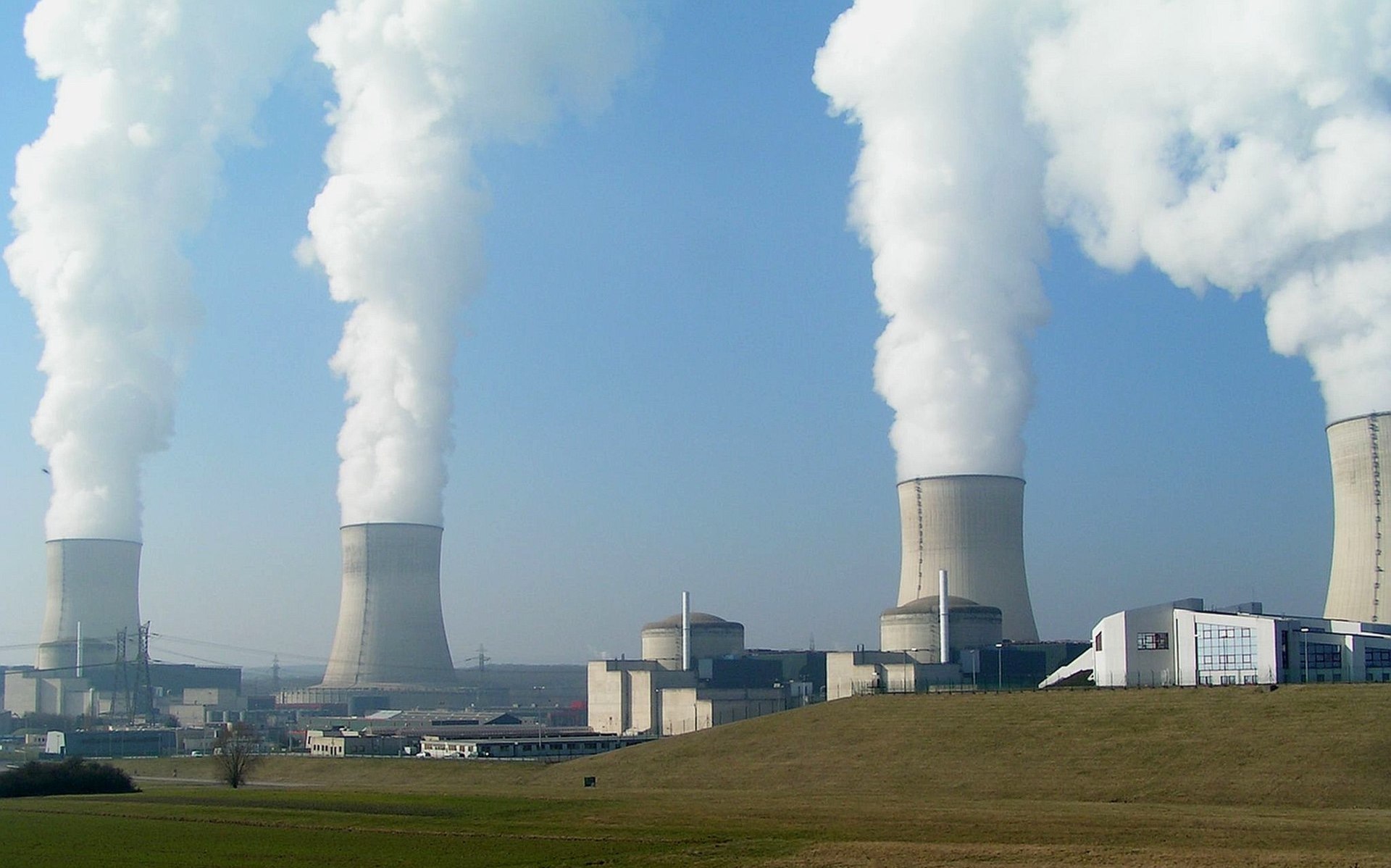
In Episode 110 of the CounterVortex podcast, Bill Weinberg rants against the current greenwashing of nuclear power, and hype about a supposedly “safe” new generation of reactors. Every stage of the nuclear cycle is ecocidal and genocidal. Uranium mining has poisoned the lands of indigenous peoples from Navajo Country to Saskatchewan to West Africa. The ongoing functioning of nuclear plants entails routine emissions of radioactive gases, factored in by the bureaucrats in determining “acceptable” levels of cancer. Disposal of the waste, and the retired reactor sites themselves, is a problem that inherently defies solution. They will be deadly for exponentially longer into the future than biblical times stretch into the past. The Waste Isolation Pilot Project (WIPP) in New Mexico, hyped as secure for hundreds of millennia, leaked plutonium after only 13 years. And finally there is the “sexiest” issue, the one that actually gets some media play, at least—the risk of accident. It is a mark of capitalism’s depravity that even after the nightmares of Fukushima and Chernobyl, we periodically get media campaigns about an imminent “nuclear renaissance.” Nuclear versus fossil fuels is the false choice offered us by industry. The imperative is to get off the extraction economy and on to one based on sustainability and resource conservation. Listen on SoundCloud or via Patreon. (Photo: Wikimedia Commons)

Africa
Apiate

Mining disaster wipes out community in Ghana

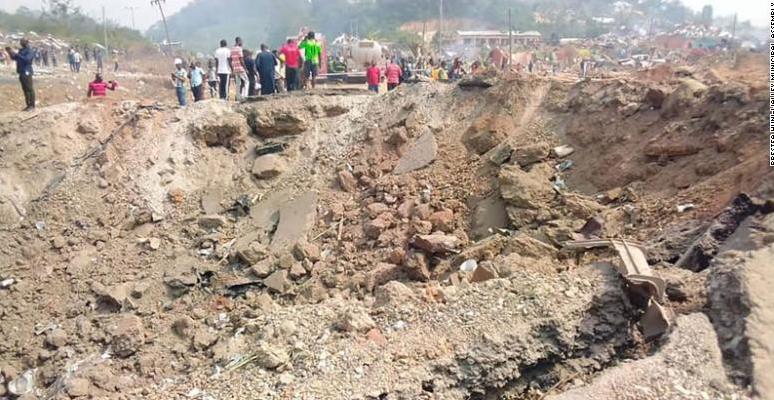
A rural community in Ghana’s Western Region was virtually flattened when a truck carrying explosives to a gold mine collided with a motorcycle, setting off a massive blast. Some 40 have been hospitalized, and the official death toll of 17 is expected to rise. The truck, owned by a local mining services company called Maxam, was en route to the Chirano gold mine, operated by Toronto-based Kinross Gold. The explosion left a huge crater and reduced dozens of buildings to dust-covered piles of wood and metal in the community of Apiate, near the city of Bogoso, some 300 kilometers west of the capital Accra. The chief executive of Prestea Huni-Valley municipality told local media “the whole community is gone” after the blast. (Photo: Prestea Huni-Valley Municipal Assembly via Mining.com)

Africa
jihadis

Russian mercenaries to Mali?

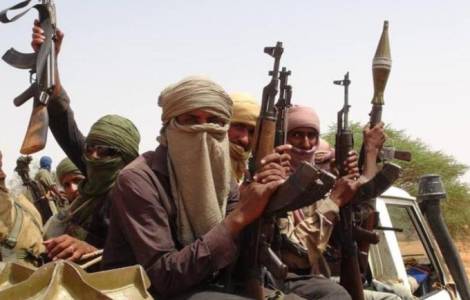
France, now in the process of drawing down its military presence in West Africa’s Sahel nations, criticized plans that could see Russian mercenaries brought to Mali, where jihadist groups tied to ISIS or al-Qaeda operate in large parts of the country. Reports suggest that Mali’s transitional government is considering a deal with the Wagner Group, which has close links to Vladimir Putin and is also active in Central African Republic. The Coordinating Body of Azawad Movements (CMA), a coalition of Tuareg rebel groups that signed a peace deal with the Malian government in 2015, likewise expressed its “firm opposition” to any agreement to bring in the Wagner Group. (Photo: FIDES)

Africa
Sahel

Mounting massacres across Africa’s Sahel nations

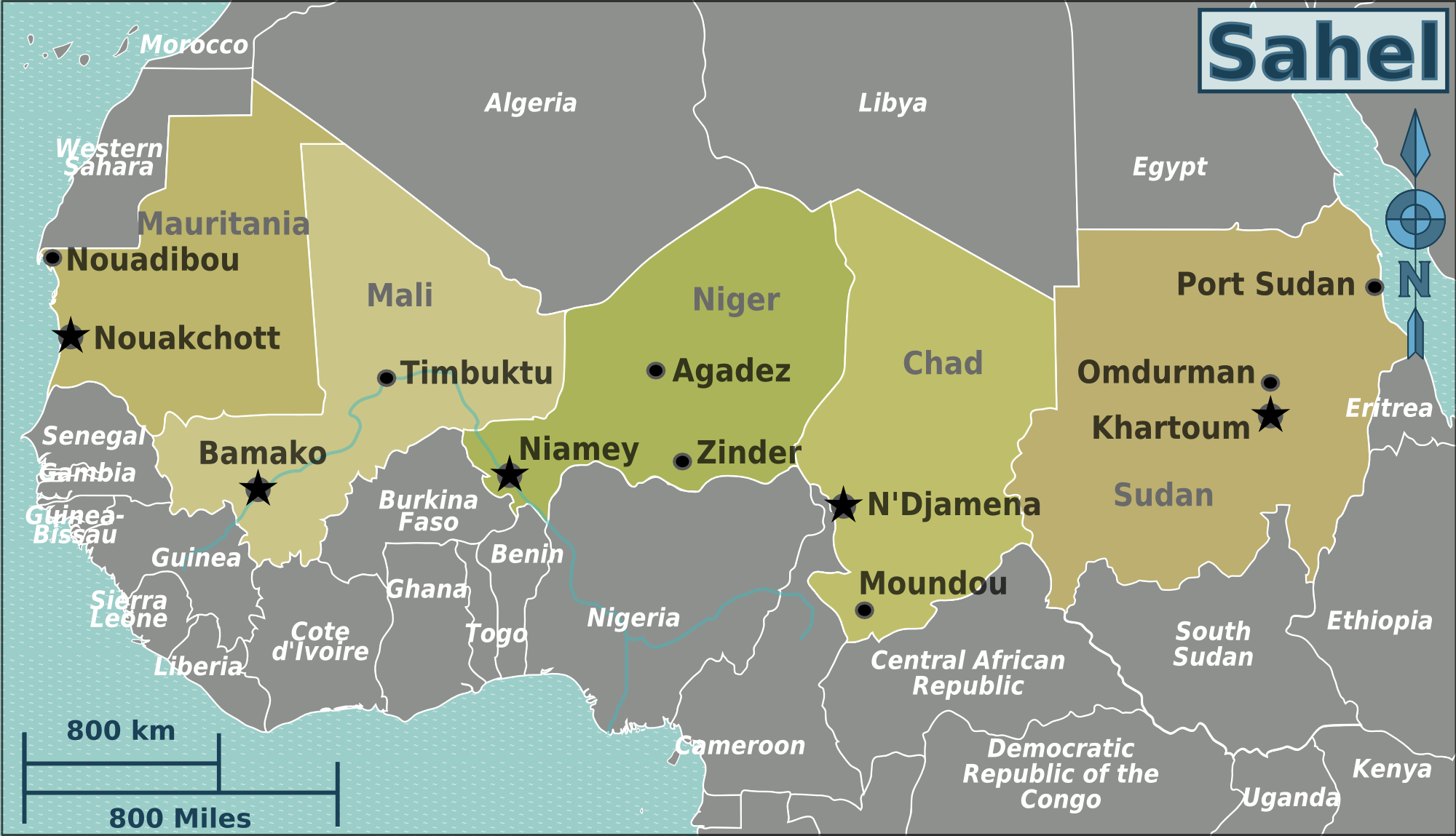
The tri-border region where the Sahel countries of Niger, Mali and Burkina Faso come together is the scene of fast-mounting massacres by presumed Islamist militants. Attacks on civilians and security forces alike have left hundreds dead this month. In Niger, peasants were gunned down while working their fields in Banibangou village—an attack attributed to a local ISIS franchise. In Mali, ongoing deadly attacks have caused a massive population exodus in several regions of the country, including Menaka, Mopti, Gao, Timbuktu and Sikasso. “Violence is spreading so rapidly across Mali that it threatens the very survival of the state,” said UN human rights expert Alioune Tine after a visit to the country. (Map: Wikivoyage)

Africa
Nigeria

Sectarian massacre in Nigeria’s Plateau state

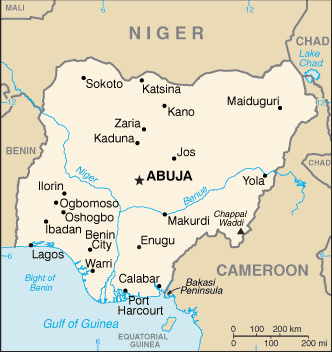
Nigerian authorities imposed a curfew in Jos, capital of north-central Plateau state, after at least 20 Muslim travelers passing through the city were massacred by a presumed Christian militia. The Muslims, mostly of the Fulani ethnicity, were in a convoy of vehicles, returning to their homes in Ondo and Ekiti states from a celebration in neighboring Bauchi state marking the start of Muharram, the Islamic new year. In Jos, the convoy was caught in a traffic jam, and the vehicles set upon by militiamen, the occupants slain with machetes, daggers and other weapons. The assailants were apparently Christians of the Irigwe ethnicity. Northern and central Nigeria have for years seen growing violence between Muslim semi-nomadic herders and Christian farmers over control of land and water. (Map: Perry-Castañeda Library)

North Africa
Haftar

Libya: Blackwater CEO trafficked arms to Russia-backed warlord

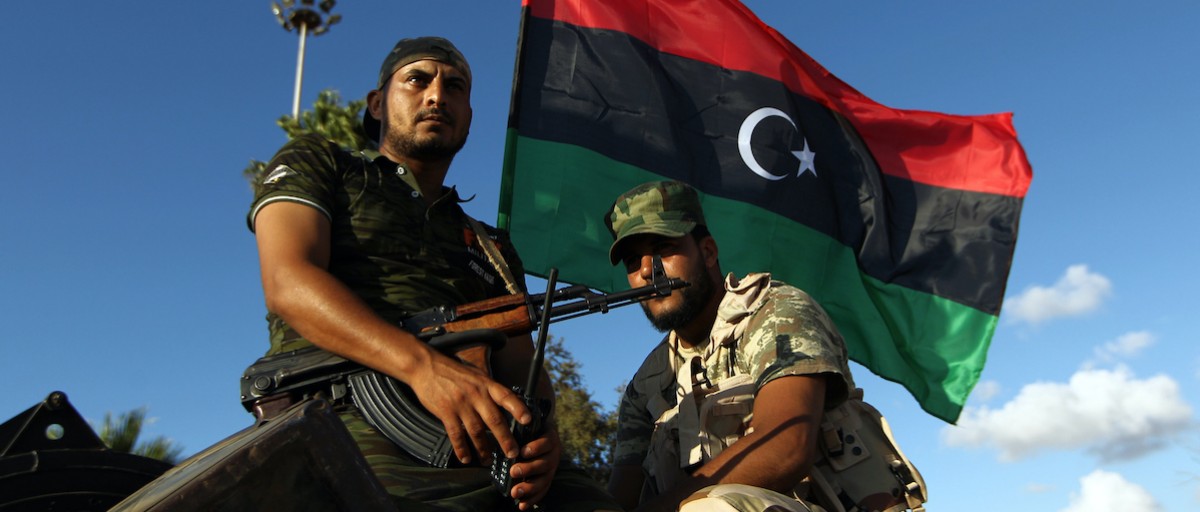
Erik Prince, former CEO of the notorious private military company Blackwater, violated the UN arms embargo on Libya with a clandestine pipeline to a rebel warlord, according to a confidential report to the Security Council obtained by the New York Times. The report found that in 2019 Prince deployed a force of foreign mercenaries and weapons to renegade military commander Khalifa Haftar, who has been fighting to depose the UN-recognized Libyan government—and is also being aggressively backed by Russia. (Photo via ISS Africa)

Africa
Liberia

Liberian warlord goes on trial in Switzerland

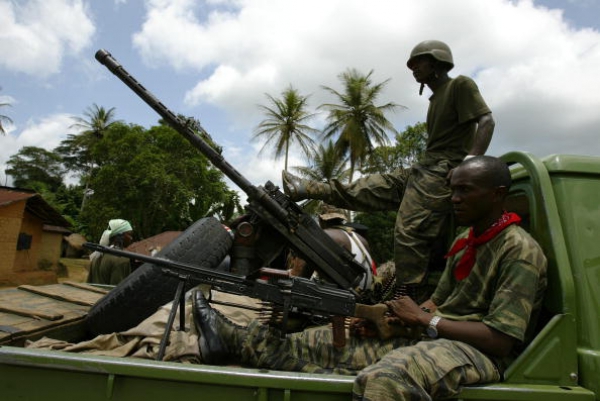
A trial opened in Switzerland for the first Liberian to face war crimes charges over atrocities during the country’s brutal internal conflict in the 1990s. Former warlord Alieu Kosiah stands accused of murder, rape, recruiting child soldiers, and numerous other crimes during the first of Liberia’s two civil wars, which together killed some 250,000 people between 1989 and 2003. Kosiah, who had been living in Switzerland since 1999, was arrested in November 2014 for atrocities he allegedly committed as a commander of the United Liberation Movement of Liberia (ULIMO) between 1993 and 1995. A group of Liberian victims is being represented by the Swiss human rights group Civitas Maxima. The case is being heard under the principle of universal jurisdiction. (Photo: IRIN via JusticeInfo)

Africa
Togoland

Ghana: repression in Western Togoland

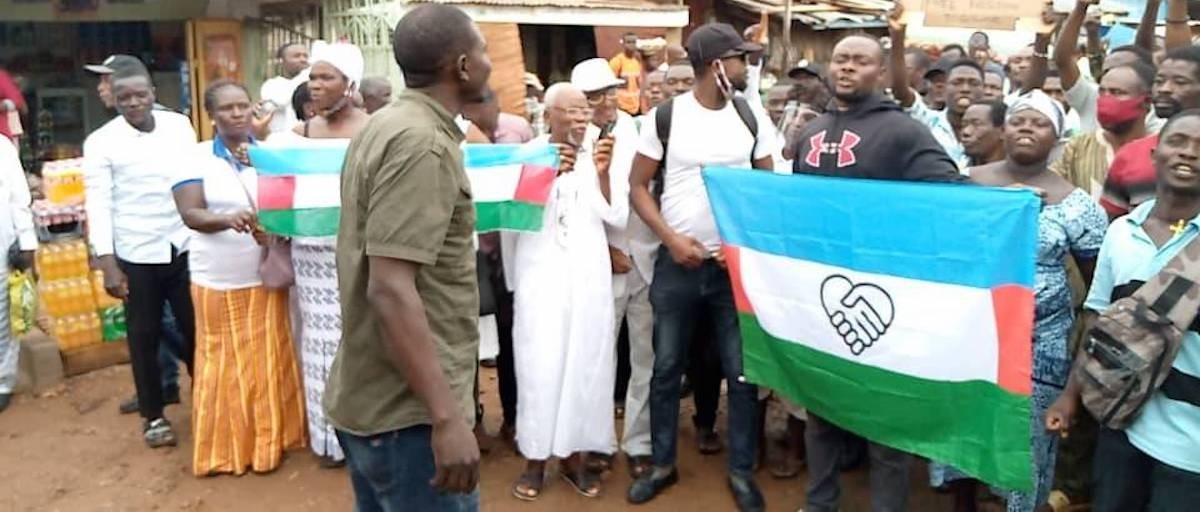
Tensions have been growing in Ghana since late September, when militants of the Western Togoland Restoration Front erected armed roadblocks on arteries into the country’s eastern Volta region, and declared the secession of the territory as the independent state of Western Togoland. Security forces shortly cleared the roadblocks. But some 60 members of the Homeland Study Group, a nonviolent civil organization calling for independence for Western Togoland, were immediately arrested in sweeps. They were later ordered released by a judge, but one of the detained reportedly died in police custody. (Photo: ISS Africa)

Africa
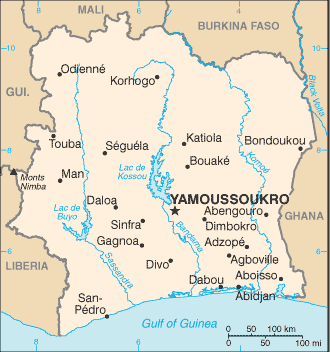
ivory coast

Ivory Coast: violence mounts ahead of election

Ivory Coast has seen a wave of communal violence ahead of presidential elections, amid a civil disobedience campaign called by the opposition. In the coastal town of Dabou, some 50 kilometers west of the economic capital Abidjan, several have been killed and scores arrested over the past week. In the inland town of Bongouanou, the home of opposition candidate Pascal Affi N’Guessan was burned down during clashes. In nearby Kotobi, the the gendarmerie headquarters was ransacked. The violence has taken on an ethnic cast, with members of the local Agni group in the country’s east-central and coastal zones pitted against Dioula people from northern Ivory Coast, who back current President Alassane Ouattara. The opposition rejects Ouattara’s quest for a third term as unconstitutional. (Photo: CIA)