Africa
#OccupyJulorbiHouse

‘Occupy’ protests hit Ghana

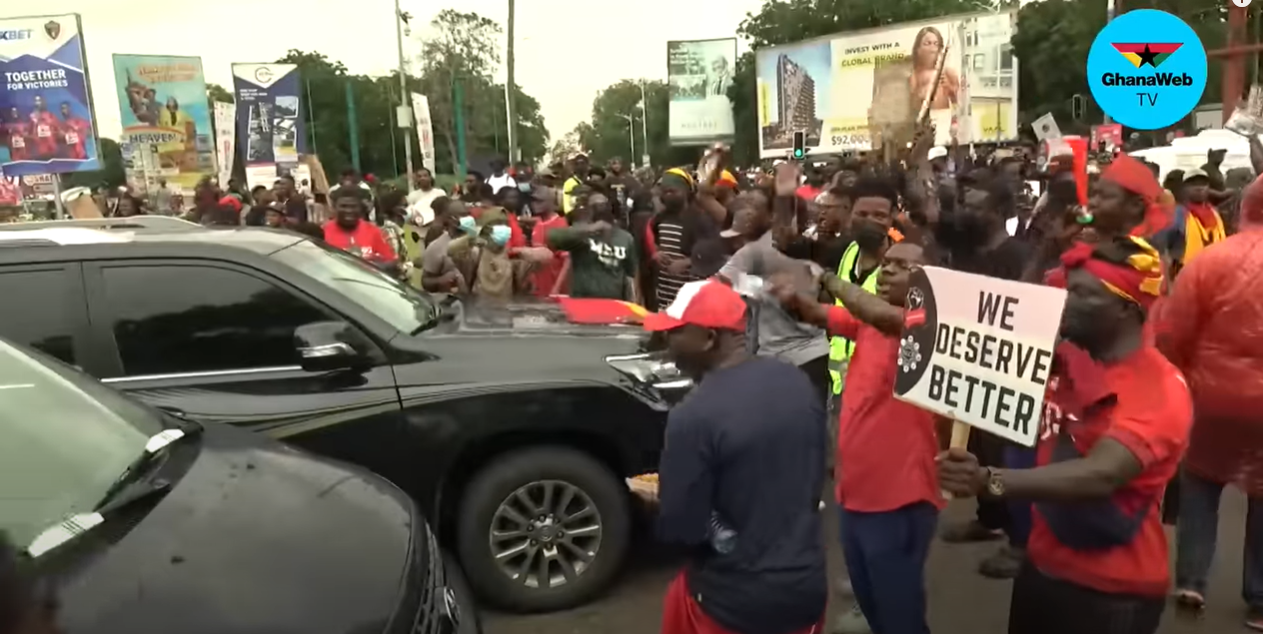
Hundreds held a three-day protest campaign in Ghana’s capital, Accra, to denounce harsh economic conditions and the “moral decay” of the country’s leadership. With placards reading “Ghana deserves better,” protesters attempted to march on the seat of government, Golden Jubilee House, intending to “occupy” it—but riot police and armored vehicles barred their way. In response, demonstrators sat down in the road, effectively shutting down the area for hours. Over 50 were arrested when police finally cleared the intersection. (Photo: Jurist via GhanaWeb TV)
Africa
Niger

Podcast: flashpoint Niger

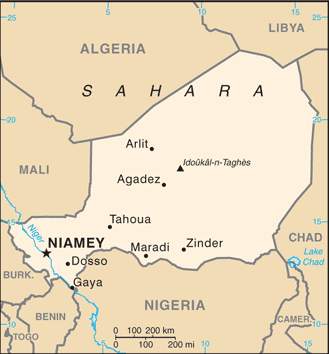
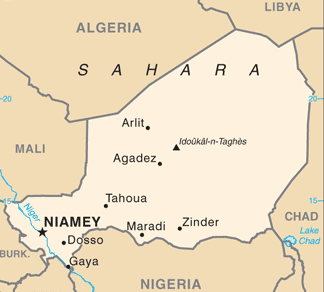
In Episode 186 of the CounterVortex podcast, Bill Weinberg examines the coup d’etat in Niger, which now threatens to plunge West Africa into regional war—with potential for escalation involving the Great Powers. Lines are drawn, with the Western-backed ECOWAS demanding the junta cede power, and Russian-backed Mali and Burkina Faso backing the junta up. Pro-junta demonstrators in Niger’s capital, Niamey, wave the Russian flag—probably to express displeasure at US and French neo-colonialism. The Wagner Group, which already has troops in Mali and Burkina Faso, has expressed its support for the junta, and offered fighters to help stabilize the regime. Elements of the tankie pseudo-left in the West are similarly rallying around the junta. Amid this, leaders of the Tuareg resistance in Niger have returned to arms to resist the new regime, and the country’s mine workers union is also demanding a return to democratic rule. Listen on SoundCloud or via Patreon. (Map: PCL)

Africa
Ambazonia

Fulani pitted against rebels in Cameroon conflict

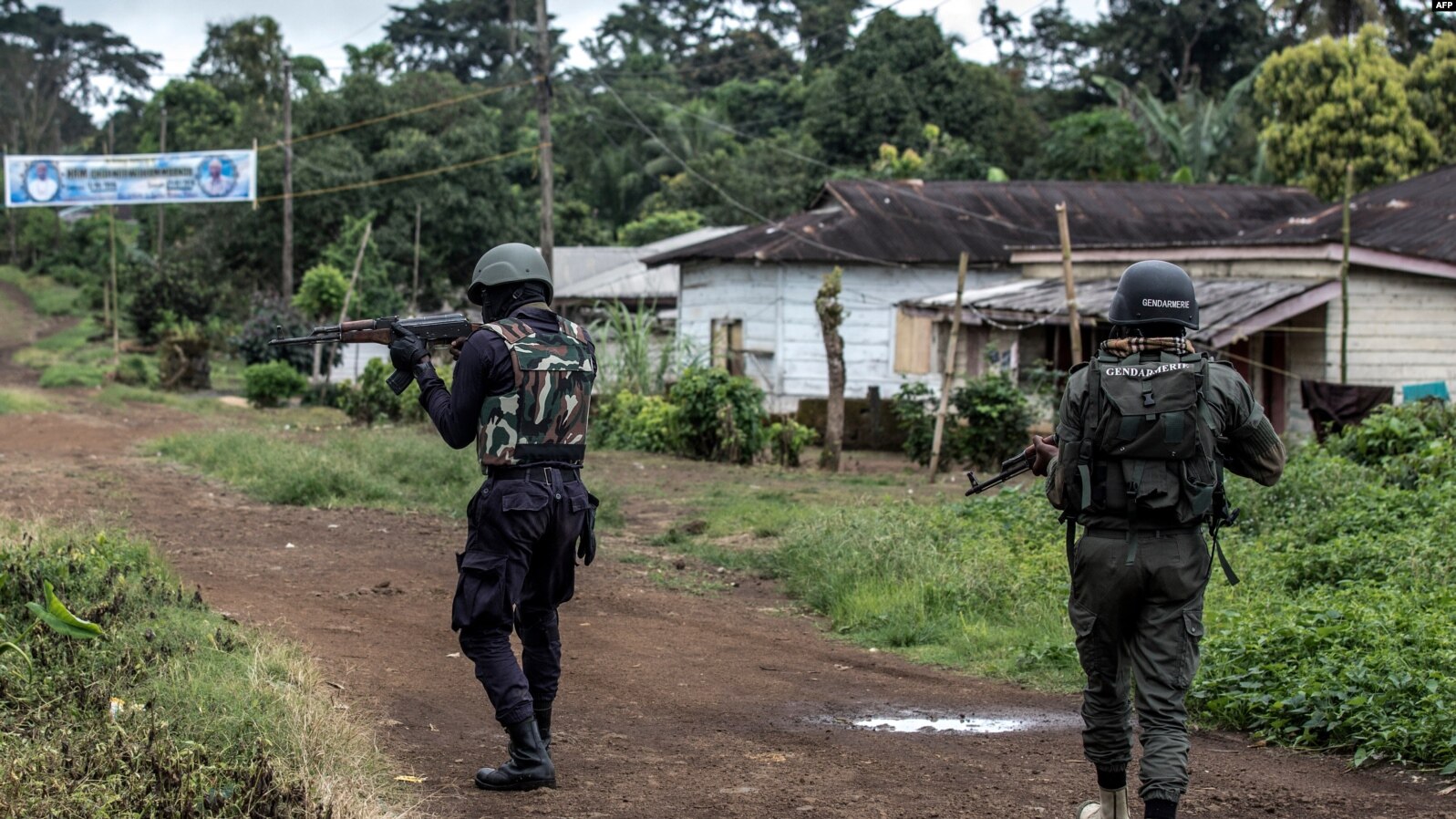
Amnesty International urged Cameroon’s authorities to investigate human rights violations committed in the country’s conflicted Anglophone regions, the North-West and South-West. According to a new report, armed separatists and the military alike are responsible for killings, torture, rape and destruction of property. In the North-West in particular, long-standing conflicts between Mbororo Fulani herders and sedentary farmers have been fuelling armed violence. As the situation has deteriorated over the past years, militias, mainly composed of Mbororo Fulani and supported or tolerated by the authorities, have committed atrocities against civil populations. The official security forces have responded to this situation with further rights violations. (Photo: Moki Edwin Kindzeka/VOA via Wikimedia Commons)

Planet Watch
paramilitaries

Podcast: against global paramilitarism

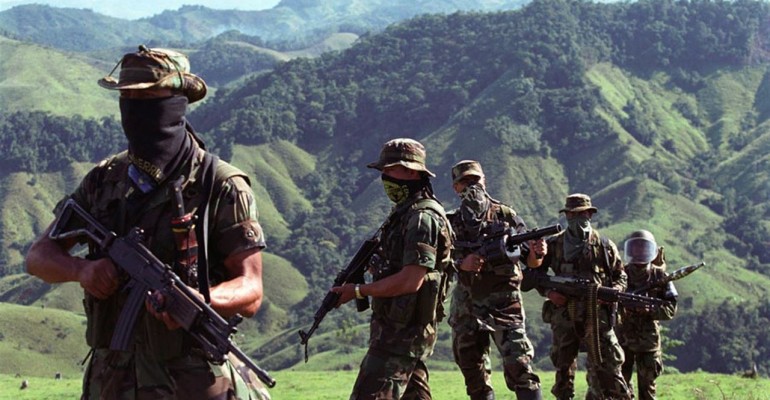
In Episode 168 of the CounterVortex podcast, Bill Weinberg examines the suddenly booming global phenomenon of paramilitarism—the official armed forces of a given state or its repressive apparatus seeking an extension in the private sector, citizen militias, or irregular forces. This is a method generally resorted to when state power is in crisis, and contributes to a general militarization of society. Examples from Russia, West Africa, Sudan, Burma, Ecuador, Israel and finally Texas point to a dangerous and ultimately fascistic new model of both imperialism and internal policing and repression. Listen on SoundCloud or via Patreon. (Photo: Contagio Radio)

Africa
Bawku

Ghana’s northern borderlands militarized

The government of Ghana is rushing hundreds of troops to the northern town of Bawku, where a long-simmering conflict between two ethnic groups over control of the local chieftaincy has exploded into open warfare. The fighting began in December, when members of the Mamprugu people installed a “parallel” chief, refusing to recognize the incumbent from the Kusasi ethnicity. Since then, some 30 local residents have been slain—many civilians killed in ethnically targeted attacks. The town lies just south of the border with violence-torn Burkina Faso, and authorities are concerned that jihadist insurgents will exploit the chaos in the zone to infiltrate into Ghana. Bawku is already swollen with some 6,000 refugees who have fled terror attacks by militants in Burkina Faso. (Photo via Africa Fest GH)

Africa
ivory coast

French forces out of Burkina Faso, into Ivory Coast

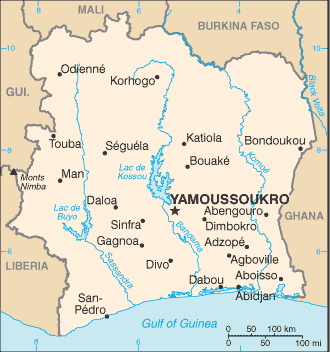
France has officially ended its operations in Burkina Faso a month after the ruling junta there terminated a military accord that allowed the former colonial power to fight jihadists. French forces remain in the greater region, however. The move came as French Defense Minister Sebastien Lecornu visited Côte d’Ivoire, pledging to boost military support as jihadist attacks hit coastal West African states. (Map: Perry-Castañeda Library Map Collection)

Africa
Fulani

Podcast: West Africa’s forgotten wars

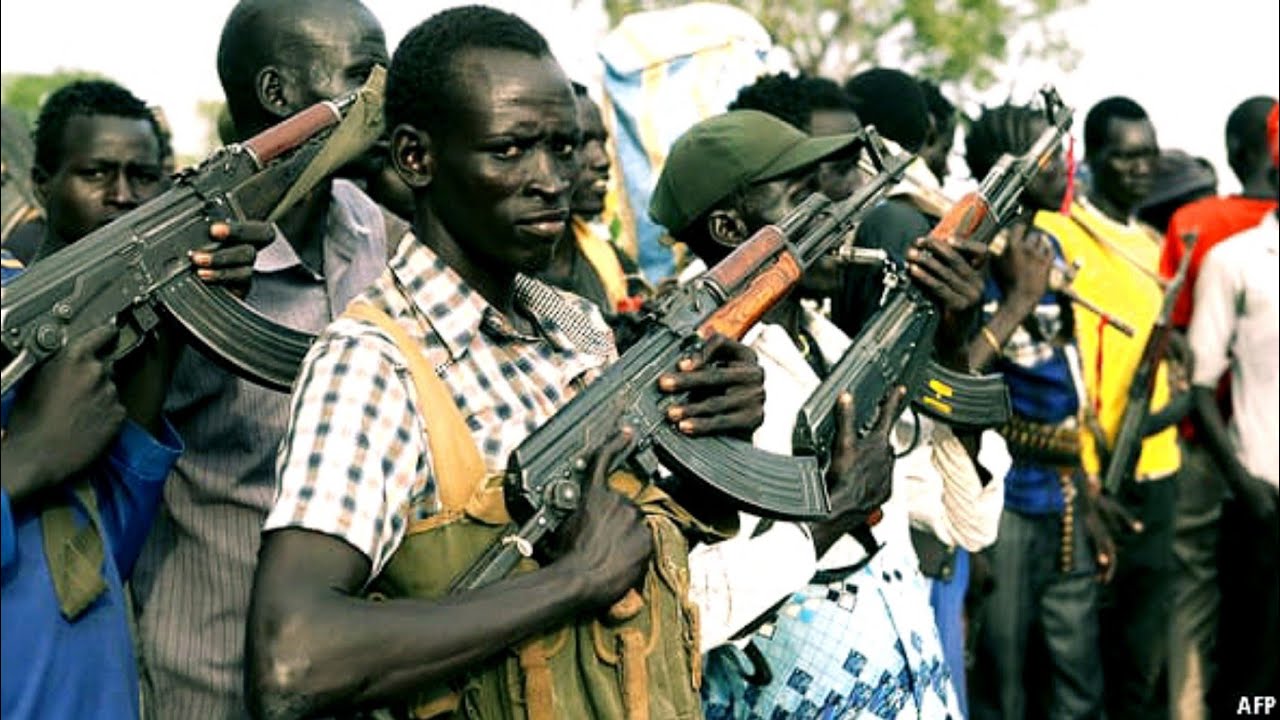
In Episode 161 of the CounterVortex podcast, Bill Weinberg provides an overview of the under-reported conflicts in West Africa, where government forces and allied paramilitary groups battle multiple jihadist insurgencies affiliated either with ISIS or al-Qaeda on a franchise model. Horrific massacres have been committed by both sides, but the Western media have only recently started to take note because of the geopolitical angle that has emerged: both Mali and Burkina Faso have cut long-standing security ties with France, the former colonial power, and brought in mercenaries from Russia’s Wagner Group. In both countries, the pastoralist Fulani people have been stigmatized as “terrorists” and targeted for extra-judicial execution and even massacre—a potentially pre-genocidal situation. But government air-strikes on Fulani communities in Nigeria have received no coverage in the Western media, because of the lack of any geopolitical rivalry there; Nigeria remains firmly in the Anglo-American camp. Listen on SoundCloud or via Patreon. (Photo: Sahara Reporters)

Africa
wagner group

African intrigues over Wagner Group

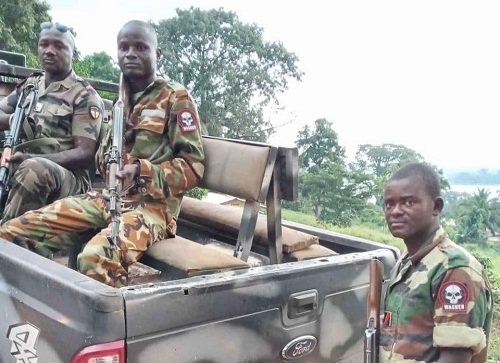
Burkina Faso’s ruling military authorities summoned Ghana’s ambassador over accusations that they have hired Russian mercenaries from the Wagner Group to help fight jihadists. Speaking alongside US Secretary of State Antony Blinken at the US-Africa Leaders Summit in Washington, Ghana’s President Nana Akufo-Addo said: “Today, Russian mercenaries are on our northern border. Burkina Faso has now entered into an arrangement to go along with Mali in employing the Wagner forces there.” Calling the mercenaries’ presence “distressing,” Akufo-Addo also alleged that Burkina Faso had offered Wagner control of a gold mine as payment. Meanwhile, a Russian national said to be closely linked to the Wagner Group was injured in an apparent assassination attempt in the Central African Republic. Wagner Group’s parent company Concord named French agents as behind the attack. Burkina Faso, Mali and the CAR alike have recently broken long-standing security ties with France, their former colonial ruler—with Russian mercenaries moving in as French soldiers go home. (Photo of CAR army troops wearing the Wagner Group insignia via Corbeau News Centrafrique)

Africa
Togo

Qaeda franchise claims deadly assault in Togo

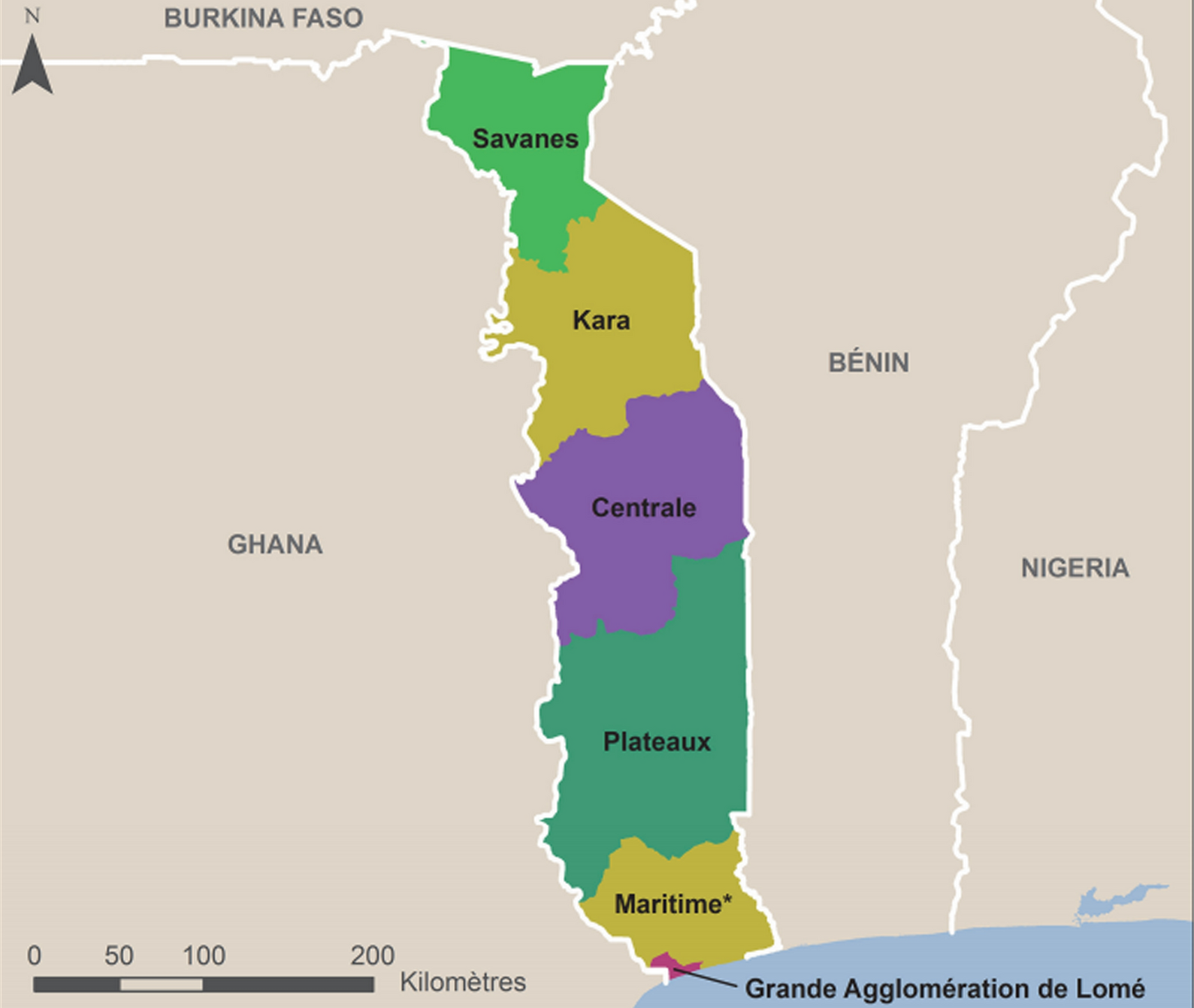
The Group for Support of Islam & Muslims (JNIM by its Arabic rendering), al-Qaeda’s West African franchise, claimed credit for an assault on Togolese forces that left at least 17 soldiers dead near the border with Burkina Faso. Togolese media reported that fighters in large columns of vehicles mounted with heavy machine-guns raided a military outpost at Tiwoli village, in northern Savanes region. This is the second such claim of responsibility for an attack within Togo by JNIM in the last two weeks, and the third this year. The attacks are raising fears of insurgency spreading from conflict-torn Burkina Faso into West Africa’s littoral states. (Map: Togo Department of Health)

Africa
Senegal

Senegal: peace process with Casamance rebels

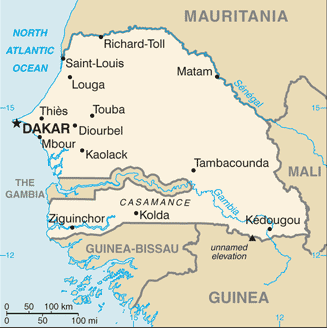
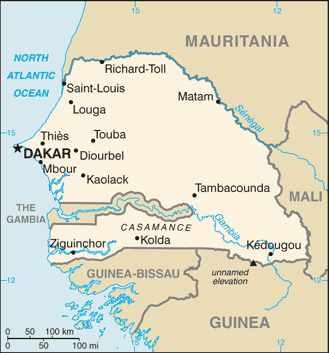
The concluding of a peace agreement between Senegal and separatist rebels in Casamance is being hailed by the government as “an important step” toward ending the 40-year conflict in the southern region. The deal was signed in neighboring Guinea-Bissau by a delegate from President Macky Sall’s administration and Cesar Atoute Badiate, leader of the Movement of Democratic Forces of Casamance (MFDC). The long-simmering conflict was re-ignited in 2021 when the Senegalese army launched a major offensive against the rebels. But Seydi Gassama, director of Amnesty International Senegal, noted that the MFDC is now but one of several rebel factions. “The negotiations must expand to include these factions so that a peace deal can be quickly signed with all the factions and peace can be established throughout all of Casamance,” Gassama said. (Map: PCL Map Collection)

Africa
freetown

Econo-protests rock Sierra Leone

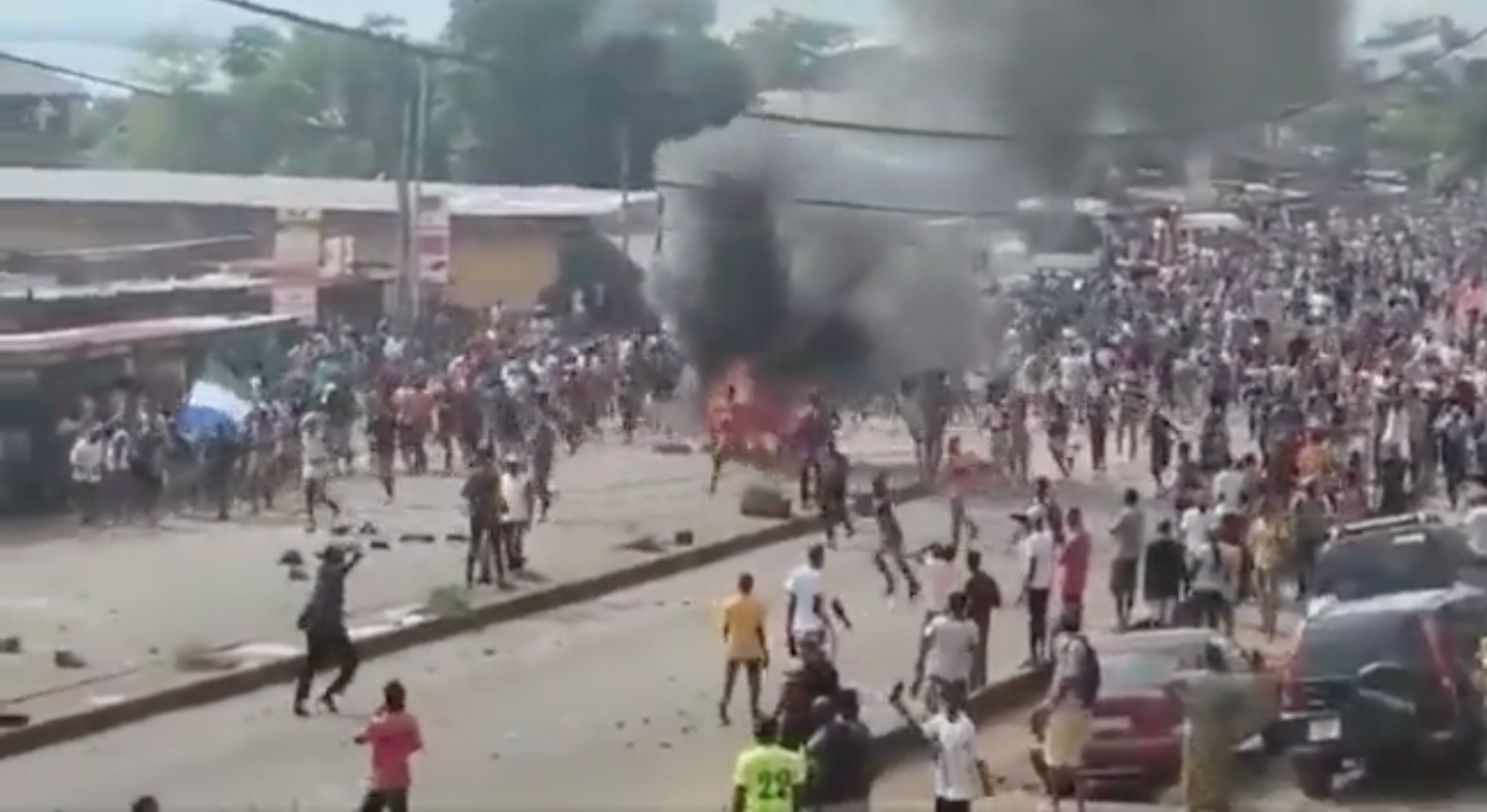
Authorities in Sierra Leone imposed a nationwide curfew amid anti-government protests, in which a still undetermined number of people have been killed, apparently including at least four police officers. In the capital Freetown, protesters barricaded the streets and clashed with security forces, enraged at a 40% spike in the cost of living. A key demand is the resignation of President Julius Maada Bio, who is on a month-long vacation with his family in London—a trip apparently paid for with misappropriated public funds. The government has shut down internet access in the country to prevent activists from issuing calls to protest and spreading images of the repression. President Bio has long been accused of rampant corruption and human rights abuses. (Image: Africa Facts Zone via Twitter)

Planet Watch
#ariseghana

Ghana to Peru: more ripples from Ukraine storm

Governments around the world are scrambling to shore up economies hard hit by rising oil and wheat prices as a resut of the Ukraine war. Ghana has opened talks with the International Monetary Fund (IMF) for emergency relief after angry protesters flooded the streets of the capital Accra, clashing with police. Protests were called under the slogan “Arise Ghana” to pressure President Nana Akufo-Ad to address a dramatic spike in the cost of food and fuel. Meanwhile, the Central Reserve Bank of Peru is to raise its key interest rate in a bid to quell inflation, after freight shipping was briefly paralyzed across the country. The truckers’ union, the National Council of Terrestrial Transport, announced an “indefinite” strike, although it was suspended following a pledge by the government of President Pedro Castillo to bring soaring fuel prices under control. (Image via Twitter)