Watching the Shadows
Wagner

Russian fascism: enemy of Black liberation

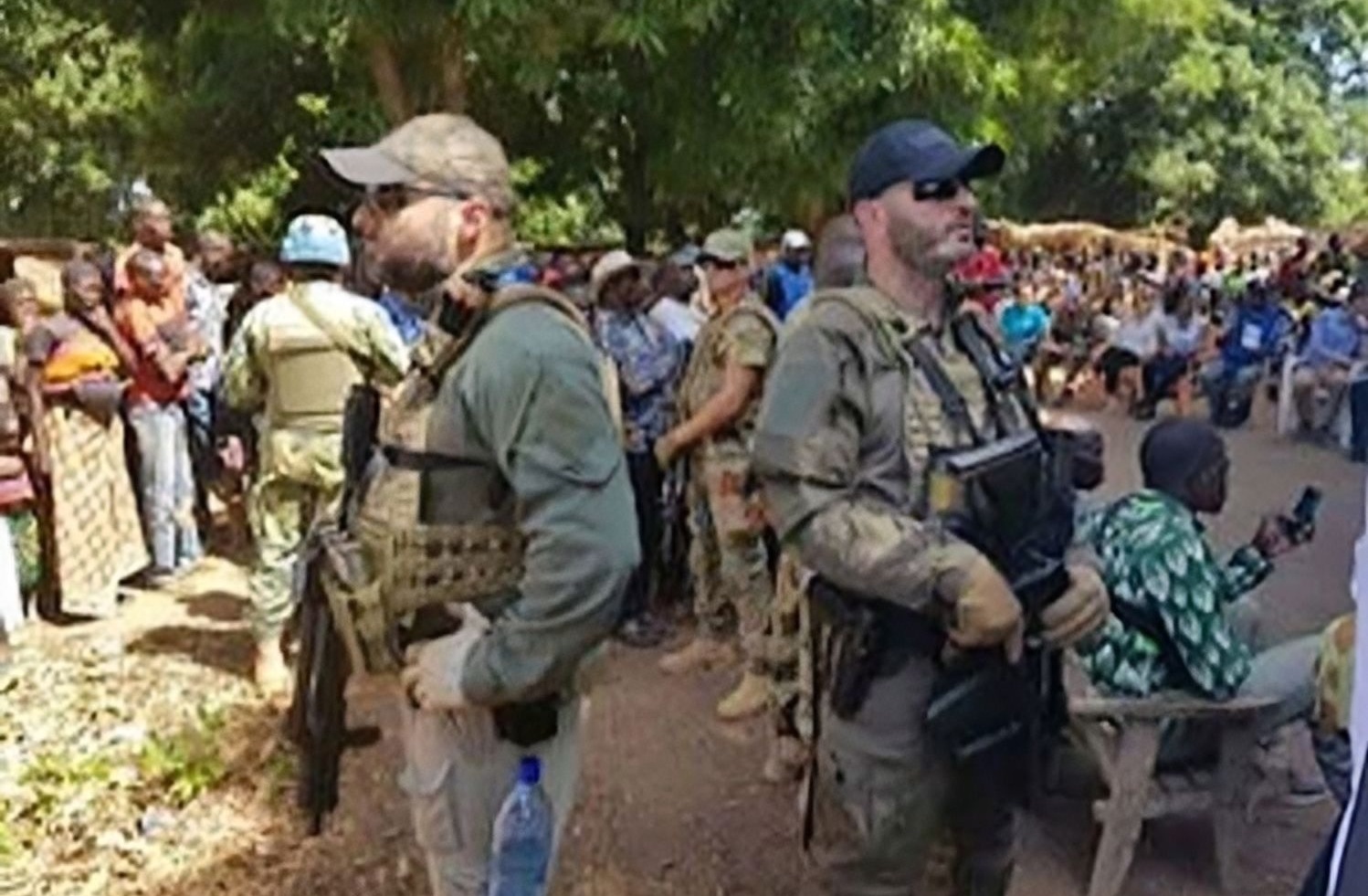
Four Black nationalists affiliated with the Uhuru Movement, an arm of the African People’s Socialist Party (APSP), are on trial for acting as agents of a Russian propaganda network, in what they are calling “the free speech trial of the century.” Regardless of whether their activities were protected by the First Amendment, the case reveals the very strangest of political bedfelows. Tucker Carlson, who similarly serves as a conduit for Russian propaganda, is also mentioned (although not charged) in a new federal indictment. Carlson is scheduled to appear onstage with JD Vance later this month, and recently hosted an uncloseted Nazi-nostalgist on his Twitter program. The absurd irony of the APSP platforming Kremlin demonization of Ukraine as a “Nazi” state is heightened by Russia’s serial massacres of Black Africans in its new military adventures on the continent. The Anti-Globalization Movement of Russia, which seemingly cultivated Uhuru/APSP, is similarly cultivating white supremacists, who are overtly Trump-aligned and marched at the Charlottesville hate-fest in 2017. The ultimate stateside beneficiary of this Kremlin-orchestrated propaganda effort is of course Donald Trump—who as president in 2020 sought to unleash the military against that year’s Black Lives Matter uprising. Yet while too many “radicals” take the Kremlin bait, once-reviled “liberals” like the National Urban League actually take a more progressive position on Russia and Ukraine. In Episode 243 of the CounterVortex podcast, Bill Weinberg explores how the American radical left went through the proverbial looking glass, including with analogies from the (last) Cold War. Listen on SoundCloud or via Patreon (Photo: Russian mercenaries in the Central African Republic. Credit: Corbeau News Centrafrique via Wikimedia Commons)
Africa
iswap

ISIS franchise claims Nigeria massacre

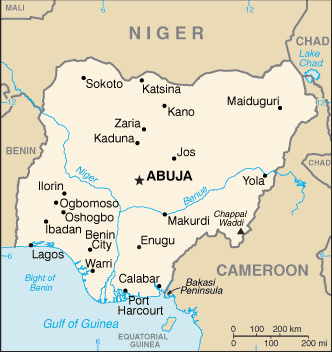
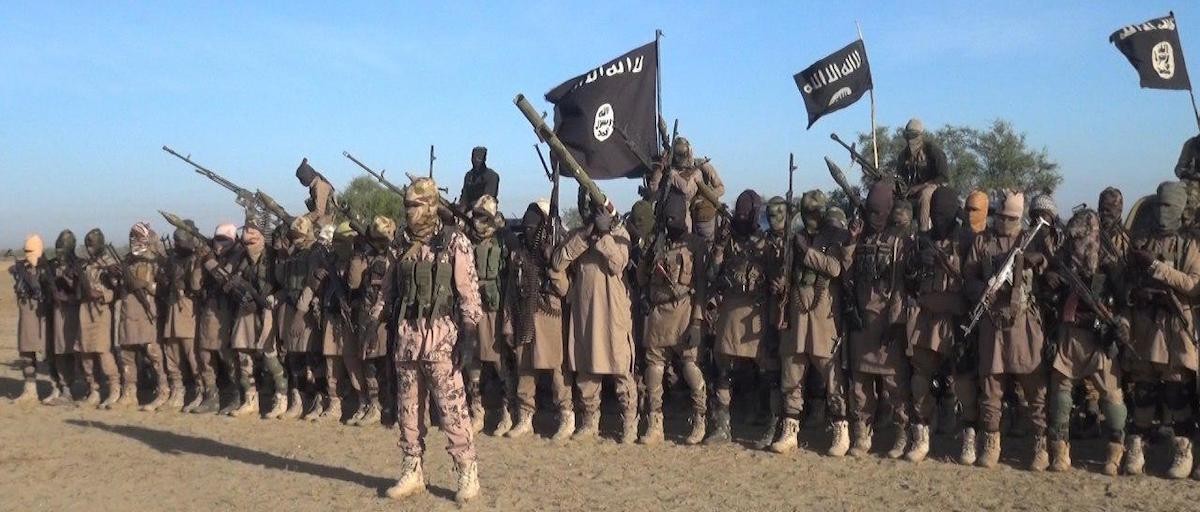
At least 81 people were killed in an attack by militants on the village of Mafa, in Nigeria’s northeastern Yobe state. A statement listing grievances against the village was left at the scene in the name of Islamic State West Africa Province (ISWAP), a Boko Haram splinter group. The attack appears to have been in revenge for villagers alerting the military to the insurgents’ presence in the area—which lies on a smuggling route to ISWAP bases in the Lake Chad region. (Photo: ISS Africa)

Africa
Burkina Faso

Russian fighters leave Burkina Faso for Kursk front

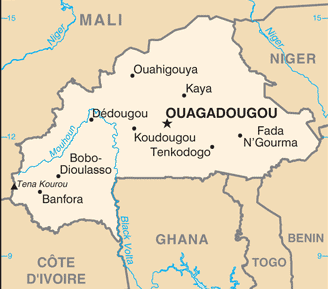
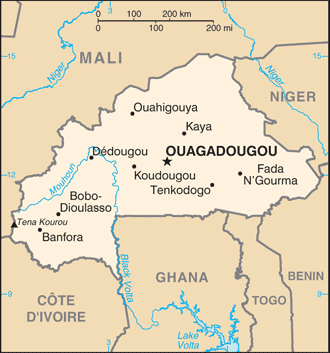
Russia is withdrawing 100 of its paramilitary troops from Burkina Faso to assist in the war with Ukraine, reports indicate. The troops are part of a contingent of some 300 fighters from the Medvedi or Bear Brigade—one of the Russian private military companies operating in West Africa—who arrived in Burkina Faso in May to support the country’s ruling military junta. In a statement, the group said its forces would return home to support Russia’s defense of Kursk oblast against Ukraine’s recent cross-border offensive. There are fears the pull-out could embolden jihadist insurgents in Burkina Faso, who recently killed up to 300 people in one of the biggest attacks in years. (Map: Perry-Castañeda Library)

Planet Watch
Nairobi

World war or world revolution?

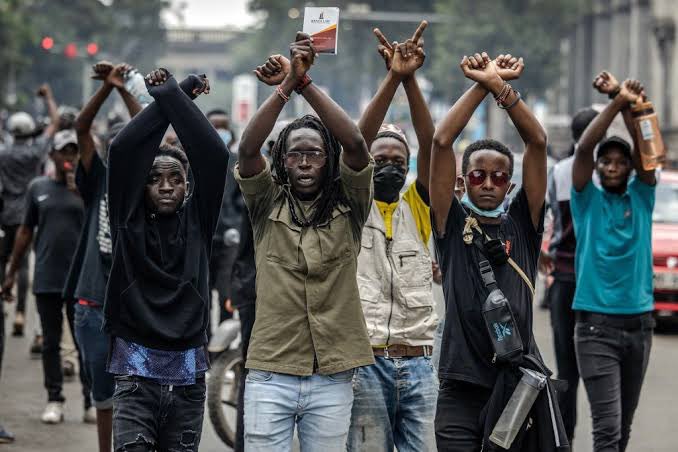
In Episode 239 of the CounterVortex podcast, Bill Weinberg provides an overview of the protest waves and uprisings going on across the planet—in Kenya, Uganda, Nigeria, Bangladesh, India, China, Serbia, Venezuela, and in Israel. This as worldwide protests in solidarity with the Palestinians of Gaza continue. Amid ongoing protests against Netanyahu in Israel, there have also been protests against Hamas in Gaza. Despite internal dangers and contradictions in all these upsurges, there is a sense that we could be approaching a revolutionary moment such as that seen in 2011—the year of the Arab Spring and Occupy Wall Street. And with the planet on an accelerating trajectory toward world war, the linking of these upsurges through conscious solidarity and the infusion of anti-war content to their demands is urgently mandated. Listen on SoundCloud or via Patreon. (Photo via Twitter)

Africa
west africa

West Africa: dissidents detained, disappeared

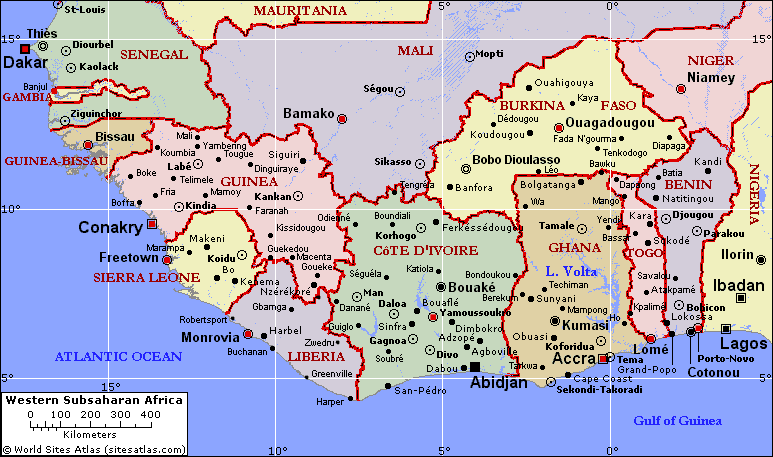
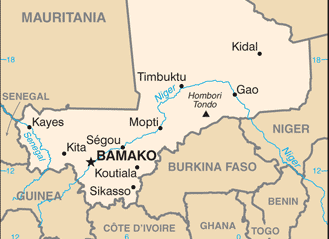
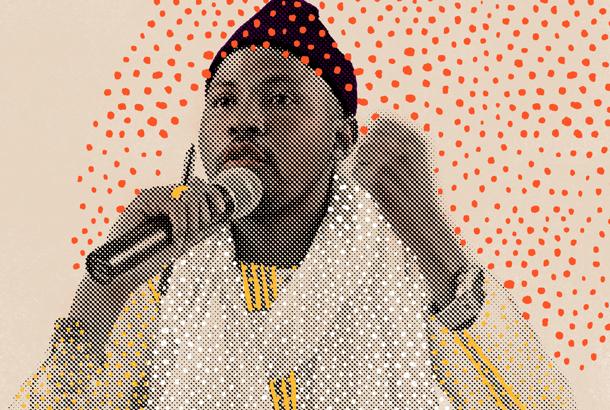
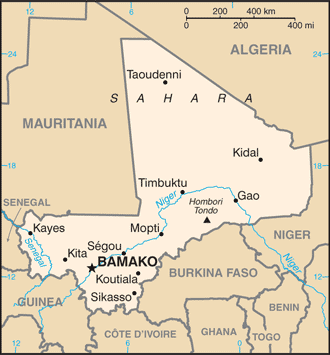
Amnesty International urged Malian authorities to immediately release dissident Youssouf Daba Diawara and 11 other arbitrarily detained opposition politicians. According to the statement, Mali’s junta has been arbitrarily holding these political figures solely for exercising their civil rights. Diawara was forced from his car by armed men in Bamako and taken to the Gendarmerie’s Criminal Investigations Brigade. He was charged with “opposition to legitimate authority” for participating in a protest against power cuts and inflation. The UN High Commissioner for Human Rights has also expressed concern over the “disappearance” of activists in neighboring Guinea. Both Mali and Guinea have been led by military juntas since coups d’etat in 2020 and 2021, respectively. (Map: World Sites Atlas)

Africa
west africa

Uranium at issue in Great Game for West Africa

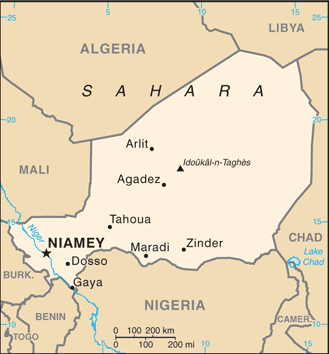
The ruling junta in Niger revoked the operating license of French nuclear fuel producer Orano at one of the world’s largest uranium mines. Russian companies have meanwhile indicated interest in picking up the lease for the giant Imouraren mine. However, exports are stalled by closure of the border with Benin, the vital sea corridor for landlocked Niger, as tensions mount between the two countries. The uranium dispute comes as French and US troops have been forced to withdraw from Niger, and Russian forces have moved in. The Pentagon’s AFRICOM commander Gen. Michael Langley has acknowledged that the US is seeking to establish new bases in neighboring West African countries, including Benin. (Map: World Sites Atlas)

Africa
Niger

Niger: jihadis score deadly blow against junta

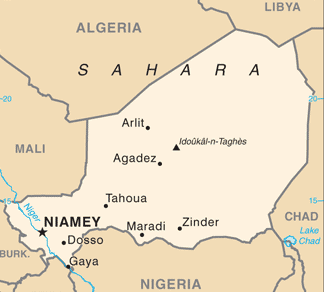
Authorities in Niger declared three days of national mourning after an ambush on security forces near the village of Tassia resulted in the deaths of at least 20 soldiers and one civilian. Tassia lies in the western Tillabéri region bordering Mali and Burkina Faso, long a stronghold of jihadist​ insurgents. The incident highlights the growing challenges facing the ruling junta one year after it came to power in a July 2023 coup, overthrowing the civilian government led by Mohamed Bazoum. (Map: PCL)

Africa
Mali

War crimes seen in Mali conflict

An Islamist armed group linked to al-Qaeda killed at least 32 civilians, including three children, and set fire to over 350 homes in central Mali in January, forcing about 2,000 villagers to flee, Human Rights Watch reports. Earlier in January, a Bambara ethnic militia formed to oppose the jihadists killed at least 13 civilians, including two children, abducted 24 other civilians, and looted property and livestock in central Mali. These attacks, which HRW said are apparent war crimes, occurred amid a cycle of reprisal killings and communal violence in central Mali, pitting the Dogon and Bambara against the Fulani. (Map: PCL)

Planet Watch
Daouda Diallo

Frontline fighters (and martyrs) for free speech

In Burma, the mutilated body of independent journalist Myat Thu Tan was found at the military base where he had been detained, after the camp was overrun by rebels of the pro-democratic resistance. In Kazakhstan, detained activist Aqylbek Muratbai is fighting extradition to Uzbekistan, where he had been speaking out against bloody repression faced by his Karakalpak ethnic minority. And in Burkina Faso, human rights defender Daouda Dialloremains missing months after he was “disappeared,” presumably at the hands of the ruling military junta. Yet neither the mainstream media nor “progressives” in the West pay heed to these cases—while the reactionary and Kremlin-coopted Julian Assange is a cause célèbre. In Episode 214 of the CounterVortex podcast, Bill Weinberg asks: Why is that? Listen on SoundCloud or via Patreon. (Image: CISC via OHCR)

Africa
Sahel

Sahel states defect from ECOWAS

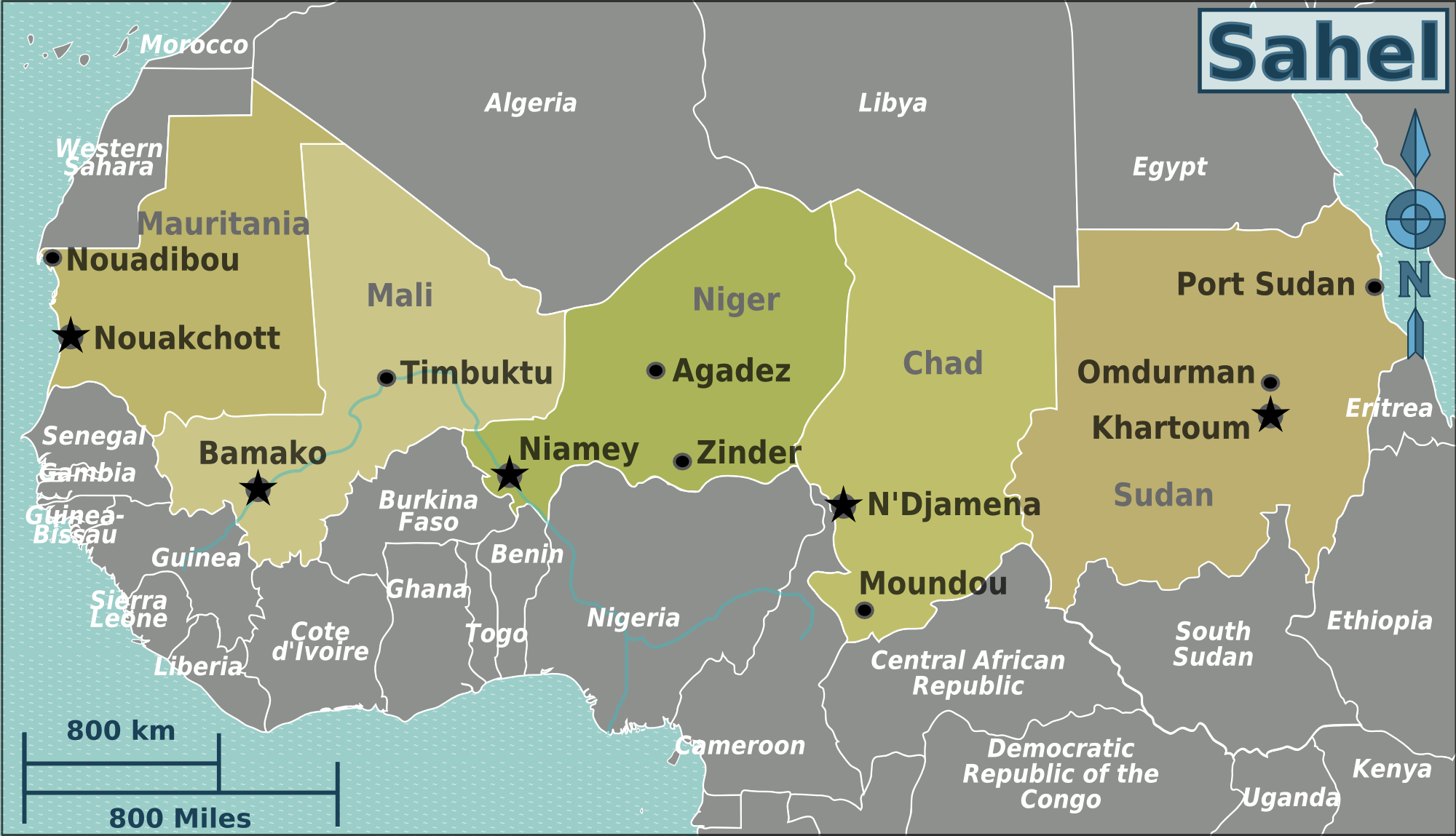
Niger, Mali and Burkina Faso announced they are withdrawing from the Economic Community of West African States (ECOWAS), issuing a joint statement saying they had taken a “sovereign decision” to abandon the regional bloc of which they were founding members in 1975. The statement charges that ECOWAS has “drifted from the ideals of its founding fathers and the spirit of Pan-Africanism,” and is now “under the influence of foreign powers.” All three countries are led by military juntas after undergoing coups d’etat, which resulted in their suspension from the bloc. All three countries have also moved closer under their respective military regimes to Russia, whose Wagner Group mercenary force is backing up a new Malian government offensive against Tuareg separatist rebels. (Map: Wikivoyage)

Planet Watch
climate

2023 hottest year on record —by ‘alarming’ margin

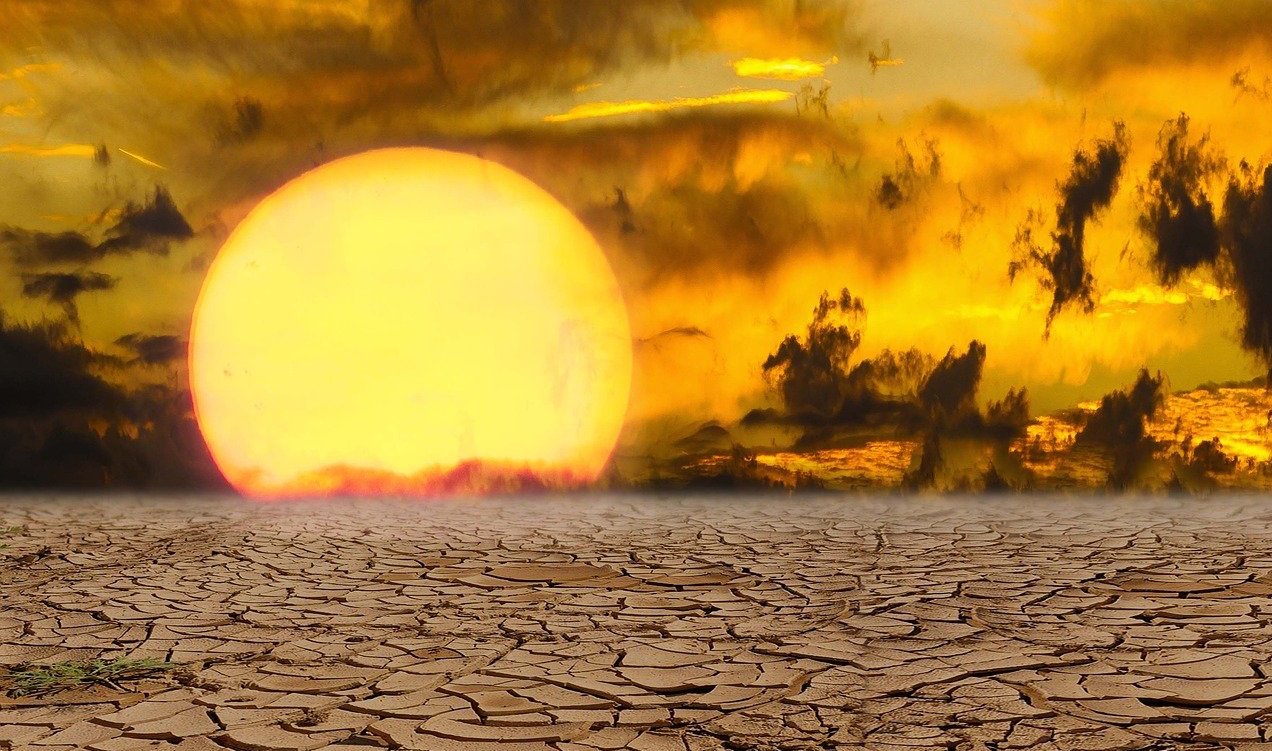
The year 2023 is officially the warmest on record—overtaking 2016, the previous warmest year, by an alarming margin. According to new data from the European Union’s Copernicus Climate Change Service, Earth was 1.48 degrees Celsius hotter last year compared with pre-industrial levels—dangerously close to the 1.5-degree threshold set by the Paris climate deal. 2023 also marked the first year in which each day was over one degree warmer than the pre-industrial average. Temperatures over 2023 likely exceeded those of any year over the past 100,000 years. This was partially due to the year’s El Niño climate phenomenon, but those impacts only began in June—and every subsequent month last year was the warmest on record for that particular month. September represented the largest climatological departure since record-keeping began over 170 years ago. (Image: blende12/Pixabay)

Africa
Nigeria

Drone massacre in northwest Nigeria

The Nigerian military says it is investigating an army drone attack at a religious gathering on a village in northwest Kaduna state that killed 85 civilians and wounded more than 60 others. Residents of Tudun Biri village were holding festivities for the birthday of the Prophet Muhammad, Eid-e-Milad an-Nabi, when the drone struck. Since 2017, hundreds of civilians have been killed in air-strikes carried out by the Nigerian military, ostensibly targeting armed rebel and bandit groups, according to monitors. (Map: Perry-Castañeda Library)