South Asia

Kashmiris under attack across India

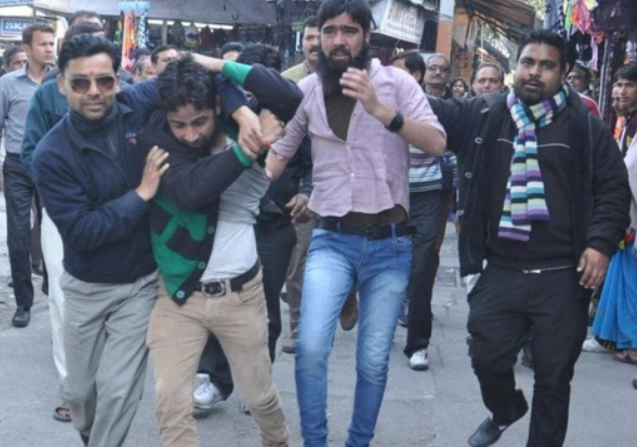
As India and Pakistan exchange military strikes in the wake of last week's massive suicide blast in Kashmir, many cities across India report cases of targeted violence against Kashmiri students and businesses by right-wing groups. Members of Yuva Sena, youth wing of the Hindu nationalist Shiv Sena, attacked Kashmiri students in Maharashtra. Colleges in Dehradun and Bhopal expelled Kashmiri students for posting objectionable content on social media about the suicide attack. A video surfaced on social media showing a Kashmiri man being beaten in Kolkata, West Bengal, by a mob which forced him to chant patriotic slogans like "Vande Mataram" and "Bharat Mata ki Jai" ("Mother, I praise thee" and "Victory to Mother India," two phrases appropriated by the Hindu-nationalist right). (Photo via KashmirWatch)
South Asia

Himalayan glaciers could be mostly gone by 2100

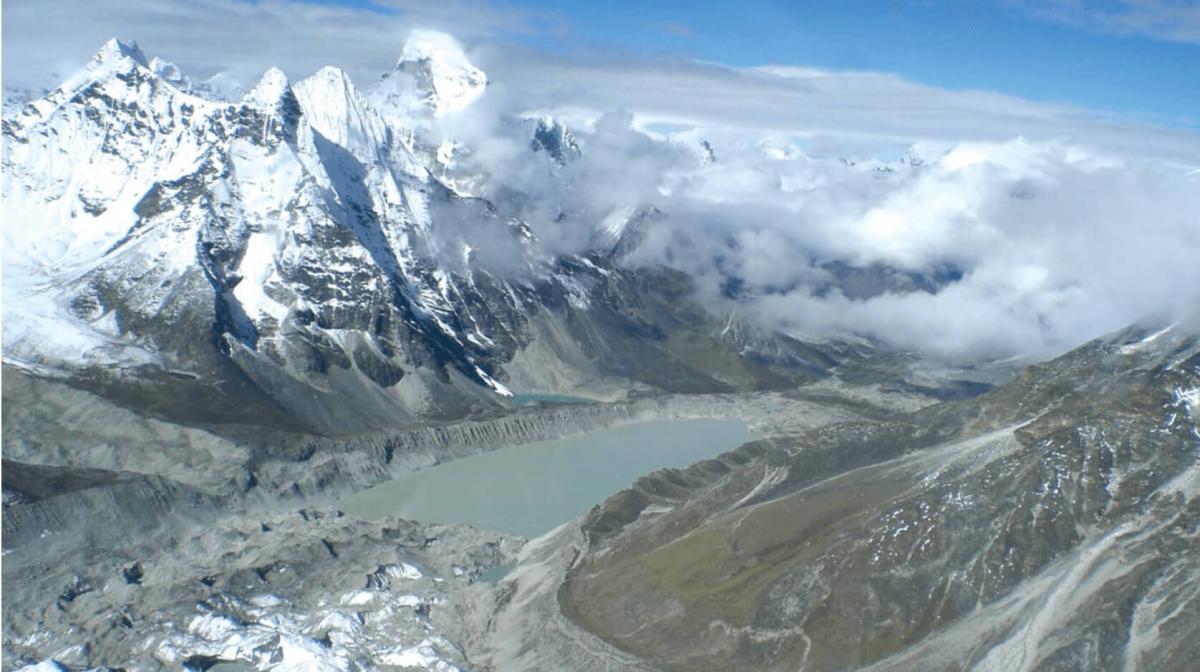
Rising temperatures in the Himalayas will melt at least one-third of the region's glaciers by the end of the century even if the world's most ambitious climate change targets are met, according to a new report. If those goals are not reached, the Himalayas could lose two-thirds of their glaciers by 2100, according to the Hindu Kush Himalaya Assessment, released by the Kathmandu-bsed International Centre for Integrated Mountain Development. Under that scenario, the Himalayas could heat up by 8 degrees Fahrenheit (4.4 degrees Celsius) by century's end, bringing radical disruptions to food and water supplies, and mass population displacement. Glaciers in the Hindu Kush-Himalayan Region, which spans over 2,000 miles of Asia, provide water to nearly a quarter of the world's population. (Photo via Nepali Times)

South Asia

China expands Indian Ocean military footprint

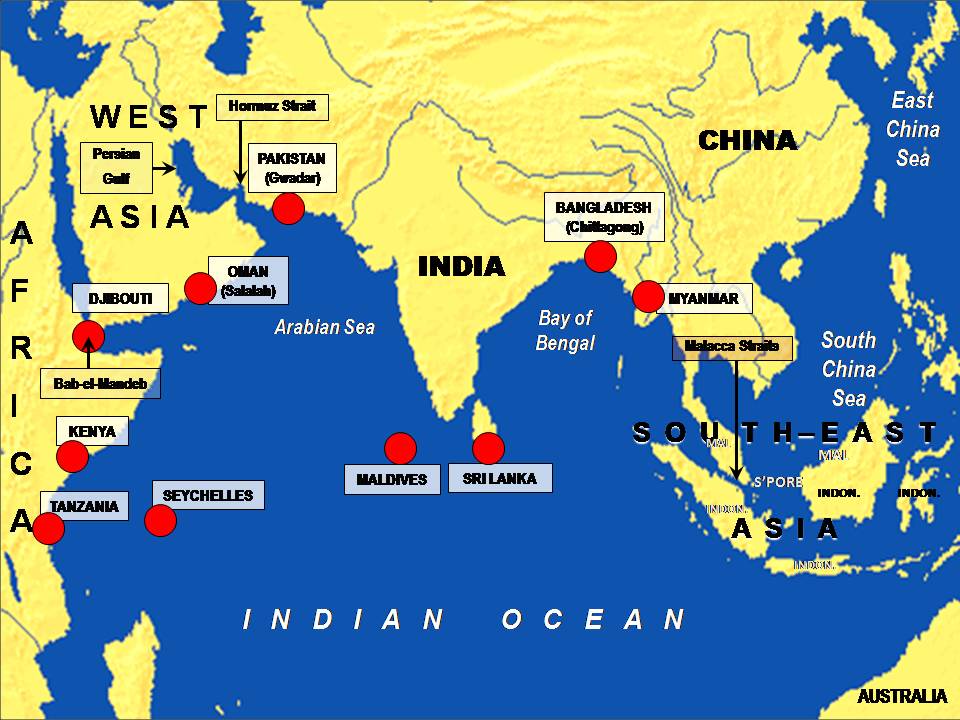
In addition to stationing troops on the disputed islands it claims in the South China Sea, Beijing is rapidly expanding its network of commercial ports across the Indian Ocean. This comes as China is sending warships into the Ocean with growing frequency, leading to fears that the commercial ports could presage military bases, The latest addition is the port of Hambantota in Sri Lanka, acquired in a debt swap deal—the Colombo government was forgiven $1 billion in debt to Beijing in exchange for the Hambantota facility. China has also gained access to facilities in Burma, Bangladesh, Pakistan, the Maldives, Seychelles and Oman as part of the maritime component of its Silk Road trade and infrastructure initiative. While the Silk Road is an ostensibly civilian project, China has also established its first foreign military base at Djibouti, leading Western wonks to warn that Beijing is seeking a "string of pearls" network of bases across the Indian Ocean.  (Map via CIMSEC)

South Asia

ISIS terror targets restive Baluchistan

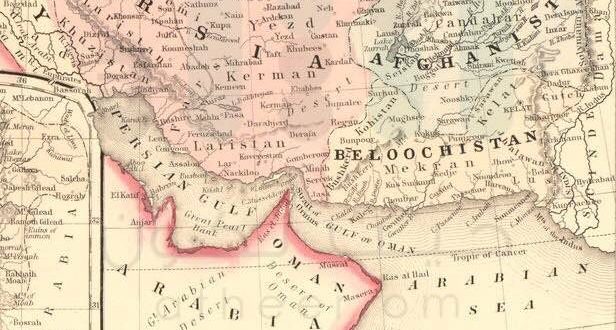
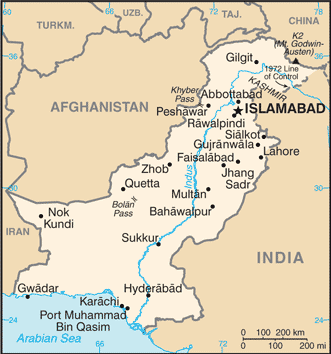
A suicide bomber killed at least 130 at a campaign rally in Pakistan’s Balochistan province— the deadliest attack in the country since 2014. A local candidate with the Balochistan Awami Party was among the dead. The local franchise of the Islamic State took credit for the attack. Radio Free Europe portrays the BAP as part of the Pakistani military establishment’s plan to undermine Baluch ethno-nationalist groups. Balochistan province is part of the larger region of Baluchistan, homeland of the Baluch people, long divided between Iran, Pakistan and Afghanistan. There are movements for Baluch independence in each of these countries, but they have been unable to unite across the nation-state boundaries. The attack may point to an ISIS strategy to disrupt electoral ethno-nationalist initiatives, and co-opt the Baluch struggle across all three borders, wedding it to Sunni extremism. (Map via Atheer)

South Asia

Pakistan: death penalty in slaying of Sufi singer

Pakistan's army high command approved the death penalty for 10 condemned jihadists who were convicted by a military tribunal of attacks that claimed over 60 lives—including the assassination of Amjad Sabri, one of the country's most revered singers of qawwalii, traditional Sufi devotional music. Sabri was on his way to a televised Ramadan performance in Karachi when his car was attacked by gunmen, and his many followers hailed justice in the case. But in the two years since Sabri's death, attacks on Sufis in Pakistan have continued, with suicide blasts and horrific massacres at shrines and mosques. (Photo via PTI)

South Asia

Hatred of Ahmadis behind Pakistan protests

The protests that paralyzed Islamabad and other Pakistani cities were ostensibly sparked by changes to the oath of office, eliminating text recognizing Mohammed as God's final prophet. But behind this was orthodox Sunni fear of the Ahmadiyya Muslim sect, which holds that 19th century founder Mirza Gulam Ahmed was the last prophet. As the protests mounted, Ahmadi Muslims faced threats across Pakistan, the Islamic world and the diaspora.

South Asia

South Asia: millions more ‘climate refugees’

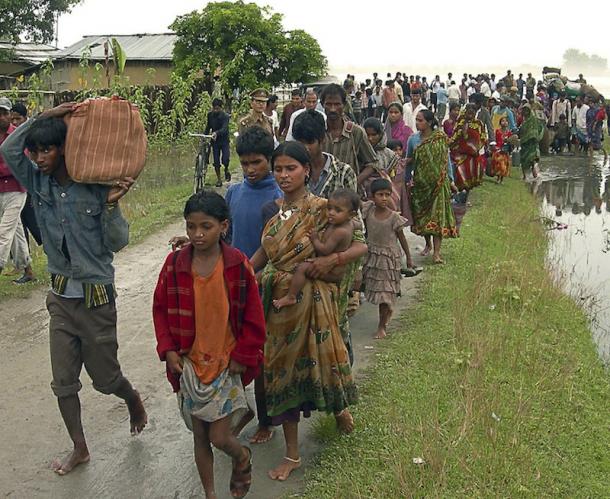
With stateside media focused on the unprecedented flooding and cascading industrial disasters from Hurricane Harvey in Texas, the far great deluges that have struck three countries in South Asia are going largely unreported. Up to 40 million have been impacted after weeks of unusually strong monsoon rains affecting India, Bangladesh and Nepal—adding to the fast-growing ranks of "climate refugees," now a nearly invisible global crisis.

South Asia

Linguistic struggle heats up in Pakistan

A proposed amendment to Pakistan's constitution, making Punjabi, Sindhi, Pashto and Balochi "national languages" along with Urdu, is sparking an angry backlash from nationalists.

South Asia

Pakistan: deadly ISIS attack on Sufi shrine

An ISIS suicide attack on a Sufi shrine killed at least 75 worshippers and wounded dozens more—the deadliest in a string of blasts across Pakistan this week.