Iran

Iran: women’s rights activist gets 24 years

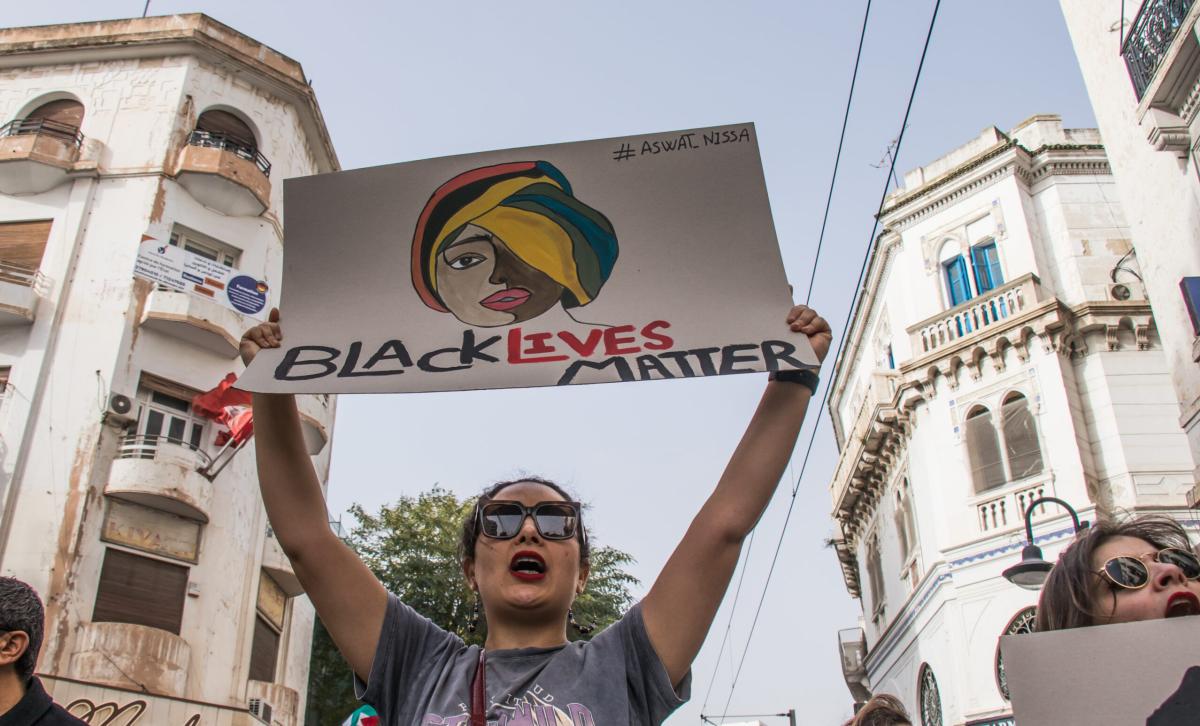
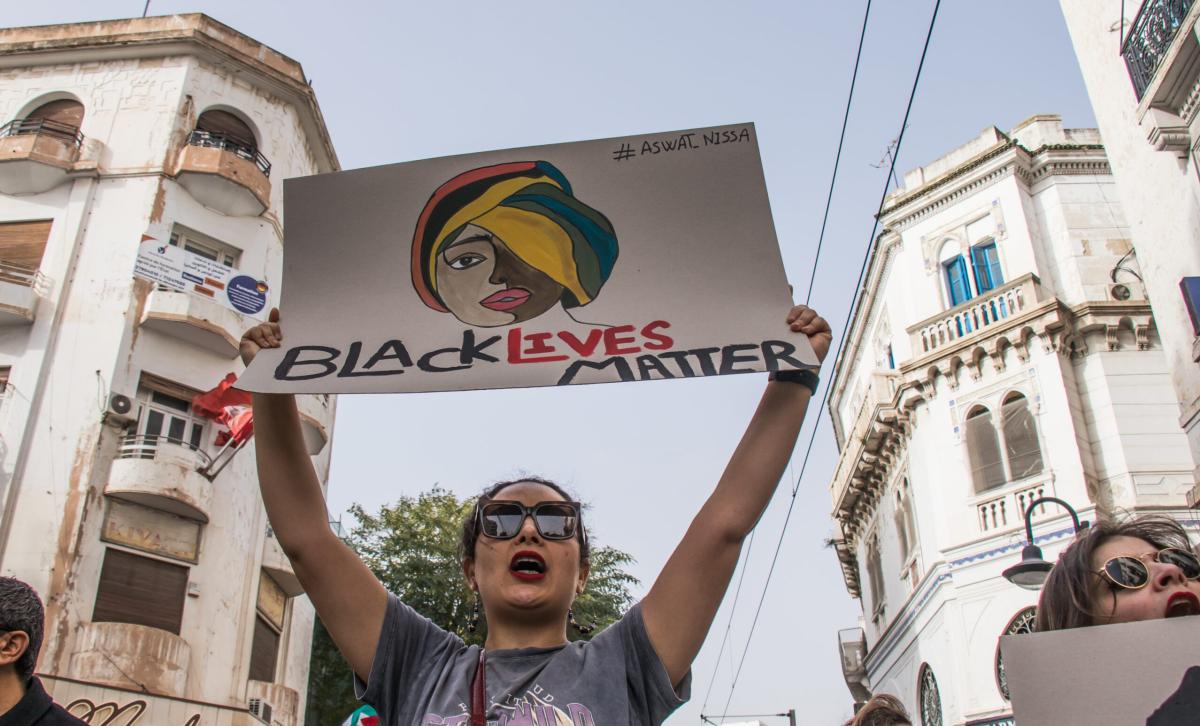
Saba Kord Afshari, a 21-year-old rights activist and an opponent of Iran’s mandatory hijab law, was sentenced to 24 years in prison by the Tehran Revolutionary Court. She received 15 years for “spreading corruption and prostitution” (appearing in public without hijab), seven years and five months for “conspiracy to act against national security,” and one year and five months for “propaganda against the state.” (Photo via Iran Human Rights Monitor)

The Caribbean
Haitians in Dominican Republic

Protest racist attacks in Dominican Republic

Rights groups throughout the Caribbean are raising the alarm on the persistence of racist attacks in the Dominican Republic, charging they are being actively encouraged by authorities. The wave of attacks on Haitian immigrants and Dominicans of Haitian background has been particularly focused in the region of El Cibao, which has become a center of operations for ultra-right nationalist groups. The mayor of Santiago, Abel Martínez Durán, a member of the Central Committee of the ruling Dominican Liberation Party, has promoted hate campaigns against Haitians. Media outlets amplify the racist and conspiracy-laden speeches of anti-immigrant public figures about a “silent invasion,” continuing a disastrous tradition that began under the long right-wing dictatorship of Rafael Trujillo. (Movimiento Socialista de los Trabajadores via Change.org)

Inner Asia
China prison

India, China mirror each other in Islamophobia

Well, this is grimly hilarious. Genocide Watch has issued two “warning alerts” for India—one for Kashmir and the other for Assam, with Muslims held to be at grave imminent risk of persecution and mass detention in both. Pakistan’s semi-official media are jumping all over this news, which is hardly surprising. But Pakistan is closely aligned with China due to their mutual rivalry with India, so it is also hardly surprising that Pakistani media have failed to similarly jump on the Genocide Watch report on the Uighurs of Xinjiang—despite the fact that the group categorizes the situation there as “preparation” for genocide, a more urgent level than “warning.” China itself has issued a protest to India over the situation in Kashmir. Delhi shot back that Kashmir is an internal matter. Beijing has been similarly dismissive of India’s protests over the mass detention in Xinjiang.  (Photo via Bitter Winter)

East Asia

Worker protests in China’s automotive sector

Employees at Hubei Meiyang Automobile Industry Co staged a demonstration to protest “illegal dismissals, wage arrears and compensation payments.” Meiyang Auto, a “new energy” start-up based in the central city of Xiangyang, had been in production for less than two years before halting operations. Workers at Eastone Automotive in Shanghai’s Pudong district also staged a protest claiming they were owed around 40 million yuan in wages in arrears stretching back to the beginning of the year. Employees claimed they were being forced to leave without any compensation, and appealed to the local government for help. So far this year, China Labour Bulletin’s Strike Map has recorded 25 collective protests by workers in the automotive sector, up from just five in the same period last year. The protests, mostly related to layoffs and wage arrears, have occurred in car plants, components factories, dealerships and service centers, and even car rental agencies. (Photo via China Labor Bulletin)

South Asia
Kashmir

Militarization as Delhi prepares to dismantle Kashmir

India’s government has flooded the northern state of Jammu & Kashmir with troops and cut off internet access upon announcing the revocation of its constitutionally protected autonomy, and plans to divide the disputed territory into two new political entities with reduced power. Article 370 of India’s constitution grants Jammu & Kashmir a high degree of autonomy, a concession to the demands of the territory’s Muslim majority, many of whom favor independence or union with Pakistan. In addition to abrogating Article 370, Delhi announced plans for a bill to divide India-controlled Kashmir into two “union territories,” which have lesser powers of self-government than states. A reduced Jammu & Kashmir Union Territory would continue, at least, to have a legislature. But it would be separated from the Buddhist-majority region of Ladakh, which is to become its own union territory, without a legislature. Complicating matters further is that the populace of Ladakh itself is divided along sectarian and regional lines. News of the plan to separate Ladakh from Jammu & Kashmir was met with jubilation in the principal Buddhist town of Leh, but with foreboding in Kargil, an enclave within Ladakh inhabited by Ismaili Muslims.  (Map via Wikipedia)

Iran

Iran: women’s rights activists get 16 years

Three women in Iran received prison sentences of at least 16 years, for offenses such as not wearing hijab and handing out flowers on a Tehran subway train on International Women’s Day. Civil rights activists Yasaman Aryani, Monireh Arabshahi and Mojgan Keshavarz were condemned by a Revolutionary Court in Tehran. Each was given 10 years for “encouraging and promoting corruption by de-veiling,” five years for “collusion and assembly to act against national security,” and one year for “propaganda against the state.” Keshavarz was given an additional seven years and six months for “blasphemy.” The attorney for the women said lawyers were not allowed to attend the trials, which were scheduled without notice. The court said no attorney access would be granted until an appeal is scheduled. (Photo via HRANA)

North America

SCOTUS overturns injunction on border wall funds

The Supreme Court reversed a lower court decision that blocked President Trump from using $2.5 billion from military accounts to build a portion of his pledged border wall. The order lifts an injunction from a federal judge in a case brought by the Sierra Club and the Southern Border Communities Coalition challenging Trump’s February declaration of a national emergency to access more than $8 billion to build the wall. The Ninth Circuit Court of Appeals earlier this month declined to lift that injunction. The Supreme Court’s conservative majority found that the administration had “made a sufficient showing at this stage” that the challengers do not have standing to block the diversion of the funds. (Photo via Jurist)

Inner Asia
Uighurs

Uighurs as pawns in the Great Game

In a perverse spectacle, the Trump administration, which is establishing its own incipient concentration camp system for undocumented immigrants, makes a great show of feigning concern with the mass detention of the Uighurs in China’s “re-education camps.” Secretary of State Mike Pompeo called China’s treatment of the Uighurs the “stain of the century,” and accused Beijing of pressuring countries not to attend a US-hosted conference on religious freedom then opening in Washington. At the conference, Donald Trump actually met at the Oval Office with Jewher Ilham, daughter of the imprisoned Uighur scholar Ilham Tothi. It is hard to fault the Ughurs for being heartened by this international attention, but it is clear that they are being exploited for propaganda purposes. (Photo: Mvslim.com)

East Asia
Ji Sizun

China: justice sought in death of ‘barefoot lawyer’

International rights groups are demanding accountability from China in the death of Ji Sizun, the most recent victim of the ongoing crackdown on dissident lawyers in the People’s Republic. Two months after being released from prison, Ji, 69, died from unknown illnesses, guarded by state security in a hospital in his native Fujian province. He had reportedly been ill-treated in detention, and was released in a comatose state. One of China’s most prominent “barefoot lawyers,” or self-taught legal advocates, Ji spent most of the past 10 years in prison. “Chinese authorities need to investigate Ji Sizun’s hospitalization and death and hold accountable anyone responsible for wrongdoing,” said Yaqiu Wang, China researcher with Human Rights Watch. “For human rights defenders in China, prison sentences are increasingly turning into death sentences.” (Photo: Chinese Human Rights Defenders)

Southeast Asia

Duterte defiant in ‘crimes against humanity’

Both UN human rights experts and Amnesty International are accusing Philippine President Rodrigo Duterte of “crimes against humanity” in his drug war. Calls for an international investigation were endorsed by a vote of the UN Human Rights Council. But Duterte remains intransigent and refuses to recognize the International Criminal Court. Amid growing international scruitny, his police killed a three-year-old girl in a drug raid. Duterte’s former police chief, Ronald “Bato” dela Rosa, now a political ally in the Senate, dismissed the incident with the comment “Shit happens,” fueling further outrage. (Photo via Rappler)

New York City

NYC: outrage over automotive terror —at last

Hundreds of bicyclists staged a “die-in” in New York’s Washington Square Park, expressing outrage over the spate of killings of cyclists on the city’s streets. Three deaths came in a one-week period, finally prompting demands for public action: Robyn Hightman, a 20-year-old bicycle messenger and track racer, was killed by a truck driver in Manhattan. Ernest Askew, 57, riding an e-bike in Brooklyn, was hit and killed by a teen driver. And Devra Freelander, 28, an artist, was killed by a cement truck driver, also in Brooklyn. Hightman was the 12th cyclist killed on New York City streets in 2019; 10 were killed in all of 2018. (Photo: Streetsblog)

Africa

Sudan protesters defy massacre, net silence

Sudan’s opposition coalition, the Forces for Freedom and Change, has renewed its call for the Transitional Military Council to hand power to a civilian-led authority, and announced a general strike to press this demand starting July 14. The call was issued a day after the “Millions March” demonstrations of June 30—which again saw security forces firing on protesters, leaving seven dead and more than 180 wounded. The TMC has formed an investigative commission into the June 3 attack on a pro-democracy sit-in outside the army headquarters, in which over a hundred were killed. Protesters continue to mobilize despite the TMC having cut off Internet access, returning to such methods as passing out leaflets at markets and transit stops. (Photo via Geeska Africa Online)