
Outgoing President Joe Biden informed Congress Jan. 14 that he would lift the US designation of Cuba as a State Sponsor of Terrorism (SSOT), as part of a deal facilitated by the Catholic Church to free political prisoners on the island. The followiing day, the Cuban government announced it would release 553 prisoners who had been jailed for “diverse crimes.” The agreement also eases some economic pressures on Cuba, including lifting sanctions on companies run by the Cuban military and the suspension of a legal provision that had enabled Cuban Americans to sue the Cuban government for confiscated property. The Cuban government responded by saying that the United States was taking “steps in the right direction” but emphasized that “the economic war remains.”
Cuba’s designation as a state sponsor of terrorism has been widely condemned by activists around the world. Trump reinstated the terrorist designation in January 2021 in the final days of his first term, after it had been reversed under the Obama administration. Biden then upheld Cuba’s inclusion on the SSOT list despite promises to review the policy. Six months into his term, Biden announced new sanctions against the island.
The deal lifts a huge burden off of the Cuban people. Cuba’s SSOT status produced a chilling effect in which banks and financial institutions were hesitant to engage with the island, created obstacles to delivering humanitarian aid, and prohibited US universities from collaborating with Cuban writers, artists, academics, and journalists. As a result of these policies Cuba has lost a staggering 10% of its population in the last few years.
The Cuban government responded to the move by thanking the international community for its solidarity and highlighting the need for further action to end the United States’ “genocidal and illegal policy of economic asphyxiation against Cuba.” The government specifically called out the ongoing targeting of Cuba’s fuel supplies, the “cruel and absurd persecution” of its international medical brigades, and restrictions on financial institutions and transactions. According to the Cuban government’s own calculations, the ongoing US embargo cost upwards of $5 billion dollars in 2024 alone. The rising human and economic costs of the sanctions led the United Nations to, once again, vote overwhelmingly to condemn the embargo in October 2024.
As part of the agreement, the Cuban government began the “gradual” release of hundreds of prisoners, news that was welcomed by the relatives of jailed protestors. The majority of those to be released took part in the July 2021 anti-government protests that resulted in the arrestsof up to 1,000 people. While the government responded to the protests with initial promises of reform, it subsequently passed a penal code that increased restrictions on basic freedoms and initiated a crackdown on Cuba’s “critical left” that labelled domestic protesters as “enemies of the revolution,” thus damaging the Cuban government’s remaining ties to the country’s grassroots social movements.
The durability of Biden’s deal was immediately cast into doubt. Just one day after the policy change, Republican Senator Marco Rubio, Trump’s pick for Secretary of State, said during his Senate Confirmation hearing that Cuba belongs on the SSOT list. Rubio is widely seen as having a smooth pass to confirmation, especially after drawing bipartisan support at his hearing. He was not the only one to cast doubt on the policy. Upon hearing of the policy change, Mauricio Claver-Carone, Trump’s envoy for Latin America and one of the initial architects of the initial SSOT policy, criticized the Biden administration’s “love” for “authoritarian anti-American regimes.” Trump’s pick for national security adviser, Congressman Mike Walz, made clear that “anything that they’re doing right now we can do back.”
From NACLA Update, Jan. 17
See our last reports on the SSOT designation and the protest wave in Cuba.
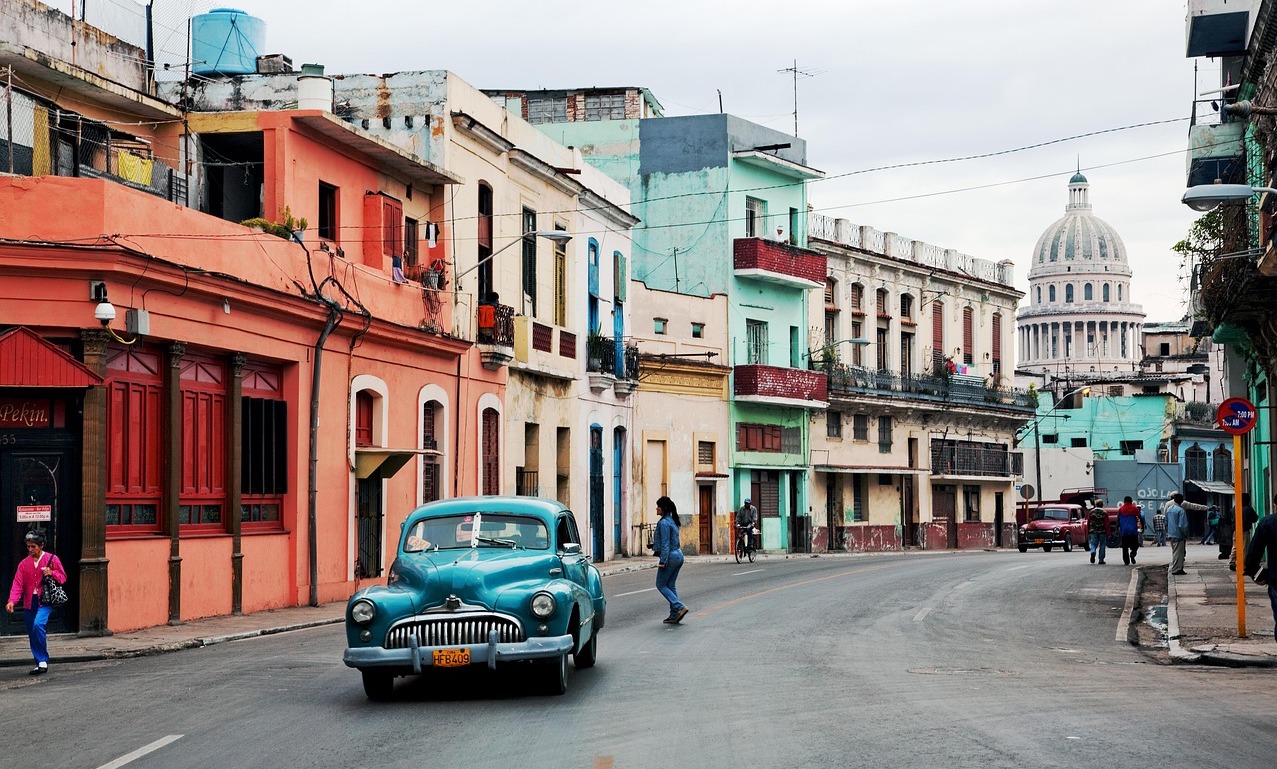
Photo: Falkenpost/Pixabay


Families fear for Cuban prisoners after Trump reneges on deal
The families of Cuban protesters jailed in anti-government demonstrations are waiting anxiously to see if the government will continue with a planned prisoner release after Donald Trump reneged on a deal made by the outgoing Joe Biden.
Activists from the human rights group Justicia 11J believe about 150 prisoners have been released so far of the 553 agreed with the Catholic church. Trump reversed Biden’s decision late on Jan. 20, his first day in office, amid a flurry of executive orders. (The Guardian)
Food crisis deepens in Cuba
A dramatic drop in rice production due to lack of fuel and fertilizers amid severe economic hardship is deepening the country’s hunger crisis. In 2024, about 80,000 tons of rice (one of Cuba’s most consumed foods) was harvested nationally–only 11% of the annual consumption and barely 30% of what Cuba produced in 2018. The situation has forced the country to rely on imports, causing already inflated prices to rise even more. (TNH)
Severe fuel shortage grips Cuba
US actions blocking oil shipments have plunged Cuba into a severe fuel shortage, crippling transport, electricity, and food distribution. The government has imposed emergency fuel-saving measures as supplies of food, fuel, and essential goods dwindle nationwide. Businesses, farms, and markets are struggling to operate, raising fears of a coming humanitarian crisis. Some vulnerable families with underweight children or elderly members have received aid delivered last week by Mexico. (TNH)
Cuba protests ‘terrorist’ infiltration
Cuban border guards killed four men and wounded six on Feb. 25 after a US-registered speedboat carrying armed Cuban exiles allegedly opened fire near Cuba’s coast. Havana said the group intended a “terrorist” infiltration and seized weapons and military gear. US officials have denied involvement and launched investigations. One slain exile was reportedly seeking to overthrow Cuba’s government.
The clash has heightened tensions as the US has instrumented a cut-off of Venezuelan oil to Cuba, deepening the crisis on the island. (TNH)
Cuba next in Trump regime change drive
President Trump said March 5 that Havana was ready to make a deal and that he was waiting to finish the conflict in Iran before turning his attention to Cuba in “a couple of weeks.” Two days earlier, he had announced, in an interview with Politico, that “Cuba’s going to fall too.” Meanwhile, Cubans living on the island—where a US oil blockade is pushing the country’s chronic humanitarian emergency into a full-blown collapse—are growing fearful of a military intervention. (TNH)
Millions of Cubans were left without power this week after a massive blackout plunged two-thirds of the country—including Havana— into darkness. The blackout highlighted the mounting strain on Cuba’s energy system amid intensifying pressure from the Trump administration. President Miguel Díaz-Canel announced the prospect of major reforms in a speech this week, though details were sparse and his political future looks increasingly uncertain as Washington escalates its campaign against the island. (NACLA Update)
Protests in Cuba amid power outages
Five people were arrested for acts of “vandalism” March 14 after a small group of protesters broke into a provincial office of the Cuban Communist party and set fire to computers and furniture. The incident, which also affected a pharmacy and another shop, took place in the town of Morón, east of Havana. (The Guardian)
Residents of the capital, meanwhile, have taken to nightly banging pots and pans to protest the prolonged power outages. (El Pais)
Will Cuba ‘make a deal’ with Trump?
On March 16 another crushing blackout plunged Cuba’s roughly ten million people into darkness. The same day, President Trump told reporters that he believed he would soon have “the honor of taking Cuba,” an ominous declaration that came as the Cuban government continued to announce economic reforms meant to please the Trump administration. There was a bit of good news on the horizon, however: activists with the Nuestra América Convoy have begun to arrive in the island, bringing crucial provisions, solar panels, and solidarity.
The widespread blackout came less than two weeks after large swaths of the island were left without power for days. Though the power grid was slowly brought back online the next day, the situation is untenable—and likely to get worse as the oil embargo continues. Indeed, though Cuba’s economic crisis is complex, its energy crisis largely stems fromcrippling US sanctions that have long prevented the government from replacing its aging infrastructure. As a result of the Trump administration’s oil blockade, no oil has been imported to the island since early January, a catastrophic situation given that more than 80 percent of the country’s electricity depends on it. Though Cubans are resilient, the energy crisis has brought much of society to a standstill: trash is piling up on the streets, public transportation has been reduced, classes have been cancelled or moved online, access to food and clean water has grown more difficult, and medical procedures have been cancelled for tens of thousands.
Pressured by the Trump administration to “make a deal,” the Cuban government has responded by negotiating with the US and announcing a slate of key reforms to gradually open up the state economy to foreign investment. Weeks after instituting changes to allow for the creation of public-private partnerships, the government announced March 16 that Cubans living in the United States would soon be able to invest in the island’s infrastructure, use its banks, and invest in or own companies. The following day, US Secretary of State Marco Rubio said that the reforms were “not dramatic enough,” emphasized that “the embargo is tied to political change,” and made clear that the government needs “new people in charge.” The call for a change in political leadership echoed recent reporting that the Trump administration has made President Miguel Diaz-Canel’s removal from power a key precondition for meaningful negotiations.
However, Trump’s recent comments about “taking Cuba” are a reminder that that negotiation itself could be a ruse to disguise more aggressive action—as was the case with Iran. But the United States has not been the only nation to punish Cuba. Indeed, the Trump administration’s allies have contributed to further isolating the island by targeting its diplomats and embassies, as is the case with Costa Rica and Ecuador, and expelling its medical missions—a move made by Jamaica, Guyana, Honduras, Guatemala, Paraguay, and others.
Though some countries, like Mexico, have stepped up their shipment of humanitarian aidto the island, the region’s collective failure to defend Cuba from the Trump administration’s attacks have led activists from around the world to take matters into their own hands. Chief among these efforts is the Nuestra América Convoy, an international coalition of organizers, healthcare workers, veterans, artists, journalists, student union members, and community activists. The arrival of members of the convoy, modeled in part after the Global Sumud Flotilla that sought to break the Israeli siege on Gaza, was celebrated byPresident Diaz-Canel, who thanked those involved for their solidarity. (NACLA Update)
Nuestra América Convoy arrives in Havana
Over 650 delegates, from over 33 countries and 120 organizations, arrived in Cuba on Saturday, bringing 20 tons of aid. The Nuestra América Convoy, named for the famous essay by Cuban nationalist José Marti, arrived in Havana to break the US embargo.
Inspired by the Global Sumud Flotilla, which attempted to bring aid to Gaza in October 2025, the Nuestra América Convoy is an international humanitarian effort delivering aid to Cuba from land, air and sea.
Supplies aboard the convoy include food, medical supplies, and solar panel equipment to lessen the impact of the US oil blockade. While the support is welcome, 20 tons of aid is not sufficient to meet Cuba’s needs. The Nuestra América Convoy arrived just days before Cuba is expected to receive its first shipment of Russian oil.
Primarily organized by Progressive International, the convoy coalition also includes the the People’s Health Movement, MediCuba, Global Health Partners, the International Association of Democratic Lawyers, the National Lawyers Guild, and the US Peace Council. Political parties across Latin America, including the governing Morena Party in Mexico, are participating in the global initiative. Members of the Neustra América Convoy include former British Labour leader Jeremy Corbyn, Irish musical group Kneecap, US labor leader Chris Smalls, Colombian Senator Clara López, and others.
The convoy aims to provide relief to Cuba following the intensification of sanctions imposed on the country earlier this year. On Jan. 29, US President Donald Trump, through Executive Order 14380, imposed an oil blockade on Cuba, threatening sanctions against any country that directly or indirectly supplies oil to Cuba. The move by the Trump administration intensified the already existing sanctions against the island nation.
The “fuel blockade” has been condemned by UN experts as against international law. The experts stated that:
The US has imposed restrictive sanctions on Cuba since 1962, following the 1959 Cuban Revolution. The sanctions have included an embargo that restricts Cuba’s ability to trade, and to receive needed supplies like medicine and fuel. The majority of countries in the UN General assembly have voted virtually annually in favor of ending the US embargo.
The effects of US sanctions against Cuba are pervasive and stem from several different laws. In 2021, Cuba was added to the US “state sponsors of terrorism” list, which limits Cuba’s access to loans from organizations like the World Bank and the International Monetary Fund. The designation also blocks the export to Cuba of “dual-use items,” which have both military and civilian uses. The 1992 Cuban Democracy Act prohibits third-country enterprises affiliated with US corporations from selling goods to Cuba containing more than 10% US components. The Helms-Burton Act of 1996 allows lawsuits to be filed against third-country entities engaged in trade in Cuba, effectively expanding the US embargo to third countries. (Jurist)