


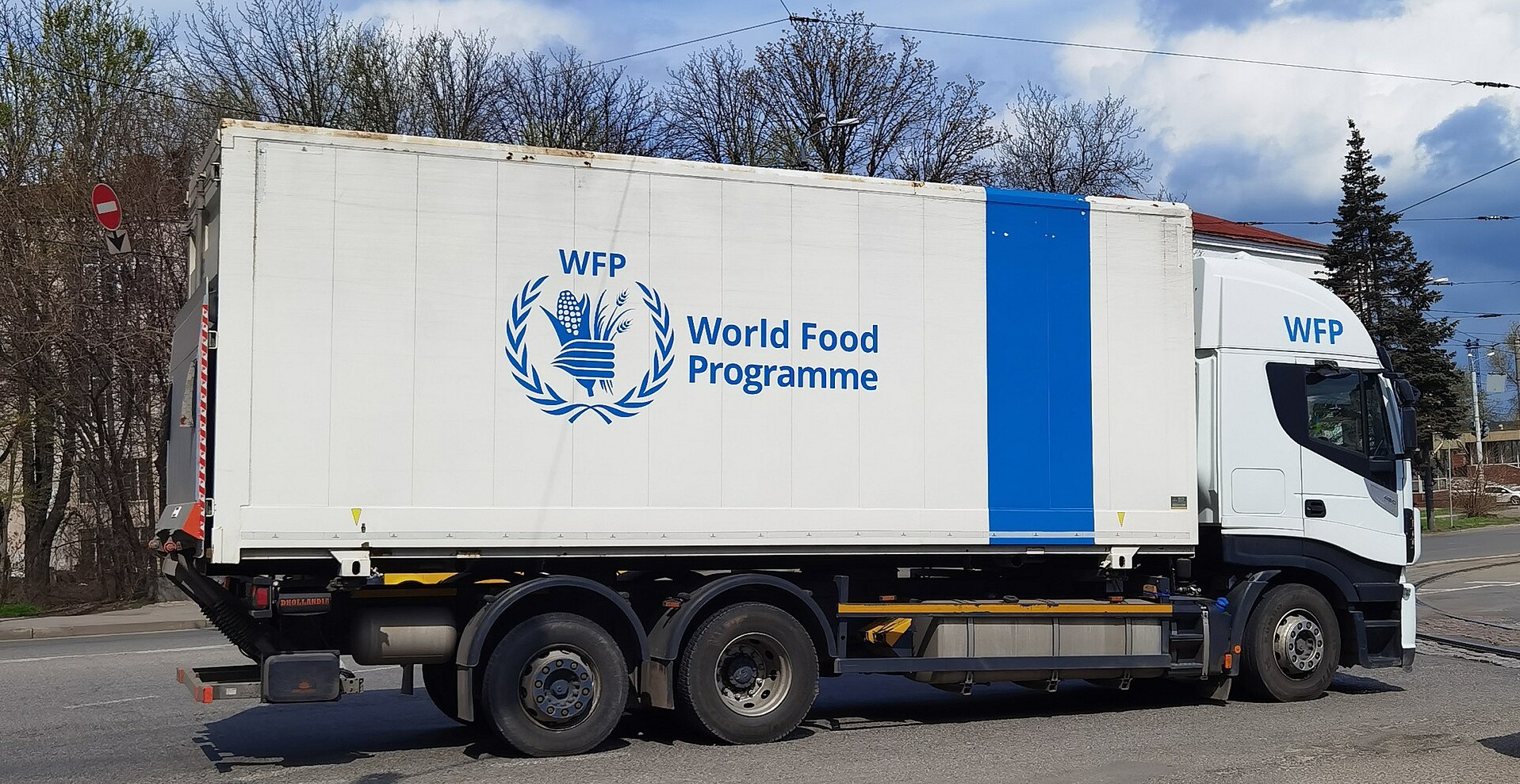
The World Food Programme (WFP) warned March 17 that the escalating hostilities in the Middle East could lead to record levels of food insecurity, and the largest disruption in the global economy and humanitarian efforts since the COVID-19 pandemic.
WFP deputy executive director and chief operating officer Carl Skau said: “If this conflict continues, it will send shockwaves across the globe, and families who already cannot afford their next meal will be hit the hardest.” Skau urged the international community to mount an adequately funded humanitarian response.
Since the United States and Israel launched airstrikes on Iran in late February, the conflict has spread to encompass much of the region, causing thousands of civilian casualties and forcibly displacing over 3 million people. The WFP predicts 45 million people may slide into acute hunger (a level known as IPC Phase 3+) if the conflict continues. Due to the heavy reliance of food and aid distribution on energy, the skyrocketing price of oil has placed heightened strain on already over-stretched aid supply lines. The disruption of shipping through the Strait of Hormuz has also increased fertilizer costs, posing a more long-term threat to food security.
In 2025, an estimated 318 million people across 68 countries were already experiencing acute food insecurity, with 41.1 million under “Emergency” conditions or worse (IPC Phase 4+). The number of people facing catastrophic hunger (Phase 5) remained alarmingly high in 2025, exceeding 1 million.
Import-reliant countries, predominantly in sub-Saharan Africa and Asia, face the greatest risk. Humanitarian organizations are already spread thin by tightening budgets, as well as the proliferation and exacerbation of global crises. Global funding for foreign aid has contracted exponentially in recent years, with a sharp decline following President Trump’s signing of Executive Order 14169, which effectively suspended most operations of USAID. Together, these developments place extraordinary pressure on humanitarian organizations, leaving millions at risk of famine. Sudan and Somalia were named as particularly vulnerable.
From JURIST, March 19. Used with permission.
Note: Hunger in the Global South has already been exacerbated by Trump’s trade tariffs regime, while spikes in the price of oil and grain since the start of the Ukraine war in 2022 have contributed to popular privation and unrest worldwide.
Photo: Alex Blokha via Wikimedia Commons


Israel’s gas field strikes threaten civilian energy lifeline
Political wrangling over who knew what before Israel bombed Iran’s South Pars gas field aside, the March 18 strikes marked a significant escalation in the US-Israeli military campaign. The deliberate attack on by far the world’s largest natural gas field—which Iran shares with Qatar and which accounts for some 70% of Iran’s domestic gas production—threatens an energy lifeline for Iranian civilians.
Iran retaliated by upping its strikes on energy sites in the Gulf region, including on Qatar’s main gas export terminal, Ras Laffan. World energy prices surged.
But US-Israeli attacks have also been hitting other types of civilian infrastructure inside Iran that are not making headlines: The Iranian Red Crescent has counted hits on 498 schools and 236 health facilities.
In Lebanon, heavy Israeli bombardments have now forced more than a million people to flee their homes. Israel has targeted bridges and bombed medical facilities, killing dozens of healthcare workers, including first responders. Israel says ambulances and medical facilities are being used by Hezbollah, a claim Lebanon’s Ministry of Health denies. (TNH)
FAO: Gulf crisis threatens global food security
The UN Food and Agriculture Organization (FAO) issued a warning March 26 that the Persian Gulf crisis is affecting agricultural production and food security worldwide, leaving significant impacts on farmers, migrant workers, and consumers.
Máximo Torero, the chief economist for the FAO, stated:
The FAO emphasized the short-term need to find alternative routes and “provide emergency balance of payment support to import-dependent nations before planting windows.” In the longer term, the FAO said that the international community needs to diversify global import sources and strengthen regional reserve sharing.
The food security concerns arise from the more than 90 percent decline in tanker traffic through the Strait of Hormuz since the Persian Gulf conflict intensified. Normally, 35 percent of global crude oil flows pass through the corridor. Additionally, Gulf countries such as Bahrain, Saudi Arabia, Oman and Qatar are critical exporters of urea and other nitrogen-based fertilizers.
Michael Werz, a senior fellow at the Council on Foreign Relations, stated: “With shipping activity through the Strait of Hormuz affected, the effect on global fertilizer exports is enormous and will generate cascading effects.” These effects are manifesting in rising fuel and fertilizer prices. The FAO said farmers are facing “a double shock,” as both are key to agricultural production.
The countries that face the most severe impacts are those that import over 90% of their fertilizer, particularly in sub-Saharan Africa. Less than a quarter of farmers in such countries have access to formal credit, so they have no ability to stockpile in advance of disruptions. Other countries that need urgent protection are Sri Lanka and Bangladesh, as they are in the middle of their rice harvests. Gulf countries such as Qatar and the United Arab Emirates are also facing challenges as they are “huge importers of food.” According to Public Affairs Professor Raj Patel, “Even if the strait opened up and the war ended tomorrow, it would take weeks to reboot the supply chain.”
Gulf countries also host millions of migrant workers from South Asia and East Africa. If the conflict persists, remittances they send home may decline.
The strait has been virtually at a standstill since the US and Israel launched air strikes, which killed Iran’s supreme leader. Following the attack, Ebrahim Jabari, a senior adviser to the Iranian Revolutionary Guard Corps, issued a warning: “The strait is closed. If anyone tries to pass, the heroes of the Revolutionary Guard and the regular navy will set those ships ablaze.”
The Iranian Parliament is working on a draft bill to impose fees for vessels seeking safe passage through the strait. Freedom of navigation through vital passageways must be guaranteed, under to international law. (Jurist)