US federal prosecutors on May 20 unsealed a superseding indictment charging former Cuban leader Raúl Castro and five former Cuban military pilots in the 1996 shoot-down of two civilian planes flown by the Miami exile group Brothers to the Rescue, an attack that killed four people. An investigation by the International Civil Aviation Organization found that the planes were shot down over international waters, although this was disputed by Cuba.
Castro, 94, headed Cuba’s armed forces at the time, and later served as the island’s president.
The seven-count indictment charges all six defendants with conspiracy to kill US nationals. Castro and one pilot, Lorenzo Alberto Perez-Perez, also face two counts of destruction of aircraft and four counts of murder. Only one defendant, Luis Raul Gonzalez-Pardo Rodriguez, 65, is in US custody, awaiting sentencing on an unrelated immigration charge; the rest, including Castro, are in Cuba.
According to the indictment, three unarmed Cessnas left Opa-Locka Airport on Feb. 24, 1996, to patrol the Florida Straits for migrants fleeing Cuba. Cuban MiG jets destroyed two with air-to-air missiles over international waters, killing Carlos Costa, Armando Alejandre Jr., Mario de la Peña and Pablo Morales. Prosecutors allege the attack followed months of planning by Cuban intelligence agents who had infiltrated the group.
Cuba’s President Miguel Díaz-Canel called the charges “a political maneuver, devoid of any legal foundation.”
The charges extend a Trump administration push to pursue foreign leaders in US courts. In January, US forces captured Venezuelan President Nicolás Maduro in a raid on Caracas and flew him to New York to face “narco-terrorism” charges. Cuba, a close Maduro ally, said 32 of its personnel were killed in that operation.
Castro’s indictment also lands amid the sharpest US-Cuba tensions in years. Cuba has been on the US “state sponsors of terrorism” list since January 2021; Trump reversed a last-minute Biden effort to remove it shortly after returning to office, and his administration issued sweeping new sanctions this month targeting Cuba’s military-run economic sector and dozens of regime officials. Havana denies sponsoring terrorism.
From JURIST, May 20. Used with permission.
Note: The Brothers to the Rescue group also played a role in the Cuba Five case. The National Security Archives cites declassified FAA documents indicating that the group deviated from filed flight plans and sought to provoke a response from the Cuban military.


Cuba in the imperial crosshairs
The Trump administration drastically escalated its pressure campaign on the Cuban government on May 20 by moving a US aircraft carrier to the Southern Caribbean and announcing the indictment of Raul Castro on charges of murder and conspiracy to kill US citizens. The charges, on which five others were also indicted, stem from the 1996 deaths of three US citizens and one US resident who were killed after the Cuban military shot down two planes used by the anti-Castro exile group Brothers to the Rescue, which carried out intentionally provocative “humanitarian flights.” The indictment marked the sharpest escalation in a weeks-long pressure campaign that has included new sanctions, ongoing threats of intervention, and increasingly aggressive military flights and drone activity off the Cuban coast. Analysts immediately drew parallels between the campaign against Cuba and the January abduction of Venezuelan President Nicolás Maduro, which similarly relied on a US indictment as a legal pretext.
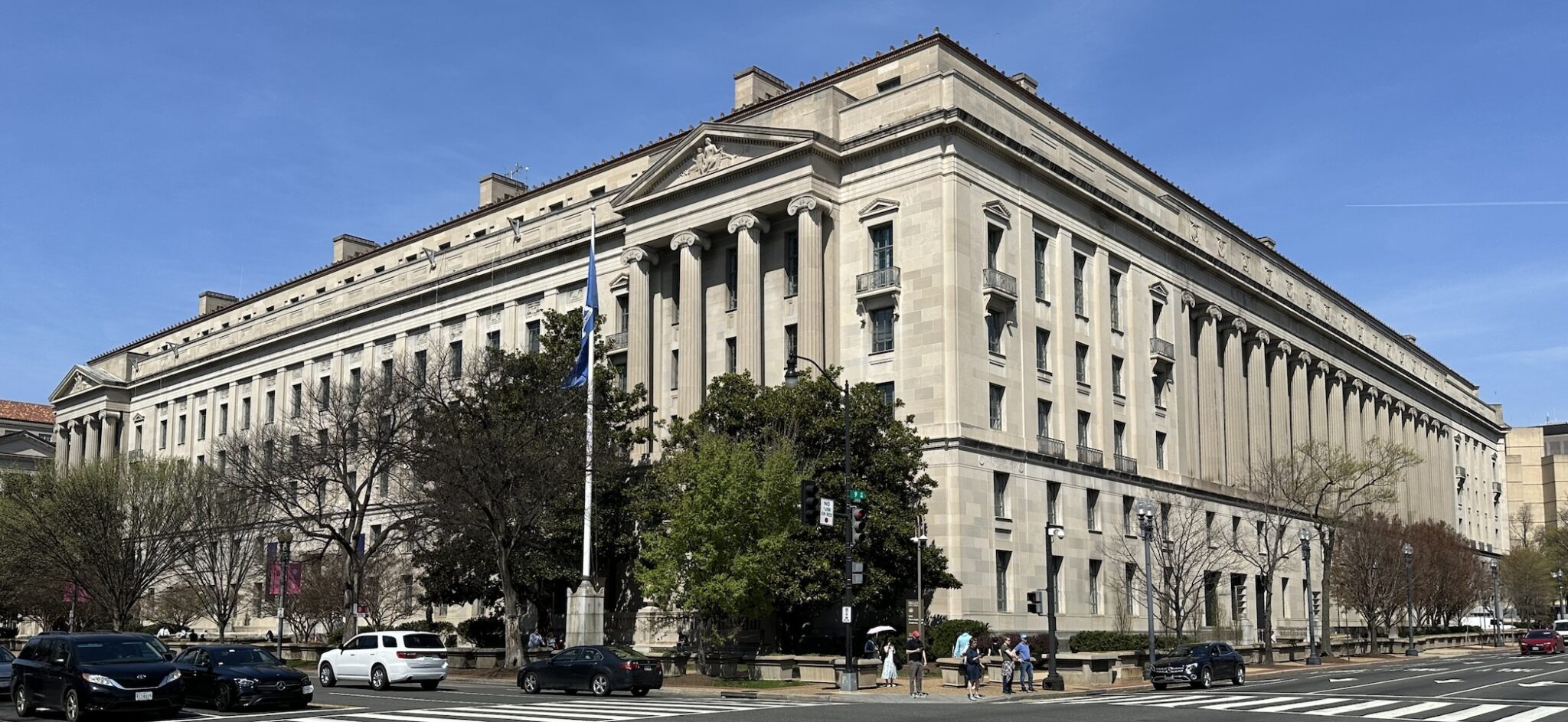
The unique setting of the indictment’s unsealing underscored the charges’ theatrical nature. Though returned nearly a month ago, they were unveiled on May 20, a date recognized by many Cuban exiles as “Independence Day.” The press conference took place at Miami’s “Freedom Tower,” a former reception center for Cubans fleeing the Revolution, before an audience of hundreds of dignitaries, Cuban exiles, and local politicians. Announced by Acting Attorney General Todd Blanche, the event resembled a political rally more than a somber legal proceeding: attendees greeted Blanche with a standing ovation as he entered and cheered him on again after the charges were announced. Framed as a defense of innocent US citizen lives, the charges—which carry a maximum punishment of death or life imprisonment—were justified by Blance with the declaration that “Nations and their leaders cannot be permitted to target Americans, kill them, and not face accountability.”
Yet Blanche’s account of the events of February 24, 1996, was deeply misleading. While he described the victims as “unarmed civilians flying humanitarian missions,” the reality is far more complicated. Brothers to the Rescue (BTTR) initially formed as a volunteer effort to alert the US Coast Guard to Cuban migrants in distress at sea. But over time, the group shifted toward openly provocative political actions, including repeatedly violating Cuban airspace, dropping anti-government propaganda, and deliberately antagonizing the Cuban government, then led by Fidel Castro with his brother Raúl serving as head of defense. Declassified Federal Aviation Administration (FAA) documents show that Cuban officials spent months urging the United States to stop the flights, even offering to free political prisoners in exchange. High-level Clinton officials pressed the FAA to ground the flights, and FAA officials met directly with BTTR president José Basulto to warn him to cease what they called his “provacations.” The night before the fatal flight, the White House official in charge of Cuba policy reportedly urged the FAA to block the planes from taking off, warning that Cuba might “attempt to shoot down” the aircraft, despite its previous “restraint.” The FAA failed to do so. Of the three planes that departed, two were shot down, killing four people; the third, with Basulto on board, escaped.
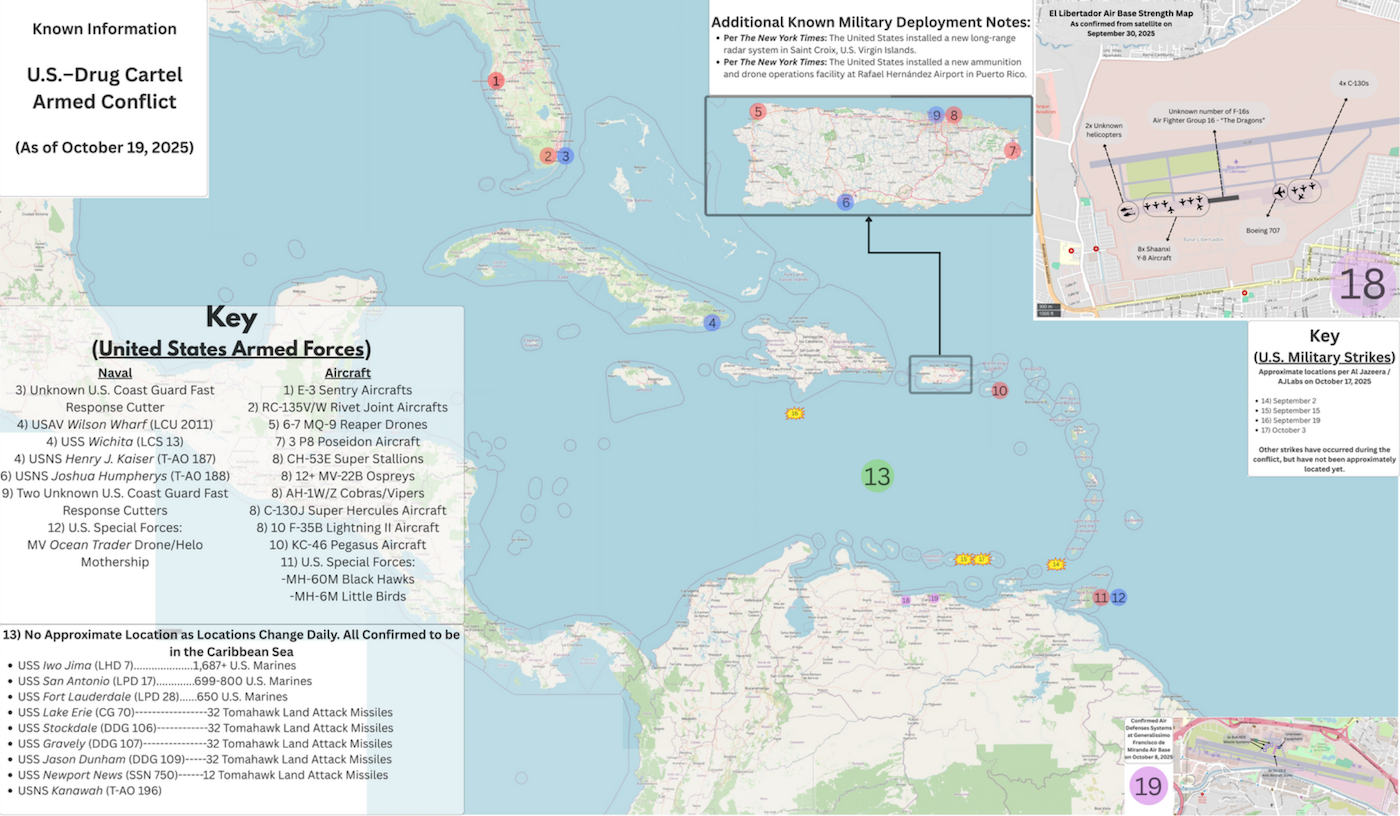
The indictment against Castro, coupled with the arrival of a US aircraft carrier to the southern Caribbean the same day, immediately raised concerns that the Trump administration may be preparing for military action against Cuba, which is already struggling under the weight of a crushing oil blockade. A slew of recent moves have pointed in that direction: CIA head John Ratcliffe’s visit to the island, military flights off Cuba’s coast, fear-mongering about alleged Chinese and Russian surveillance bases on the island, and media leaks about the threat posed by Iranian drones allegedly purchased by Cuba. The outlet that broke that story, Axios, has increasingly functioned as a vehicle for anonymous national security leaks aligned with U.S. military objectives, including in the run-up to the invasion of Venezuela. Cuba’s Foreign Minister denounced the allegations as part of a “fraudulent case” for intervention and criticized the role of media outlets that “promote slander and leak insinuations” originating from the US government.
In response to the indictment, Cuban President Miguel Diáz-Canel highlighted the hypocrisy of the Trump administration. Defending Castro, he accused the BTTR of ties to narco-trafficking and condemned what he called the real violation of international law: the United States’ ongoing “extrajudicial executions of civilian boats in the Caribbean and Pacific.” Days earlier, he insisted that Cuba “poses no threat” to the United States, while warning that any US attack on the island would trigger a “bloodbath with incalculable consequences.” (NACLA Update)
UN rights chief urges Washington to lift Cuba sanctions
UN High Commissioner for Human Rights Volker Türk warned June 8 that the expansion of US sanctions against Cuba is causing widespread harm to the population and endangering lives, calling for the sanctions to be lifted immediately.
Türk’s statement identified two overlapping measures: the national emergency declared by President Trump in January, which disrupted fuel shipments to Cuba, and sector-wide sanctions imposed in May with extraterritorial reach to traders, insurers, shipping companies, and financial institutions. Together, the measures have reduced Cuba’s fuel reserves so severely that daily blackouts now frequently exceed 20 hours.
“The fuel restrictions imposed since early 2026 and recent tightening of extraterritorial sanctions, taken together, are directly harming Cubans, especially the most vulnerable. Children are dying because doctors lack access to essential medical supplies and medicines,” Türk said. “This is unacceptable. These sanctions must be lifted immediately.”
The statement cited public health data showing infant mortality has doubled to 9.9 per 1,000 births and childhood cancer survival rates have dropped from 85% to 65% since the fuel restrictions began. Essential medicines are available at about 30% of normal supply levels, and food production has declined by a reported 60%.
Türk said the measures “are incompatible with basic principles of international human rights law,” and called on private sector actors to avoid compliance and blanket disengagement under the UN Guiding Principles on Business & Human Rights. Major shipping companies’ suspension of services had already affected more than 2,900 metric tons of humanitarian food cargo, the statement noted.
In May, Secretary of State Marco Rubio announced further designations under the sanctions framework, stating the aim is to “protect US national security and deprive Cuba’s communist regime and military of access to illicit assets.”
Türk also called on the Cuban government to respect the rights to freedom of expression, association and peaceful assembly, and release all those arbitrarily detained. (Jurist)