


Hong Kong Chief Executive Ka-chiu Lee applauded the "good turnout" in the city's Dec. 10 "patriots-only" District Council elections—despite a tunrout of only 27.5%, the lowest in any race since the return to Chinese rule in 1997. He also charged that protesters had attempted to "sabotage" the vote. These were the first district-level polls since Hong Kong's government overhauled the electoral system, introducing changes that effectively made it impossible for pro-democratic candidates to run. Several pro-democracy hopefuls failed to obtain the required nominations from government-appointed committees. Most of the city's leading democracy advocates are behind bars, in exile, or have dropped out of politics.
The number of publicly elected seats in the District Council race was also slashed from 90% to 20% of the 470-seat body. The remainder are voted on by government-appointed committees, with candidates selected by the chief executive. This means the Council now has fewer directly elected seats tan when it was established in the 1980s, under British rule. The scrapping of this system in favor of universal suffrage had been a key demand of the 2019 protests in Hong Kong.
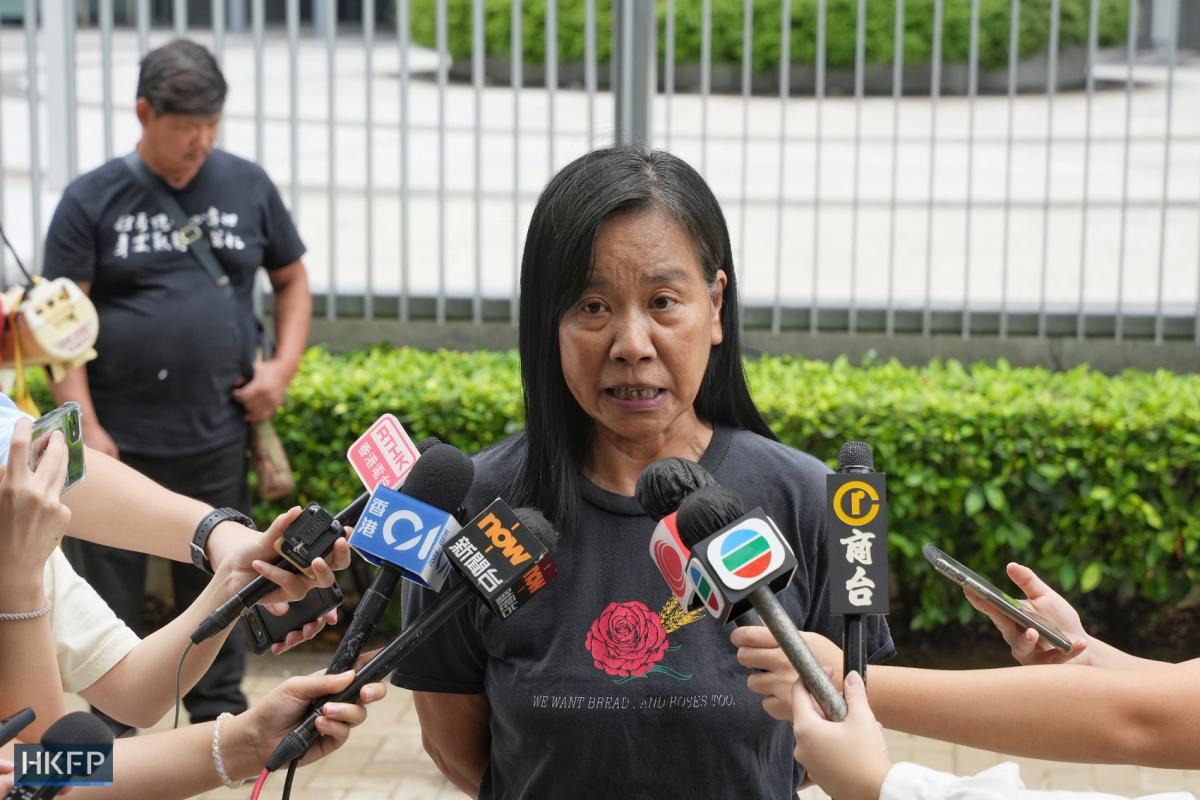
Three members of the League of Social Democrats were arrested as they were on their way to protest the vote on the morning of the election. The paty's chair Chan Po-ying and vice-chairs Dickson Chow and Yu Wai-pan were detained by police in Central. Two days earlier, veteran activist Koo Sze-yiu was apprehended by national security police after informing reporters of plans to protest the overhauled elections. (HKFP, AP)


Hong Kong activist pleads guilty to sedition charges
Hong Kong activist Chu Kai-poon pleaded guilty on Jan. to two counts of sedition at Hong Kong’s West Kowloon Magistrates' Courts. Chu was previously arrested on Nov. 27 by national security police at the Hong Kong International Airport for wearing a shirt with "seditious wording." He was then charged with two counts of sedition. Chu faces a maximum of two years in prison under Hong Kong's sedition law. Chu wore a shirt with the slogan "Liberate Hong Kong, revolution of our times" when he was arrested. (Jurist)
Hong Kong: prison for wearing t-shirt
Hong Kong's West Kowloon Magistrates' Courts sentenced activist Chu Kai-poon to three months in prison on Jan. 10. Chu pleaded guilty Jan. 2 to two counts of sedition after national security police arrested him in November for wearing a shirt with the slogan "Liberate Hong Kong, revolution of our time" at the Hong Kong International Airport. Hong Kong's High Court found in July 2021 that the phrase could incite secession. (Jurist)
Hong Kong activist sentenced for advocating election boycott
The Hong Kong Fanling Magistrates Courts Jan. 15 handed down a two-month suspended sentence for activist Man Wing Fung, who pleaded guilty to engaging in "illegal conduct to incite another person not to vote," contrary to section 27 of the Elections (Corrupt and Illegal Conduct) Ordinance. (Jurist)
Another HK activist sentenced for advocating election boycott
The Hong Kong Eastern Magistrates' Courts imposed a suspended two-month prison term Jan. 22 on a defendant who pleaded guilty to violating the Elections (Corrupt and Illegal Conduct) Ordinance. Yeung Sze-wing admitted she shared a post from Leo Lee, a former district councillor. In it, Lee stated that "refusing to vote is the greatest respect to democracy." Lee is no longer in Hong Kong and is currently under a warrant for the same offence. (Jurist)
HK top court upholds law banning election boycott advocacy
The Hong Kong Court of Final Appeal on June 17 unanimously upheld a law prohibiting public advocacy for an election boycott.
The court held that the law is a justified infringement on the right to free speech. Chief Justice Andrew Cheung found that the law serves a legitimate aim of protecting the legitimacy of elections by ensuring broad participation and protecting electoral integrity from misleading or demagogic campaigns. The court also found that the encroachment on free speech is limited to the election period and that judges have discretion to impose sentences according to the seriousness of the conduct.
The case, HKSAR v So Tsun Fung, concerns a defendant reposting on his social media a post that called on the public to cast blank ballots in the election to signal dissatisfaction with the government. All lower courts found him guilty and rejected his constitutional challenge to the law. (Jurist)