Palestine
Jit

Settler pogrom in West Bank village

Dozens of Israeli settlers, many of them masked, attacked the Palestinian village of Jit, outside the West Bank town of Nablus, hurling stones and Molotov cocktails. The group of over 100 assailants put at least four houses and six vehicles to the torch, and apparently killed one resident. The Palestinian Authority health ministry said Rashid Sedda, 22, was killed by gunfire from the settlers and another resident was seriously wounded in what it called an act of “organized state terrorism.” (Photo: Wikipedia)

Planet Watch
Nairobi

World war or world revolution?

In Episode 239 of the CounterVortex podcast, Bill Weinberg provides an overview of the protest waves and uprisings going on across the planet—in Kenya, Uganda, Nigeria, Bangladesh, India, China, Serbia, Venezuela, and in Israel. This as worldwide protests in solidarity with the Palestinians of Gaza continue. Amid ongoing protests against Netanyahu in Israel, there have also been protests against Hamas in Gaza. Despite internal dangers and contradictions in all these upsurges, there is a sense that we could be approaching a revolutionary moment such as that seen in 2011—the year of the Arab Spring and Occupy Wall Street. And with the planet on an accelerating trajectory toward world war, the linking of these upsurges through conscious solidarity and the infusion of anti-war content to their demands is urgently mandated. Listen on SoundCloud or via Patreon. (Photo via Twitter)

East Asia
Nagasaki

Gaza at issue in Nagasaki commemoration

The US ambassador to Japan did not attend this year’s official commemoration of the atomic bombing of Nagasaki in protest of the city’s failure to invite Israel. Ambassador Rahm Emanuel said the event had been “politicized” by Nagasaki’s decision to exclude the Jewish state. Five other G7 countries and the EU likewise boycotted the ceremony. The municipal government in Hiroshima refused to pay heed to public calls to exclude Israel over the Gaza bombardment, and invited Israeli officials to its event as usual. Russia and Belarus were exuded from both commemorations for a third consecutive year. (Photo: Pop Japan)

Greater Middle East
Golan Heights

Podcast: flashpoint Golan Heights

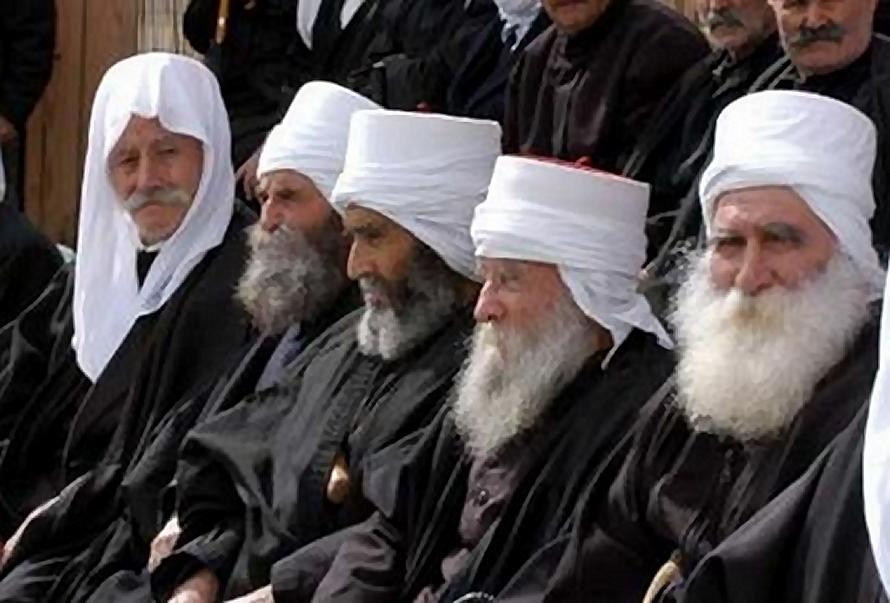
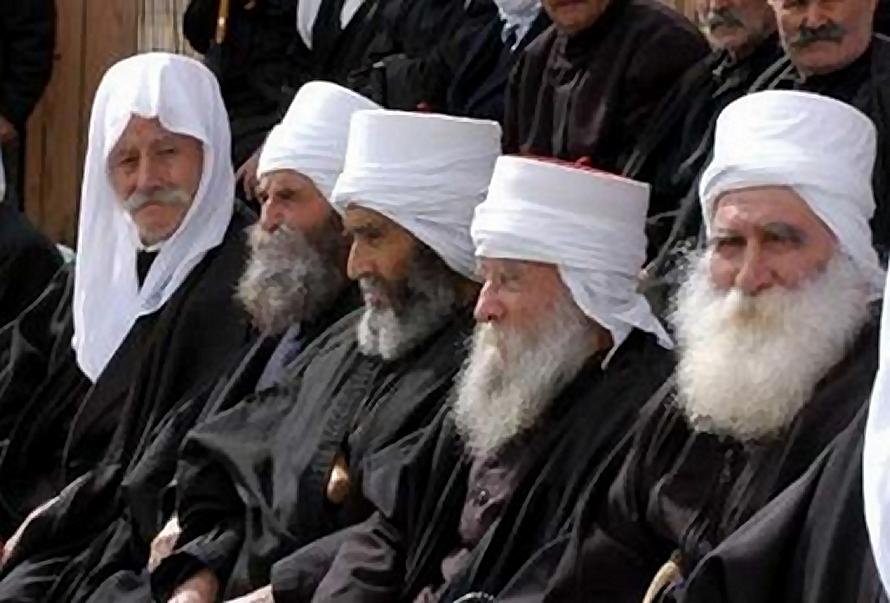
In Episode 237 of the CounterVortex podcast, Bill Weinberg provides some under-reported context for the international crisis that has quickly spiraled since last week’s deadly rocket strike on a Golan Heights village, and now threatens to escalate to the unthinkable. Under international law, the Golan is Syrian territory not Israeli. And the kids who were killed in the rocket strike were Druze not Jews. Most of the Druze residents of the Golan have refused Israeli citizenship and remain loyal to Syria. Only one country on Earth recognizes Israeli sovereignty over the Golan—the USA, thanks to Donald Trump. Israel has a complicated history with the Druze, going back well before the occupation of the Golan in 1967. But the origins of the current trajectory toward regional war in a massacre of Druze youth points again to how peoples on the ground are exploited as pawns and propaganda in the cynical Great Power game. Listen on SoundCloud or via Patreon. (Photo: Freedom’s Falcon via Wikimedia Commons)

Greater Middle East
Iran

Regional war looms closer after Golan rocket strike

Israeli warplanes hit several targets in southern Lebanon, as diplomats worked frantically to prevent a regional war after a rocket strike that killed 12 youths in the Golan Heights. Israel is blaming Hezbollah for the rocket, which struck a football field in the Druze village of Majdal Shams. Hezbollah has denied responsibility, asserting that a projectile from Israel’s own Iron Dome missile defense system hit the village amid strikes on military targets elsewhere in the area by the Iran-backed Lebanese armed organization. Israel and Hezbollah have been trading strikes over the Lebanese border since Oct. 8, a day after the start of the war in Gaza. Israel has killed 527 people in Lebanon since then, according to an AFP tally, including at least 104 civilians. Israel says 23 of its civilians and 17 soldiers have been killed by Hezbollah rocket-fire over this period. (Image: Pixabay)

Palestine
Beijing Declaration

Fatah and Hamas sign unity declaration in Beijing

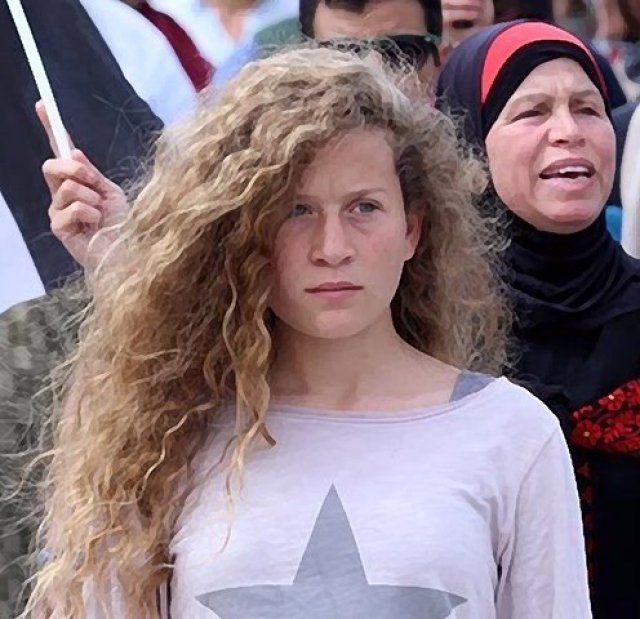
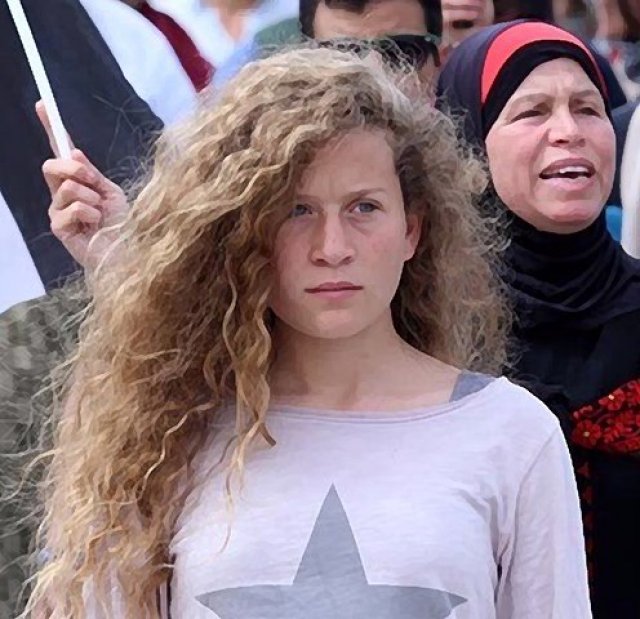
Meeting in the Chinese capital, senior leaders from Fatah and Hamas as well as 12 other Palestinian factions signed a joint statement, the “Beijing Declaration to End the Division & Strengthen Palestinian National Unity,” calling for establishment of an “interim government of national reconciliation” with a focus on post-conflict reconstruction of Gaza. Chinese Foreign Minister Wang Yi described the event as an “historic moment for the cause of Palestine’s liberation.” Asserting that “‘Palestinians governing Palestine’ is the basic principle for the post-conflict governance of Gaza,” Wang called for an international peace conference to advance a two-state solution. Israel quickly rejected the agreement, with Foreign Minister Israel Katz saying that Hamas’ rule in Gaza “will be crushed.” (Photo: PRC MFA)

Watching the Shadows
Bialystok

From Baghdad to Bialystok —to Pico-Robertson

In Episode 232 of the CounterVortex podcast, Bill Weinberg examines the politics of the ugly dust-up between pro-Palestinian protesters and local Jewish residents in the Los Angeles neighborhood of Pico-Robertson—and notes the anniversary of June 1941 anti-Jewish pogroms in Bialystok, Poland, and Baghdad, Iraq. Propagandistic and distorted portrayals of the LA protest as mere arbitrary anti-Semitism ignore the fact that the targeted synagogue was hosting a real estate event promoting sale of lands to create “Anglo neighborhoods” in Israel, and probably in the occupied West Bank (which would be a clear violation of international law). On the other hand, insensitivity to (or ignorance of) the historical context(and contemporary context) that makes an angry protest outside a synagogue an inevitably problematic “optic” only abets the propaganda. Listen on SoundCloud or via Patreon. (Photo: The Great Synagogue of Bialystok before it was destroyed by the Nazis in 1941. Via Jewish Historical Institute)

Watching the Shadows
anti-semitism

Anti-Semitism versus anti-Zionism: beyond parsing

The Zionist propaganda machine continues to weaponize the accusation of anti-Semitism to delegitimize any effort to resist Israel’s genocidal assault on Gaza. This increases rather than decreases the responsibility of activists to distinguish—and oppose—actual anti-Semitism. Yet in recent weeks, sectors of the activist response to the Gaza genocide in the United States have utterly surrendered to the most abject, undisguised, unambiguous anti-Semitism—playing right into the hands of the Zionist calumnies. Bill Weinberg discusses this difficult reality in Episode 231 of the CounterVortex podcast. Listen on SoundCloud or via Patreon. (Image via frgdr Blog. Hebrew lettering in background spells names of places in Europe where Jews were exterminated.)

Greater Middle East
Sahrawis

Podcast: from Palestine to Western Sahara

Benjamin Netanyahu’s gaffe on French TV, displaying a map of the “Arab World” that showed the occupied (and illegally annexed) Western Sahara as a separate entity from Morocco, sparked a quick and obsequious apology from the Israeli Foreign Ministry. But the snafu sheds light on the mutual hypocrisy at work here. There is an obvious hypocrisy to Moroccan protests that demand self-determination for the Palestinians but not the Sahrawi, the indigenous Arab inhabitants of Western Sahara. The hypocrisy of Israel is also obvious: Israeli commentators and hasbara agents are the first to play the “whataboutery” game—relativizing the plight of the Palestinians by pointing to that of Kurds, Berbers, Nubians, Massalit and other stateless peoples oppressed under Arab regimes. But, as we now see, they are just as quick to completely betray them when those regimes recognize Israel and betray the Palestinians. Yet another example of how a global divide-and-rule racket is the essence of the state system. Bill Weinberg breaks it down in Episode 229 of the CounterVortex podcast. Listen on SoundCloud or via Patreon. (Photo: Kirby Gookin/Western Sahara Resource Center)

Greater Middle East
sahara

Netanyahu’s new map flap: multiple ironies

Israel was forced to apologize to Morocco after Prime Minister Benjamin Netanyahu was seen in a video displaying a map of the Middle East and North Africa—that failed to show the occupied (and illegally annexed) territory of Western Sahara as within the kingdom’s borders. Netanyahu brandished the map in an interview with a French TV channel, showing what he called “the Arab world” in green, a swath of near-contiguous territory from Iraq to Mauritania—contrasting small, isolated Israel, “the one and only Jewish state.” The goof was especially dire because in 2020 Israel joined the US as the only two countries on Earth to recognize Moroccan annexation of Western Sahara, in exchange for Moroccan recognition of the Jewish state under the Trump administration-brokered Abraham Accords. This was a cozy mutual betrayal of both the Palestinians and Sahrawi Arabs, the indigenous inhabitants of occupied Western Sahara. (Image: Twitter via Middle East Eye)

Palestine
Philadelphi

Israel seizes ‘buffer zone’ on Gaza-Egypt border

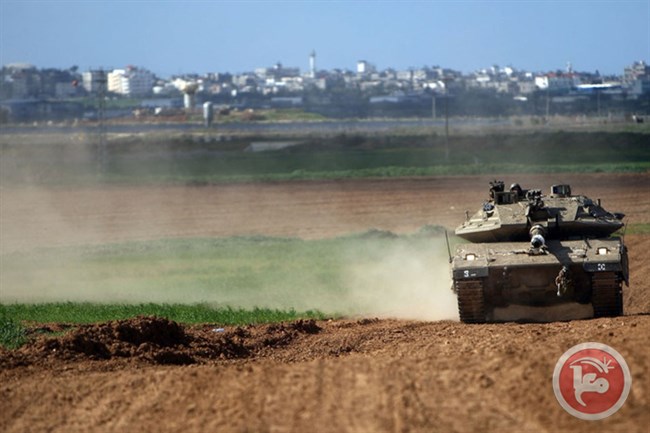
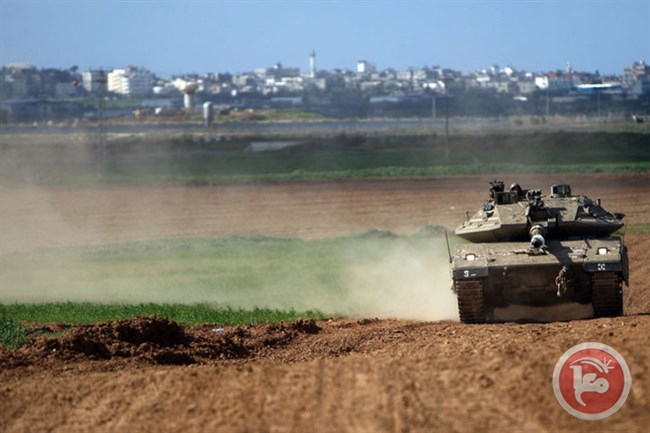
The Israel Defense Forces took “operational control” of the Philadelphi Corridor, the strip of territory running along the border between Egypt and Gaza, claiming it was being used by Hamas to traffic weapons into the Strip. In the operation, the IDF’s 162nd Division said it uncovered dozens of rocket launchers in a network of tunnels under the Corridor. The Corridor, known to the Egyptians as Salah al-Din, had been established as a demilitarized zone under the 1978 Camp David Accords, and its re-occupation by Israel as led to fears that Egypt will “tear up the peace treaty” between the two countries. (Photo: IDF via JNS)

Palestine
Standing Together

Israeli activists mobilize to protect aid trucks

For months, groups on the Israeli far right have traveled to the crossings where aid is moved from the West Bank to the Gaza border in an effort to disrupt the shipments—even attacking drivers and attempting to destroy the supplies. But now, other groups of Israelis are boarding buses from Jerusalem and Tel Aviv and heading to those crossings to try and help the trucks complete their passage into Gaza to deliver the aid. This has sparked stand-offs near the border between right-wing groups such as Tzav 9 and pro-coexistence groups such as Standing Together. Activists from Standing Together have helped clear roads and reload boxes of humanitarian aid that had been thrown off trucks by Tzav 9 followers. (Photo: Standing Together via Times of Israel)