

Central Asia
East Turkistan

Podcast: the politics of separatism in China
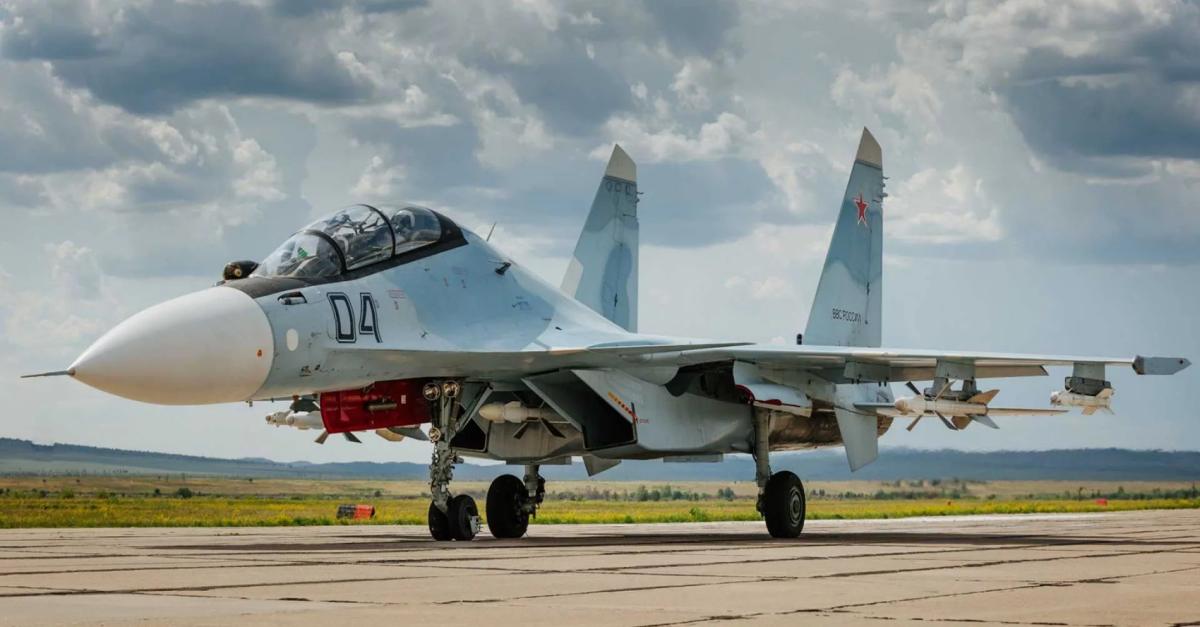
warplaneFollowing his visit to Moscow for the Victory Day celebrations earlier this month, Burmese junta leader Min Aung Hlaing thanked Russia for the fighter jets and helicopters it has provided his military government. The junta, which came to power in the February 2021 coup, is currently facing an insurgency by a number of armed ethnic and opposition groups across Burma. Rights groups accuse the Tatmadaw, as the Burmese military is known, of routinely targeting civilian populations and infrastructure in its aerial attacks. While in Moscow, Min Aung Hlaing also met for the first time with Chinese leader Xi Jinping, another key patron of his regime (Photo: Russia MoD via The Irrawaddy)
Central Asia
East Turkistan

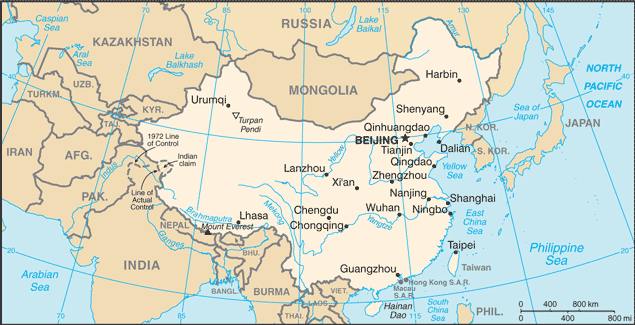
China’s rulers fear balkanization —with reason?

warplaneFollowing his visit to Moscow for the Victory Day celebrations earlier this month, Burmese junta leader Min Aung Hlaing thanked Russia for the fighter jets and helicopters it has provided his military government. The junta, which came to power in the February 2021 coup, is currently facing an insurgency by a number of armed ethnic and opposition groups across Burma. Rights groups accuse the Tatmadaw, as the Burmese military is known, of routinely targeting civilian populations and infrastructure in its aerial attacks. While in Moscow, Min Aung Hlaing also met for the first time with Chinese leader Xi Jinping, another key patron of his regime (Photo: Russia MoD via The Irrawaddy)
Central Asia
Uighurs

Uighurs as pawns in the Great Game

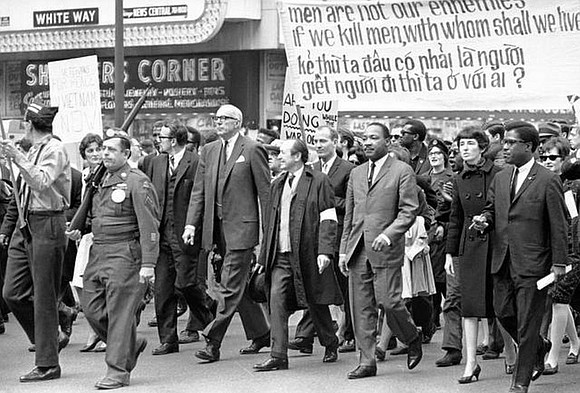
MLKIn Episode 158 of the CounterVortex podcast, Bill Weinberg notes that the Russian Socialist Movement has issued a call for solidarity actions with anti‑war activists in Russia on Jan. 19. This is the date when left activists Stanislav Markelov and Anastasia Baburova were gunned down by far-right militants in Moscow in 2009. Today, the Vladimir Putin regime is persecuting activists such as Alexandra Skochilenko—who faces a long prison term for producing public art on an anti-war theme. Instead of responding to this call for solidarity, the ANSWER Coalition and other exponents of the "tankie" pseudo-left have called a rally against aid to Ukraine, and implicitly in support of Putin and his war aims, for Jan. 14 in locations such as New York's Times Square—perversely, in the name of Martin Luther King. The Ukraine Socialist Solidarity Campaign repudiates this pseudo-anti-war rally, urging: "No exploitation of Dr. MLK Jr. to support war criminal Putin!" Debunking the Russian propaganda that portrays Putin's aggression as a defensive move against NATO encroachment, Weinberg demonstrates that the principles propounded by Dr. King in his courageous dissent from LBJ's criminal war in Vietnam now mandate that we direct our protests at Vladimir Putin. Listen on SoundCloud or via Patreon. (Photo: MLK at anti-war march in Chicago, March 25, 1967, under banner with quote from Vietnamese pacifist Thich Nhat Hanh. Via Portland Observer)

Planet Watch

Will world war be October surprise?

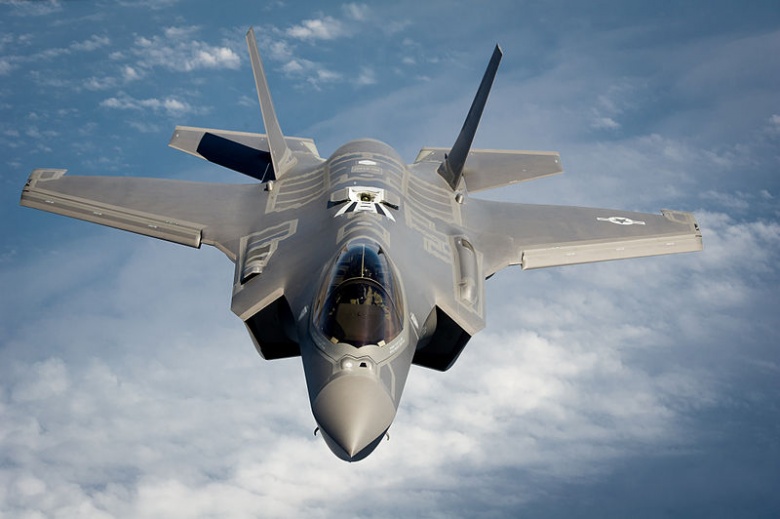
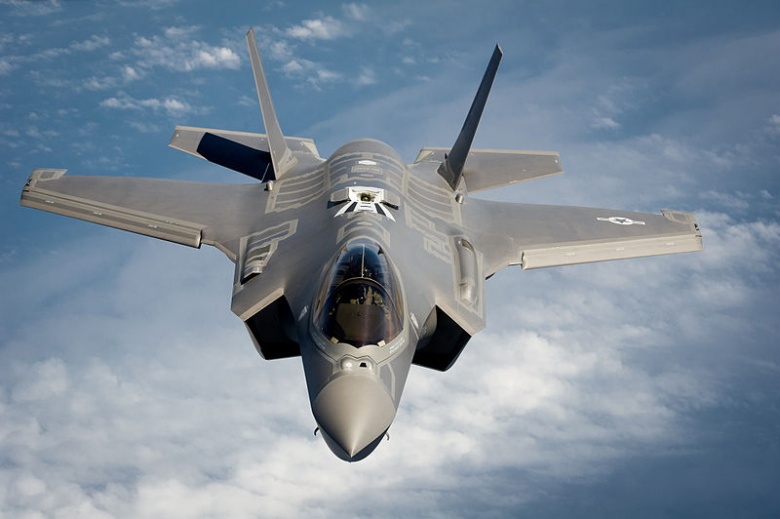
warplaneWill an "October surprise" in the prelude to the mid-term elections in the US be the outbreak of world war—that is, direct superpower conflict? Things are escalating fast on the frontlines with both of the United States' major imperial rivals. The US Navy's Pacific Fleet is preparing to carry out a "global show of force" as a warning to China, after a near-skirmish between a US warship and a Chinese destroyer in the disputed South China Sea. Meanwhile, NATO is planning to conduct its largest military exercises since the end of the Cold War, Trident Juncture 2018, along Norway's border wth Russia. This comes as Washington and Moscow are odds over missile deployments, accusing each other of violating the 1987 Intermediate-range Nuclear Forces Treaty. (Image: Lockheed Martin)

South Asia

China expands Indian Ocean military footprint

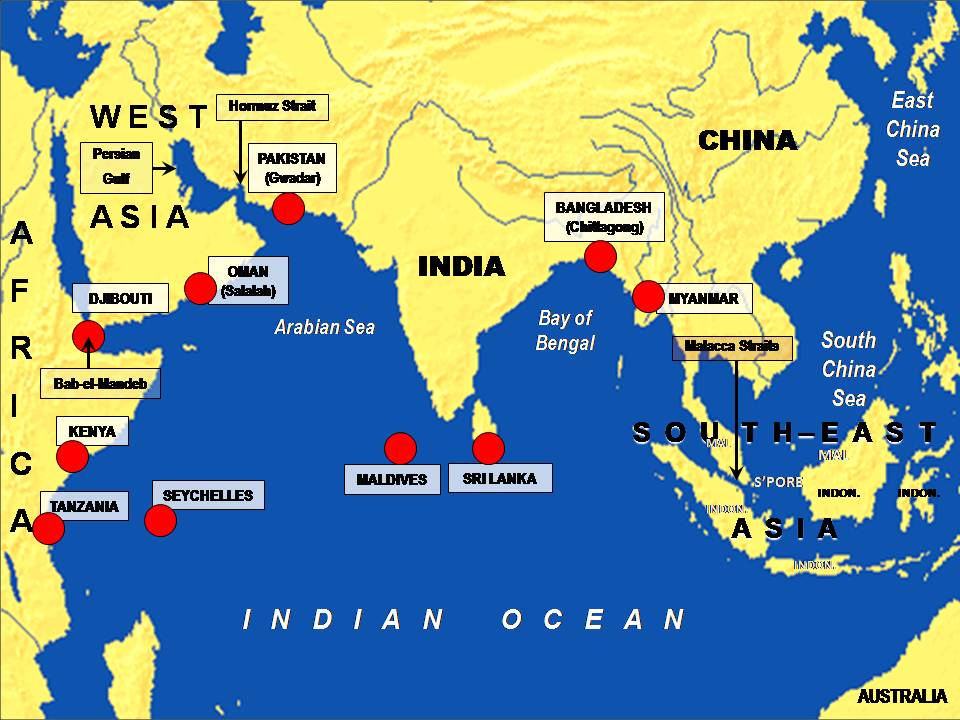
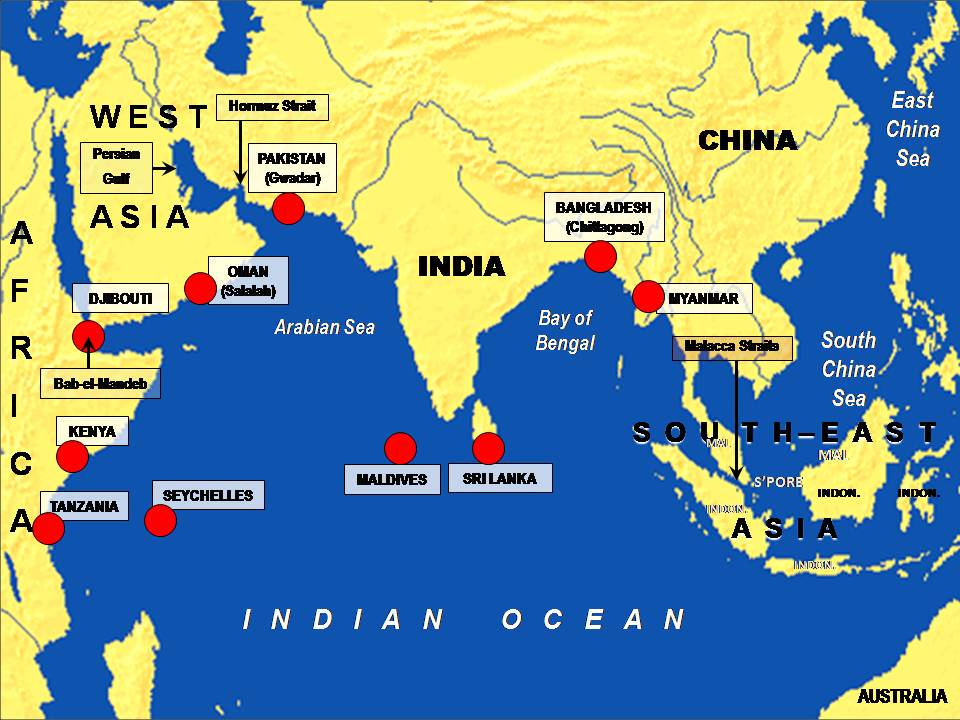
string of pearlsIn addition to stationing troops on the disputed islands it claims in the South China Sea, Beijing is rapidly expanding its network of commercial ports across the Indian Ocean. This comes as China is sending warships into the Ocean with growing frequency, leading to fears that the commercial ports could presage military bases, The latest addition is the port of Hambantota in Sri Lanka, acquired in a debt swap deal—the Colombo government was forgiven $1 billion in debt to Beijing in exchange for the Hambantota facility. China has also gained access to facilities in Burma, Bangladesh, Pakistan, the Maldives, Seychelles and Oman as part of the maritime component of its Silk Road trade and infrastructure initiative. While the Silk Road is an ostensibly civilian project, China has also established its first foreign military base at Djibouti, leading Western wonks to warn that Beijing is seeking a "string of pearls" network of bases across the Indian Ocean.  (Map via CIMSEC)

East Asia

Brink looms closer in East Asia maritime theaters

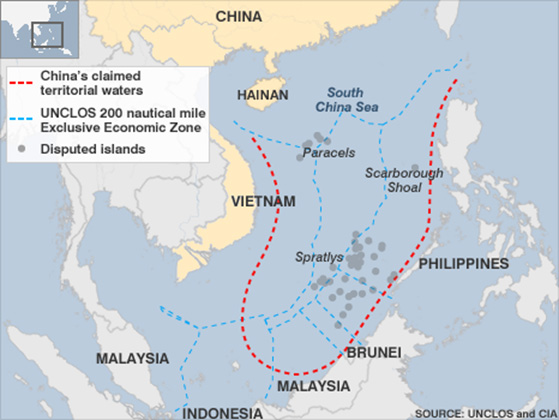
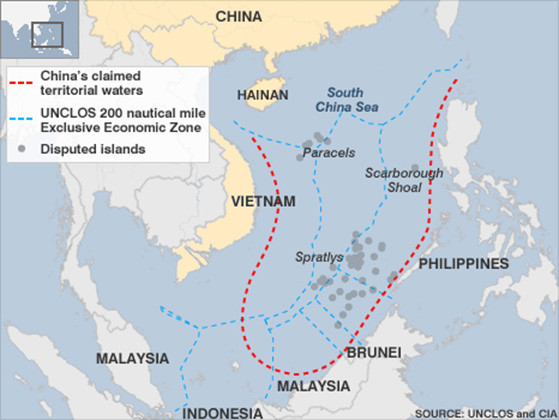
South China SeaJapan has activated its first amphibious marine unit since World War II, which conducted practice drills to defend the disputed Senkaku Islands from an anticipated Chinese military seizure. Meanwhile, the USS Theodore Roosevelt aircraft carrier, with a group of Philippine generals onboard, entered disputed waters in the South China Sea, where China is building military defenses on islands claimed by the Philippines and Vietnam. Another carrier, the USS Carl Vinson, patrolled the contested waters last month, taking part in anti-submarine drills with Japanese forces and visiting Vietnam with its 5,000-strong crew—the largest such US military presence there since the Vietnam War ended in 1975. (Map via IDSA)

The Andes

Peru: mass protest against political class

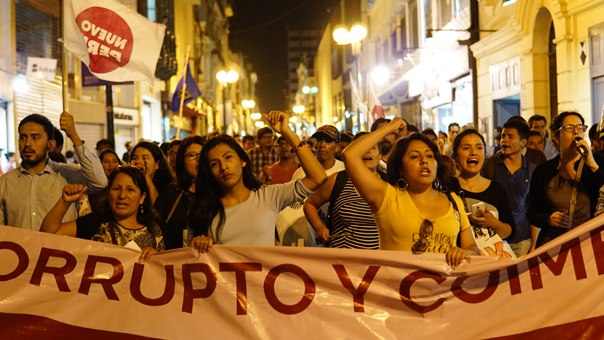
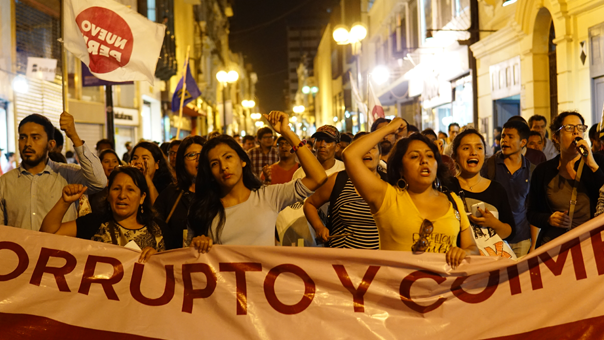
Nuevo PeruThousands of protesters took to the streets of Lima after Peru's scandal-embattled president Pedro Pablo Kuczynski announced his resignation. Clashes were reported in the city's downtown Plaza San Martín, with tear-gas used and several injured. The resignation came after months of political machinations in Peru's congress had put off Kuczynski's ouster, and the ire of the demonstrators was directed not just at the disgraced "PPK," but Peru's entire political class. The left opposition and trade unions are calling for a constituent assembly to "refound the country and devolve power to the people." The popular slogan heard again and again at the marches is  "¡Que se vayan todos!"  (Throw them all out!) (Photo: Nuevo Perú)

East Asia

Podcast: Xi Jinping’s totalitarian capitalism

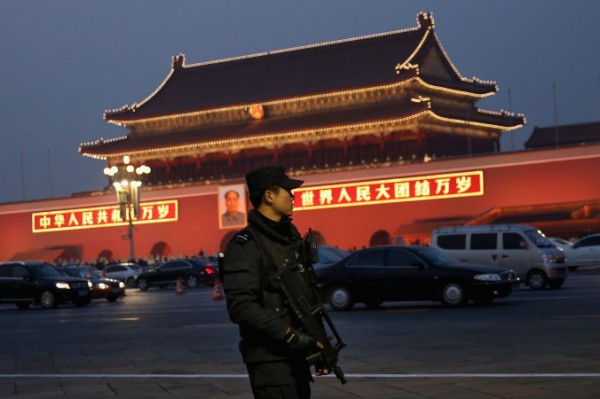
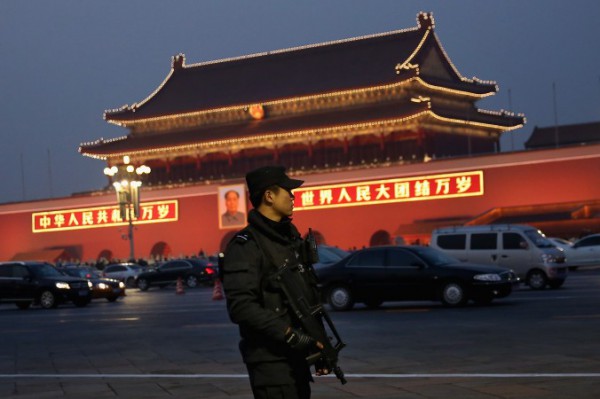
TiananmenIn Episode Five of the CounterVortex podcast, Bill Weinberg makes the case that despite the official ideology of "socialism with Chinese characteristics" and the revival of rhetoric and imagery from the Mao era, media commentators are off base in their comparison of Xi Jinping and Mao Zedong. The new personalistic dictatorship of Xi is appropriating the outward forms of Maoism, but whereas the Great Helmsman used totalitarian methods to advance socialism (at least in terms of his own intentions) Xi is doing so to further entrench China's savage capitalist system. As a part of the same constitutional changes that have installed Xi as the new "paramount leader," the Chinese Communist Party is imposing further market liberalization and "supply-side" economic reform. The New Cold War between the US and China is simply a rivalry between capitalist powers. But in the global divide-and-conquer game, the leaders of oppressed nationalities within China such as the Tibetans and Uighurs look to the US and the West as allies, while left-populist governments in Latin America such as Venezuela and Bolivia similarly look to China. How can we respond to these developments in a way that builds solidarity between peasants, workers and indigenous peoples across the geopolitical divide? Listen on SoundCloud, and support our podcast via Patreon
(Photo: chinaworker.info)

East Asia

Xi proves: capitalism, totalitarianism no contradiction

TiananmenTo absolutely nobody's surprise, China's National People's Congress overwhelmingly approved numerous amendments to the country's Constitution, eliminating presidential term limits and effectively enshrining Xi Jinping as the new "paramount leader." But the inevitable invocation of Mao in this context is misleading. As part of the same restructuring now being rubber-stamped by the NPC come further market liberalization and "supply-side" economic reforms. This is economic "neoliberalism" under a system that is completely illiberal where political freedoms and pluralism are concerned. (Photo: chinaworker.info)

Planet Watch
doomsday

Doomsday Clock: two minutes of midnight

doomsdayThe Bulletin of the Atomic Scientists advanced the minute hand of its Doomsday Clock to two minutes of midnight from its previous two-and-a-half minutes. "In 2017, world leaders failed to respond effectively to the looming threats of nuclear war and climate change, making the world security situation more dangerous than it was a year ago—and as dangerous as it has been since World War II," the Bulletin said. Finding that the "greatest risks last year arose in the nuclear realm," the statement of course cited the crisis over North Korea's atomic weapons program, but also ongoing military exercises along the borders of NATO, upgrading of nuclear arsenals by the US and Russia, tensions over the South China Sea, a nuclear arms race between India and Pakistan, and uncertainty about continued US support for the Iran nuclear deal. These threats are worsened by "a breakdown in the international order that has been dangerously exacerbated by recent US actions." (Image: misucell.com)

East Asia

China’s rise threatened by ‘de-globalization’?

ChinaWilliam C. Kirby, author of Can China Lead? Reaching the Limits of Power and Growth, argued in a presentation at New York's China Institute that China's rise is dependent on continued global integration, and that this is now threatened by the authoritarianism of Donald Trump and Xi Jinping alike.

The Andes

Venezuela drops petro-dollar: how meaningful?

dollarVenezuela, under growing pressure from US sanctions, has told oil traders that it is dropping petro-dollars for petro-euros and petro-yuans. Despite the instinct to cheer the decline of US world domination, will this make any real difference—either to Venezuela, still dependent on oil exports in a world of depressed prices, or to Planet Earth, facing biosphere collapse as a result of burning hydrocarbons?