

Greater Middle East
PKK

PKK resolves to dissolve at 12th Congress

The Kurdistan Workers’ Party (PKK) held its 12th Congress in the Medya Defense Zones of northern Iraq, where delegates voted to dissolve the group’s organizational structure and end the armed struggle against the Turkish state that it has waged since 1984. The congress was convened in response to the “Call for Peace and a Democratic Society” issued in February by PKK leader Abdullah Öcalan, who has been imprisoned in Turkey since 1999. The statement called for his followers to lay down arms and pursue a civil struggle for Kurdish rights. However, Turkey continued to carry our air-strikes on the Medya Defense Zones right up to the very eve of the congress, and even in the days after it concluded. Turkey has also continued its campaign of air-strikes on the Rojava region of northern Syria, where PKK-aligned Kurdish forces have established an autonomous zone. (Image of PKK flag: Wikipedia)

Greater Middle East
Lebanon

Lebanon ceasefire —real or fiction?

The ceasefire between Israel and the Lebanese political and militant group Hezbollah is on shaky ground following an Israeli air-strike on Beirut’s southern suburbs. It was the first strike on Lebanon’s capital since a pause in hostilities came into effect in November last year. Israel—which has bombed southern Lebanon almost daily despite the ceasefire—said it was retaliating for a rocket attack into northern Israel. Hezbollah chief Naim Qassem warned that if Israel continues to carry out strikes in Lebanon, and the Lebanese government does not act to stop it, then his organization will take matters into its own hands. (Image via Flickr)

Greater Middle East
warplanes

Trump launches air-strikes on Yemen, Iraq

President Donald Trump ordered a series of air-strikes on Yemen’s capital, Sanaa, promising to use “overwhelming lethal force” until the Houthi rebels cease their attacks on shipping along a vital maritime corridor. Houthi authorities said 13 civilians were killed in the strikes. Yemen’s Houthi rebels, who control the capital, have said they will resume attacks on ships in the Red Sea in response to Israel’s renewed blockade on aid to Gaza. Following the January Hamas-Israel ceasefire, the Houthis had paused their campaign of attacks on shipping, which they depict as a gesture of solidarity with the Palestinians (although many targets are not linked to Israel). Days before the strikes on Sanaa, a US air-raid in Iraq’s Anbar province reportedly killed Abdallah Makki Muslih al-Rifai, the second-highest ranking ISIS leader. (Photo: CENTCOM)

Greater Middle East
ARSA

Rojava and the Rohingya: fearful symmetry

Three weeks after the fall of the Bashar Assad dictatorship, the only fighting in Syria remains between Arab and Kurdish militias—holding grim potential for destabilization of the democratic revolution. Kurds had been persecuted and even denied citizenship under the Assad regime, but the invasion of their autonomous territory of Rojava by the Turkish-backed rebels of the Syrian National Army (SNA) drove them into a paradoxical tactical alliance with the dictatorship. The tragic situation in Burma’s Rakhine state mirrors this disturbing reality. The Muslim Rohingya people had been persecuted, denied citizenship and finally targeted in a campaign of genocide by the military, but are now facing attacks by the Buddhist-supremacist rebels of the Arakan Army—driving some Rohingya into a paradoxical tactical alliance with the military junta. In Episode 258 of the CounterVortex podcast, Bill Weinberg offers this analogy in the hope that the peoples of Burma can unite across religious lines to defeat the junta, and that Syrians can find a way toward co-existence in the new revolutionary order and avoid ethnic war. Listen on SoundCloud or via Patreon. (Photo of Arakan Rohingya Salvation Army-ARSA rebels: Burma News International)

Greater Middle East
warplanes

US air-strikes on Yemen, Syria

Pentagon Central Command forces carried out multiple air-strikes against Houthi weapons facilities in Yemen. Both Air Force and Navy aircraft, including F-35C fighter jets, were involved in the strikes, which were in response to Houthi attacks on commercial ships and US-led coalition military vessels in the Red Sea, Bab al-Mandab Strait and Gulf of Aden. CentCom also conducted strikes against targets at two locations “associated with Iranian groups in Syria.” The strikes were in response to drone and artillery attacks on US personnel that took place at Mission Support Site “Green Village” in northeast Syria. (DOD News)

Greater Middle East
Iran protests

Podcast: neither Jewish State nor Islamic Republic

Israel’s long-awaited strikes on Iran targeted military and industrial installations in Tehran, Khuzestan and Ilam, with air-strikes also reported in the Syrian cities of Damascus and Homs. It is now Iran’s turn to retaliate in the escalatory tit-for-tat game, as the brink of regional and even world war looms ever closer. In Episode 249 of the CounterVortex podcast, Bill Weinberg advocates a neither/nor position that rejects the militaristic and reactionary regimes of both Zionism and political Islam, and looks to a secular order in the Middle East. Listen on SoundCloud or via Patreon. (Image: @iranprotest2019)

Greater Middle East
Iran

Turkey strikes Syria, Iraq after Ankara attack

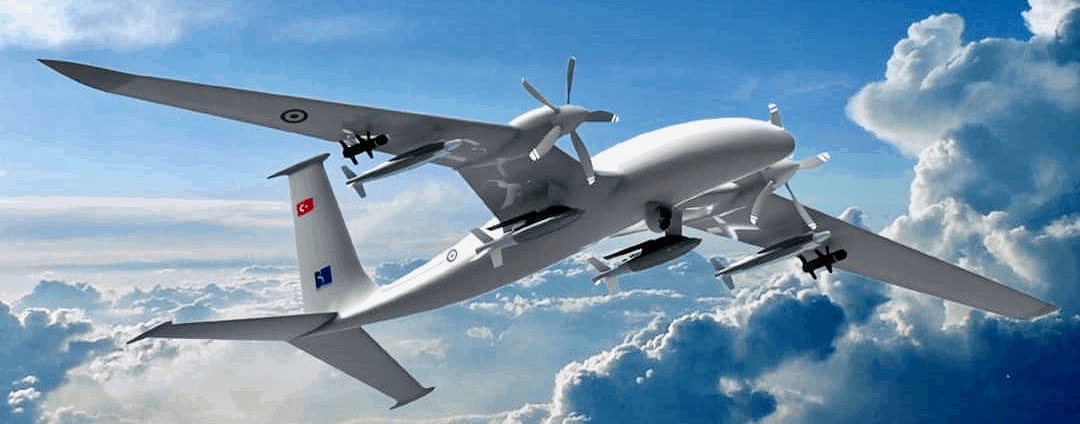
Turkey launched air-strikes on supposed Kurdistan Workers’ Party (PKK) targets in Syria’s Rojava autonomous enclave and Iraq’s Kurdistan region in retaliation for an attack on the headquarters of a defense contractor in Ankara. Five were killed and two attackers reported “neutralized” in the explosion and armed assault at the Turkish Aerospace Industries (TUSAS) facility in Ankara’s Kahramankazan district. No group has claimed responsibility for the attack, but Turkish authorities quickly blamed the PKK. Strikes were reported on the Rojava towns of Qamishli, Derik, Kobane, Tal Rifaat, and Manbij. Rojava’s autonomous authorities said that at least four civilians were killed, including a five-year-old child, and 15 people injured. (Image: Pixabay)

Planet Watch
anthropocene

Ranting against the apocalypse II

With Lebanon under bombardment and the world awaiting Israel’s response to the Iranian missile attacks on its territory, fears mount that Iran’s nuclear facilities could be targeted—which, in addition to being an environmental disaster in its own right, could represent the crossing of a moral threshold toward the use of nuclear weapons. So two theaters of the world conflict—the Middle East and Ukraine—now constitute a looming nuclear threat. Meanwhile, the other horsemen of the apocalypse continue their relentless advance—climate change, cyber-based disinformation and the ultimate replacement of humanity by artificial intelligence. In Episode 246 of the CounterVortex podcast, Bill Weinberg looks for glimmers of hope in emerging signs of human resistance—such as the East Coast dockworkers’ strike, which is demanding a ban on all automation at the ports. Listen on SoundCloud or via Patreon. (Photo: CounterVortex)

Greater Middle East
Yemen

Yemen: Houthis obstruct aid amid deepening disaster

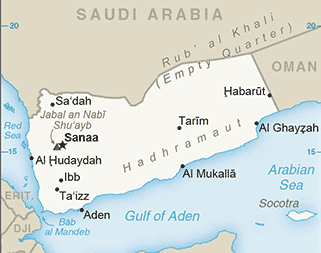
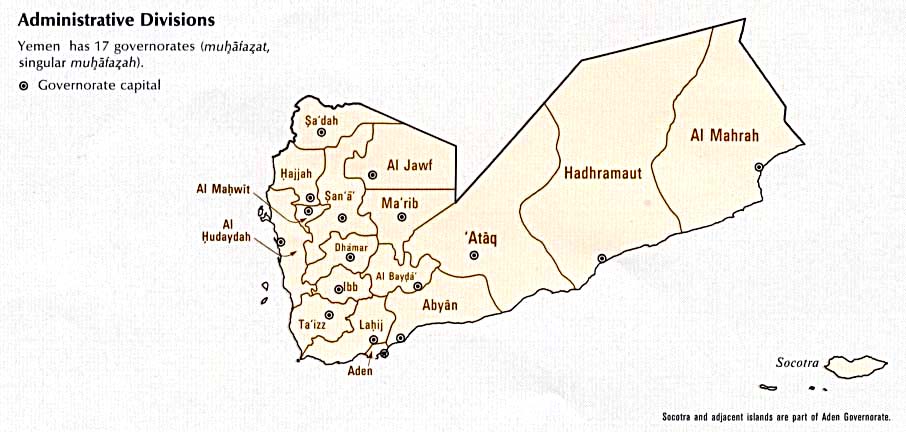
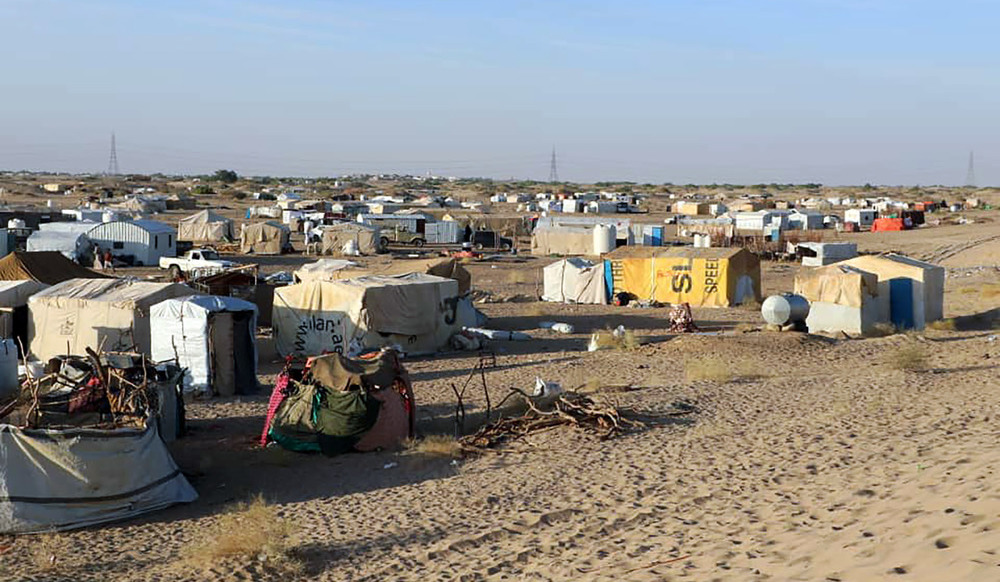
Flooding in Yemen’s coastal Hodeidah province has killed at least 30 people, while floods in the inland district of Taizz killed 15. The World Health Organization reports severe damage to homes and infrastructure, with contaminated water worsening the cholera outbreak in the country. Meanwhile, Human Rights Watch said in a new report that authorities across Yemen have “obstructed aid” to stricken areas, and “failed to take adequate preventative measures to mitigate the spread of cholera.” The report especially criticizes such obstruction by the Houthi forces, who have for years maintained a siege of Taizz. (Map via PCL)

Greater Middle East
Golan Heights

Podcast: flashpoint Golan Heights

In Episode 237 of the CounterVortex podcast, Bill Weinberg provides some under-reported context for the international crisis that has quickly spiraled since last week’s deadly rocket strike on a Golan Heights village, and now threatens to escalate to the unthinkable. Under international law, the Golan is Syrian territory not Israeli. And the kids who were killed in the rocket strike were Druze not Jews. Most of the Druze residents of the Golan have refused Israeli citizenship and remain loyal to Syria. Only one country on Earth recognizes Israeli sovereignty over the Golan—the USA, thanks to Donald Trump. Israel has a complicated history with the Druze, going back well before the occupation of the Golan in 1967. But the origins of the current trajectory toward regional war in a massacre of Druze youth points again to how peoples on the ground are exploited as pawns and propaganda in the cynical Great Power game. Listen on SoundCloud or via Patreon. (Photo: Freedom’s Falcon via Wikimedia Commons)

Greater Middle East
Iran

Regional war looms closer after Golan rocket strike

Israeli warplanes hit several targets in southern Lebanon, as diplomats worked frantically to prevent a regional war after a rocket strike that killed 12 youths in the Golan Heights. Israel is blaming Hezbollah for the rocket, which struck a football field in the Druze village of Majdal Shams. Hezbollah has denied responsibility, asserting that a projectile from Israel’s own Iron Dome missile defense system hit the village amid strikes on military targets elsewhere in the area by the Iran-backed Lebanese armed organization. Israel and Hezbollah have been trading strikes over the Lebanese border since Oct. 8, a day after the start of the war in Gaza. Israel has killed 527 people in Lebanon since then, according to an AFP tally, including at least 104 civilians. Israel says 23 of its civilians and 17 soldiers have been killed by Hezbollah rocket-fire over this period. (Image: Pixabay)