Africa
GERD

Trump wades into Egypt-Ethiopia fight over Nile

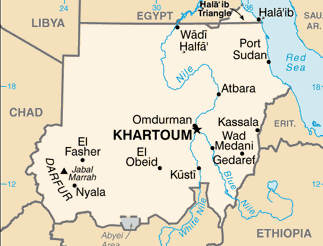
Reportedly at the direct instigation of President Donald Trump, the US State Department ordered a suspension of aid to Ethiopia over its move to begin capturing water behind a controversial new mega-dam on the Blue Nile that is opposed by Egypt and Sudan. A State Department spokesperson said the decision to “temporarily pause” some aid to Addis Ababa “reflects our concern about Ethiopia’s unilateral decision to begin to fill the dam before an agreement and all necessary dam safety measures were in place.” The freeze could affect as much as $100 million in aid. The reservoir behind the Grand Ethiopian Renaissance Dam (GERD) began filling in July, over the protests of Egypt and Sudan, which rely on the Nile for nearly all of their water needs. (Photo: Water Power & Dam Construction)

Greater Middle East
hegazi

Egyptian LGBT activist a suicide in exile

Three years after her arrest and torture by security forces in her native country, Egyptian LGBT activist Sarah Hegazi killed herself in exile in Canada, prompting an outpouring of sympathy and anger on social media. Hegazi, 30, an openly gay woman and rights advocate, was among a group of activists arrested in September 2017 after raising a rainbow flag at a Cairo concert of the Lebanese indie band Mashrou Leila, which includes gay members. Hegazi was charged with joining an illegal group promoting “deviant thought.” She fled to Canada after being released on bail in January 2018. The incident was followed by a harsh crackdown on Egypt’s LGBT community. (Photo via Middle East Eye)

North Africa
Sudan rebels

Internationalization of Libya war

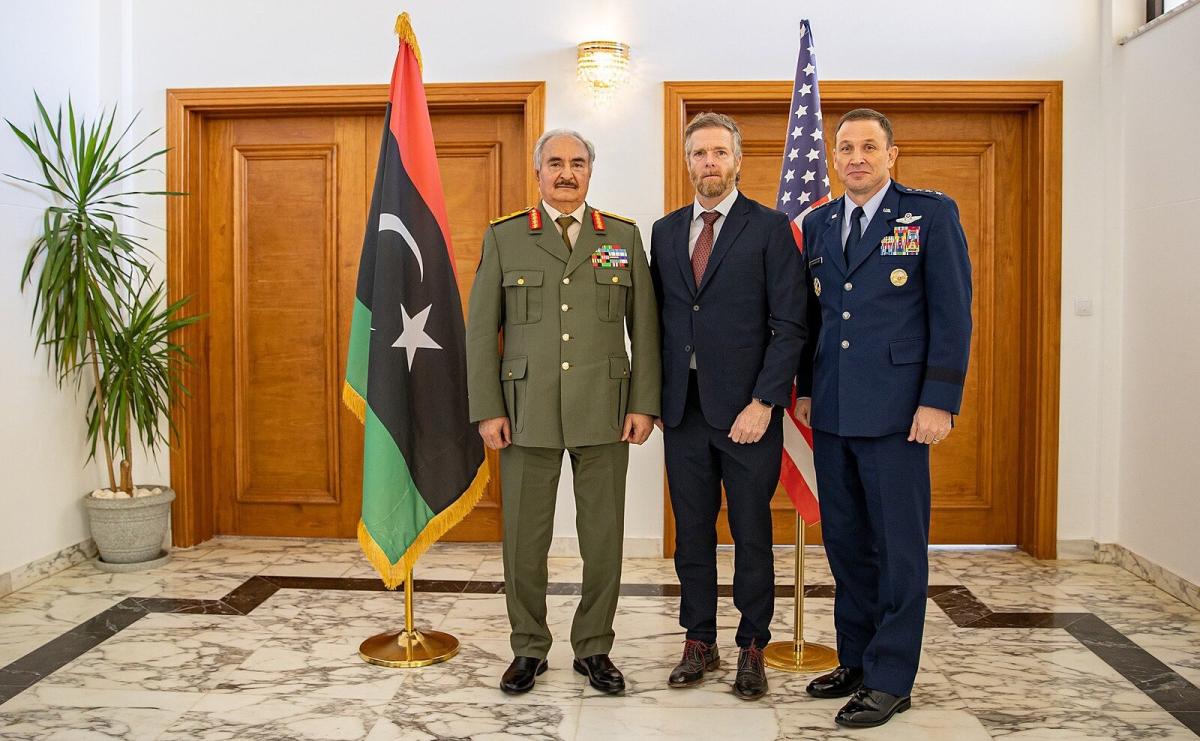
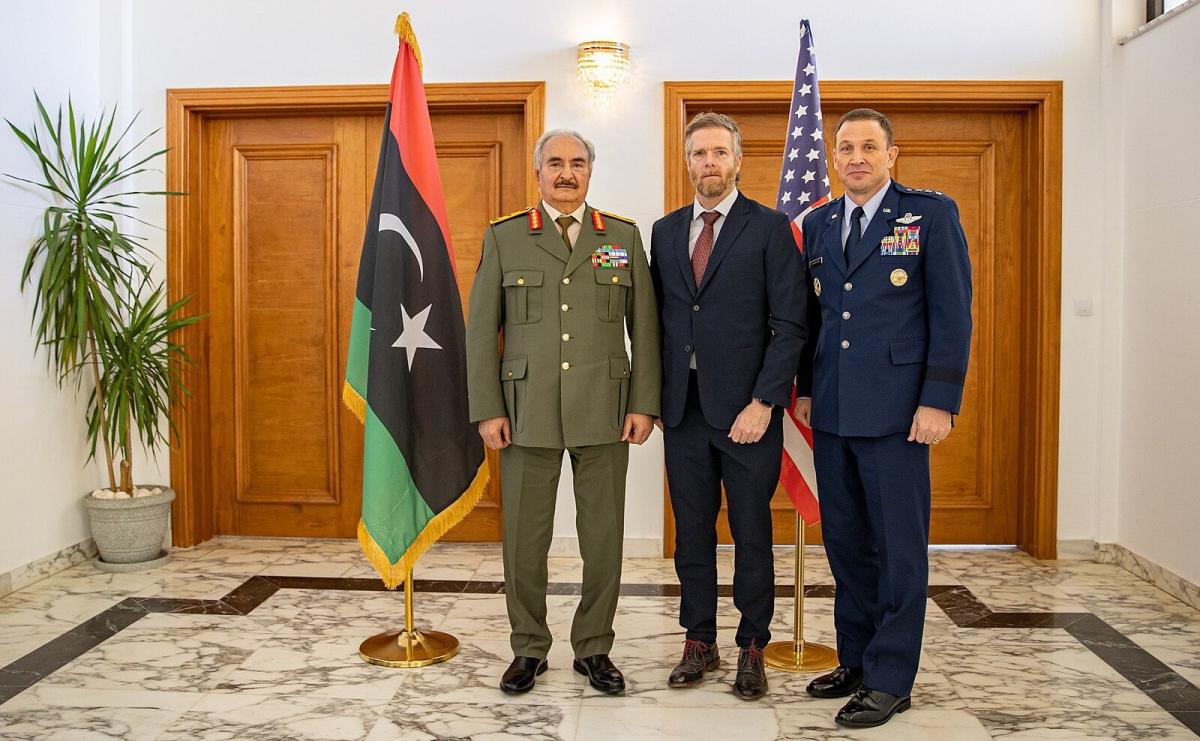
A senior UN official charged at a press conference in Munich that numerous countries are violating the Libya arms embargo and must be held accountable. UN Deputy Special Representative to Libya Stephanie Williams said that “the arms embargo has become a joke.” The Libyan National Army (LNA), led by Khalifa Haftar, has been fighting with the internationally recognized Government of National Accord (GNA) for control of Tripoli since April of last year. Russia, Egypt and the UAE are supporting the LNA, while Turkey supports the GNA. Foreign powers are violating the arms embargo “by land, sea and air,” Williams said. A UN report also accuses Haftar of bringing in Sudanese rebels from Darfur to fight for the LNA, while Turkey is accused of importing Syrian rebels to fight for the GNA. (Photo: Libya Observer)

Planet Watch
Chile protester

Podcast: world revolution in 2020?

In Episode 43 of the CounterVortex podcast, Bill Weinberg takes stock of the current wave of popular protest and uprisings around the world, and asks if the planet is approaching another moment of revolutionary possibilities, such as was seen in 2011. He examines the prospects for these disparate movements to build solidarity across borders, repudiate ethnic and national divide-and-rule stratagems, and recognize the enemy as transnational capital and the authoritarian states that serve it. With discussions of Hong Kong, mainland China, Indonesia, Bolivia, Chile, Ecuador, Peru, Uruguay, Honduras, Costa Rica, Haiti, Puerto Rico, Iraq, Lebanon, Turkey Iran, Egypt, Algeria, Sudan, Uganda, Ethiopia and Guinea. Listen on SoundCloud, and support our podcast via Patreon. (Photo: David Lynch via Twitter)

Greater Middle East

Egyptian revolution rebooted

Anti-government protests broke out across Egypt, with thousands joining demonstrations calling for the ouster of President Abdel Fattah el-Sisi—a rare show of defiance since he established his dictatorship four years ago. Demonstrators filled Cairo’s Tahrir Square, center of the 2011 uprising that toppled longtime autocrat Hosni Mubarak. Protesters also gathered in Alexandria, Suez and Gharbiya. Videos posted on social media showed demonstrators chanting “rise up, fear not, Sisi must go” and, reviving the slogan of the 2011 Arab Revolution, “the people demand the downfall of the regime.” Hundreds of protesters were finally dispersed from Tahrir Square by the riot police. (Photo via Twitter)

North Africa

Libya: did Haftar bomb migrant detention center?

The UN is calling for an urgent investigation into the “outrageous” bombing of a migrant detention center at Tajoura, outside Libya’s capital Tripoli, which left at least 44 dead. Libya’s UN-recognized government issued a statement blaming the air-strike on warlord Khalifa Haftar, who has for months been besieging Tripoli. Already believed to be supported by France and Russia, he has now also apparently established contact with Washington. The White House admitted in April that President Trump had spoken by phone with Haftar and discussed “ongoing counter-terrorism efforts.”  (Photo via Libya Observer)

Inner Asia

Regional reaction to mass detention of Uighurs

Amid the mass internment of ethnic Uighurs in China's western Xinjiang province, reaction within the greater region has been largely muted. Dolkun Isa, head of the Germany-based World Uyghur Congress, blasted the leaders of Muslim countries for being largely "silent" over the "ethnic cleansing" of the Uighurs, calling it the "shame of the Muslim world." Worse, both Pakistan and Egypt are accused of deporting Uighurs back to China—presumably to face detention. Demonstrations have been held in Kyrgyzstan against the persecution of the Uighurs and other Turkic peoples in China—but the Sinophobic ethno-nationalist posture of these protesters is clear. Ironically, among their demands is the deportation of any Chinese nationals living "illegally" in Kyrgyzstan. (Photo of Kyrgyz protesters in Bishkek via RFE/RL)

Syria
Rojava

Bolton goes to bat for Rojava Kurds?

Talk about strange bedfellows! This week witnessed the surreal spectacle of US National Security Adviser John Bolton, the most bellicose neoconservative in the Trump administration, visiting Turkey to try to forestall an Ankara attack radical-left, anarchist-leaning Kurdish fighters that the Pentagon has been backing to fight ISIS in Syria. “We don’t think the Turks ought to undertake military action that’s not fully coordinated with and agreed to by the United States,” Bolton told reporters. Refering to the Kurdish YPG militia, a Turkish presidential spokesman responded: “That a terror organization cannot be allied with the US is self-evident.” Bolton left Turkey without meeting President Recep Tayyip Erdogan, who then publicly dissed the National Security Adviser’s stance as a “serious mistake.” YPG spokesman Nuri Mahmud, in turn, shot back: “Turkey, which has been a jihadist safe-haven and passage route to Syria since the beginning of the conflict, has plans to invade the region end destroy the democracy created by blood of sons and daughters of this people.” (Photo: ANF)

Syria

Arrest warrants issued for top Damascus officials

French prosecutors issued international arrest warrants for three prominent Syrian officials charged with collusion in crimes against humanity, in what human rights lawyers are calling a major victory in the pursuit of those believed responsible for mass torture, abuse and summary executions in the regime’s detention facilities. The warrants name three leading security officials—including Ali Mamlouk, a former intelligence chief and senior adviser to President Bashar al-Assad, as well as head of the Air Force Intelligence security branch, Jamil Hassan. A third, Abdel Salam Mahmoud—an Air Force Intelligence officer who reportedly runs a detention facility at al-Mezzeh military base near Damascus—was also named. Hassan and Mamlouk are the most senior Syrian officials to receive an international arrest warrant throughout the course of the conflict. (Photo of hunger strikers at Syrian prison via Foreign Policy. Credit: Louai Beshara/AFP/Getty Images)

North Africa

Libya: ‘official’ regime to lose control of Tripoli?

Armed street clashes have rocked Tripoli over the past week, as militias linked to the UN-backed Government of National Accord (GNA) have vied for control of the Libyan capital with rival militias that have launched an offensive on the city from the southeast. The most significant of these is the 7th Brigade from the town of Tarhuna, which has rejected a truce, vowing to continue fighting until it "cleanses Tripoli of militias." The city's electricity has intermittently gone out amid the fighting, and access to Facebook—the only news source for most Libyans—has been blocked, although it is unclear by whom. The GNA has declared a state of emergency in the city, and Prime Minister Fayez al-Sarraj has formed a "crisis committee" to try to broker peace. But warlord Khalifa Haftar in Benghazi, who is loyal to Libya's unrecognized eastern government, anticipated the fall of Tripoli, saying that "liberating the Libyan capital is inevitable." (Photo: Libya Observer)

Greater Middle East

US unfreezes military aid to Egypt

The Trump administration has decided to release $195 million in military aid to Egypt that had been frozen last year because of human rights concerns, the State Department announced July 25. The decision is intended to recognize "steps Egypt has taken over the last year in response to specific US concerns," the statement said. A high-level Egyptian military delegation had been in Washington for talks prior to the announcement. The funds, falling under Foreign Military Financing, are intended for Egypt to buy US-made military equipment. Human rights groups slammed the decision by Secretary of State Mike Pompeo, saying he had squandered valuable leverage over President Abdel Fattah el-Sisi at a time when his regime's rights record only seems to be worsening. (Photo: Egyptian Streets)

Palestine

Egypt: Copts protest Trump’s Jerusalem move

Pope Tawadros II, leader Egypt's Coptic Church, has cancelled a meeting with US Vice President Mike Pence during his visit to Cairo later this month, in protest of the Trump administration's decision to recognize Jerusalem as Israel’s capital. Trump's decision "did not take into account the feelings of millions of Arab people," the church said in a statement, adding that it "declines to receive" Pence.