East Asia
glory to HK

Hong Kong: bid to ban protest anthem backfires

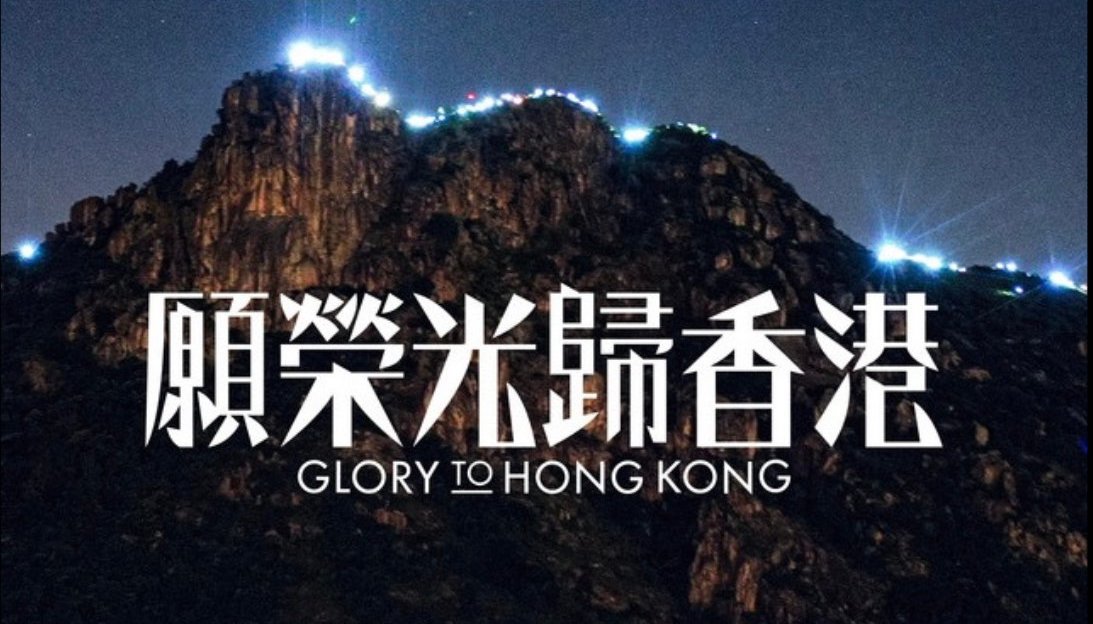
The Hong Kong Department of Justice applied to the Special Administrative Region’s High Court for an injunction to prohibit any performance or online dissemination of the song “Glory to Hong Kong,” anthem of the 2019 protest movement. The government asserts that the song contains secessionist lyrics that breach multiple laws in Hong Kong and China, including the National Security Law. However, thousands of Hong Kong citizens responded to the government’s move by gathering in public to sing the song, in defiance of an ongoing ban on protests. It also shot to the top of the iTunes charts. After days of this, a judge postponed deciding on the petition, finding it potentially overbroad and asking the government to be more specific on the breadth of its request. (Image: Campaign for Hong Kong via Twtter)

East Asia
Nagu

China: Muslim protests over mosque ‘Sinicization’

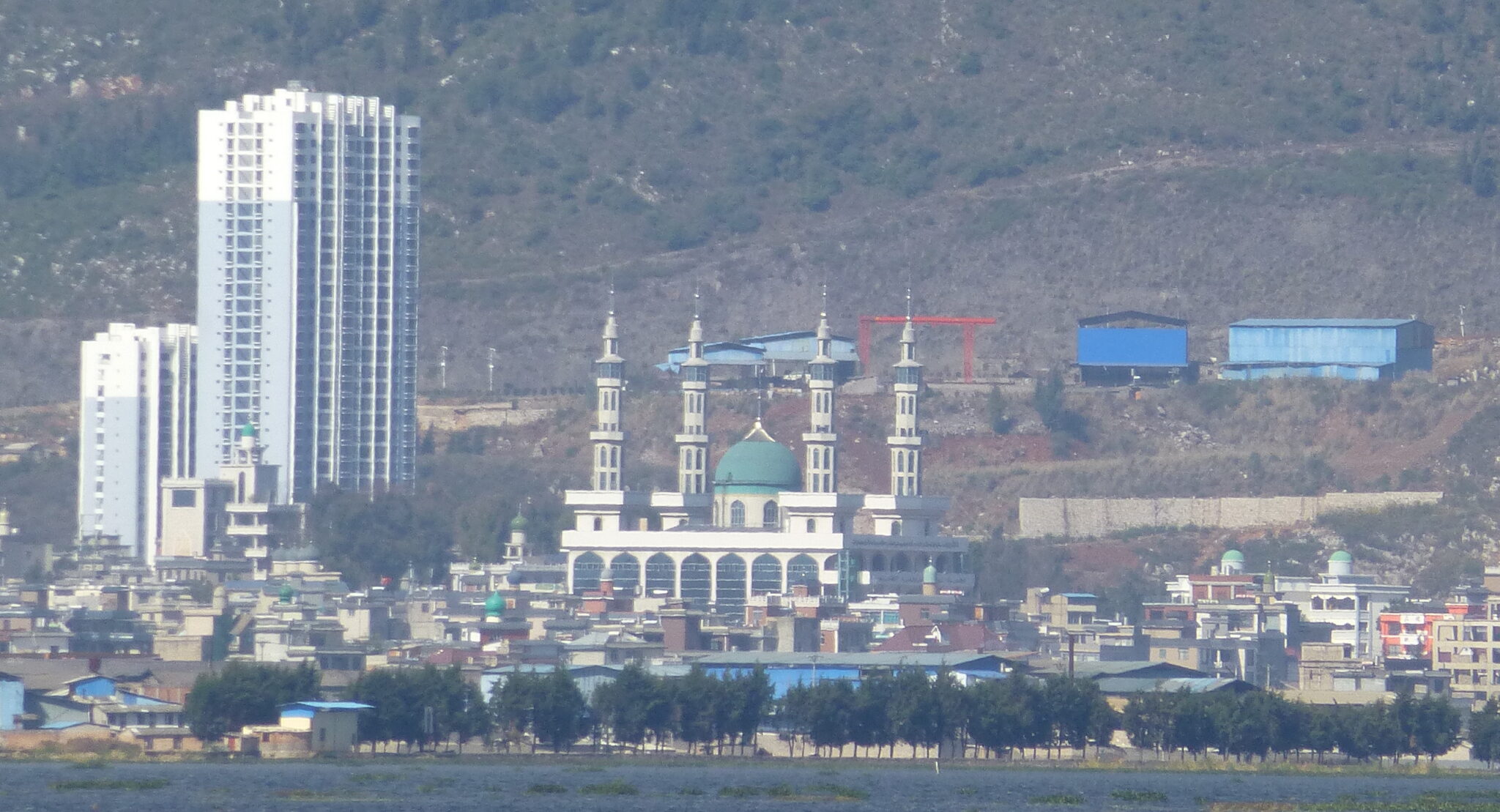
The predominantly Muslim town of Nagu in China’s Yunnan province saw street-fighting between residents and police over planned demolition of the dome of the locality’s historic mosque. Orders were issued in 2020 to demolish the dome, which had recently been expanded, as part of President Xi Jinping’s campaign for the “Sinicization” of Islam in China. The campaign mandates that mosques in what is deemed an overly “Arabic style” must be “rectified.” The order for “rectification” of Nagu’s 13th-century Najiaying Mosque went unenforced until a crew of workers with cranes and bulldozers arrived unannounced, accompanied by some 400 riot police. Clashes ensued when residents mobilized to defend the mosque. Authorities responded by flooding the town with up to 5,000 troops, and cutting off the internet in the area. Dozens of protesters have been arrested, and authorities have issued an ultimatum for accused instigators to turn themselves in. (Image via WikiVoyage)

East Asia
Chow Hang-tung

Hong Kong: prison hunger strike to remember 6-4

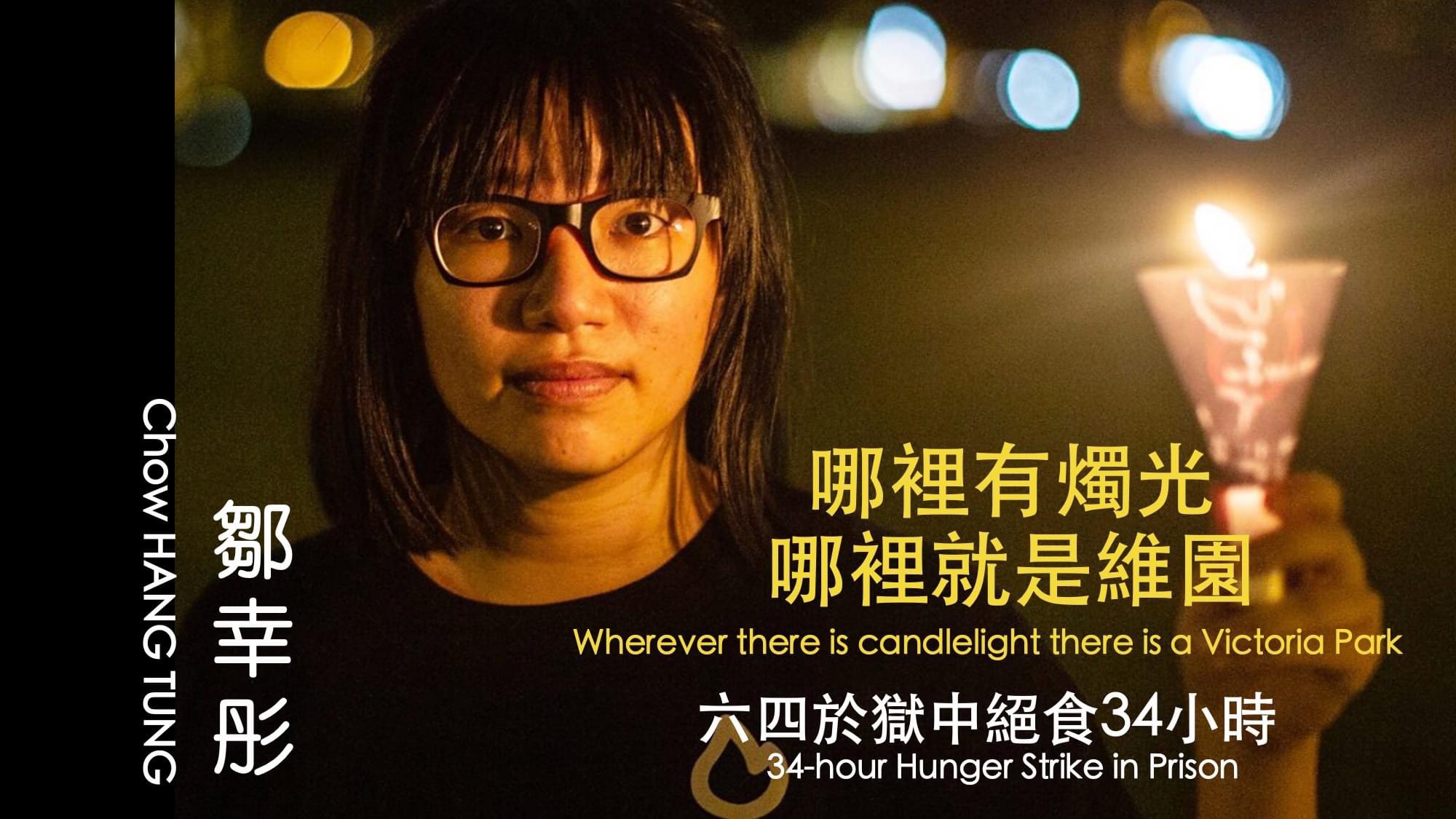
Hong Kong police detained at least eight people for allegedly attempting to hold public vigils commemorating the Tiananmen Square massacre. Victoria Park, the site of the massive annual commemoration which is now suspended due to the crackdown in the city since 2020, was meanwhile the scene of a fair promoting unity with China. However, prominent activist Chow Hang-tung, who has been imprisoned since her arrest in 2021 for promoting an “unauthorized” commemoration that year, announced a 34-hour hunger strike—one hour for each year since June 4, 1989, known in China as “6-4.” (Image via Twitter)

East Asia
Zunzi

Censorship regime expands in Hong Kong

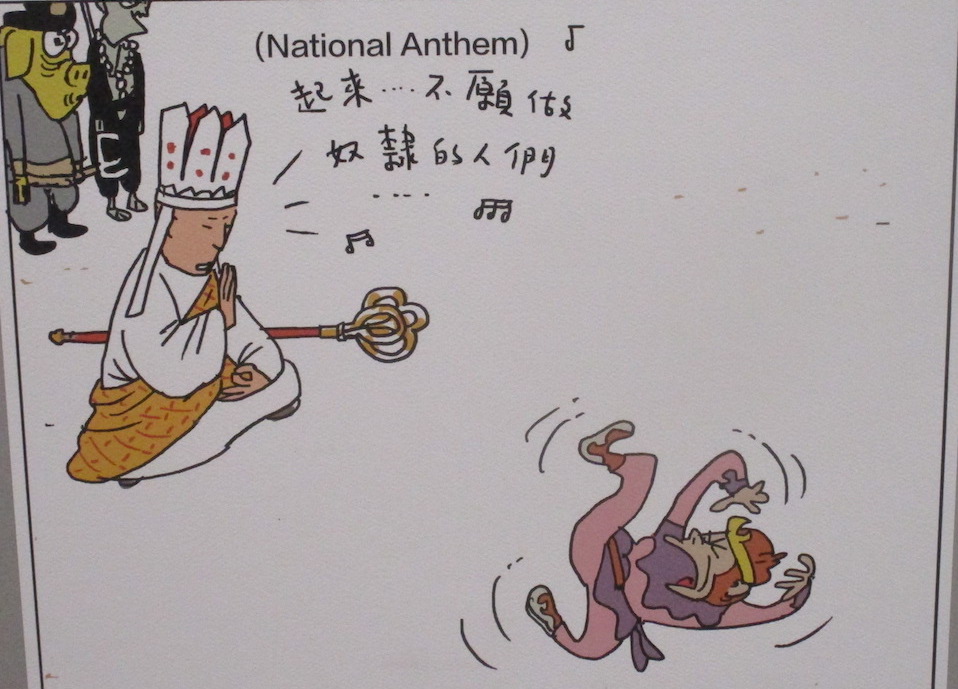
Hong Kong newspaper Ming Pao ended the decades-long run of popular satirical cartoonist Wong Kei-kwan, known by his pseudonym “Zunzi,” after his work drew fire from government authorities. Since 1983, Zunzi’s work had lampooned city officials over corruption, authoritarianism, rights abuses, and subservience to Beijing. His drawings had recently been publicly criticized by Hong Kong Chief Executive John Lee and Security Bureau chief Chris Tang. Meanwhile, books about Hong Kong protest movements, the Tiananmen Square massacre and other subjects deemed politically sensitive by Beijing are being removed from the city’s public libraries. A government audit stated that the Cultural Services Department needed to “step up efforts in examining library materials for safeguarding national security.” (Image: Zunzi cartoon depicting a monk, representing the Chinese government, controlling the rebellious Monkey King, representing Hong Kong, by a magic incantation—China’s national anthem. Photo credit: Bill Weinberg/The Village Sun)

Europe
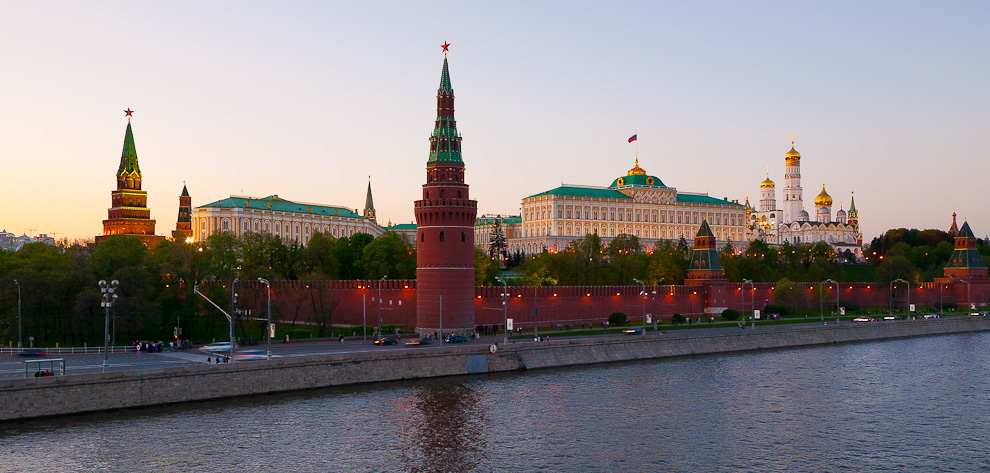
Kremlin

Putin design to rebuild Russian Empire: blatanter and blatanter

Lithuania, Latvia and Estonia reacted with outrage after China’s ambassador in Paris appeared to question the sovereignty not only of Ukraine, but all the former Soviet republics, saying they “do not have an effective status in international law.” Fearing diplomatic censure, Beijing’s Foreign Ministry backpedalled, releasing a statement saying: “China respects the sovereign status of former Soviet republics ” But such sentiments are fast gaining an alarming currency in Russian political circles. A commentator for pro-Kremlin newspaper Komsomolskaya Pravda opined that “according to the Ukrainian scenario, we have an historical right” to Russian-inhabited lands of Kazakhstan. Former president Dmitry Medvedev, now deputy chairman of Russia’s Security Council, tweeted a call for Ukraine to “DISAPPEAR” (in caps), and referred to the country as “Malorossiya” (Little Russia)—a term from the empire of the czars for territories outside Great Russia (Russia proper). (Photo: Wikipedia)

Inner Asia
Kashagan

Kazakhstan: environmental suit against Caspian consortium

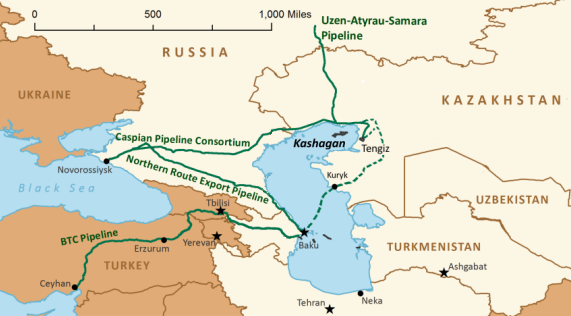
The government of Kazakhstan has brought a legal action for violation of environmental protection laws against the North Caspian Operating Company (NCOC), the consortium leading development of the country’s massive Kashagan oil field, seeking $5.14 billion in fines. In the complaint, the Ministry of Ecology & Natural Resources cites storage of sulfur on site in excess of permitted limits, burning of crude gas on flares without a permit, improper discharge of wastewater, and other violations. Kashagan is one of the largest oil-fields discovered on Earth over the past 40 years, with recoverable reserves estimated at up to 13 billion barrels. The consortium includes the Italian Eni, French Total, US-based ExxonMobil, Anglo-Dutch Shell, Chinese CNPC, Japan’s Inpex, and KazMunayGas, the Kazakh national operator. (Map: US Energy Information Administration via Jurist)

East Asia
Yau Tong

Hong Kong sees first protests since 2020

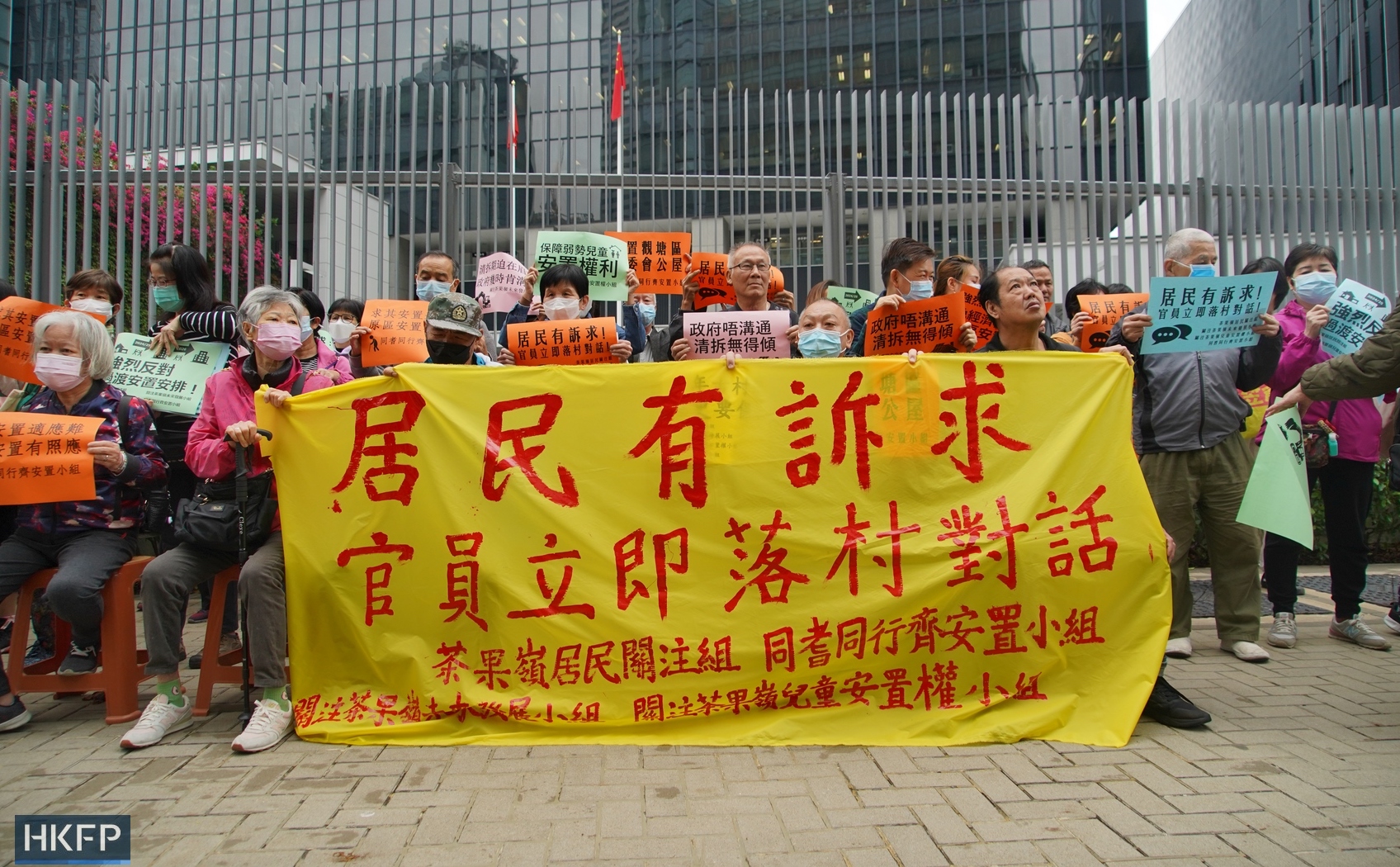
The first protest since the introduction of the 2020 National Security Law in Hong Kong was held in Tseung Kwan O, an eastern area of the city. A small number of protestors marched against a land reclamation plan and construction of a waste disposal facility. The marchers complied with restrictions imposed by authorities. The protest was limited to a maximum of 100 participants, whose banners and placards were pre-screened. Protestors were required to wear numbered tags. However, two days later, a smaller but seemingly unauthorized protest was held outside Hong Kong’s Central Government Offices. Some 40 residents from Yau Tong squatter community in Kowloon, which is set to be razed to make way for a public housing project, gathered to voice opposition to their impending eviction. (Photo: HKFP)

Afghanistan

Taliban regime in oil deal with Chinese company

Afghanistan’s Taliban regime has agreed to sign a contract with a Chinese company to exploit oil in the Amu Darya basin in the country’s north. The contract with the Xinjiang Central Asia Petroleum & Gas Co. (CAPEIC) is to be the first major resource extraction deal the regime has signed with a foreign company since taking power in 2021. “The Amu Darya oil contract is an important project between China and Afghanistan,” China’s ambassador, Wang Yu, told a joint press conference with Taliban officials in Kabul. Beijing has not formally recognized the Taliban government but has significant interests in Afghanistan, a country deemed critical for its Belt & Road Initiative. (Map: Perry-Castañeda Library)

Africa
Rift Valley

African dissent from biodiversity protocol

The UN Biodiversity Conference, or COP15, concluded in Montreal with what is being hailed as a landmark agreement to address the current unprecedented loss of species, now termed the planet’s sixth mass extinction. The centerpiece of the Kunming-Montreal Global Biodiversity Framework, conceived as a match to the Paris Agreement on climate change, is the so-called “30×30” pledge—with countries committing to protect 30% of their territory for habitat preservation by 2030. The deal earmarks $30 billion per year to flow from wealthy countries to poor ones to assist in conservation programs. But the financial commitments are not binding, and were assailed by countries in the developing world as inadequate. After an all-night session, the gavel was brought down on the deal minutes after the delegation from the Democratic Republic of Congo pressed outstanding criticisms. This was decried by the DRC, Uganda and other African delegations. A representative from Cameroon protested: “What we saw was a force of hand.” (Photo of Kenya’s Great Rift Valley via Pixabay)

East Asia
Sinitic language map

Podcast: the linguistic struggle in China

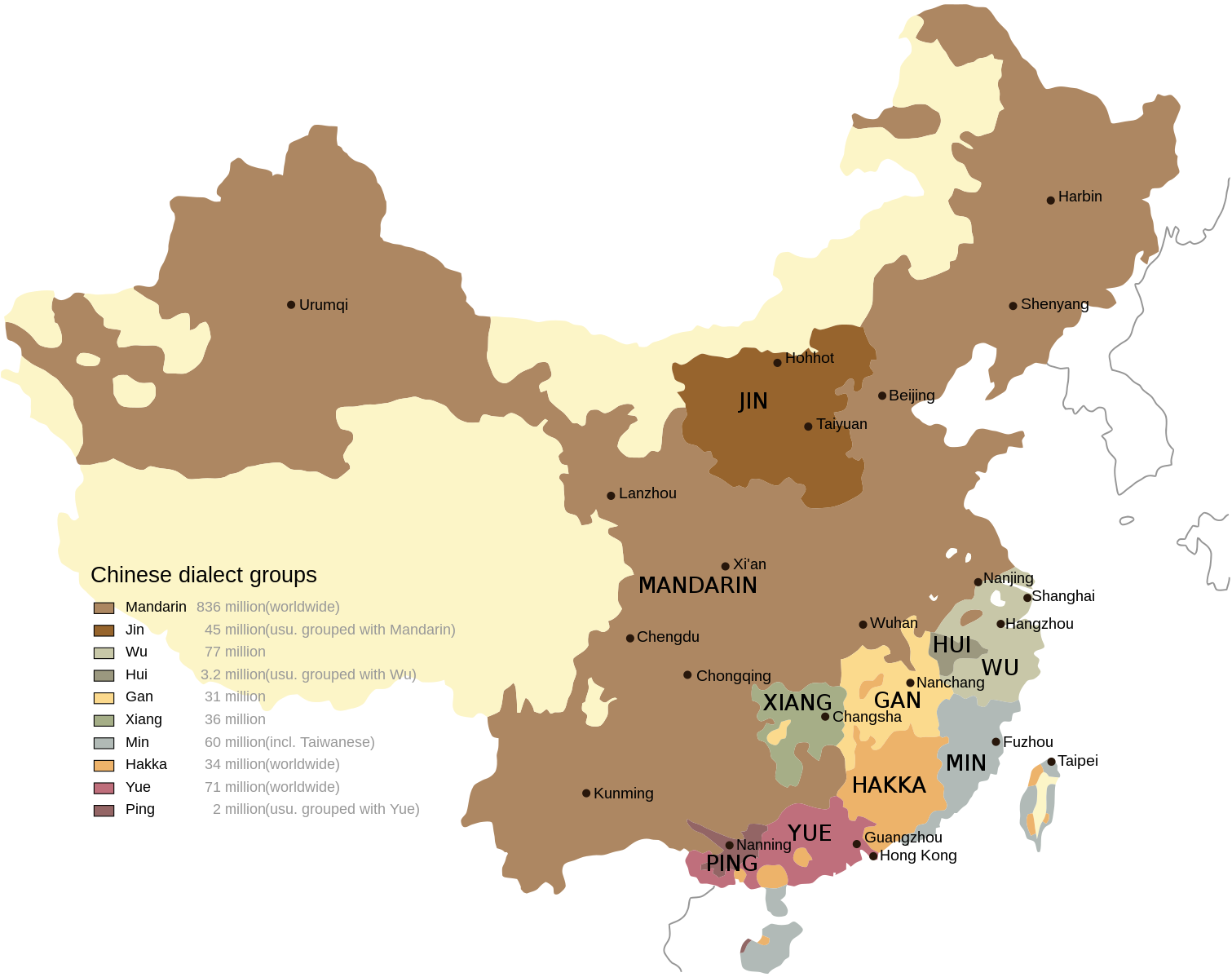
In Episode 154 of the CounterVortex podcast, Bill Weinberg conducts an in-depth interview with Gina Anne Tam, author of Dialect and Nationalism in China, 1860–1960 (Cambridge University Press) on how Mandarin (Putonghua) became the official language of China, and what has been the role in China’s national identity of the regional “dialects,” or fangyan. In a dilemma that has vexed China’s bureaucracy for 2,000 years, the persistence of fangyan raises questions about conventional notions of nationalism and state formation. What can the tenacious survival of Shanghaihua (Wu), Fujianese (Min), Cantonese (Yue), Toisan and Hakka tell us about the emergence of an “alternative Chinese-ness” in the 21st century? Listen on SoundCloud or via Patreon. (Map via Wikimedia Commons)

Planet Watch
Guangzhou

Bicycling in China & the origins of Critical Mass

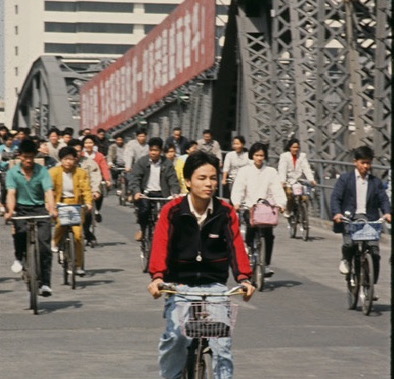
Legendary transportation activist George Bliss will be presenting a slideshow and hosting a discussion of his 1991 trip to China at the Museum of Reclaimed Urban Space (MoRUS) in New York City on Friday Dec. 9. What would NYC be like if we got rid of cars and everybody rode bikes? In 1991, Bliss and filmmaker Ted White visited Guangzhou, China (then pop. six million). Only one in a thousand owned cars. Bikes cost about $50. There was no theft because cheap attended bike-parking was everywhere. Riding en masse was fun, and traffic flowed safely and efficiently with almost no red lights. The term “critical mass“—first applied to this phenomenon by Bliss in White’s film Return of the Scorcher—soon became a rallying cry in the global bike movement. While that China is long gone, its legacy points to the city we could yet have, even half a world away. (Photo: George Bliss)

East Asia
Nanjing

China: nationwide protests challenge dictatorship

Following weeks of sporadic protests against the recurrent draconian COVID-19 lockdowns in China, spontaneous demonstrations broke out in cities across the country. Street demos were reported from Shanghai, Nanjing, Guangdong, Chengdu and Wuhan as well as Beijing. In addition to slogans against the lockdowns and for freedom of speech and assembly, such verboten chants were heard as “Xi Jinping, step down” and “Communist party, step down.” The spark was an apartment block fire in Urumqi, capital of western Xinjiang region, that killed at least 10 who were under lockdown orders and unable to flee. Hong Kong-based Borderless Movement left-dissident website has issued a list of “Demands from Chinese and Hong Kong Socialists” in response to the outburst, calling for an end to lockdowns and forced testing, provision of multiple vaccines, and the right to citizen and worker self-organization. The statement calls for “marginalized groups in the mainland and abroad, including Hongkongers, Taiwanese, Uyghurs and Tibetans to continue building a long-term strategic program for democratic struggle in China.” (Photo of student protest in Nanjing via Twitter)