Syrian anarchist speaks
The British anarcho-syndicalist website Solidarity Federation runs a statement from a representative of a “group of young Syrian anarchists and anti-authoritarians from Aleppo.”
Syrian forces and their supporting Shabbiha fighters have committed “war crimes and gross violations of international human rights and humanitarian law,” a UN report finds.
A general strike shut down Tunisia’s Sidi Bouzid region—birthplace of last year’s uprising—to demand the release of detainees and the resignation of the governor.
As urban warfare rages in Damascus and Aleppo, rebel gunmen abducted 47 Iranian pilgrims outside the capital—and a mob attack on Alawites was reported in Turkey.
The Egyptian government announced that it has requested the release of the last of its citizens currently being held at the Guantánamo Bay detention facility.
The UN High Commissioner for Human Rights urged Sudan to investigate claims of excessive force by government troops against protesters in Darfur, resulting in eight deaths.
Amnesty International published a report holding the Syrian government responsible for human rights violations in Aleppo that AI claims amount to crimes against humanity.
Palestinian refugees at the Yarmouk camp in Damascus have joined the Syrian uprising. But Palestinian militants backed by the regime are targeted by the rebels for assassination.
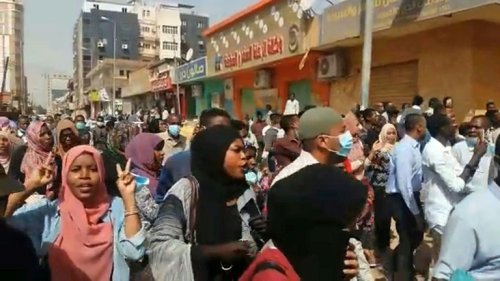
UN High Commissioner for Human Rights Michelle Bachelet called on the government of Sudan to protect its people's rights to peaceful assembly and freedom of expression in the face of mounting violence. Anti-government protests have swept across Sudan for weeks. Over 800 have been arrested, including "journalists, opposition leaders, protestors and representatives of civil society." The government has confirmed 24 deaths but other reports place the number at double that. There have also been reports of security forces following protesters into hospitals and firing tear-gas and live ammunition inside. (Photo via Sudan Tribune)
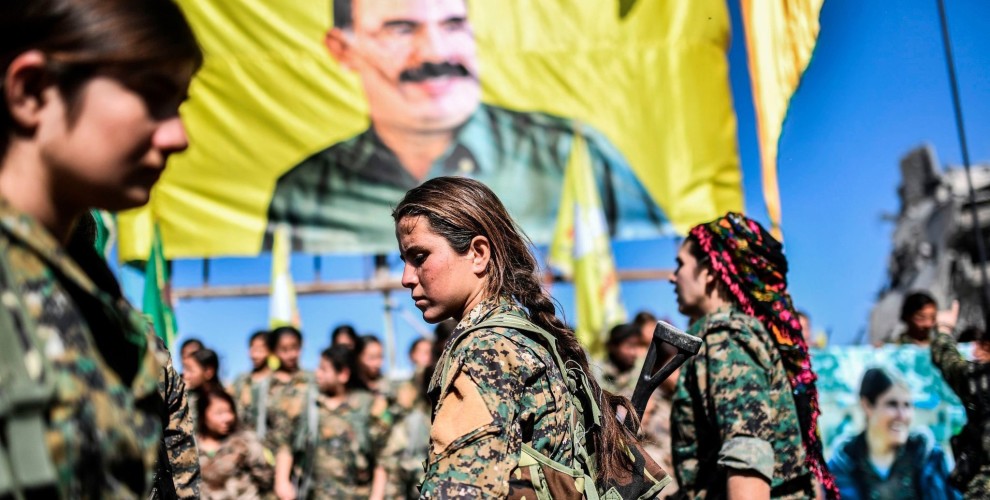
Talk about strange bedfellows! This week witnessed the surreal spectacle of US National Security Adviser John Bolton, the most bellicose neoconservative in the Trump administration, visiting Turkey to try to forestall an Ankara attack radical-left, anarchist-leaning Kurdish fighters that the Pentagon has been backing to fight ISIS in Syria. "We don't think the Turks ought to undertake military action that's not fully coordinated with and agreed to by the United States," Bolton told reporters. Refering to the Kurdish YPG militia, a Turkish presidential spokesman responded: "That a terror organization cannot be allied with the US is self-evident." Bolton left Turkey without meeting President Recep Tayyip Erdogan, who then publicly dissed the National Security Adviser's stance as a "serious mistake." YPG spokesman Nuri Mahmud, in turn, shot back: "Turkey, which has been a jihadist safe-haven and passage route to Syria since the beginning of the conflict, has plans to invade the region end destroy the democracy created by blood of sons and daughters of this people." (Photo: ANF)

Following the announcement of a US withdrawal of its troops embedded with Kurdish forces in Syria, the Kurds are again making overtures for a separate peace with the Assad regime. Kurdish fighters of the People's Protection Units (YPG) are reported to have turned over the flashpoint town of Manbij to regime forces—marking the first time that the Assad regime's flag has flown over the northern town for more than six years. "The aim is to ward off a Turkish offensive," said Ilham Ahmed, an official of the Kurdish autonomous administration. "If the Turks' excuse is the [YPG], they will leave their posts to the government." However, a Kurdish deal with Assad could cement the split between the Syrian rebels and the YPG, and holds risk of opening an Arab-Kurdish ethnic war in northern Syria. (Photo via Kurdistan24)
Protests have been mounting across Sudan in response to the nation’s acute economic crisis. Inflation reached 70% in November and many have been forced to spend significant portions of their income on bread, leading to local media designating the demonstrations as "bread protests." Protesters have repeatedly called for President Omar al-Bashir, who has been in power since 1993, to step down. The protests have been organized by professional organizations and trade unions as well as Sudan's principal opposition group, the Umma Party. Sudan's government has shut off internet access to prevent the protesters from organizing via social media. According to Amnesty International, at least 37 protesters have been killed so far as Sudanese authorities attempt to quell the demonstrations by releasing tear-gas and firing live ammunition. (Photo via Middle East Eye)