North Africa
Tunisia

Tunisia government ‘suspends’ migrant rights group

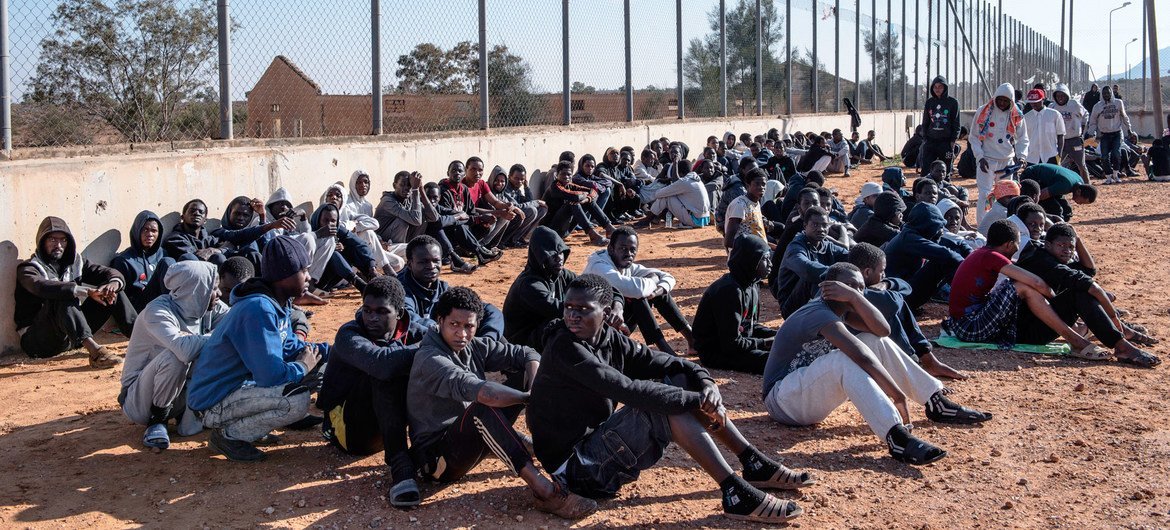
The Tunisian government ordered a prominent advocacy organization, the Tunisian Forum for Social & Economic Rights (FTDES), to suspend its activities for one month. The organization has been outspoken in its criticism of President Kais Saied’s crackdown on Black African asylum seekers and migrants in the country, and his promotion of racist tropes about migration. The move comes amid a broader repression of civil society. (Image: Pixabay)

Africa
El Fasher

Podcast: Darfur again —a genocide foretold

Throughout the 18-month siege of El Fasher, capital of Sudan’s North Darfur state, international human rights observers had been warning that the city’s residents faced a general massacre when it eventually fell to the Rapid Support Forces (RSF). Yet nothing was done, apart from ineffectual Great Power diplomacy that had zero impact on the ground. Now that the foretold massacre is underway—with hundreds killed, thousands missing, and no end in sight—calls are at last emerging for boycott, divestment and sanctions against the United Arab Emirates, the apparent underwriter of the genocidal RSF. In Episode 302 of the CounterVortex podcast, Bill Weinberg notes the contrast with the situation 20 years ago, when #SaveDarfur was a cause cĂ©lèbre—and asks what has changed. (Photo: Roman Deckert via Wikimedia Commons)

Africa
Tanzania

Post-electoral violence rocks Tanzania

Protests have escalated in Tanzania following elections widely viewed as a sham. Violence erupted on polling day over the exclusion from the ballot of President Samia Suluhu Hassan’s two biggest challengers, and increasing government repression. The protesters defied a heavy security presence to target polling stations, police vehicles, and businesses connected to the ruling party, some chanting “We want our country back!” An unknown number of people were shot dead, and Amnesty International has called for an investigation. Protests continue despite an internet blackout and the deployment of soldiers to enforce a lockdown. (Photo via Twitter)

Africa
Cameroon

Post-electoral violence sweeps Cameroon

The Office of the UN High Commissioner for Human Rights expressed concern over the protests and repression that have swept Cameroon following contested presidential election results. Demonstrators immediately defied a ban on public gatherings to support the opposition after the election, but the situation escalated after the Constitutional Council announced five days later that long-ruling President Paul Biya had won. The opposition rejected the results and proclaimed their candidate, Issa Tchirola Bakary, as the legitimate winner, urging citizens to demonstrate peacefully. Thousands took to the streets demanding recognition of an opposition victory, to be met with repression; clashes between protesters and security forces led to fatalities and numerous arrests. The protests have shaken the capital, YaoundĂ©; the economic capital, Douala; and the northern towns of Garoua and Maroua. Local jails are filled with opposition supporters who accuse Biya of rigging the polls. Biya is now to assume his eighth term in office as the world’s oldest president at age 92, having ruled Cameroon for 43 years. (Photo: Twitter via Peoples Dispatch)

The Andes
Petro

US imposes sanctions on Colombian president

The US administration announced sanctions against Colombian President Gustavo Petro, his family, and Colombia’s Minister of the Interior Armando Benedetti. The US will also reduce financial assistance to Colombia by about $18 million. The Department of State said the move was “due to President Gustavo Petro’s disastrous and ineffective counternarcotics policies.” The Colombian government has recalled its ambassador to the United States in protest. Simultaneously, the Pentagon announced that it is moving the aircraft carrier USS Gerald R. Ford and its group to the Caribbean Sea, where the US military already hasapproximately 10,000 personnel pre-positioned. (Photo via MROnline)

The Andes
Bolivia

Bolivia: far-right candidate defeated —at least

Rodrigo Paz, a center-right senator and son of a former president, won Bolivia’s run-off election—defeating former far-right president Jorge “Tuto” Quiroga, who ran on a platform that pledged an IMF bailout for the troubled economy and widespread privatization of state industries and natural resources. For the first time since 1997, there was no candidate on the ballot from the Movement toward Socialism (MAS), the party of former president Evo Morales. A candidate from MAS, which had ruled all but one year since 2006, was eliminated in the first round in August. However, some of the social policies put in place by the MAS have now been adopted by Paz. (Photo: Dan Lundberg/Flickr)

Africa
Sudan

Sudan: massacres, ‘execution spree’ as El Fasher falls to RSF

Sudan’s Rapid Support Forces (RSF) have fired on fleeing civilians, plundered hospitals, and carried out over a dozen “field executions” in El Fasher in the days since the paramilitary army took the city, local observers report. The Sudan Doctors Network issued a statement saying the RSF had carried out a “heinous massacre [of] unarmed civilians on ethnic grounds in what amounts to an act of ethnic cleansing.” Among those slain in targeted summary executions was reportedly Siham Hassan, a longtime activist and former member of parliament. She was known for running a community kitchen to feed the hungry in El Fasher, and as an outspoken advocate for women’s rights. (Map: PCL)

Palestine
West Bank

‘Skyrocketing’ settler attacks on West Bank

The regional head of the United Nations Office of the High Commissioner for Human Rights (OHCHR) for the Occupied Palestinian Territory warned that Israeli settlers are increasing violence against Palestinian farmers in the occupied West Bank. Ajith Sunghay said: “Settler violence has skyrocketed in scale and frequency, with the acquiescence, support, and in many cases participation, of Israeli security forces—and always with impunity.” The statement comes at the start of the critical olive harvest season, a main source of income for many Palestinian families. The Israeli Knesset meanwhile voted to advance legislation that would effectively annex the West Bank. (Photo: B’Tselem)

New York City
Zohran

Podcast: fascism, socialism and the NYC mayoral race

In Episode 301 of the CounterVortex podcast, Bill Weinberg offers his anarchist annotation of the New York City mayoral candidates’ debate. He makes the case that the promise of “socialism” represented by Zohran Mamdani is (alas) not as real as the threat of fascism represented by Curtis Sliwa—or acquiescence to fascism represented Andrew Cuomo. Both Cuomo and Sliwa invoked the too real possibility of Trump attempting to abrogate New York’s municipal powers if Mamdani becomes mayor. However, this contingency could heighten the contradictions in a politically salubrious way—prompting the needed rupture between progressive-run localities and the illegitimate Trump regime. (Photo: Jim Naureckas/Flickr)

Central America
PNC Guatemala

Anti-mara militarization in Guatemala

Guatemala’s Congress passed a law designating the Barrio 18 and MS-13 gangs as “terrorist organizations.” The move came days after 20 Barrio 18 convicts broke out of the maximum-security Fraijanes II prison outside the capital. The new “Ley Anti-pandillas” provides for heavier sentences for gang members convicted of crimes such as extortion or recruitment of minors, and calls for the construction of more-maximum security prisons. (Photo: Danilojramirez via Wikimedia Commons)

Europe
Russian tank

Russia calls up more reserves as Ukraine war stalls

Russian authorities are preparing to call up thousands of reservists for active military service—while insisting they will not be sent to Ukraine to fight. The Main Mobilization Directorate of the General Staff announced orders that men who have been drafted and served in the military will be subject to mandatory “mobilization” for the purpose of “safeguarding strategically important facilities.” With the lines in Ukraine largely frozen in a war of attrition, the move would free up President Vladimir Putin to expand the Russian force for the “special military operation,” which is numbered at some 700,000 troops—mostly reservists who have signed contracts with the Defense Ministry. General conscripts are not sent to Ukraine, and the last call-up of reserves for the war, in September 2022, sparked a flight of young men from Russia to neighboring countries, and even scattered protests. The denial that the new mobilization is for the Ukraine war seems aimed at appeasing popular discontent, even while freeing up other soldiers to expand the invasion force. (Photo: Wikimedia Commons)

Iraq
Ain al-Asad

US troops to remain at Iraq air base

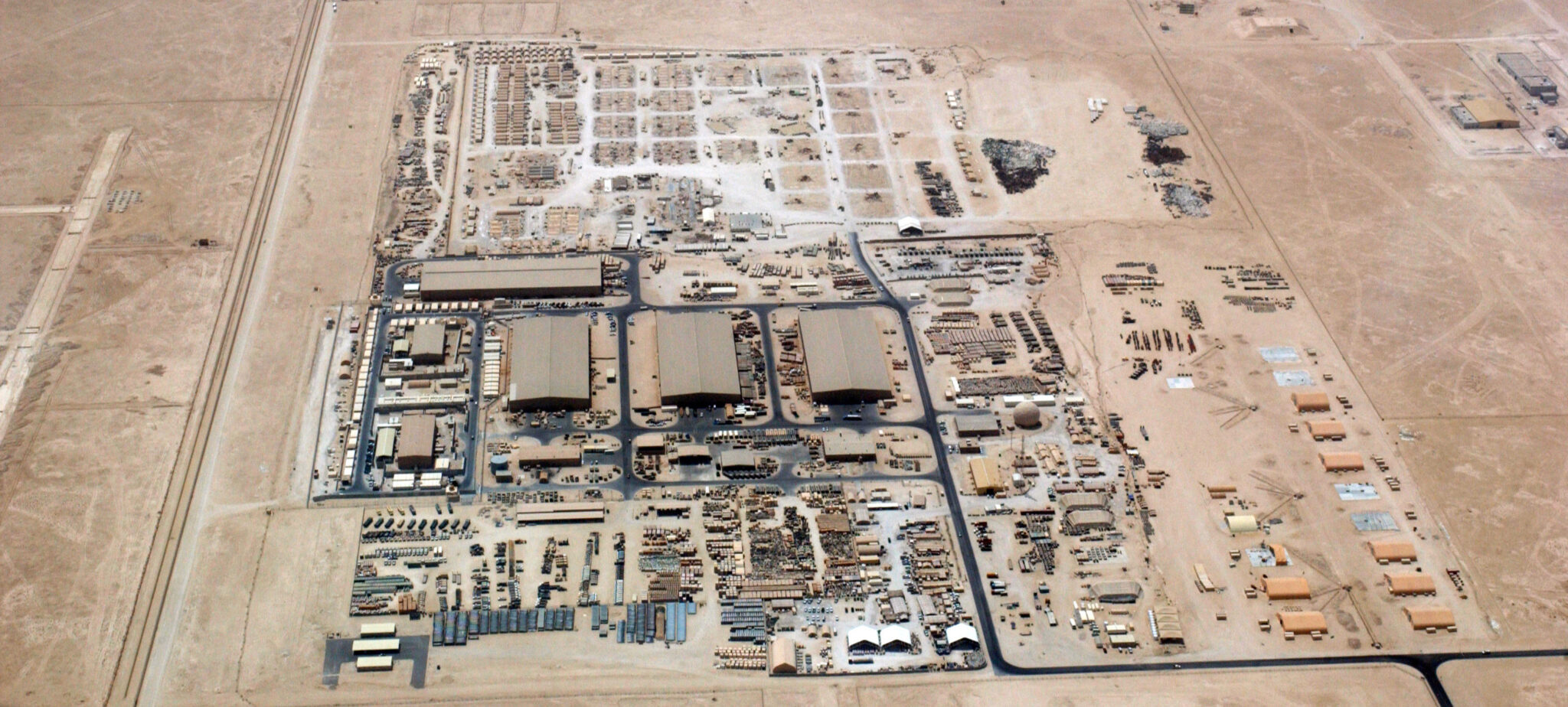
A “small force” of US troops will remain at Iraq’s Ain al-Asad air base in order to fight ISIS, the Baghdad government announced. The decision reverses plans for a full withdrawal of US forces from the base. Prime Minister Mohammed Shia al-Sudani said that a force of up to 350 Pentagon advisors and support personnel would stay at the base in western Iraq, as well as al-Harir base in Iraqi Kurdistan. The decision to allow the US troops to stay was made in response to “developments in Syria,” al-Sudani said. This presumably refers to the fall of the Assad regime in December 2024, after the draw-down agreement between the US and Iraq was reached. (Photo: Spc. Timothy VanDusen/US Army via Task & Purpose)