


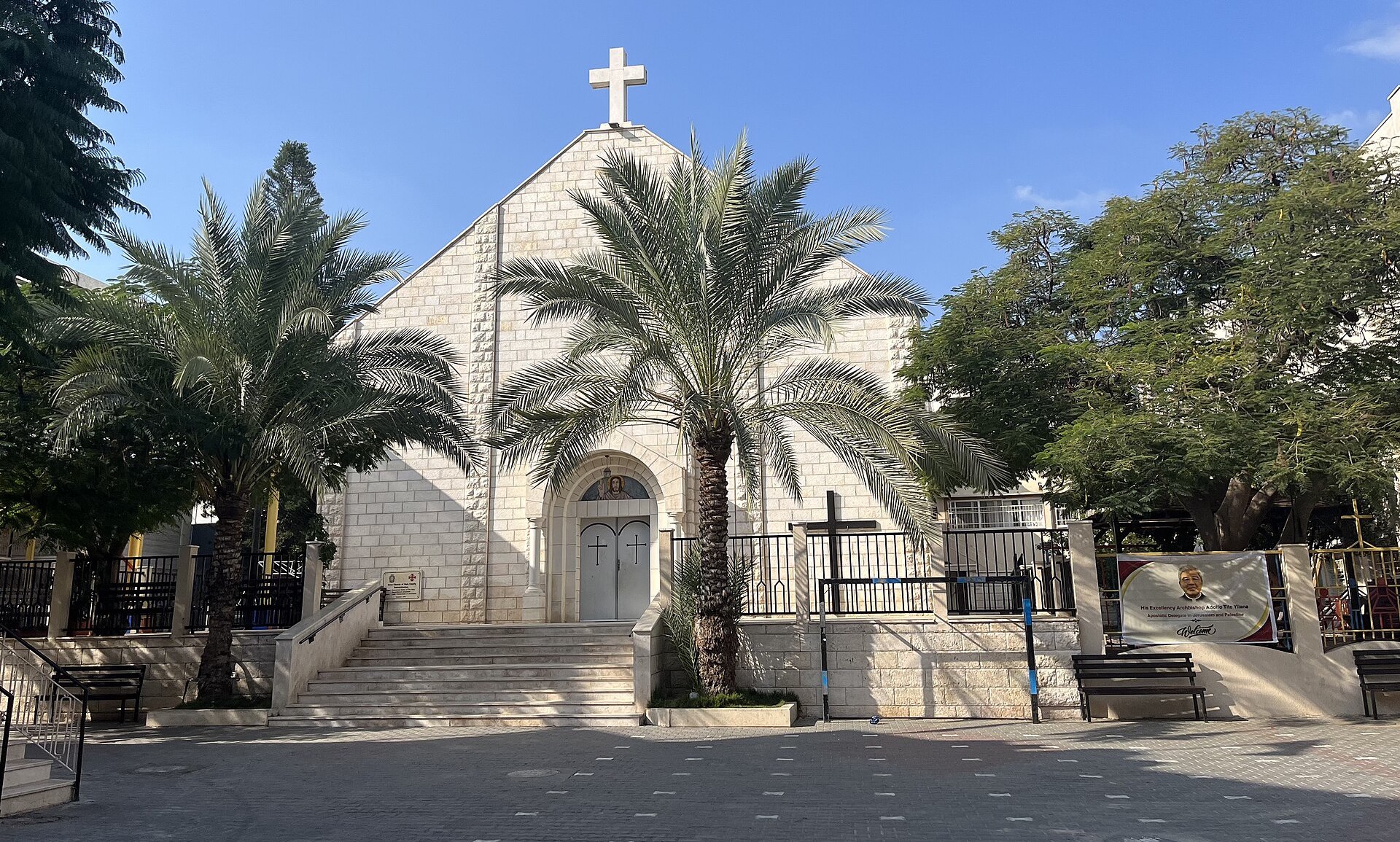
UN Secretary-General António Guterres has strongly condemned a deadly Israeli artillery strike that damaged Gaza’s historic Holy Family Catholic Church, calling the attack “unacceptable” and reiterating calls for an immediate ceasefire and the release of all hostages. The strike, which occurred on July 17, killed three civilians and injured several others, including parish priest Father Gabriel Romanelli, according to the Vatican.
The Holy Family Church, Gaza’s only Catholic parish, had served as a refuge for displaced civilians since the onset of the war, and held up to 600 people when it was struck. Witnesses reported a tank shell struck the church compound. Father Romanelli, who sustained minor injuries in the attack, was a close confidant of the late Pope Francis, who had called him daily for updates on conditions in Gaza.
Stephanie Tremblay, a spokesperson for the UN Secretary-General, emphasized that the church was not only a place of worship but also a sanctuary for displaced civilians. “People seeking shelter must be respected and protected, not hit by strikes,” she said, adding that “too many lives have already been lost.”
Israeli Prime Minister Benjamin Netanyahu expressed regret during a phone call with Pope Leo XIV, calling the incident a “tragic accident.” The Israeli military claimed the church was hit by stray munitions and said an internal investigation was underway. Israel has consistently stated that its military actions are aimed at Hamas militants, though it has acknowledged the frequent deaths of civilians in densely populated areas of Gaza. During the call, Pope Leo XIV renewed his appeal for negotiations, a ceasefire, and an end to the war, expressing deep concern over Gaza’s worsening humanitarian crisis. He also stressed the urgent need to protect places of worship and all civilians in both Palestine and Israel. Just days into his papacy, Pope Leo XIV issued a heartfelt appeal for an immediate ceasefire and the release of all hostages in Gaza, signaling his early commitment to peace and humanitarian relief in the territory.
Jerusalem ecclesiastical leaders, including Cardinal Pierbattista Pizzaballa and Greek Orthodox Patriarch Theophilos III, visited the church in Gaza a day after the strike. Their rare appearance in the war-torn enclave aimed to offer pastoral solidarity and oversee humanitarian convoys delivering food, medical supplies and equipment.
Under the Geneva Conventions and their Additional Protocols, as well as customary international law, houses of worship enjoy protected status as civilian objects and may not be targeted unless they are being used for military purposes. Article 53 of Additional Protocol Iand Rule 38 of the International Committee of the Red Cross’ customary law framework prohibit attacks on religious buildings. The Rome Statute of the International Criminal Court Article 8(2)(b)(ix) also categorizes the intentional targeting of buildings dedicated to religion as a war crime, provided they are not being used to support military operations.
While Pope Leo XIV has refrained from invoking terms such as “genocide” or “war crimes,” Vatican observers note his emphasis on immediate humanitarian relief. His tempered rhetoric may signal a strategic attempt to keep diplomatic channels open, particularly with a government already facing mounting international scrutiny.
From JURIST, July 20. Used with permission.
See our last report on genocide accusations against Israel.
Photo: Dan Palraz/Wikipedia


Effort to save Gaza’s threatened cultural heritage
PBS NewsHour reports on efforts by local artists and scholars to document the destruction of Gaza’s rich cultural heritage over the long months of Israeli bombardment, and preserve or restore what remains.
According to the UN, nearly two years of bombardment has destroyed 90% of the Gaza Strip’s built environment. And as of November, UNESCO has verified damage to 145 historical, religious and archaeological sites. Palestinian officials say the actual number is much higher.
Among the lost treasures are the ancient ports of Anthedon, dating back 1,000 years, and sixth century churches in Jabalia in Central Gaza. The 1,600-year-old Church of St. Porphyrius was thought to be the world’s third oldest church. An Israeli strike in the first few weeks of the war destroyed it.
The seventh century Great Omari Mosque, a one-time Crusader church, with towering minaret and marble columns, now lies in ruins. The 14th century Hamam al-Sammara, an Ottoman-era bath house noted for its arched ceilings, marble floors and heated systems, is now a pile of rocks.
The Khan Yunis Caravanserai (also known as Barquq Castle), a medieval gathering hub for merchants from around the known world, is reduced to rubble. And the Pasha Palace in Gaza City, first built in the mid-13th century, a seat of power during the Mamluk and Ottoman periods, is today a shell of its past glory, nearly reduced to rubble.
The Caravanserai used to serve as a museum of history in Gaza and housed thousands of rare artifacts. Now local archaeologists are undertaking the impossible task of recovery. They told NewsHour that so far, out of 17,000 precious artifacts, just 20 have been found in the rubble.
Erratum re. Church of Porphyrius
NewsHour appears to have overstated it. As our previous coverage indicates (follow embedded link above), it was damaged but not “destroyed” in the air-strike of Sept. 20, 2022.