


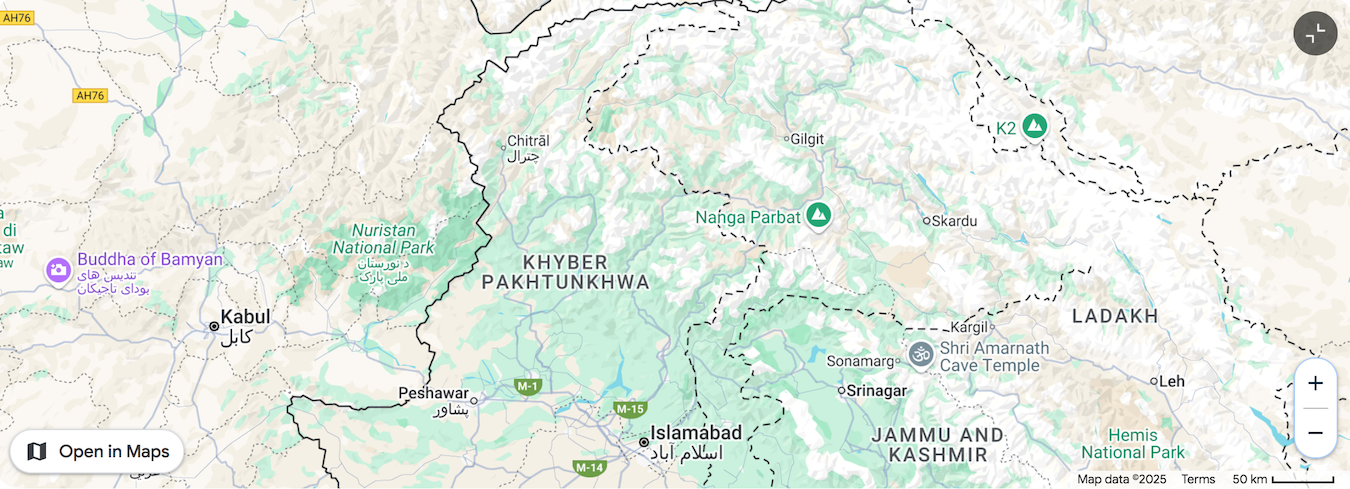
Violence has once again broken out between Afghanistan and Pakistan, with Islamabad declaring “open war” on Kabul. Late on Feb. 26, Afghan forces fired on military bases across the border in Pakistan, reportedly using drones. Pakistan retaliated early overnight on Feb. 27, bombing what it said were military and infrastructure targets in Kabul and several border provinces. Afghanistan’s Islamic Emirate government said its attacks were a response to Pakistani airstrikes on Feb. 21 and 22 that reportedly killed at least 13 civilians in Nangarhar province. Pakistan accuses the Taliban-led government of harboring fighters from the Tehrik-e Taliban Pakistan (TTP)—accused of being behind recent attacks in Islamabad and Peshawar. Afghan Minister of Interior Sirajuddin Haqqani said the “doors for dialogue” remain open but insisted that if Afghanistan continues to be attacked, it will respond. Iran, a mutual neighbor, has offered to mediate between the two sides. Türkiye and Qatar helped to forge a fragile ceasefire after a previous flare-up in October.
From The New Humanitarian, Feb. 27. Internal links added.
Map: Google


Pakistan bombs Kabul rehab center, killing hundreds
Afghanistan’s Taliban-led Islamic Emirate government says a Pakistani airstrike on a 1,000-bed drug rehabilitation center in Kabul on March 16 killed at least 400 men, most of them in treatment at the time. The UN verified 143 deaths at the Ibn Sina Drug Addiction Treatment Hospital but said the number will likely go up. Pakistan claims the strike hit a weapons depot, but calls are mounting for an independent investigation.
Amnesty International said Pakistan failed to properly assess the intelligence: “It’s well-documented that a large part of Camp Phoenix, a former NATO camp, had been operating as a drug rehabilitation facility since 2016. Pakistan’s military should have taken all feasible precautions to spare civilians and civilian objects before launching this strike. Any reasonable assessment and information gathering would have concluded that the camp had a high civilian presence. Even if an ammunition depot was present inside the wider camp, the decision to attack should have been weighed against any excessive harm that it was likely to cause to civilians.”
The flare-up of hostilities between Afghanistan and Pakistan has been overshadowed by events in Iran and the Gulf but has serious implications for regional stability and militancy. Pakistan accuses Afghanistan of providing safe haven to the Pakistani Taliban militant group, which the Islamic Emirate continues to deny. On March 18, at the behest of Qatar, Saudi Arabia and Türkiye, Pakistan agreed to pause attacks on Afghanistan during the Eid al-Fitr holiday. That armistice is expected to last until March 24. (TNH)
Afghan-Pakistan peace talks in China
Representatives from Afghanistan and Pakistan have been holding their first face-to-face talks since December in a bid to ease tensions that have boiled over into all-out conflict. Even as the China-mediated talks continued in the Chinese city or Urumqi, both countries reported new attacks. (TNH)