


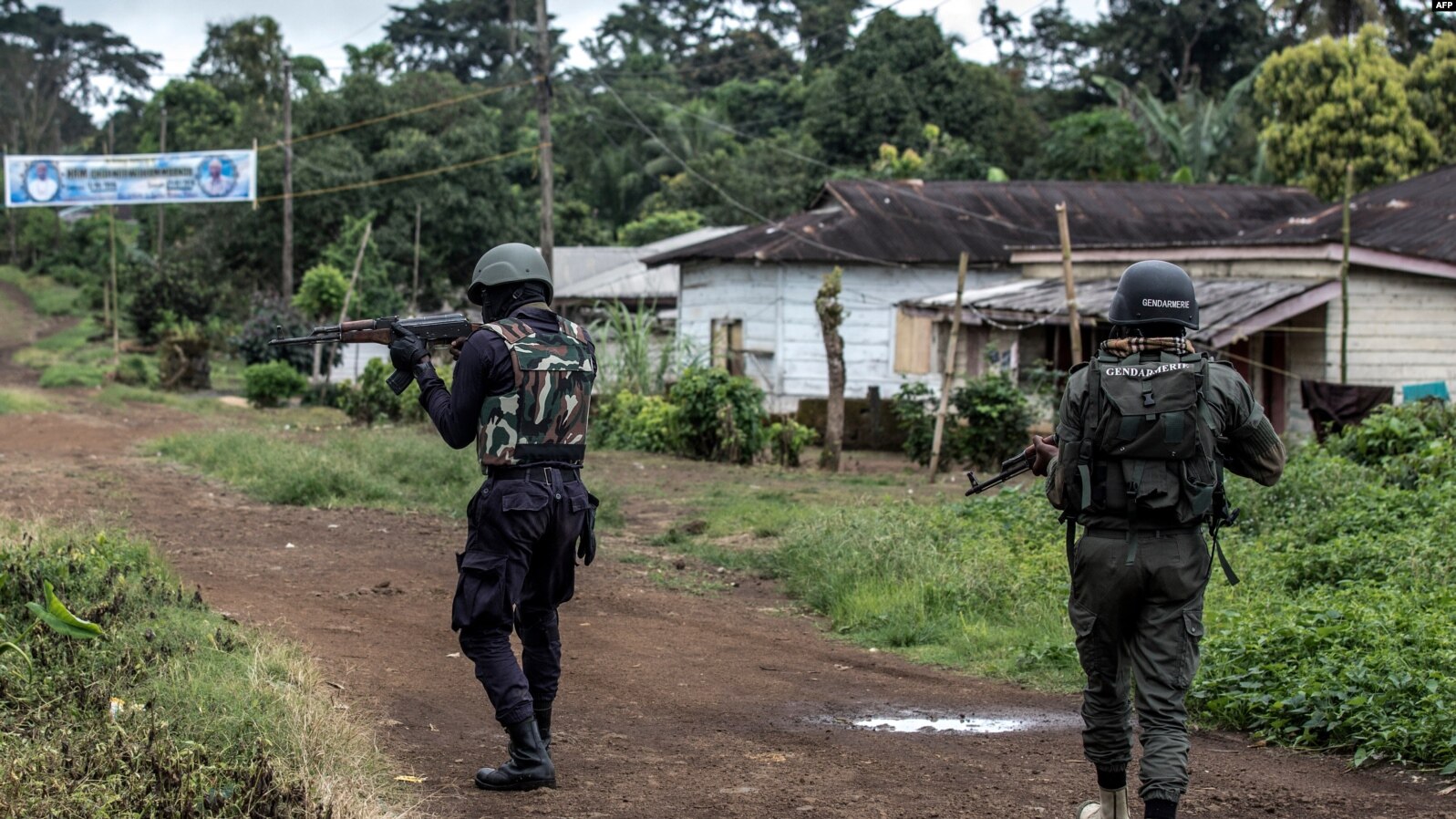
Amnesty International on July 4 urged Cameroon’s authorities to investigate human rights violations committed in the country’s conflicted Anglophone regions, the North-West and South-West. According to a new report, armed separatists and the military alike are responsible for killings, torture, rape and destruction of property. In the North-West in particular, long-standing conflicts between Mbororo Fulani herders and sedentary farmers have been fuelling armed violence. As the situation has deteriorated over the past years, militias, mainly composed of Mbororo Fulani and supported or tolerated by the authorities, have committed atrocities against civil populations. The official security forces have responded to this situation with further rights violations.
Photo: Moki Edwin Kindzeka/VOA via Wikimedia Commons


More than 20 villagers killed in Cameroon attack
Presumed separatist rebels killed nearly 20 people, including women and children, in an attack on Egbekaw village, Mamfe municipality, Manyu division, South-West region, Cameroon, Nov. 6. (AfricaNews)
Protest sentencing of Cameroon massacre perpetrators
Human Rights Watch on Feb. 24 decried the “lenient” sentencing of military officers involved in the 2020 Ngarbuh massacre in Cameroon, in which 21 civilians were killed.
On Feb. 14, 2020, military troops and Fulani militiamen killed 21 civilians, “including 13 children and 1 pregnant woman.” Homes and properties were pillaged and burned, and village residents told HRW that they believed the attack was retaliation for “harboring separatist fighters.”
The military court in Yaoundé sentenced three soldiers involved in the killings last Thursday after a trial held in absentia. The court found the soldiers guilty of “participating in a joint operation with an allied ethnic militia,” and handed down sentences within a range of five to 10 years.
HRW said that prosecutors failed to pursue evidence as to “who planned and ordered the killings,” while the court “refused to admit key evidence, including death certificates to identify all of those killed,” and families of the victims were “allowed only minimal participation” in proceedings. Proceedings were reportedly delayed due to non-attendance of judges, and the trial lasted five years.
HRW senior Africa researcher Illaria Allegrozzi commented that “the failure of Cameroon’s prosecutors and judiciary to investigate those bearing command responsibility, combined with the denial of reparations, exacerbates the suffering of victims’ families.” (Jurist)